

I’ve been going out to some agricultural areas near Tucson a bit more often these days. With the change of seasons, I am hoping to welcome both the arrival of some wintering birds but also some migrant birds passing through. One morning a friend and I found a large flock of Common Ravens along a line of trees we were driving by. While most of them flew, one pair stuck around for a bit. Notice the red corners of the one Raven’s mouth?
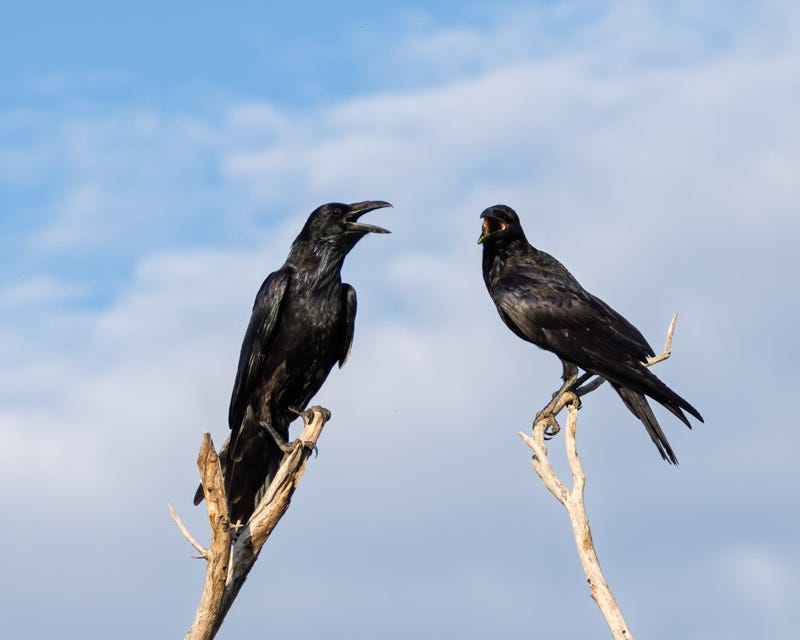
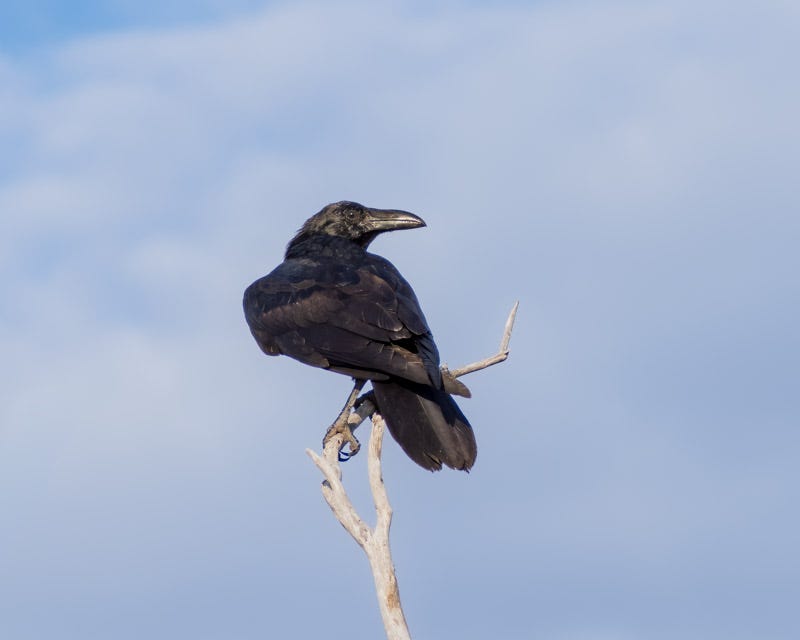
The Raven on the left flew off leaving just one Common Raven on the tree snag. I learned that at this time of year, Common Ravens may gather in large flocks. Most of those birds are either young adults or juvenile birds. Breeding pairs of adult Common Ravens do not join those flocks but stick together in order to protect their territories. The bird below is a very young bird. As it looks back at the other birds, it doesn’t show the thick, stiff nasal bristles on its bill like an adult bird would. A young, juvenile Common Raven has very thin, sparse nasal bristles that are less obvious.
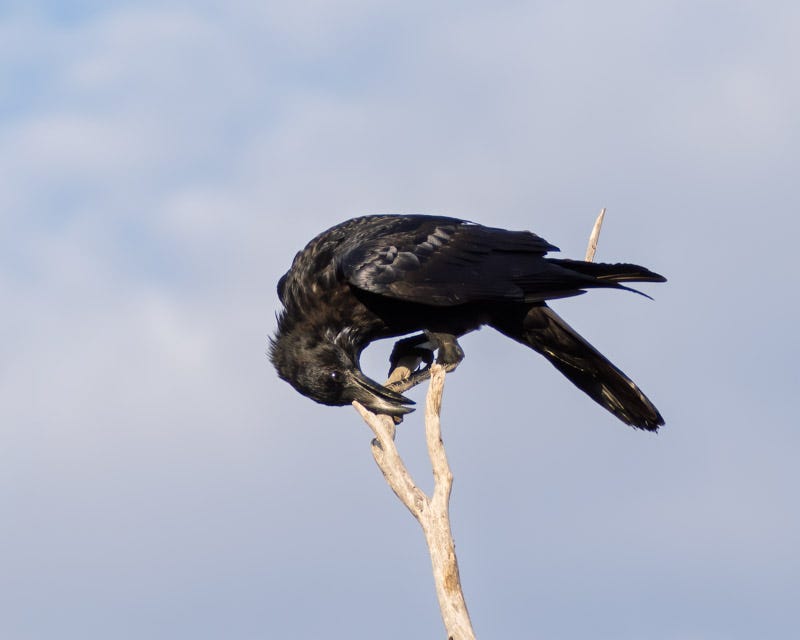
The Common Raven turned and rubbed its beak against the hard surface of the tree snag. The beaks of birds are made out of keratin, a protein substance that our human fingernails are made from. All birds will rub their bills or beaks on the side of hard surfaces as this bird is doing in order to clean, sharpen and maintain them. You can learn about this behavior here and here.
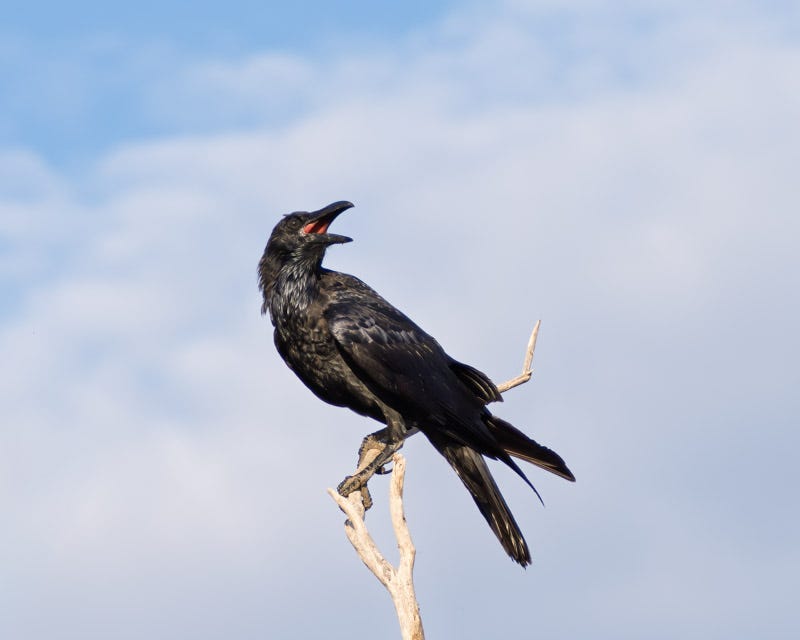
Then the bird began to call out to its friends again. Who knows why it chose to not fly off? Instead, it was calling out to the dozens and dozens of ravens that were scattered all around. In the picture below, you can see another indication that this is a young bird. Notice the red on the inside of its mouth? I learned that young Common Ravens have pink or red on the insides of their mouths. That color helps the adults to spot the open mouth in order to feed their young. Similarly, all young birds have a lighter color to the inside of their mouths or to the gape, the fleshy part at the corner of their mouths.
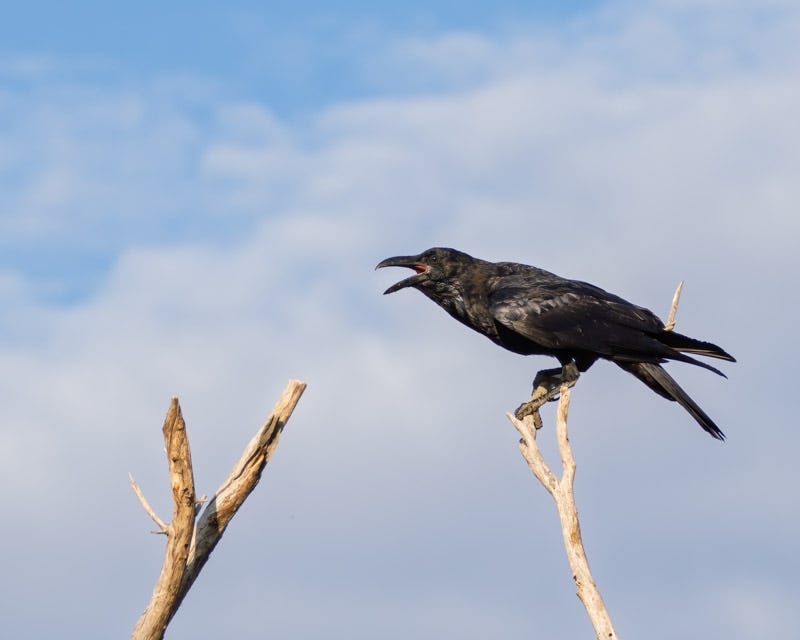
The Common Raven turned and continued to call out to the rest of the flock. Again, you get a very good look at the inside of its mouth. As this Raven ages, the inside of its mouth will turn dark gray or black, just like that of all adult Common Ravens.
Common Ravens remain in these large flocks between the ages of one to three. They become mature and begin courting behaviors and form breeding pairs generally some time between the ages of two and four. Once they form a pair bond, they leave the flock and then will live the rest of their lives as a pair.