

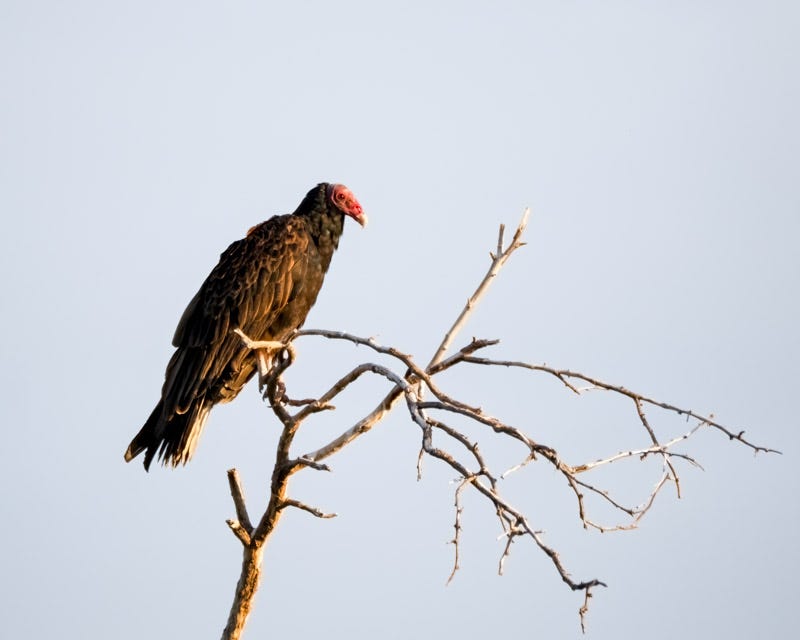
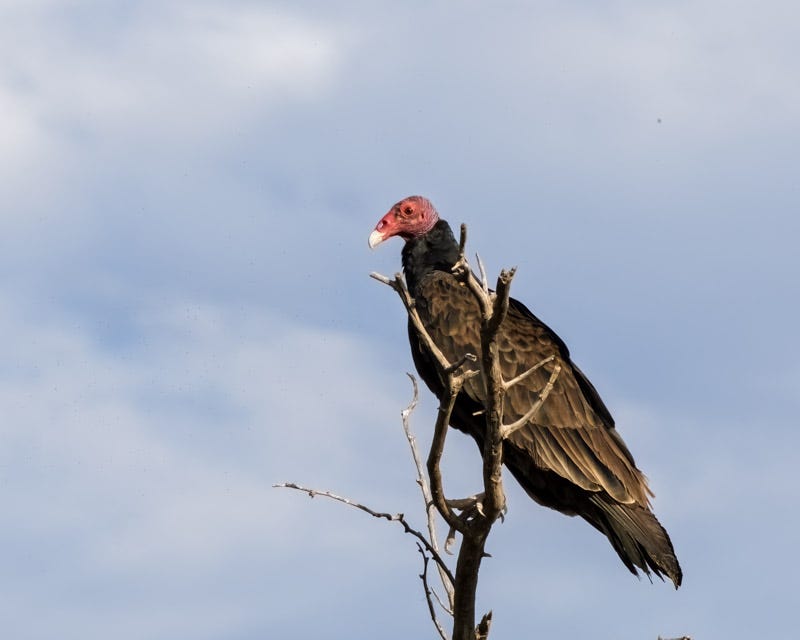
We have turkey vultures in the Tucson area year-round. During the winters, they are here but scarce. The population increases dramatically during the summer breeding season. At this time of year, however, we see many more Turkey Vultures in the air as they begin their southern migration. I was in an agricultural area northwest of Tucson early one morning when I came across a group of Turkey Vultures. The early morning sun cast a golden light on the Turkey Vulture’s dark brown feathers.
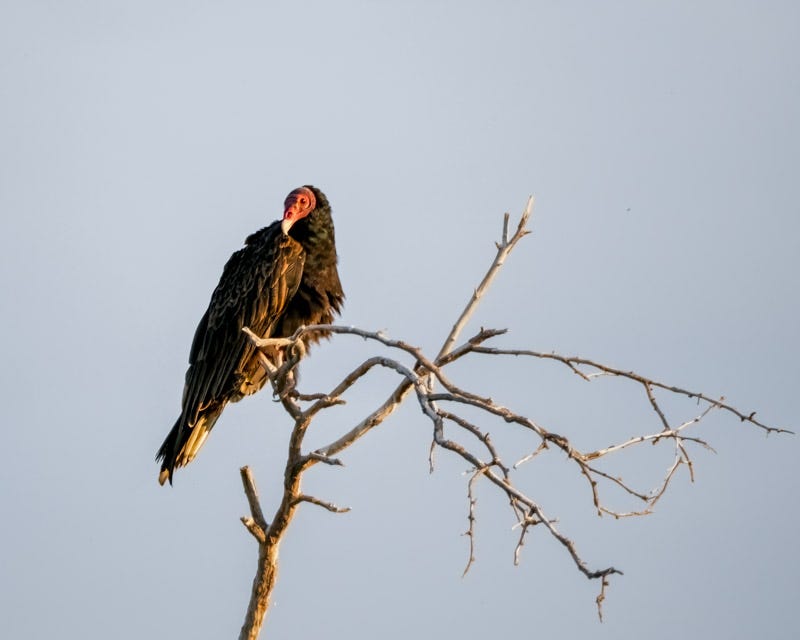
Our Turkey Vultures are one of the subspecies of Vultures in the Americas. They are distantly related to the Vultures in the Old World. They were given their common name in America in the 1700s because of their physical resemblance to Turkeys, another very large bird which also has dark feathers and a bald, red head.
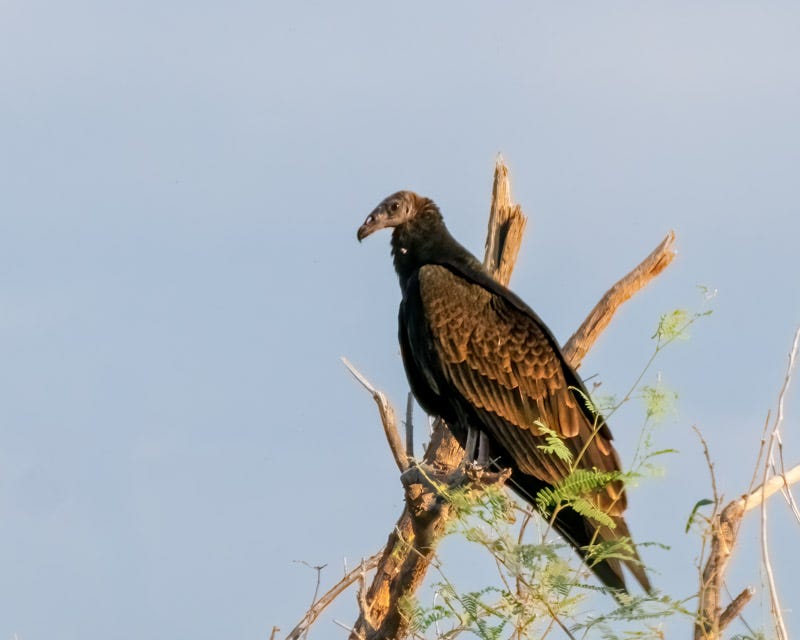
Immature or sub-adult Turkey Vultures have a dark gray head and a dark gray beak. It takes one or two years until these Turkey Vultures achieve their adult look so the odds are that the bird below hatched this spring or early summer. Perhaps next year when it returns it will have the familiar red head of an adult Turkey Vulture.
Although Turkey Vultures don’t have the biggest fan club, they actually have a number of distinctive traits that should bring them more attention. These traits help them to stand out even more from a typical bird. This short video helps to present some of their traits in an interesting manner.
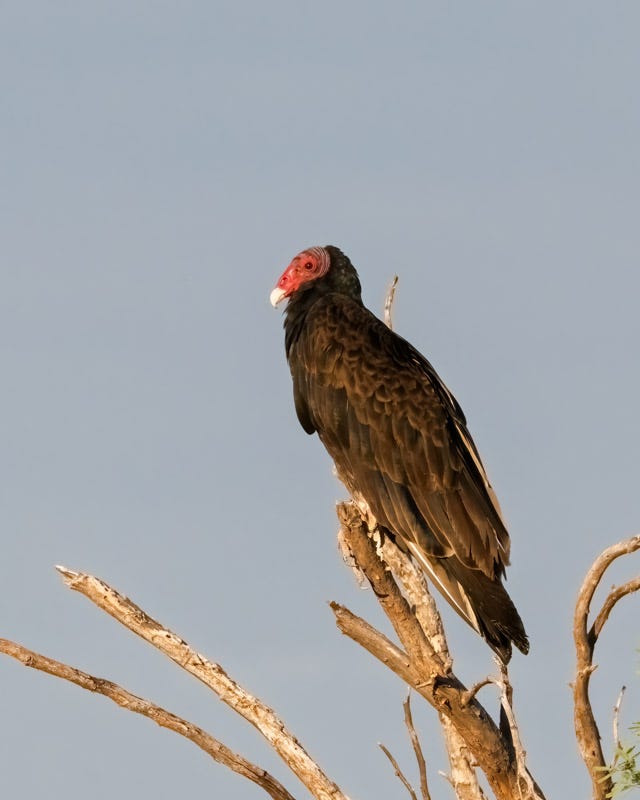
Because it was early morning and there weren’t any heat thermals rising from the fields, the Turkey Vultures tended to stay put on their perches. At most, they would fly from one perch to another.
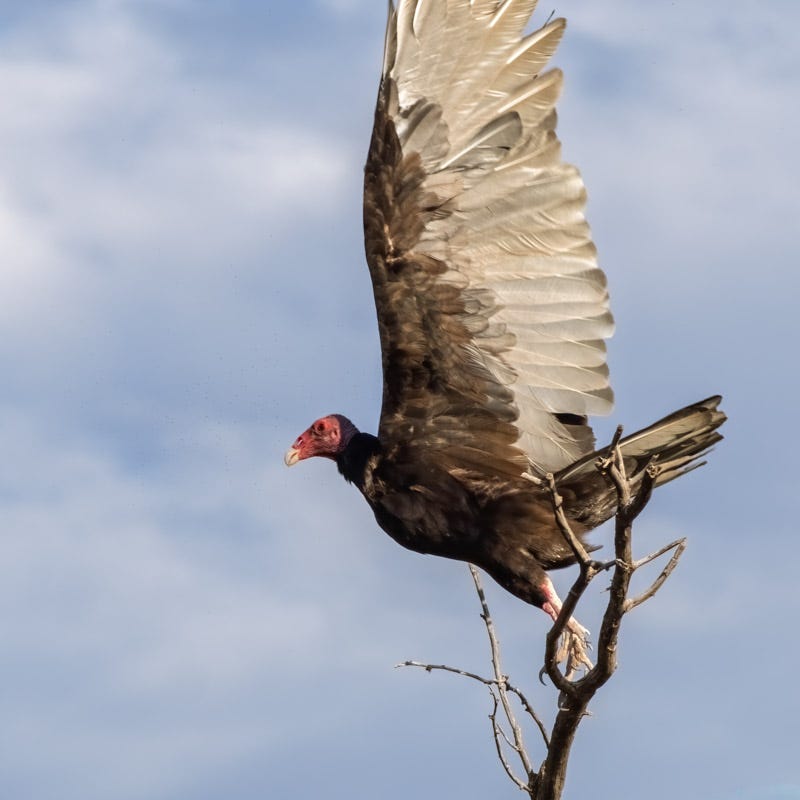
One Turkey Vulture finally had enough of us. As all the other Turkey Vultures had done, it flew away from us and didn’t give us any opportunity to get any nice soaring shots. We did, however, see its big two-toned wings. Turkey Vultures’ wings are recognizable when they soar far above us. The leading half of their underwing is dark brown or black, while all of the long, trailing flight feathers are white or silvery. The Turkey Vulture’s wingspan is up to six feet, measured from wingtip to wingtip!
For a little more on these interesting birds, also in a humorous fashion, listen to the “Bird Noir” report from Birdnote.
I misidentified two dragonflies in my recent post titled “More Dragonflies from El Rio Preserve.” What I stated was ‘another male Western Pondhawk’ was really a Blue Dasher. Both have blue abdomen’s but the Blue Dasher has green eyes and a white face as pictured. I also mislabeled the rare visitor to Arizona. It was a Pin-tailed Pondhawk, not a Pennant. Thank you to Barb L. and Dennis Paulson for correcting me. You can see the corrections in the original post here.
That is an amazing wing span and picture of it Dan! Wow!
🎵P, P, P! Easy as 1, 2, 3…🎵