

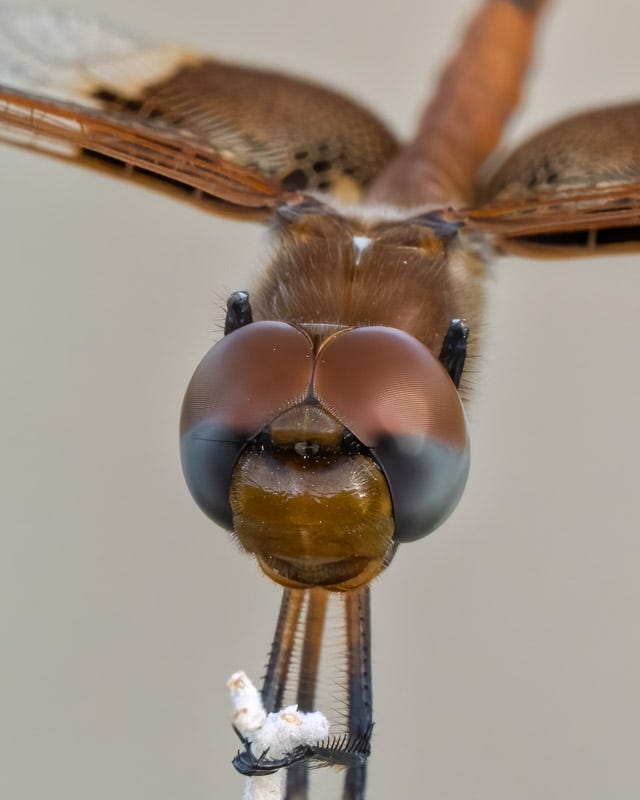
While the days are still hot, the shortened days, cooler nights, and aftermath of the monsoon season have all worked to bring life back to the Preserve. It still can be very hot and early mornings are the best times to visit, but there are winged things to see. I seem to find more Red Saddlebags here than at other water spots around the Tucson Area. Dragonflies can have 10-30,000 lenses in each eye. Can you see them in Saddlebag below? Click on the picture to get a slightly larger image.
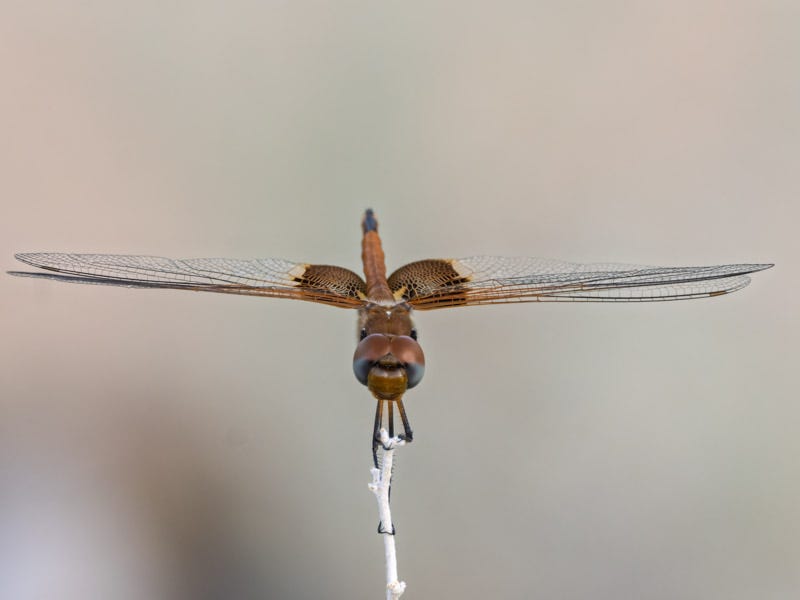
Here’s a look at that same Red Saddlebags from a distance. Those eyes are one of a number of things that make Dragonflies formidable hunters. You can read more about these fascinating insects at the Natural History Museum of the UK.
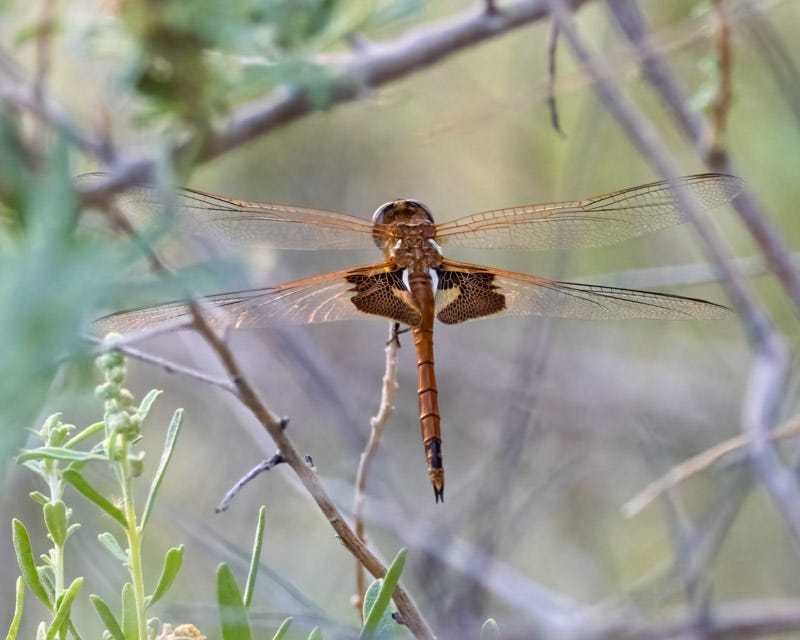
From this perspective, you can see how the “saddlebags” fit on the hind wings of the Dragonfly.
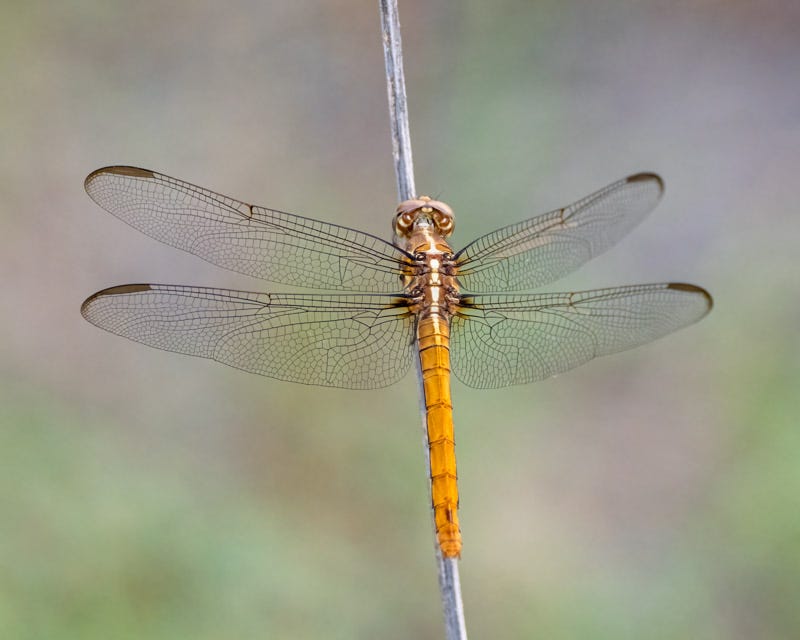
A female Roseate Skimmer perched parallel to the twig she was on. Male Roseate Skimmers are rose-colored but the females are an orange hue. You can see that her hind wings are broader and have more surface area than her forewings. Dragonflies’ hind wings work independently from their forewings helping to give Dragonflies incredible agility and the ability to fly backwards.
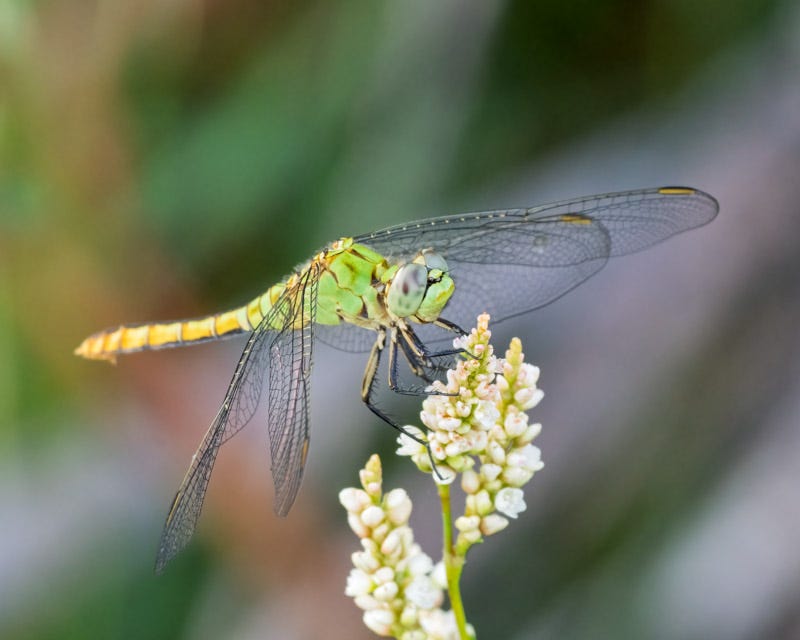
Unlike many female Dragonflies with more muted colors, the female Western Pondhawks have a bright green color. As we slowly wandered around at El Rio, we affirmed that we were more likely to find the female Dragonflies away from the water. Male Dragonflies tend to aggressively patrol the water while the females, outside of breeding, spend most of their time in brush away from the water.
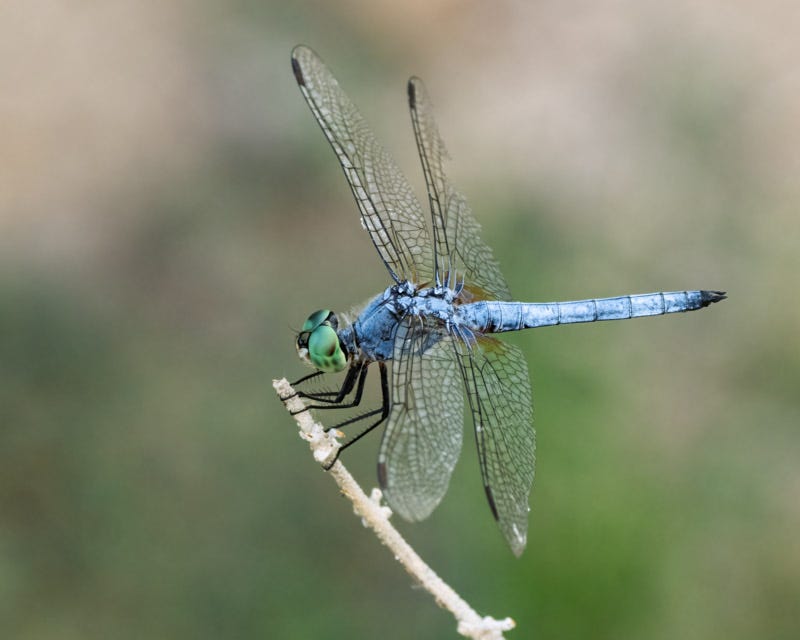
The male Western Pondhawk below shares the green face of the female, and the blue eyes, but its body is powder blue with that pruinose, waxy coating.
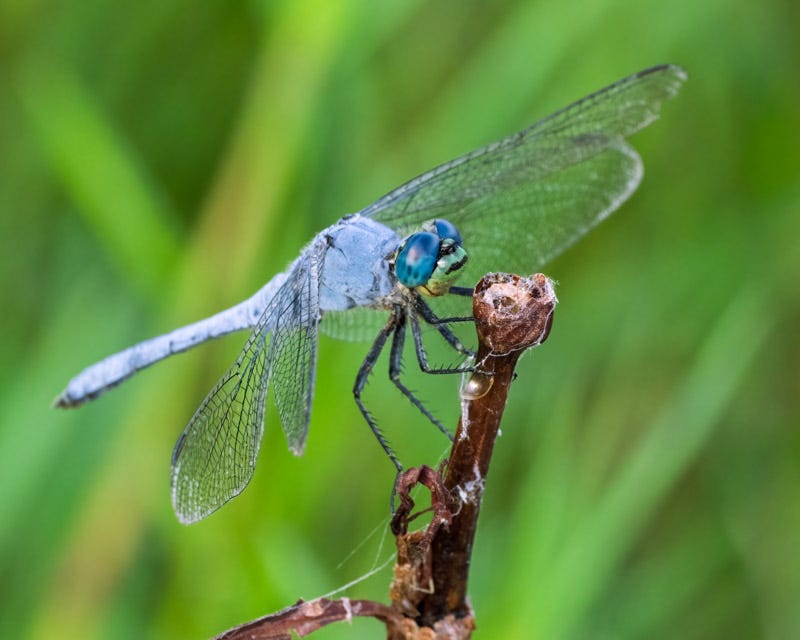
Here’s another look at a male Western Pondhawk.
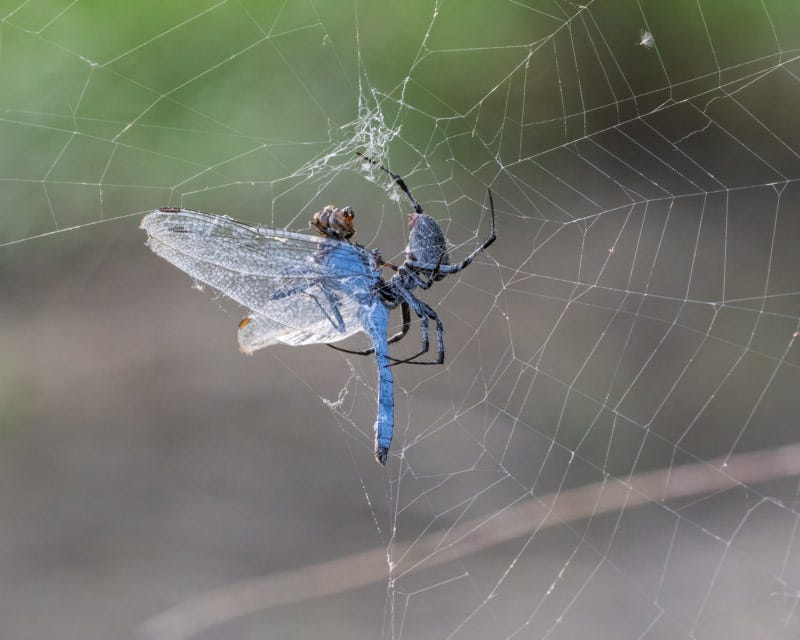
You may remember my photo from the August 20 post on dragonflies that showed a Red Saddlebags caught in a spider’s web. Today’s photos were taken at the end of August, and we saw another dragonfly in the same spider’s web. This time, it was a Western Pondhawk and the spider was enjoying its meal!! Dragonflies, the ultimate predators, can also become prey. Erasmus Darwin, the grandfather of Charles Darwin, wrote, “Such is the condition of organic nature! whose first law might be expressed in the words ‘Eat or be eaten!’ and which would seem to be one great slaughter-house, one universal scene of rapacity and injustice!”
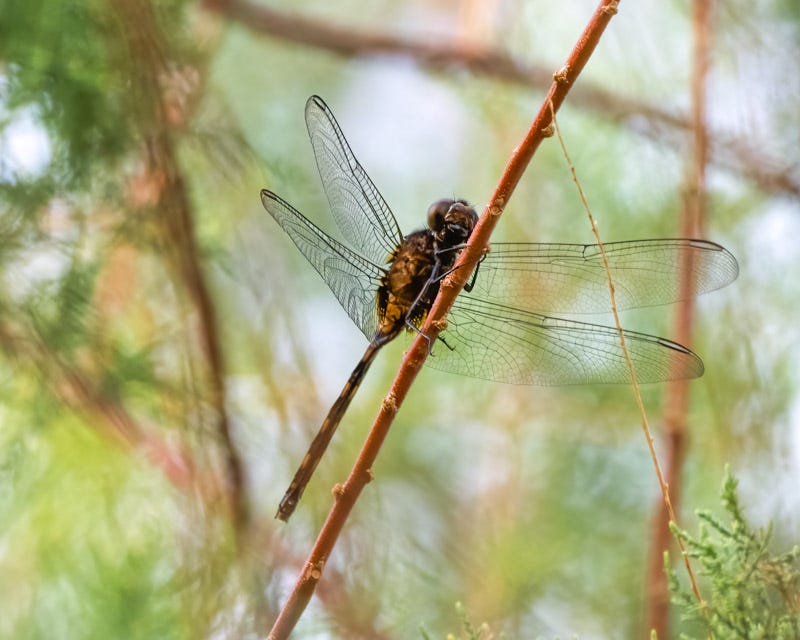
A day prior to our visit to El Rio, a birder had reported seeing a rare-to-Arizona Dragonfly. Pin-tailed Pennants have only been found in Arizona a few times in the past, so this sighting was special. While my friend and I were looking at Dragonflies, a Dragonfly enthusiast happened to be looking up at a tree next to us. I asked if he had seen the Pin-tailed Pennant and he said that it had been seen in two of the tamarisk trees we were next to. With some of his coaching, I was able to find the Pennant. The photo may not be the greatest but it documents this special insect!!
Part of what makes Dragonflies so intriguing is their prehistoric origins. Fossils of Dragonflies show that these insects were flying more than 300 million years ago. That means they predate dinosaurs by over 100 million years and birds by over 150 million years. A close cousin to today’s Dragonflies were the now extinct Griffinflies, the largest insect ever. I can’t imagine what it would be like running across something with the skills of a dragonfly and a wingspan of two and a half feet!