

Acorn Woodpeckers have a unique combination of red, white and black on their face. Add to that a white eye against a black face, and watching their behavior just somehow shouts “clown” to many people. Male and female Acorn Woodpeckers look similar with a red crown and a white forehead, but the females, like the one below, have a black headband between their red cap and their white forehead.
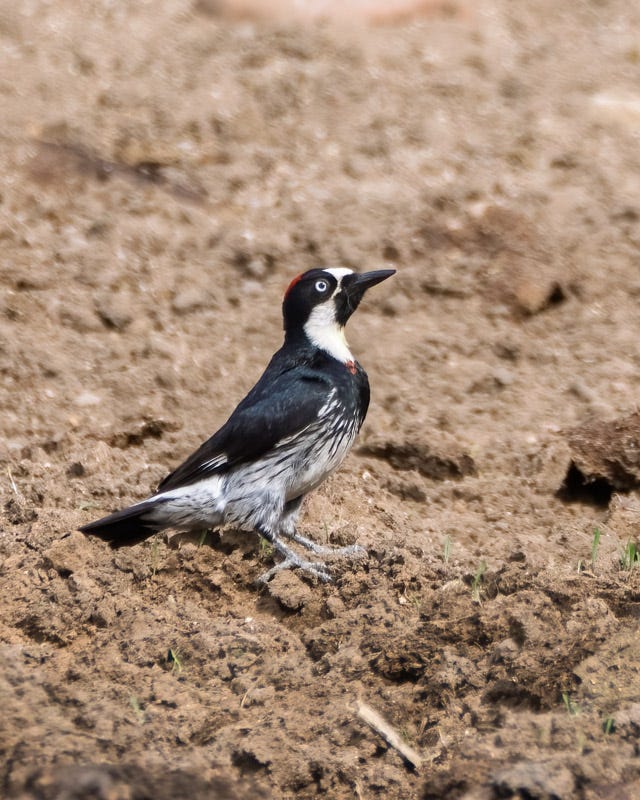
Bird photography allows you to capture special things at times. When I began processing these photos, I noticed an unusual red dot on this bird’s breast. You can see a bit of red right where its white throat meets its black breast feathers. Despite my having seen hundreds if not thousands of Acorn Woodpeckers over the years in the nearby Sky Islands, I had never noticed much less heard of that feature.
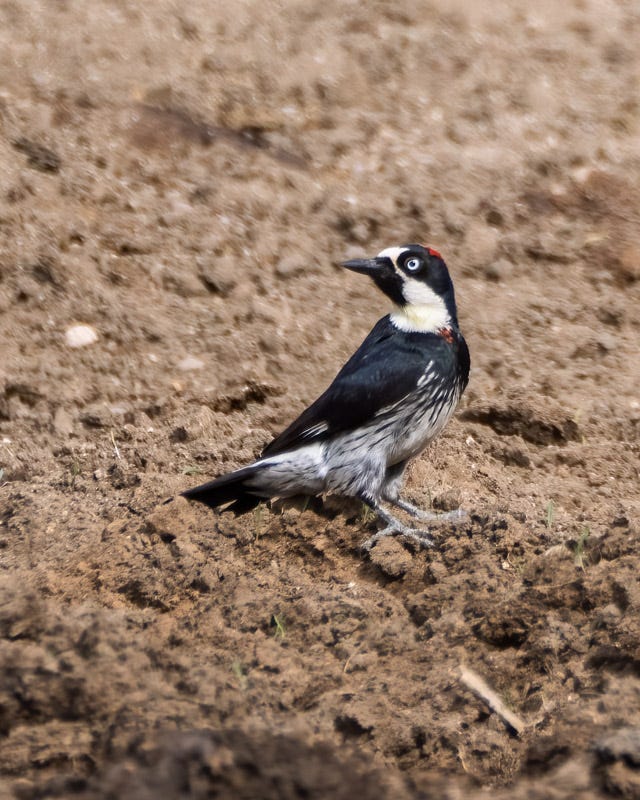
With the BirdsoftheWorld.org webpages as a source, I learned that in “some female Acorn Woodpeckers, the center of this band at the border of the throat is marked by a small area of black feathers with red tips. This trait is especially noted in certain southern ranges (such as Costa Rica and Panama), where individuals can exhibit brighter yellow throats and occasional red feathers on the chest.” BirdsoftheWorld is another terrific resource operated by the Cornell Lab, as is the AllAboutBirds site from which the range map below comes.
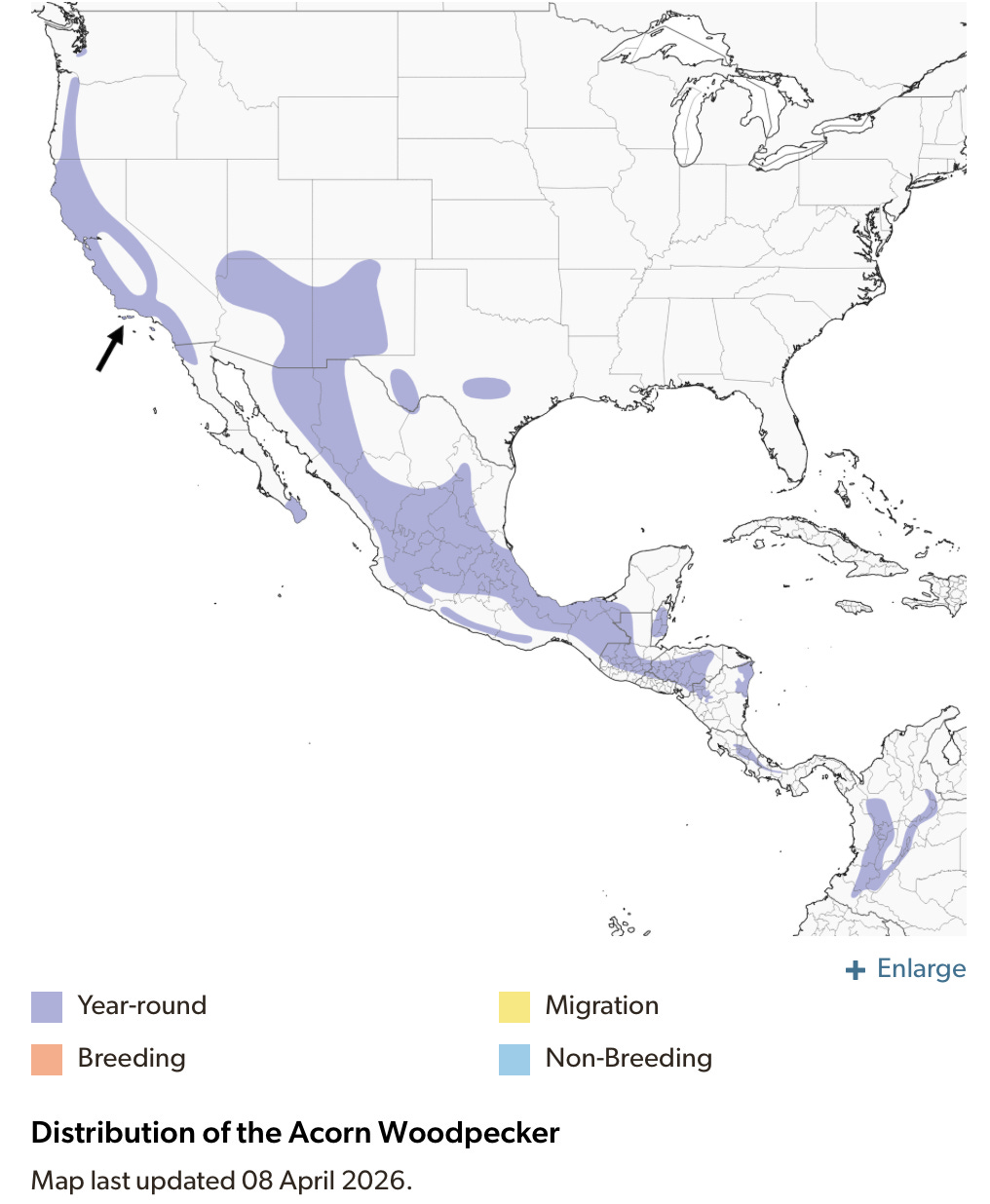
So that Acorn Woodpecker with the red spot may have been unusual in southern Arizona but exists a bit more often in Central American birds. In the meantime, I became interested in the wing feathers of this Acorn Woodpecker. There is a white patch at the base of its primary flight feathers which contrasts sharply with the black feathers of the wing. (Primary feathers are the long outer feathers at the back of a bird’s wing that helps to generate thrust during flight.)
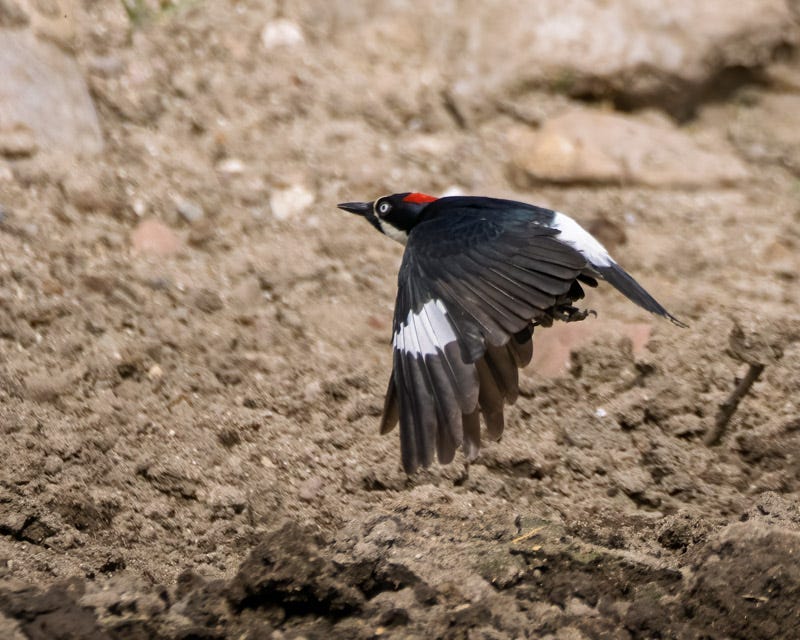
Compare the colors, or pigment, of the upper side of the Acorn Woodpecker’s feathers to the underside. The look is very different! The darker feathers on the upper side of the wing contain more melanin than the lower side of each flight feather. The feather surface on the outer/upper side that is more exposed to sunlight and the melanin helps to make both stronger and more resistant to UV degradation.
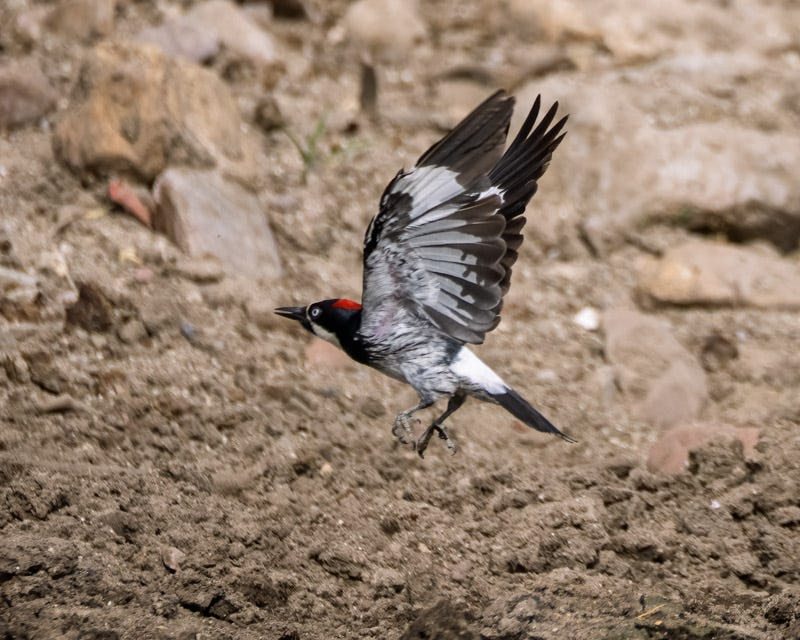
There may also be some camouflage benefit to the wing feathers colored so differently on each side. In any case, this female Acorn Woodpecker gave me much to think about. For a deeper look at this unique woodpecker species, AllAboutBirds goes a bit “nutty” about these birds here. Did you know that Acorn Woodpeckers were the likely inspiration for the first Woodpecker you probably ever learned about: Woody Woodpecker? Birdnote explains how that came about.
Very, very interesting. Thanks, Dan!
Very good pictures and narrative.