

Birders from around the United States are drawn to southern Arizona to see this beautiful, exotic bird. There are many unique species found here that cannot be found elsewhere in the United States but this stunning, tropical species is usually at the top of the list that visitors hope to find. We found this male after a short hike on our first day of a recent stay in the Chirichahuas.
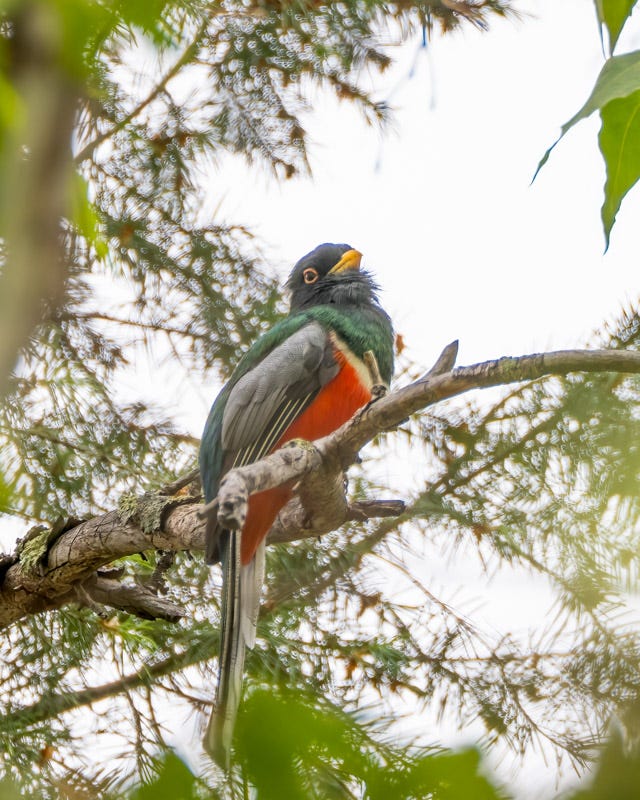
Known as the Elegant Trogon since 1983, its name was changed last year to acknowledge the differences in plumage and range between the birds in Arizona and Mexico from those of the birds in Central America. Prior to 1982, all of these birds were known as the Coppery-tailed Trogons, so this name change reverts back to what the birds were once called. In Arizona, the upper side of the tails can have an iridescent and metallic, orange/yellow hue to them. It is variable due to lighting and other factors. On the first morning on our trip, we found two males.
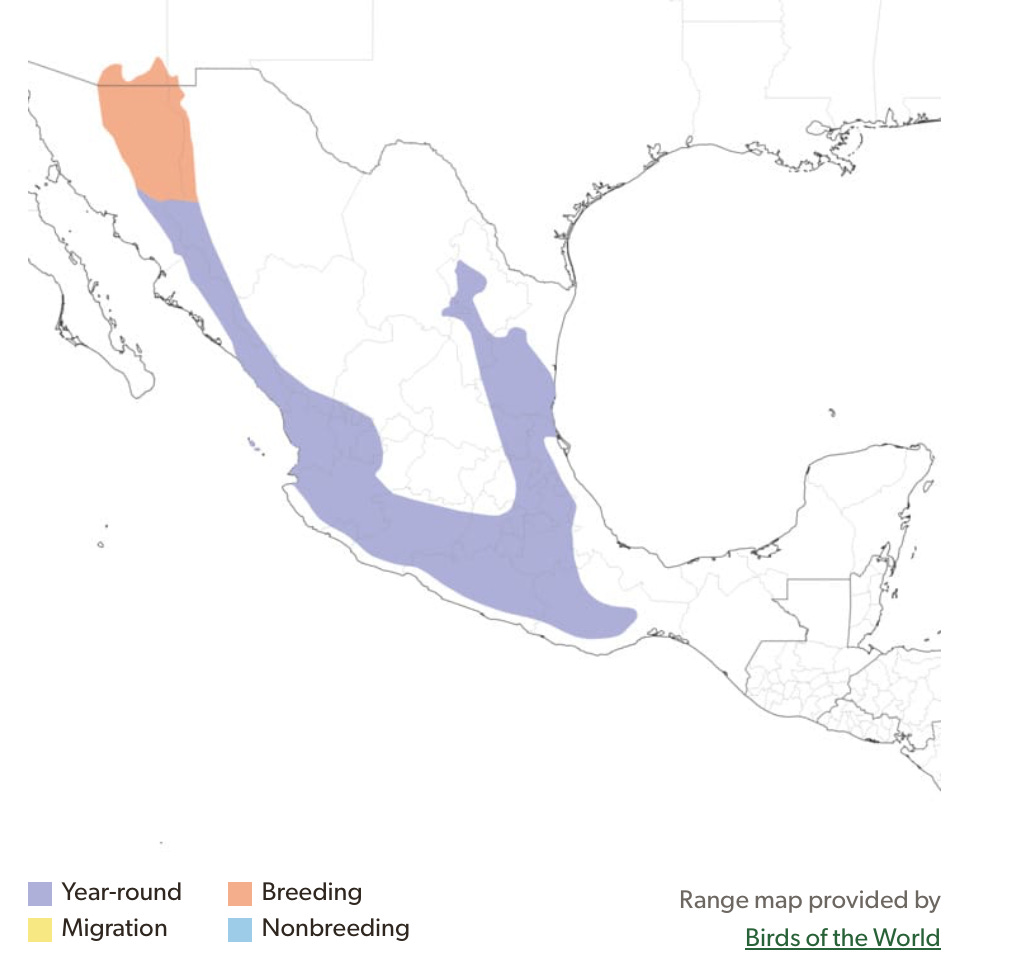
These Trogons breed regularly in four Arizona mountain ranges: the Chiricahuas, Huachucas, Santa Ritas, and Atascosas. The range map from AllAboutBirds gives a good visual of where to find these birds.
April is when we spent a few days in the Chiricahuas. We were able to hear and see a few Trogons in the South Fork of Cave Creek. This is one of the accessible, well-known spots to see Coppery-tailed Trogons. They are found in sycamore and oak riparian areas within their Arizona range. Their brilliant colors combine rosy red underparts, a shiny green back and chest, a white breast band and a black head. The eye-ring and bill color contrasts with the dark head.
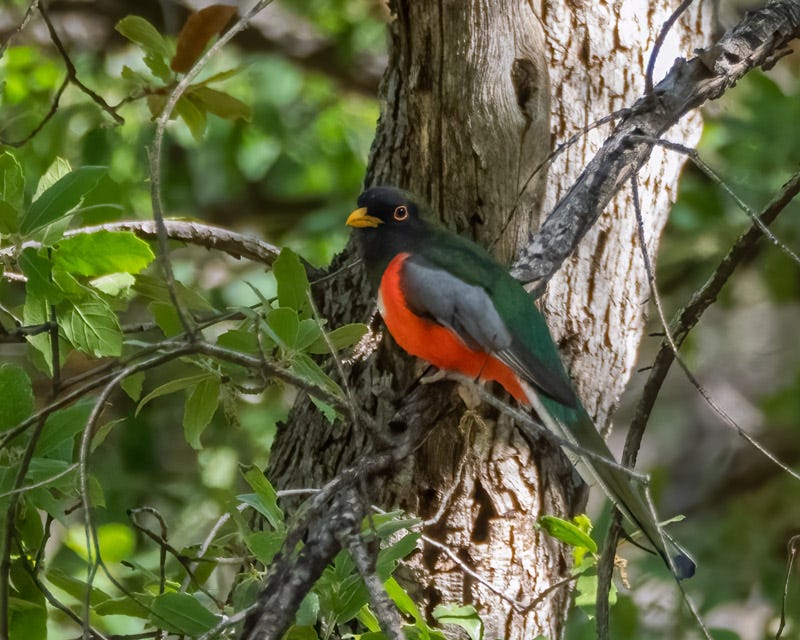
Usually, you find the male Trogons by first hearing their call. Then, the “where’s Waldo” hunt begins the search. For me, I usually spot them when they fly and that red color flashes through the leaves. I describe their call as a barking sound, a repetitive call that resonates through the canyon. You can watch a video at AllAboutBirds of this Trogon making its distinctive call and imagine standing in a mountain canyon listening to the Trogon’s sound.
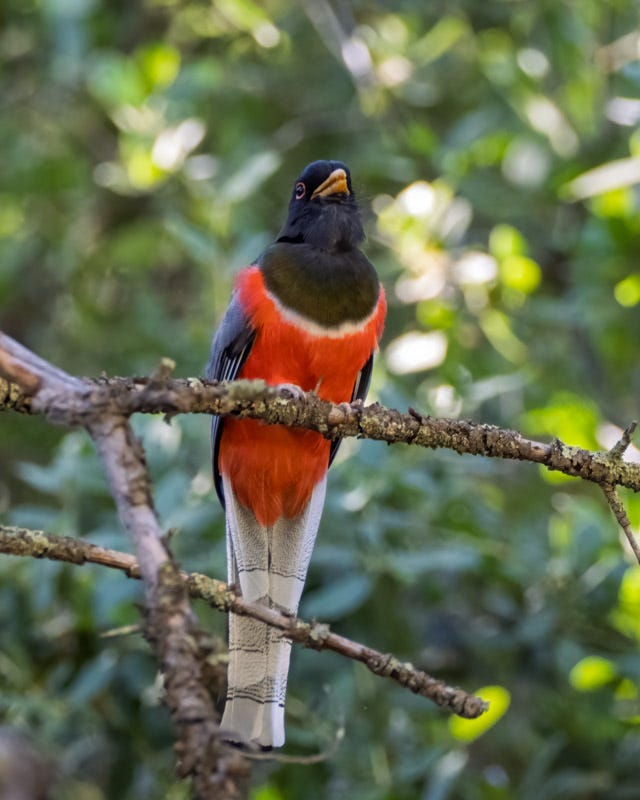
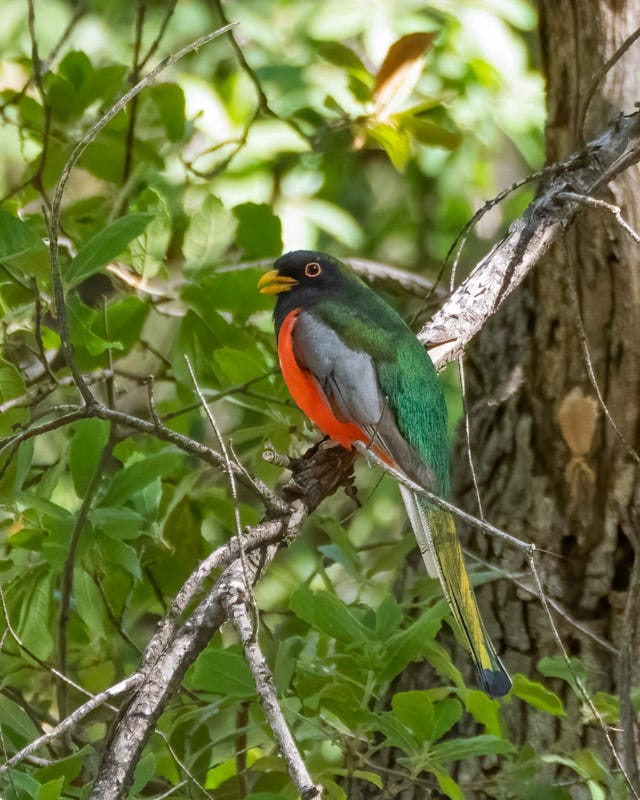
In between the calls, the Trogon paused for a short time. The males arrive in these canyons early to establish their territories, the females arrive later. We had been told that there were three males in Cave Creek this year and we were fortunate to watch two males ‘discussing’ their territories. There is a one mile long dirt forest road in South Fork. One Trogon was calling from the lower portion of the road and one was calling from the upper. Both birds slowly approached each other, perching and calling over and over again. In the photo below, you can see the three white bands on the undertail and what has been described as “black freckling.”
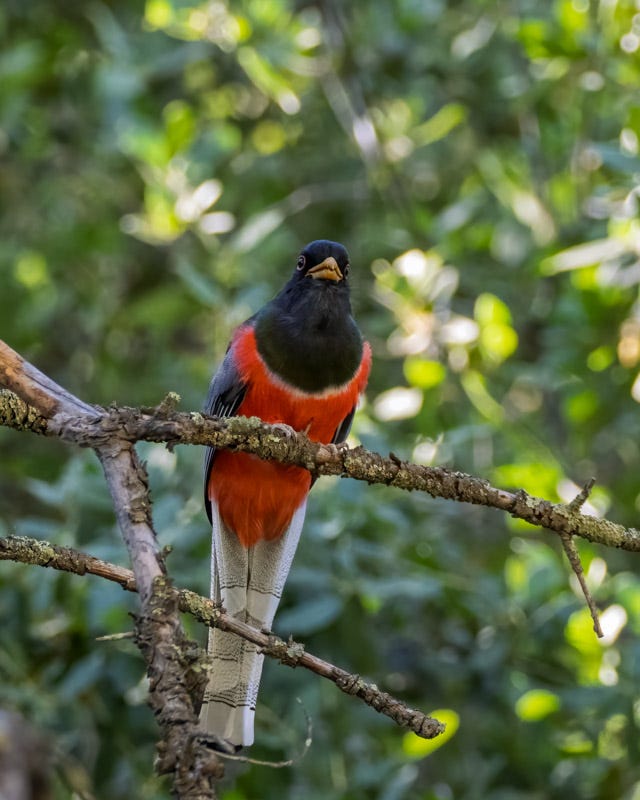
At one point, the two male Coppery-tailed Trogons were perched in the same tree but on opposite sides of the tree. That spot, apparently, marked the ‘property line’ between their two territories. They eyed each other, but the calling subsided as they just guarded their spot. They watched and they waited.
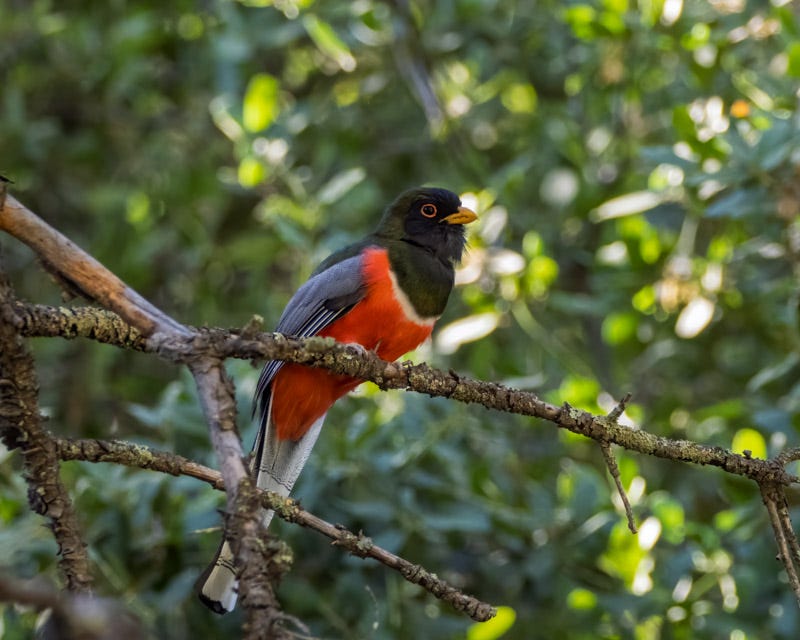
After a while, both birds agreed to disagree and each flew in opposite directions back into the heart of their own territory. The calling continued as they began going about their day. If you look closely, you can see the serrated edge of the bill in this bird. That cutting edge is serrated to aid in the Trogon’s gripping fruit and holding onto prey. Clicking on the photo will enlarge it, giving you a slightly closer look.
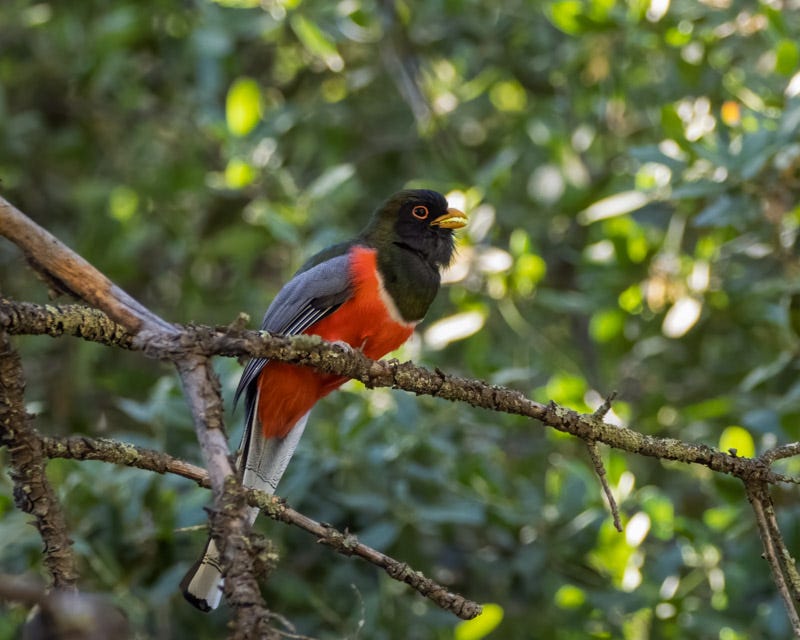
Two days later, we stopped in the South Fork one last time before heading back to Tucson, hoping to see the Trogons again. We did hear and then found one! It spent time calling from up high. These males spend much time calling in the spring both to establish and defend territories and to attract females which will arrive any day soon.
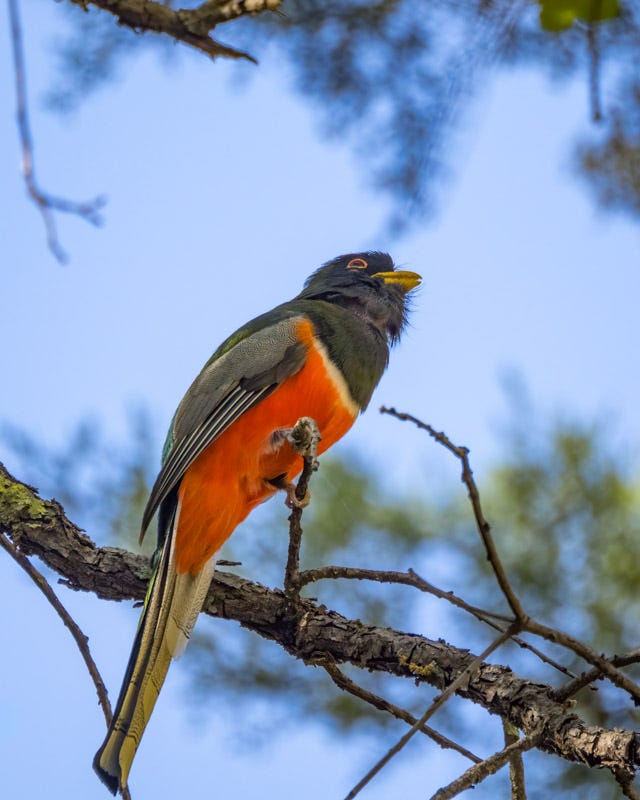
The male Trogons will have scouted out possible nesting sights to show the females. Trogons are what is called secondary cavity nesters. They don’t create cavities in trees, but will use the cavities that woodpeckers have carved out. Sycamore trees also provide natural cavities. In older trees, branches break off leaving openings. Fungi enters and decays the trunk, creating nesting holes for Trogons and many other cavity nesting birds.
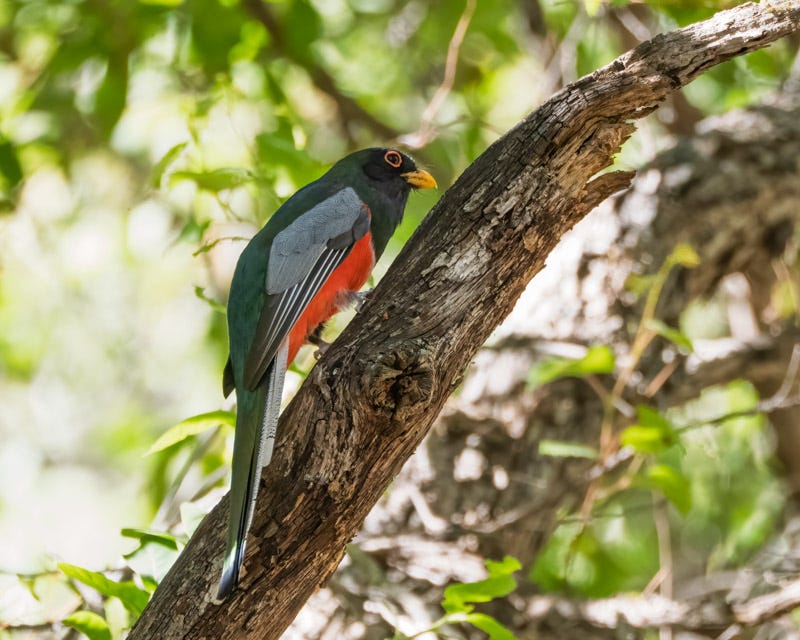
Tucson Bird Alliance provides a nice summary about this southern Arizona specialty. I was sure happy to get good looks at it.
They are magnificent! They look like a painting
Fabulous photos, Dan!!!