

Agua Caliente Park is a wonderful oasis on the far east side of Tucson. I have posted photos from there in the past. The many ponds, riparian habitat, ridge human history, and easy access make this a great place to visit.
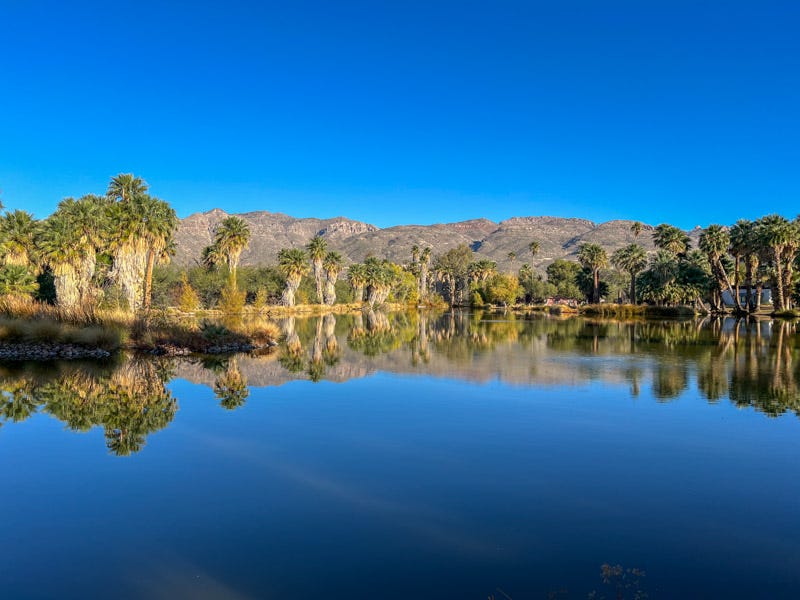
This winter, in early December, an uncommon bird for Southern Arizona showed up. Northern Saw-whet Owls’ normal habitat is mountainous coniferous forests, and they are present in the Catalinas and the Chiricahuas. Every once in a while one may descend to the desert valley during the winter. This happens to be one of those winters where one of these owls seems to have settled into a valley winter home. Many birders have been making a pilgrimage to see this unique bird. You can learn more about the Northern Saw-whet Owl from Birdnote.
In general, this is what the best looks of the owl were.
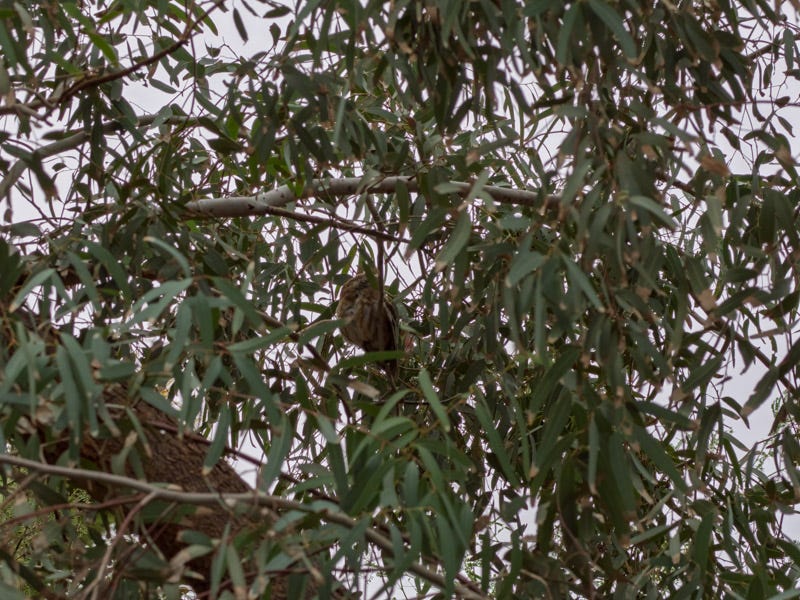
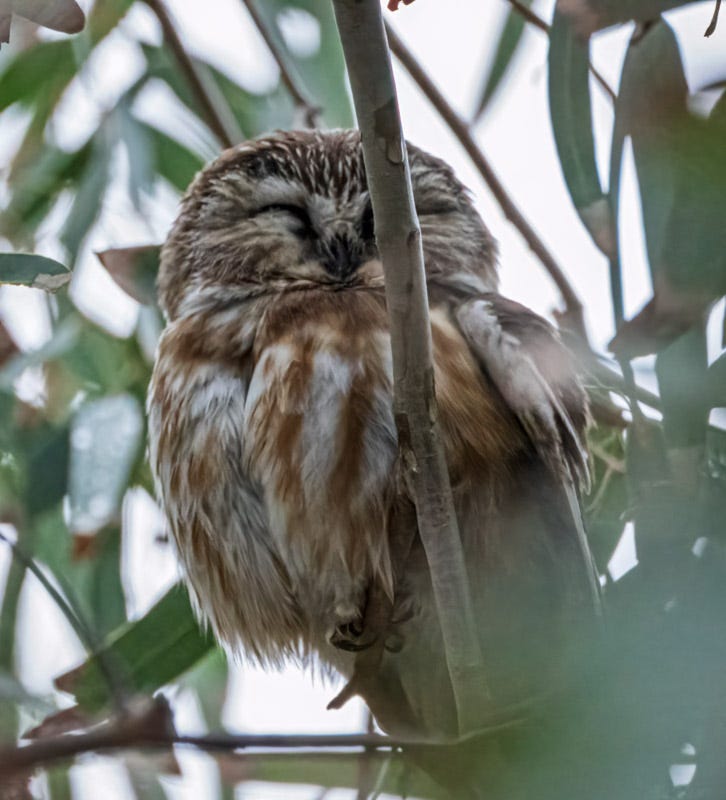
The Northern Saw-whet Owl has been spending its days sleeping. Its favorite roost is in the shadows deep behind thick eucalyptus leaves. There just aren’t open looks at the bird which demonstrates that it chose a roost spot wisely, well hidden from predators as well as humans. In this image, its head is turned towards its back while it sleeps.
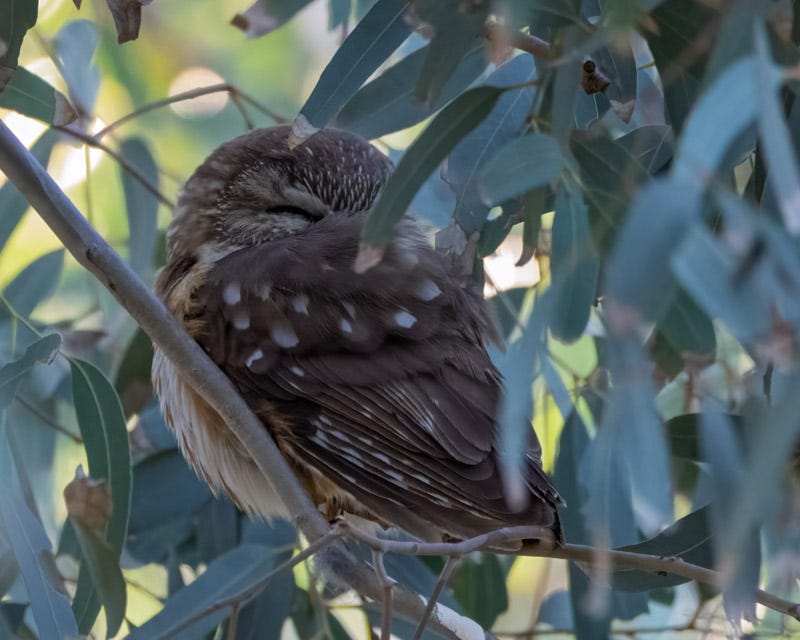
Every once in a while you could find a better view from a different angle and when the leaves were blown out of the way.
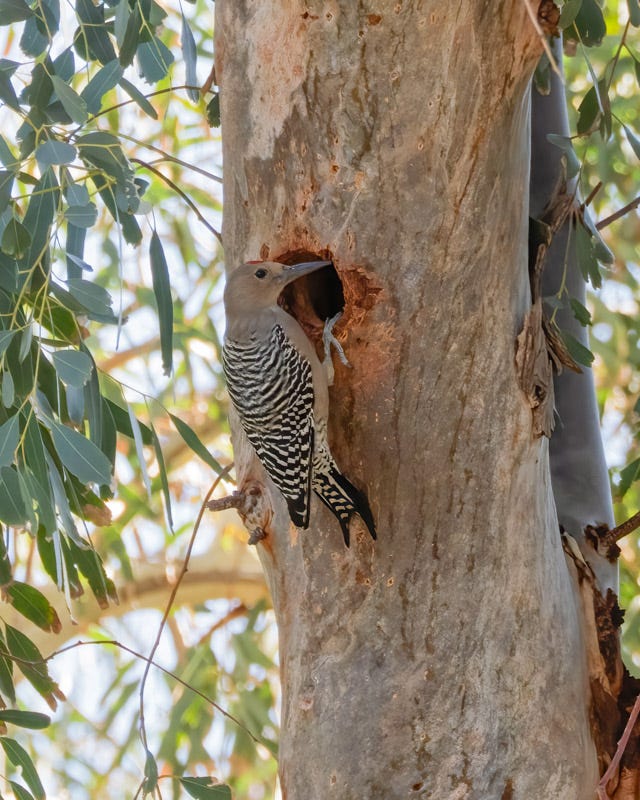
While at Agua Caliente, I did see other birds. A Gila Woodpecker was checking out an old woodpecker hole in a nearby eucalyptus tree.
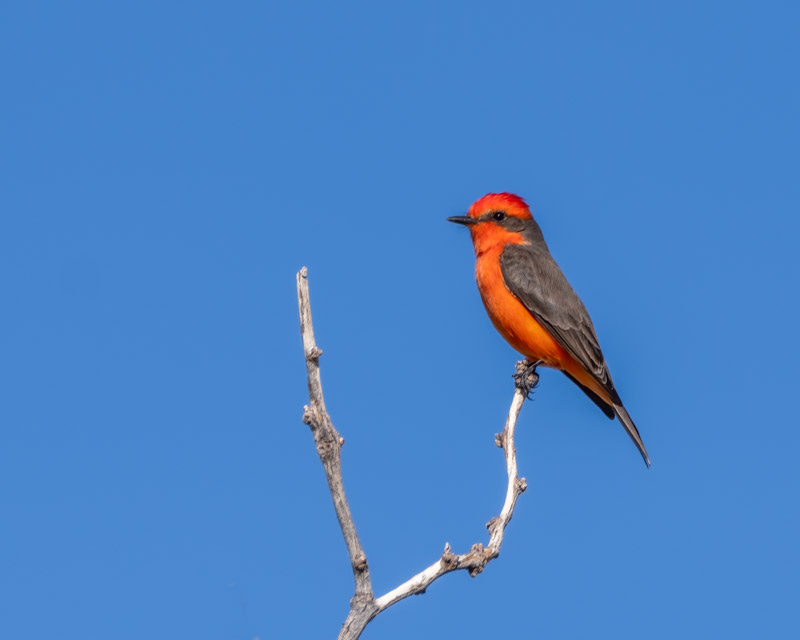
Vermilion Flycatchers are also at Agua Caliente, as they are at virtually every single park in Tucson.
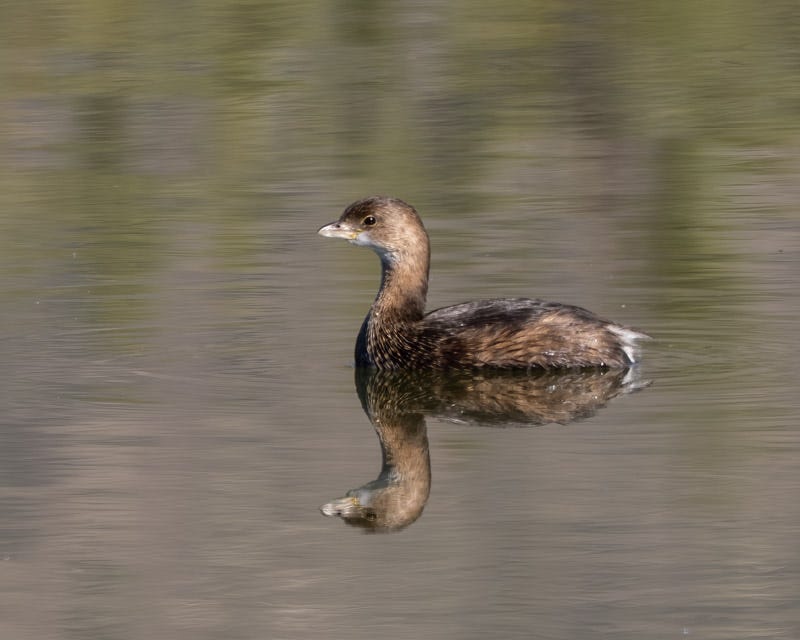
There are several ponds at Agua Caliente. Once fed by natural springs (including hot springs that gave the spot its Spanish name), the water is now supplemented by Pima County. One of the back ponds was very still and the water was calm enough to provide a mirror image of this Pied-billed Grebe.
Back to the Owl again. The bird has been staying in a very tough spot for photography, hidden in the shade behind leaves with the sun usually at its back. There are just a few small “windows” to see the owl through the vegetation. A week after my first visit I returned to the park on a surprisingly rainy morning. The sky was heavily overcast, making photography even more difficult than usual. With the breeze, leaves that were blocking the view of the Owl continued to sway in the breeze. Still, the Owl was there. During my two hour long visit, the owl slept the entire time except for two short moments where it awoke.
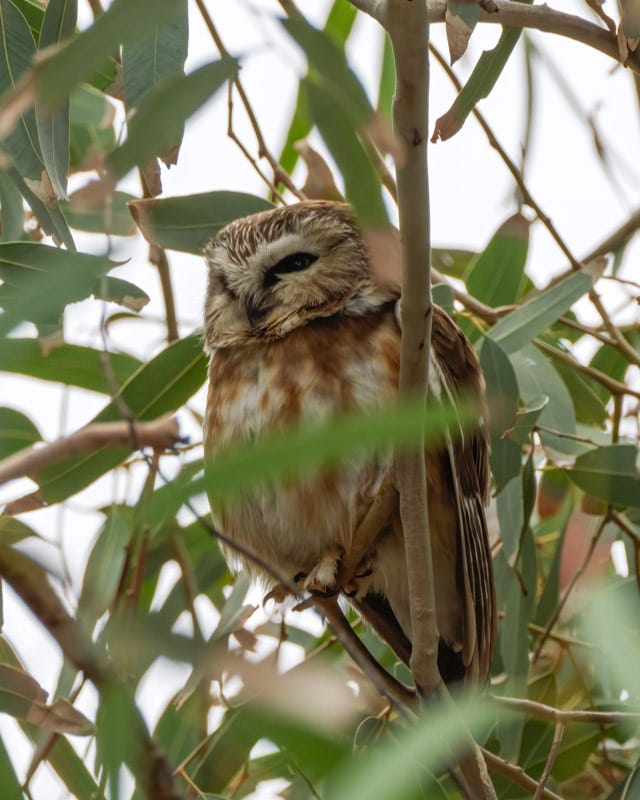
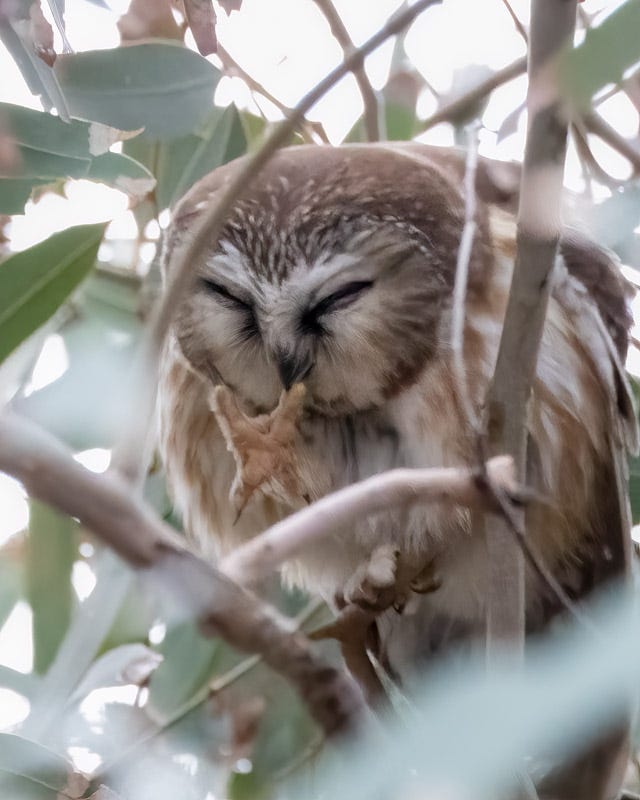
I don’t know about you but when I was growing up, I never heard anyone sharpening their saw with a whetstone. Apparently the bird’s songs and calls reminded early people of that sound and so the bird was named Saw-whet. Kenn Kaufman shares a bit about the Northern Saw-whet Owl’s name and history. The poor lighting resulted in some soft images of the bird, but I was pleased to see it waking up for a bit to preen.
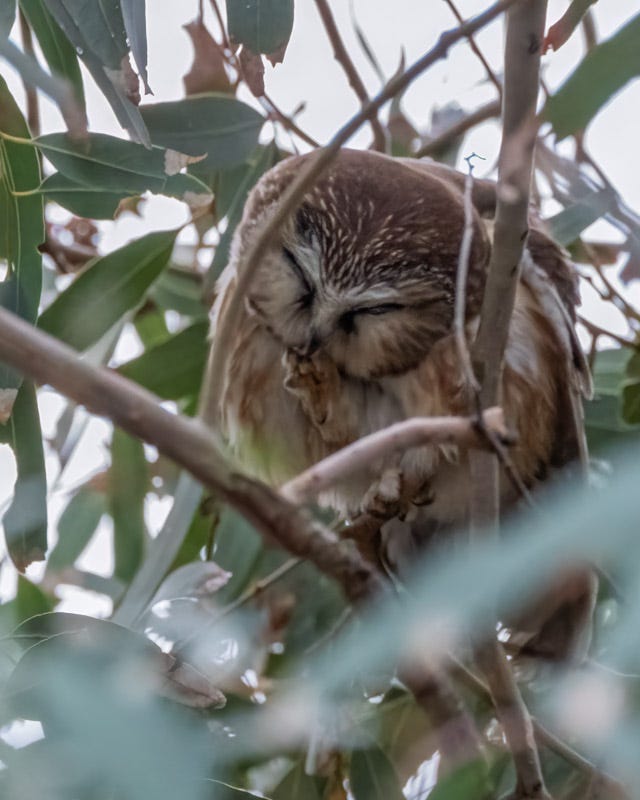
When a bird cleans itself, it cleans all of its feathers, even the ones on its toes. Here is the Saw-whet doing a birdie pedicure.
After waiting for two hours, I finally got a shot of the Owl with its eyes open for one brief moment!
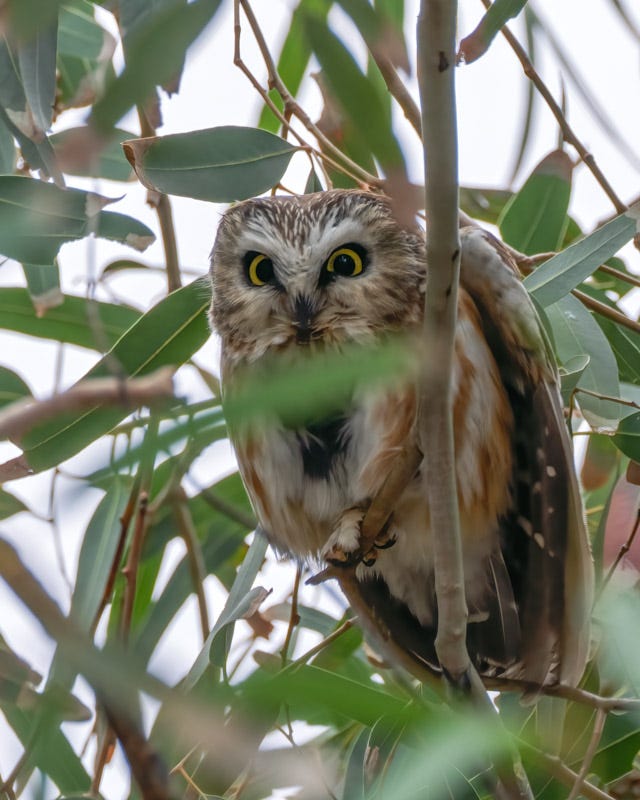
The owl looked around for a few seconds.
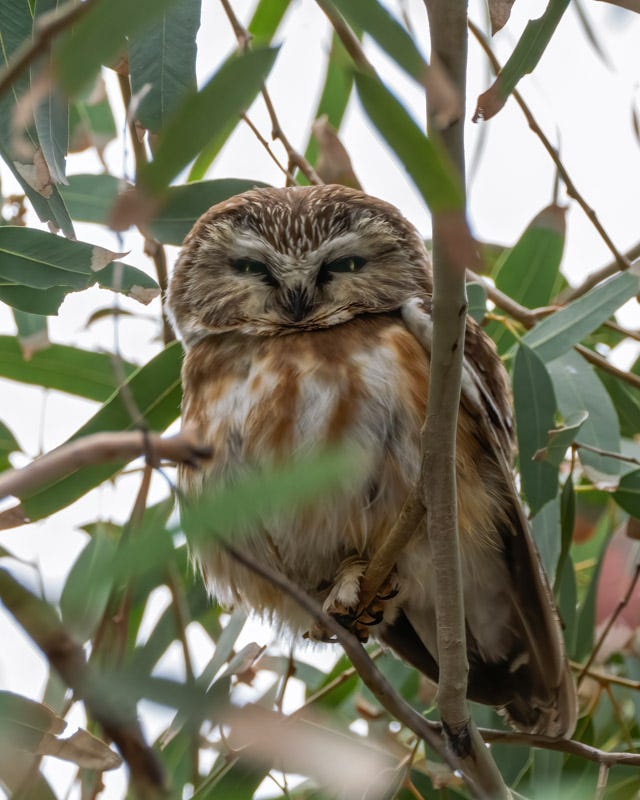
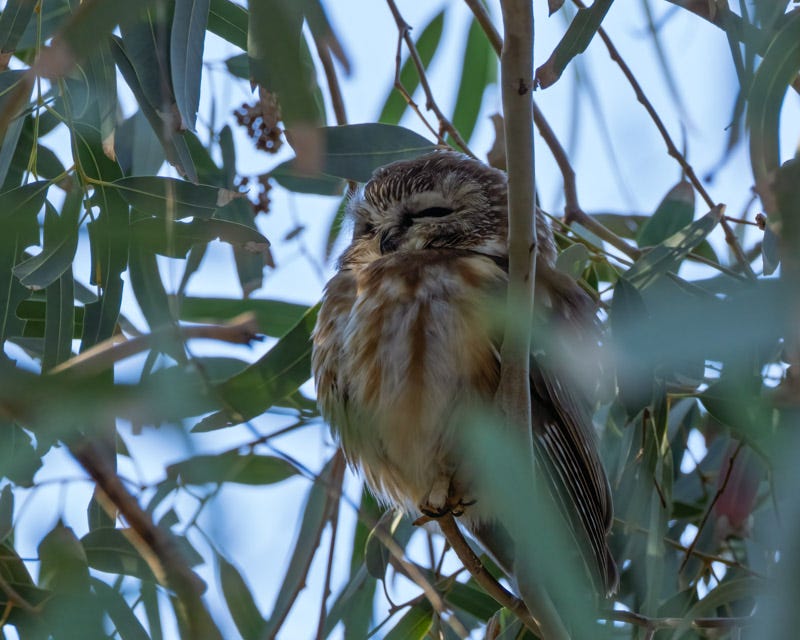
Mostly, the Owl spent its time sleeping.
The Peregrine Fund has a description of the Northern Saw-whet that includes this great line: “Let’s face it. It is hard to be any more adorable than a Northern Saw-whet Owl. Their big yellow eyes, disproportionately large heads, and almost cat-like faces give them an extra dose of cuteness that is unrivaled by most.” More from the Peregrine Fund here.
That is a special bird in a special place. I am hoping that this Northern Saw-whet Owl has a successful winter in the park. There is a very good chance I’ll return again to try to get another look at it.
What a rare opportunity and such cute shots of the owl!
Have to agree that this owl has a very high cute factor! Appreciate your patience and the reward by getting such great pictures! Happy picture taking in 2026!