

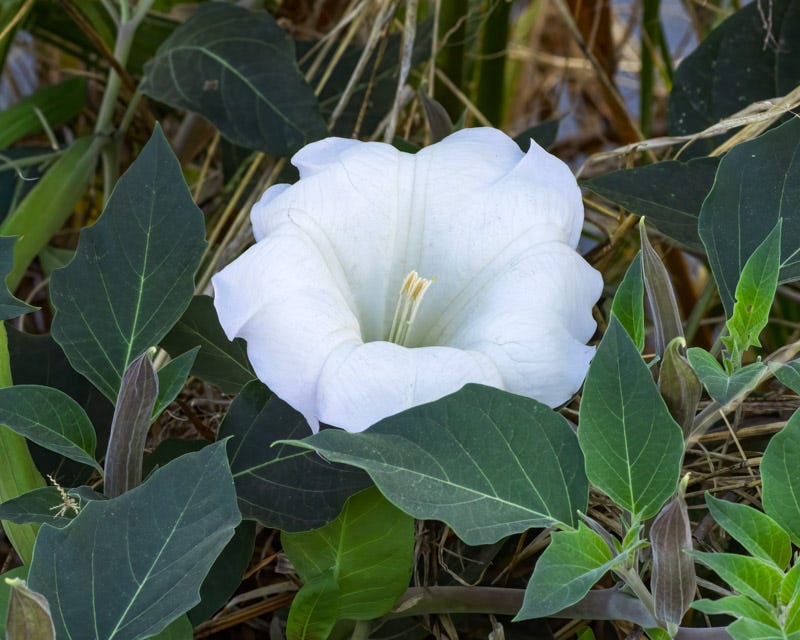
Jimson Weed, or Sacred Datura, is a very striking perennial plant in the desert. The large, dark green leaves offer a nice contrast to the large, funnel shaped flower. Hawkmoths pollinate the flowers and lay their eggs on the foliage.
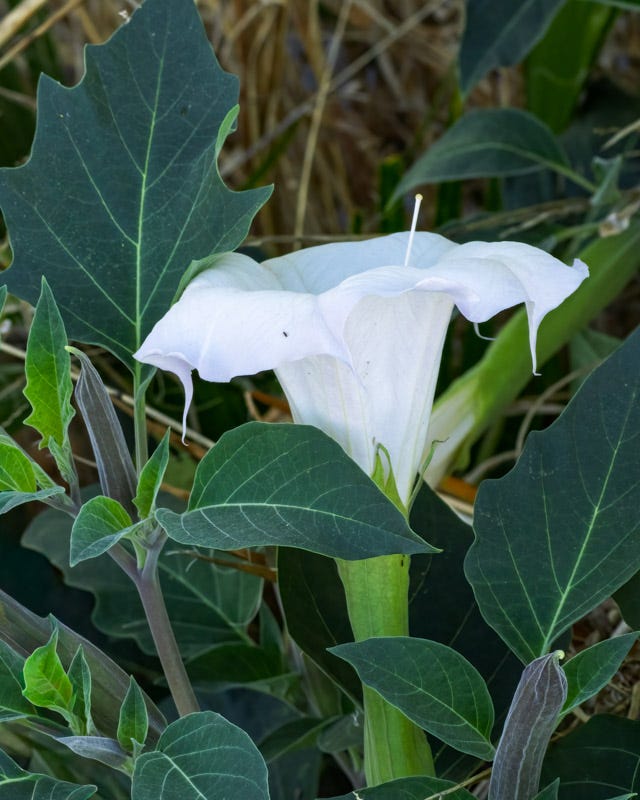
As beautiful as the Jimson Weed plant is, all parts of the plant are highly toxic. It shouldn’t be touched or handled in any way.
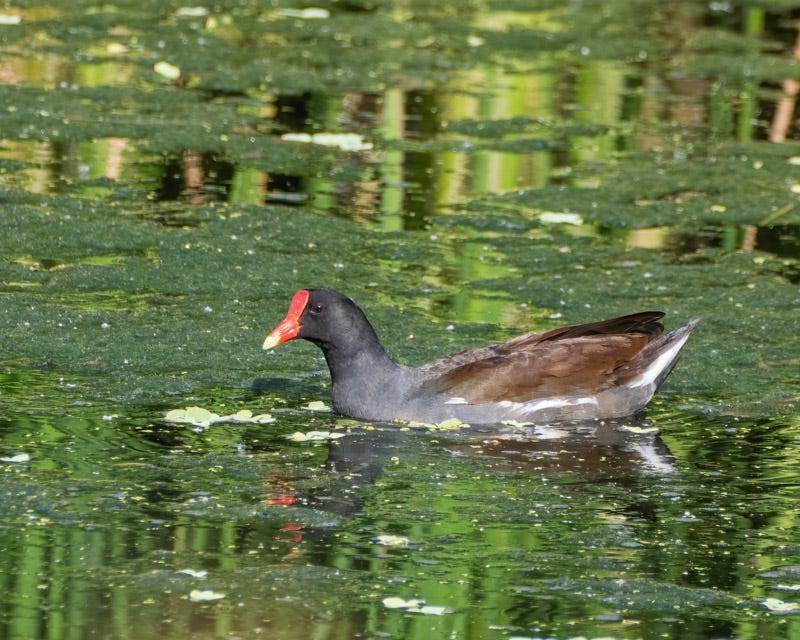
A Common Gallinule has been present in one long stretch of water on the south of the preserve. Common Gallinules are related to American Coots. They are both in the Rail family. These Gallinules are a lighter color than Coots and have a red bill with an orange tip.
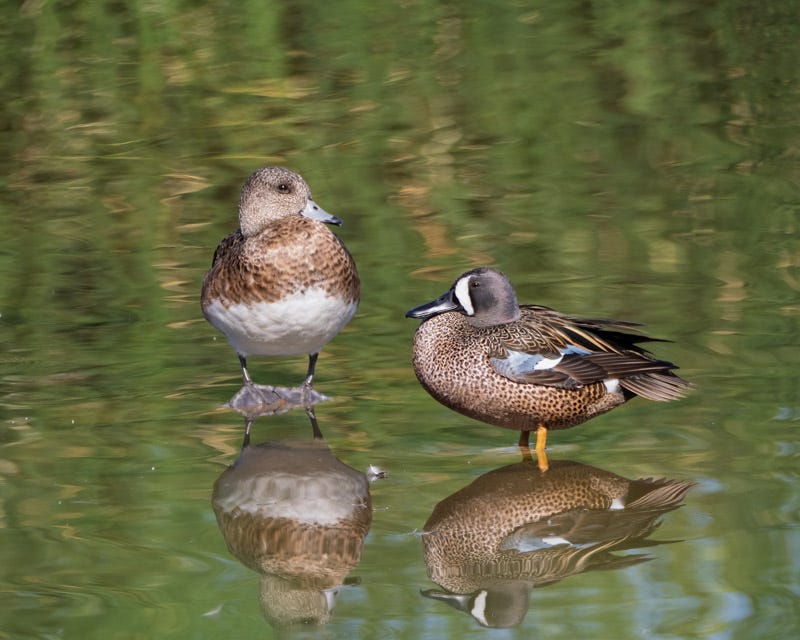
Two ducks with pastel blue stood side-by-side. A female American Wigeon has a light blue bill. The male Blue-winged Teal is showing the blue on its wing. Both ducks should be leaving town any day now and heading back to their summer grounds.
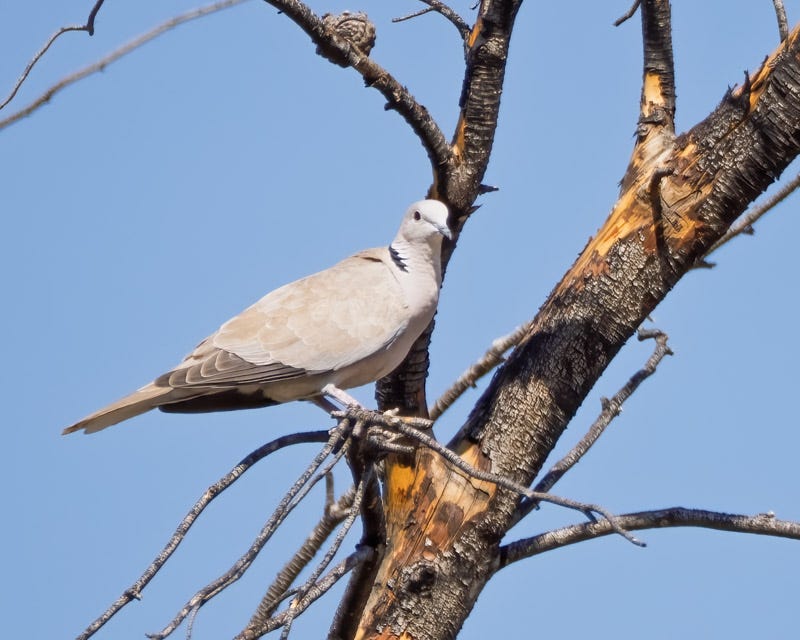
The Eurasian Collared Dove is a large relative to our Mourning Doves. As the name implies, they have a black collar and they are not native to the Americas. A few doves were introduced to the Bahamas in the 1970’s. They made their way to Florida by the 1980’s and then spread rapidly throughout most of North America.
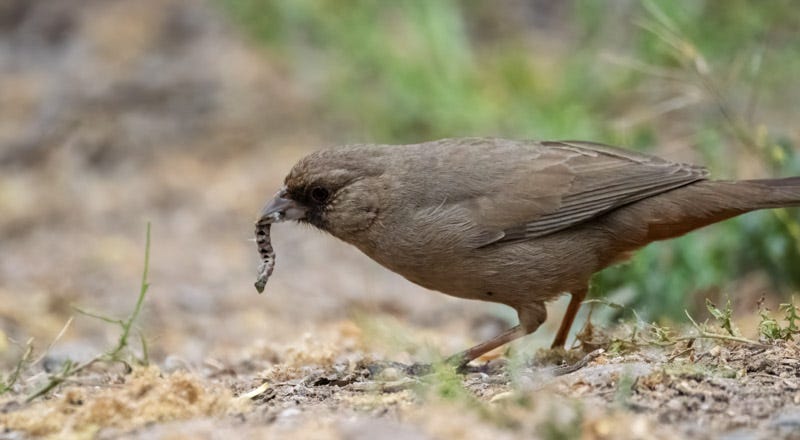
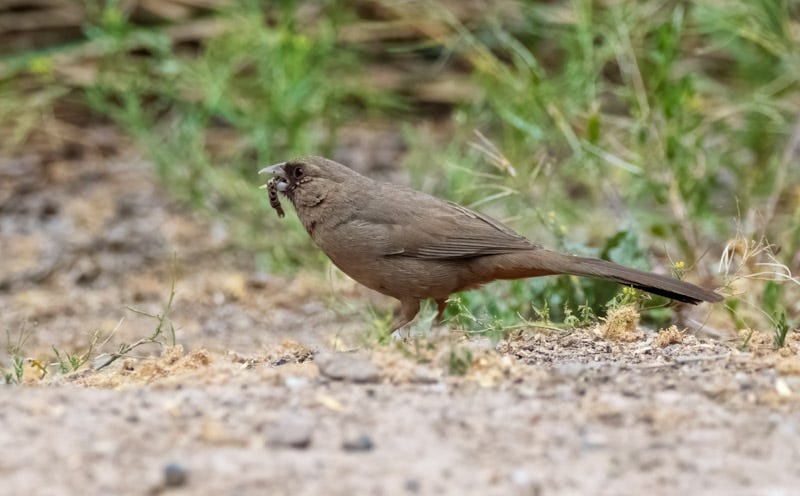
Abert’s Towhees are one of our native desert birds. Usually found in pairs, they can be seen under thick brush and can be found kicking up dirt to look for food. This Abert’s found a nice sized caterpillar.
Seems like that Abert’s is enjoying its treat.
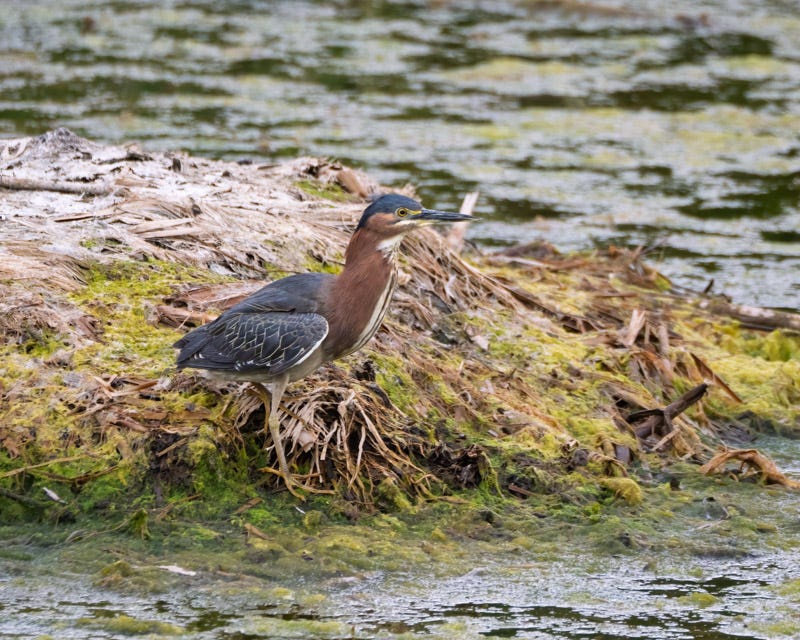
I came across this Green Heron shortly after someone reported it. It had swallowed a bullfrog. It definitely was not hunting at the moment.
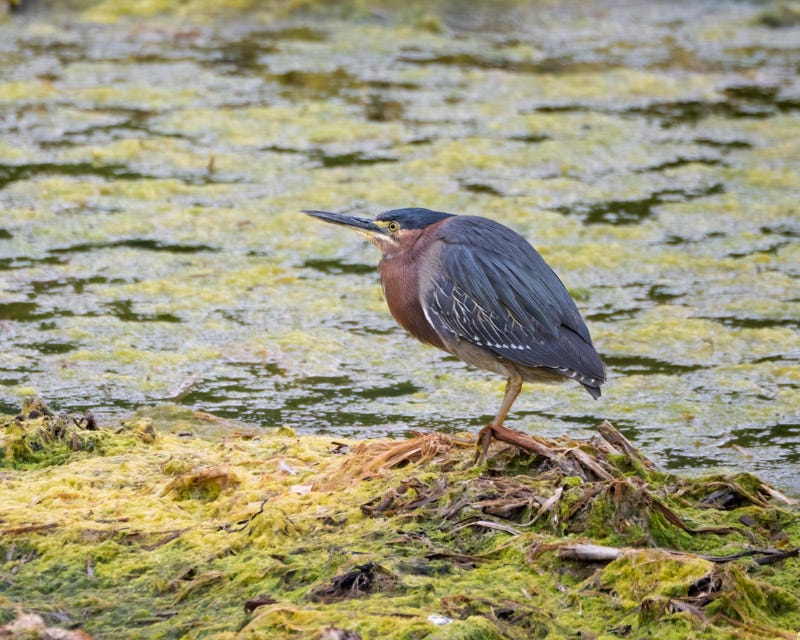
A few minutes later and the Green Heron was walking around. It did make a half-hearted attempt to grab something small in the water. Generally though, it was walking around looking at the world and not focused on finding food.
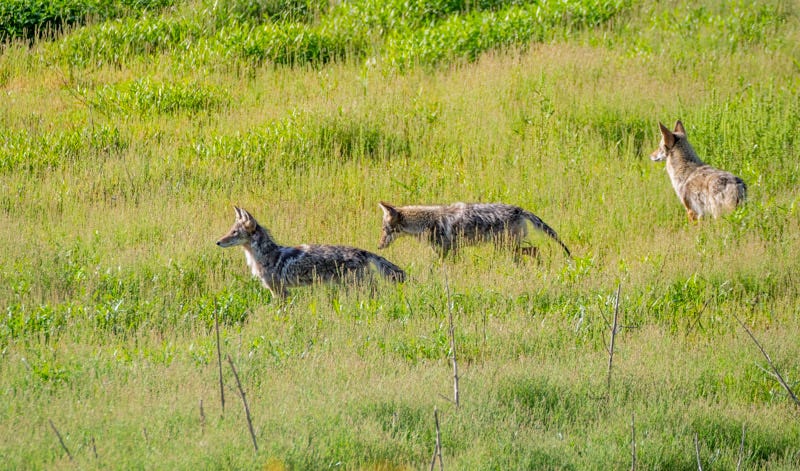
There are several large “settling ponds” at Sweetwater. They were originally designed and used as the place where clean water was pumped into and then allowed to settle down into the underground aquifer. Now, new processes and equipment are cleaning the water better and it is being released directly into the Santa Cruz River. The settling ponds offer a nice spot for this family of coyotes to hunt for rodents and other small prey.
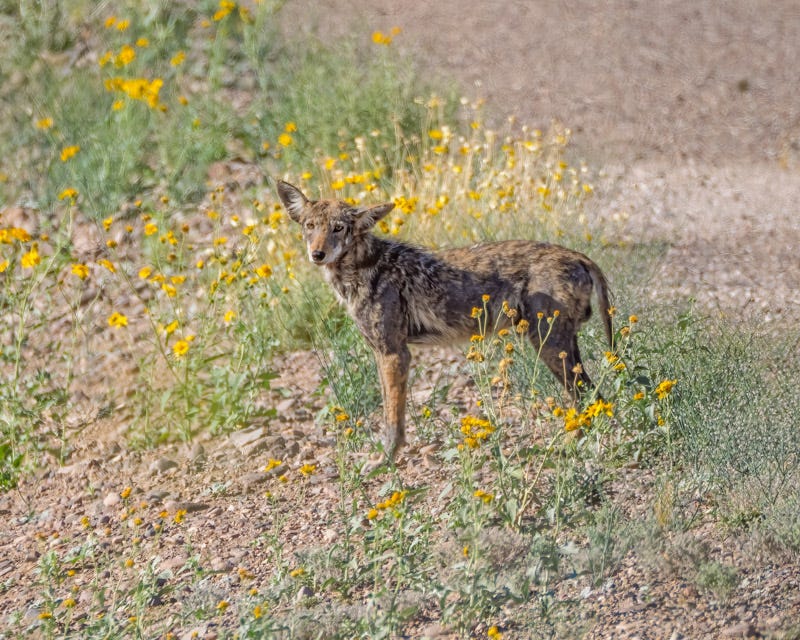
A young Coyote paused before joining the family. It looks as if it is losing much of its thick winter coat. It is the right time of year for the Coyote to be molting and that straight line across the top of its leg hints at the molting process.
Sweetwater always has a variety of delights.
A nice variety of beautiful sights. I especially like the flower. Striking.
Very fine walk, indeed. I love visiting Sweetwater, a little less now than I used to as they don't want people to bring their dogs onto the property -- at least the last time I was there the sign was up. As for the coyotes, I can't help but notice that Arizona's coyotes have ears that appear longer, taller, and less furry than the ones in my neighborhood in Illinois and Wisconsin. BTW, last time I was at Sweetwater, we saw a nice bobcat along with oh-so-many birds species.