

The brown mottling on this juvenile Burrowing Owl’s breast shows that it is beginning to grow in its adult plumage. This Owl was part of the small family living a half mile or so from the Martin Farm.
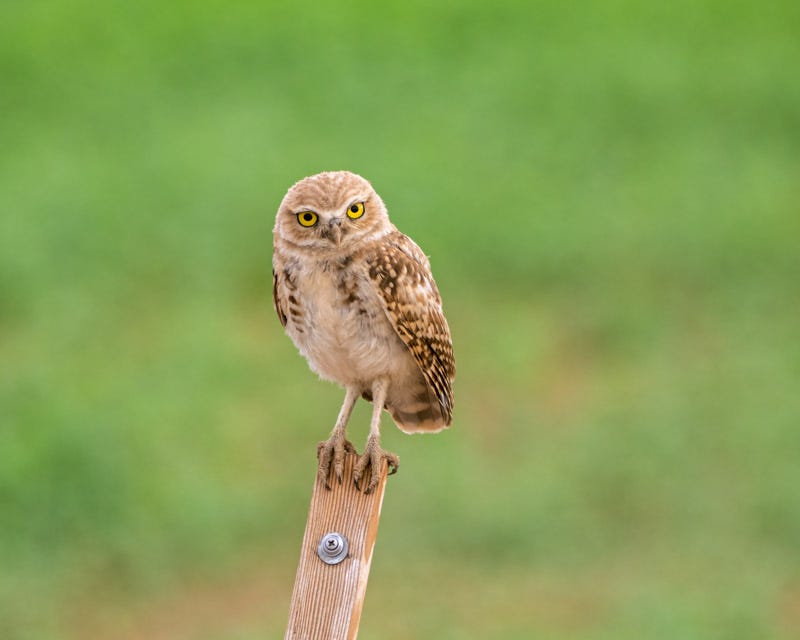
You can see that its feet are muddy from running around on the wet fields. Burrowing Owls will help to clear or dig and renovate their burrows. Mostly they prefer to use existing homes that were made by other animals, but they can use other empty underground spaces and scratch out or shape their own tunnels. Irrigation ditches provide a strong roof for those burrows. During our hot summers, the flooded irrigation ditches provide another layer of cooling for the burrows.
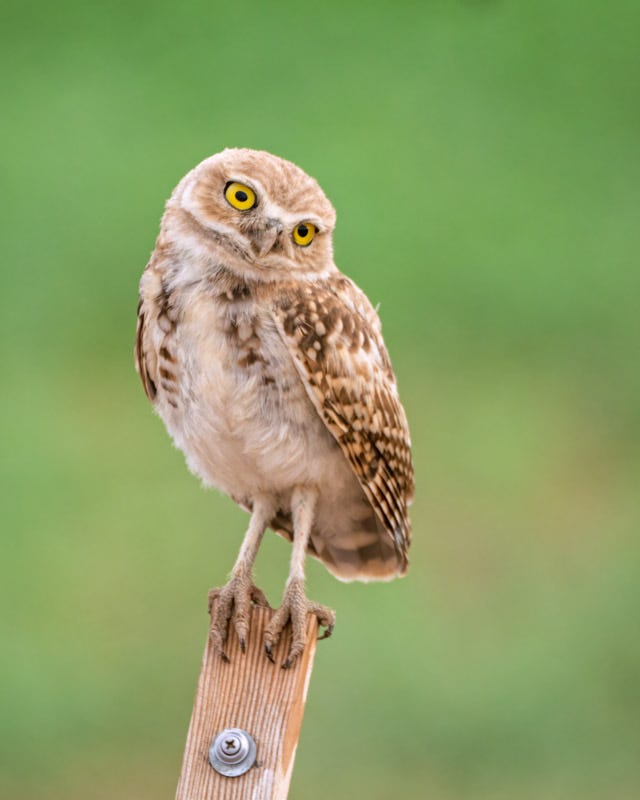
This looks like the same Owl, but on a different perch and with trees in the background rather than the farm fields.
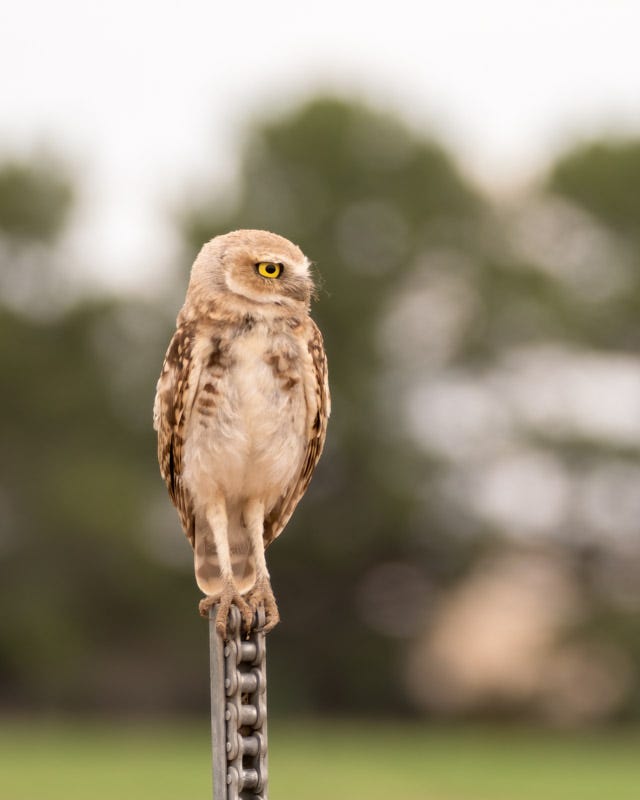
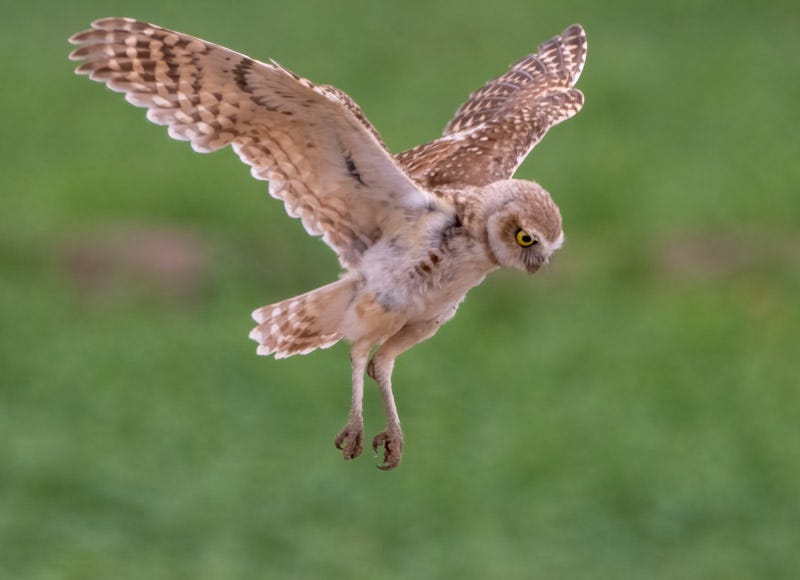
The young Owl took flight and headed towards yet another nearby perch. Burrowing owls have an average wingspan of up to two feet.
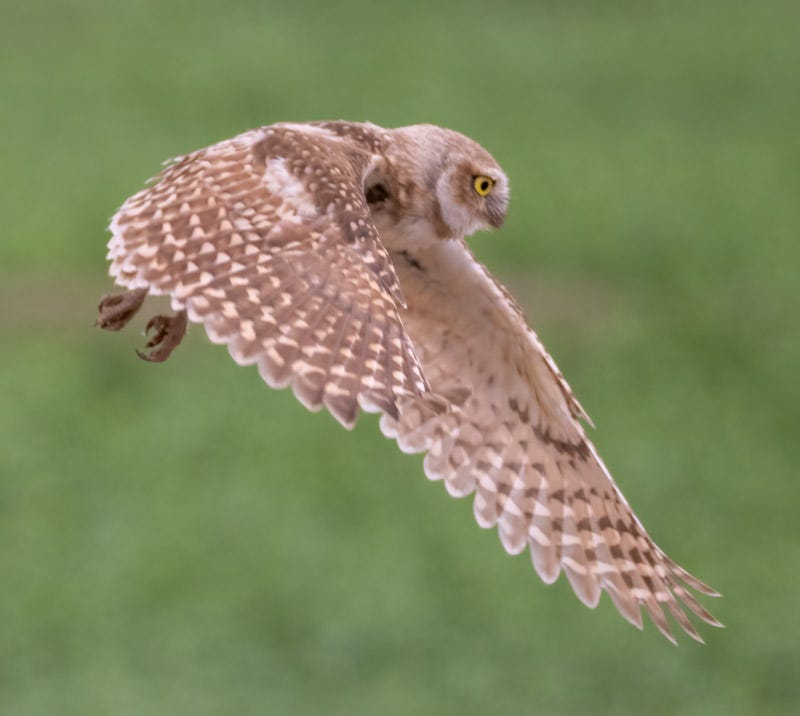
A bird’s length is determined by the distance from the tip of its bill to the end of its tail when the bird is laid flat on its back. Burrowing Owls range from about 8-11 inches long. This Owl is getting ready to land.
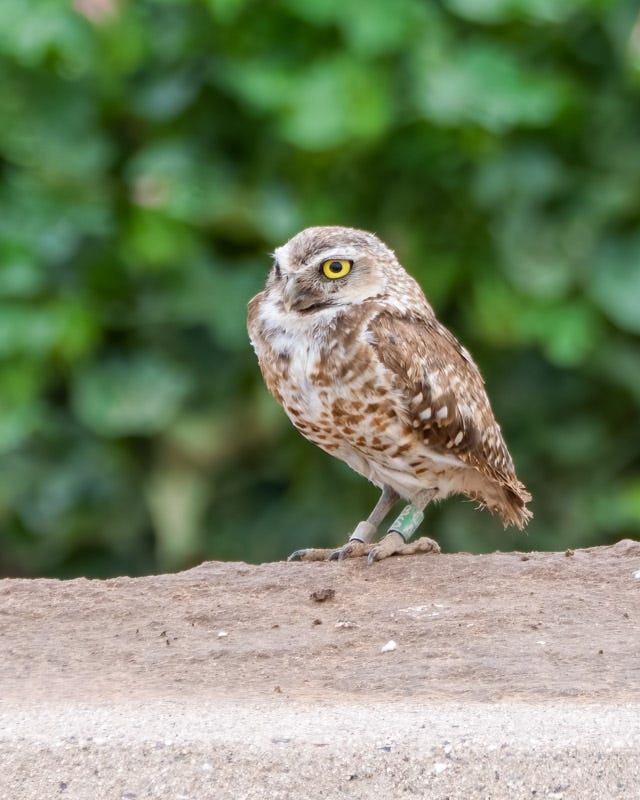
A mile or so away I found another Burrowing Owl family. Part of what makes Burrowing Owls appealing besides their looks is their body movements and actions. Here, this adult female is crouched down and looking rather squat. It is standing on some dirt piled up outside the burrow’s opening. You can make out the edge of the irrigation ditch- that white line in the forefront of the photo. The greenery is Pima Cotton, a common crop in southern Arizona.
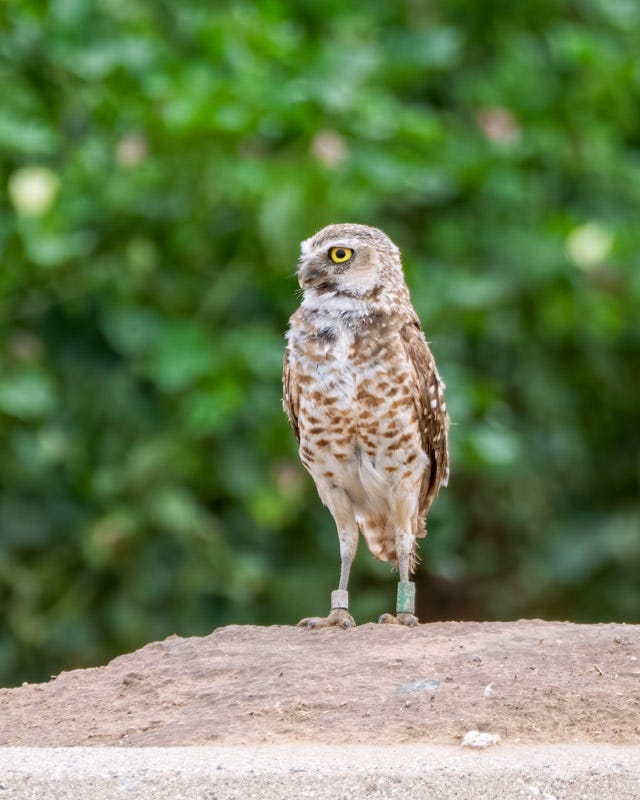
Suddenly, she reacted to something and stood as tall as she could! I don’t know what alerted her. She looked like a different bird from the one seen moments prior.
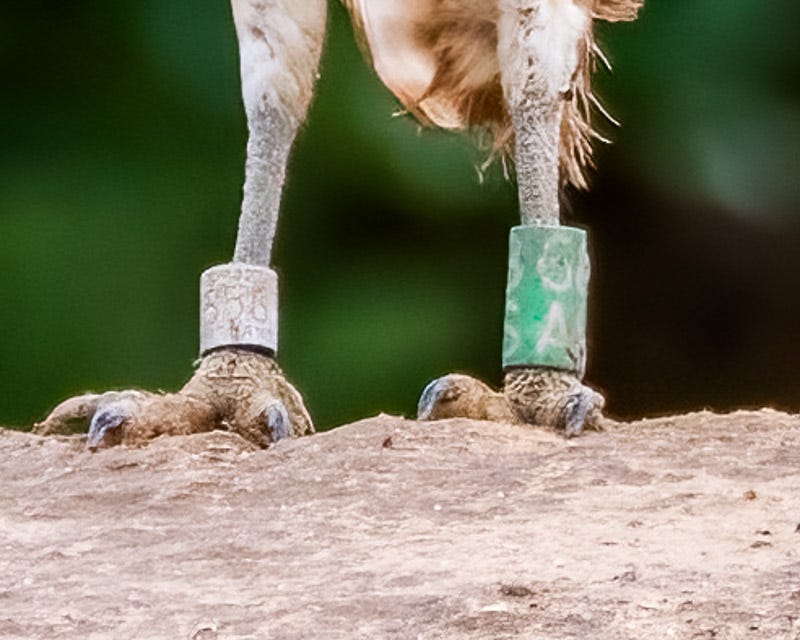
You may have noticed the bands that she was wearing on her ankles. I first saw this same bird several years ago in the farmland northwest of Tucson. At that time, I wrote to Wild at Heart giving them her ID information and asking about her history. They replied with, “That Burrowing Owl (GR 86/AS) was live trapped to be relocated on 12/16/23 from near the town of Maricopa. She is a female and was released on 1/20/24 near the Gila River, north of Gila Bend.” So she was rescued from Maricopa, a small farming community in the Gila River Valley about 35 miles south of Phoenix. She was released one month later at a location near Gila Bend, about 40 miles west of Maricopa. Shortly afterwards she made her way 87 miles south to Marana where she found a family and there she remains three years later!
Meanwhile one of her youngsters is in its own world, squinting, hunched over and with one fist balled up. I wonder what was going through its mind?
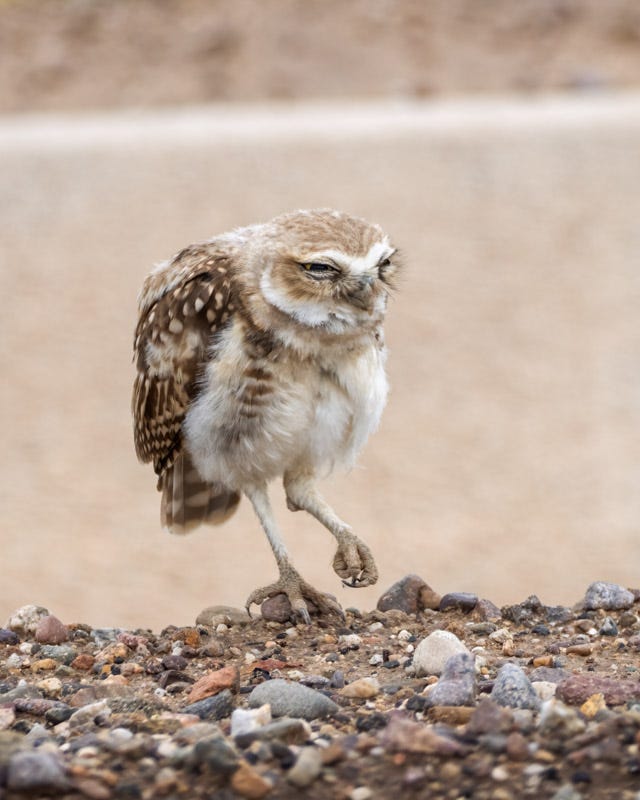
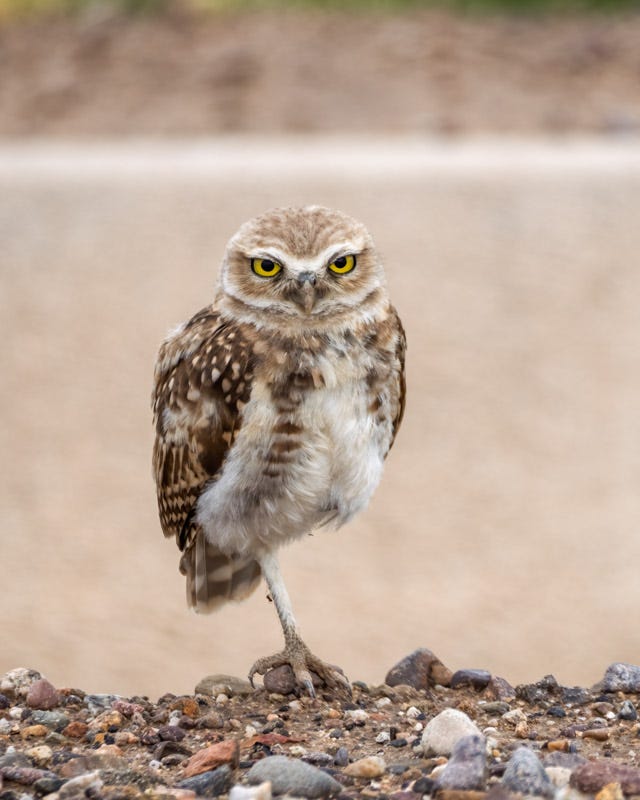
And just as suddenly it “woke up” and looked towards me. It was very relaxed and didn’t seem to know or mind that an ant was crawling up its leg.
I lead a field trip to this area every year for the annual Southeast Arizona Birding Festival. I will be visiting the site a few more times between now and the Festival in order to scout the area and be prepared.
Stunning shots. I love how mesmerizing their eyes are. They just lock you in. Thanks Dan!
It's great that you documented the banded owl's travels! I hope she is happy in her current home.