

...I did not know that some songbirds also did this. I knew that Owls ‘coughed’ up pellets. Owls swallow their prey whole or in chunks. While their stomach breaks down soft tissues, indigestible materials like bones, feathers, teeth, and fur are collected in the gizzard which compresses those materials. An Owl will cough up (regurgitate) a pellet from its gizzard once or twice per day. In 2017, I saw a Western Screech Owl shortly after it emerged from a nest box in my yard. It had flown to my porch light where it coughed up a pellet.
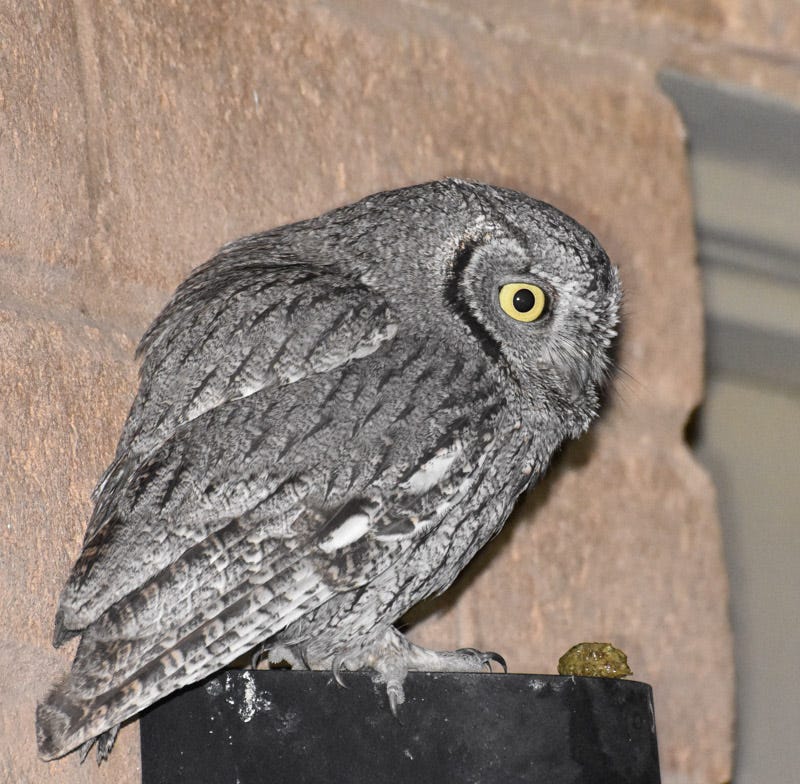
This isn’t something that is easily observed but I did catch a Western Screech Owl casting a pellet in my backyard two years later in 2019. Look closely in its mouth.
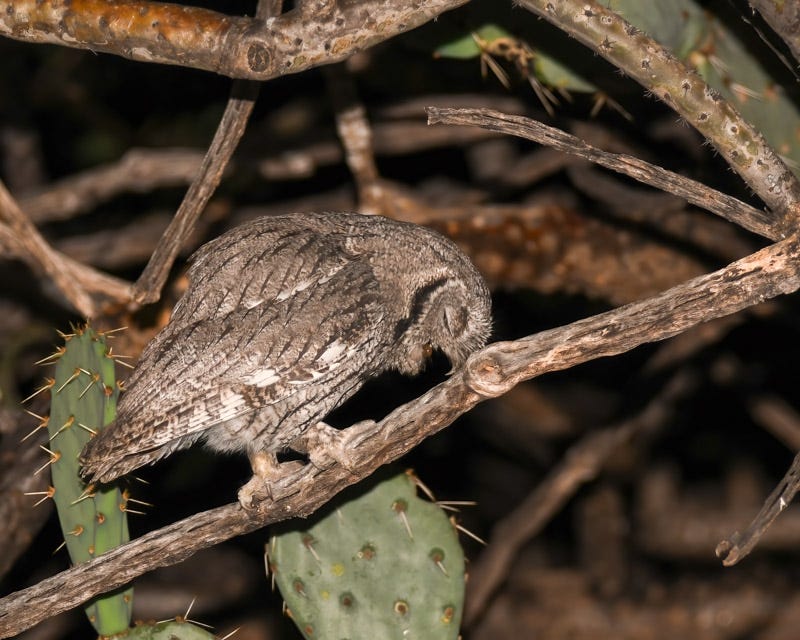
A few months after capturing that photo, I watched a female Vermilion Flycatcher in a park behaving strangely. My instinct was to quickly take photos, which I did. Later at home while processing the photos I saw the image below. A bit of research revealed that I had witnessed the female Vermilion expelling a pellet. While I didn’t see the actual pellet, the bird’s behavior clearly showed her working to expel the pellet.
What I learned was that other species of birds besides owls and raptors also expel pellets. Crows, Herons, Gulls and Kingfishers cough up pellets. Many songbirds, including ‘my’ Vermilion Flycatcher, also cough up pellets. Those pellets contain indigestible material such as insect exoskeletons, berry husks, etc., depending on the birds’ diets. Pellet casting is an essential digestive part of those birds’ healthy lives.
Although all raptors cast pellets, Owl pellets are often more intact because Owls have weaker stomach acid and generally swallow prey whole. In many schools, students have dissected Owl pellets as part of their Science curriculum. To get a sense of what treasures you can discover in an Owl pellet, watch this short video from the National Audubon Society on “The Amazing Owls”. AYou can purchase Owl pellets on Amazon if you so desire!
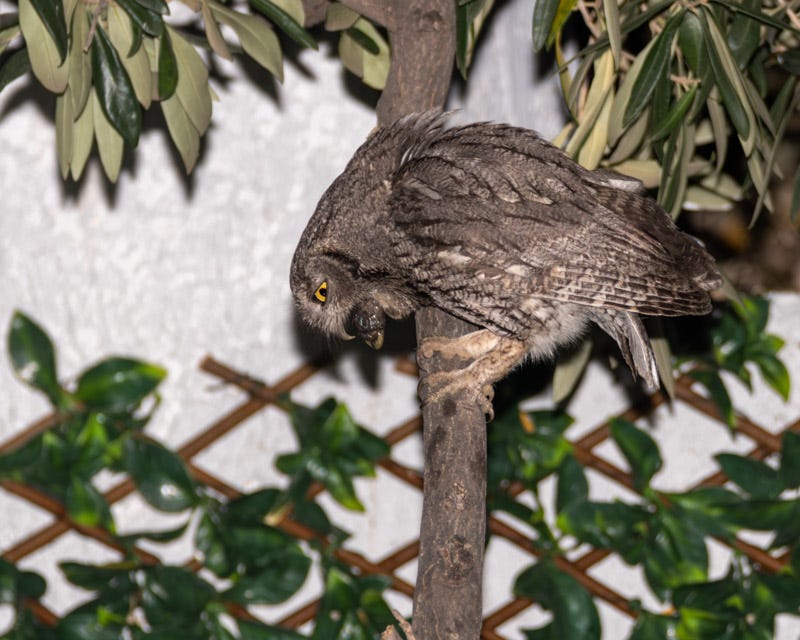
Here is a photo I took in 2023 in a friend’s backyard. Again, I was very lucky to capture this shot. I saw the Western Screech Owl leaning forward and I thought it might be trying to cast a pellet. I was right!
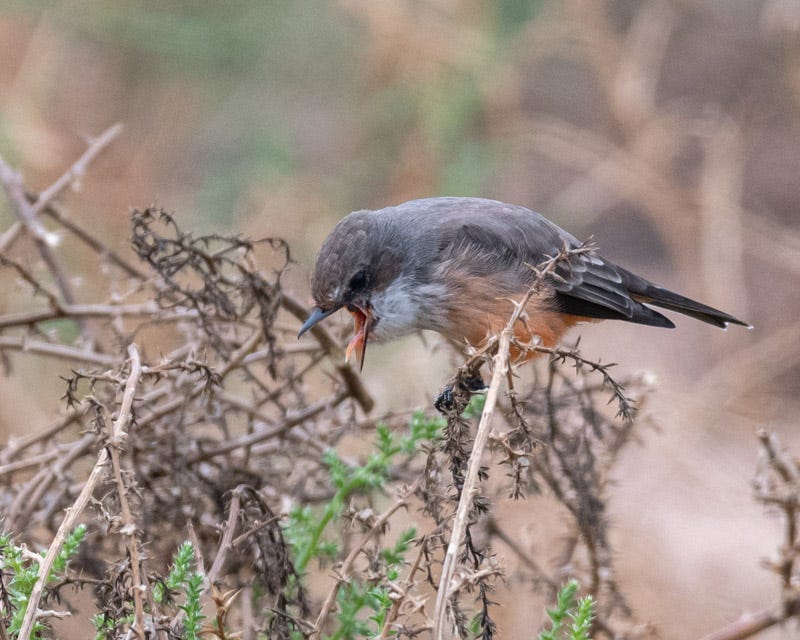
Why am I telling you about pellets? Recently I was out with some friends on our monthly bird outing and we saw a number of Vermilion Flycatchers. The males are outstanding sights. They can be found readily throughout Tucson on any open field including golf courses, city parks, school yards, ball fields, etc. They are always pleasing to see.
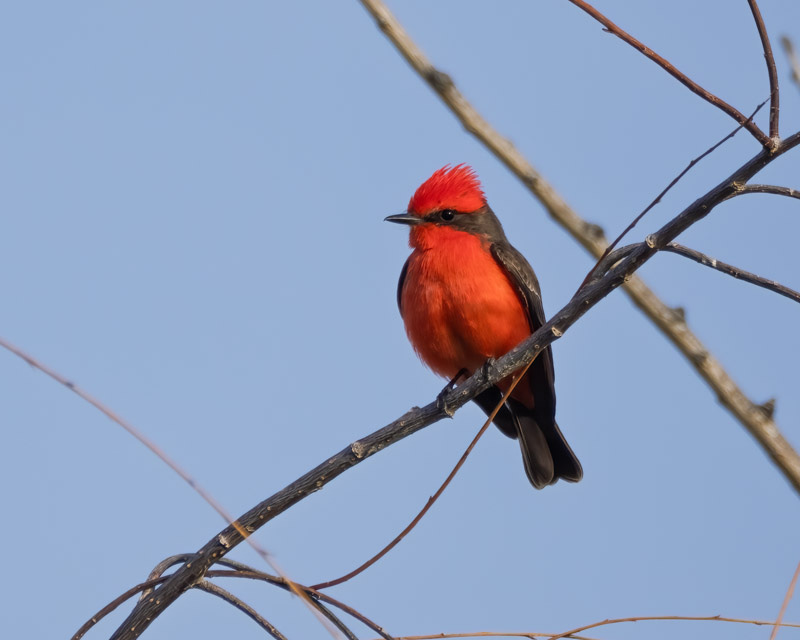
In addition, there were a number of female Vermilions around. While not as brilliantly colored as the males, the females do have a special beauty about them. This one had caught an insect for a snack.
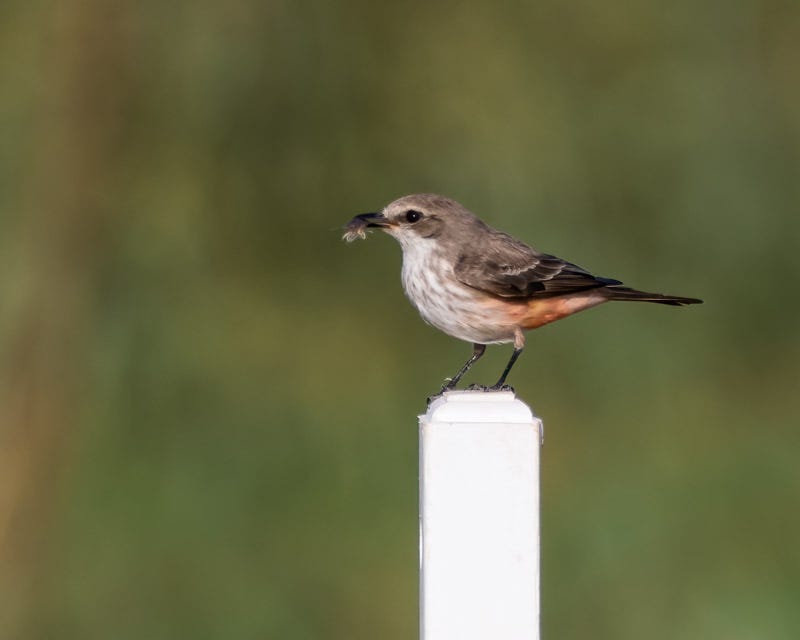
I’m not sure whether or not she ate the insect, but as I watched this bird for a while I got an inkling that something special was going on. I held down my shutter release button to get a series of photos. What I captured was the bird casting a pellet. Again, I didn’t know what was happening until I got home to process my photos. The action happens so quickly.
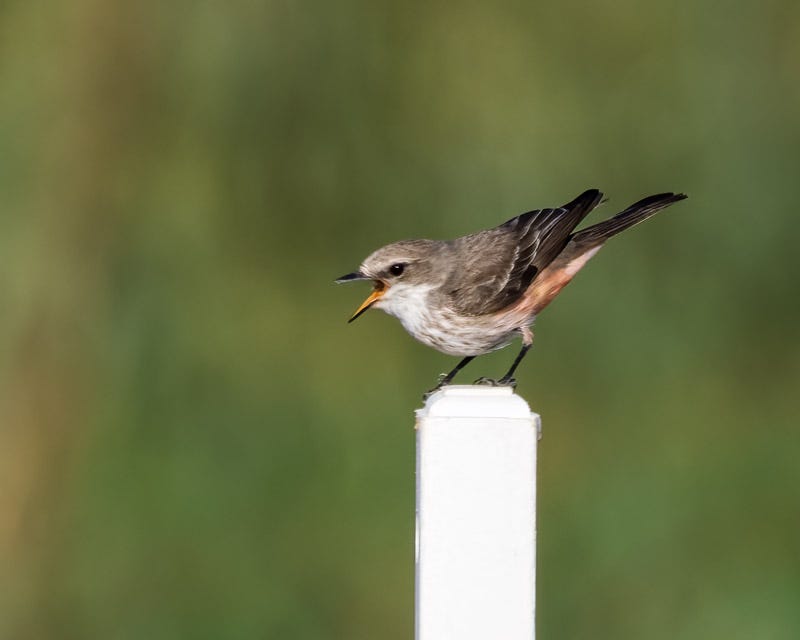
Here, the pellet is finally emerging.
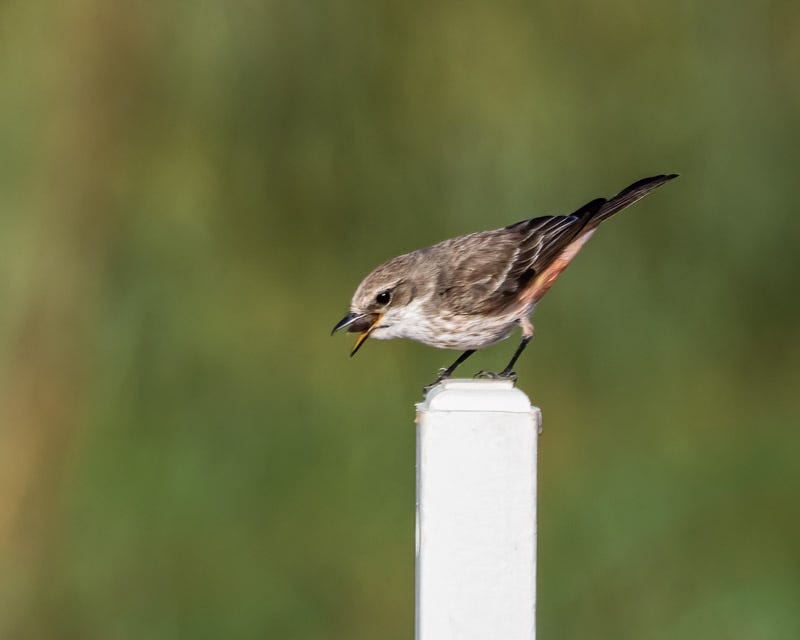
When the gizzard is full, it blocks the digestive tract. That’s a signal to the bird that it’s time to cough up the pellet. With her throat ‘cleared’, the Vermilion can now relax. More importantly, she can now continue eating!!
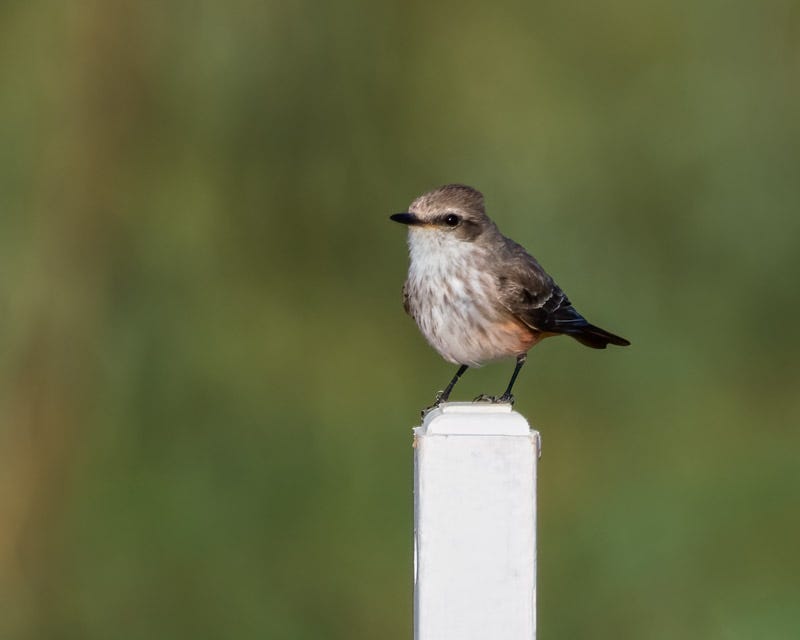
And so she flew off and went about her day.
With all of the hours I’ve spent birding and all of the photos I’ve taken over the years, witnessing a bird casting a pellet is a matter of luck. The process is fast and hard to see even if you are fortunate enough to be watching a bird. I felt lucky to have again witnessed another very normal part of these birds’ daily lives.
I loved reading this and all the photos are fantastic!
Dan,
Years ago, I had the pleasure of taking my daughter to TUSD1's Camp Cooper; one of the activities was dissecting owl pellets and we found complete mouse skeletons inside the pellets, very cool! The funny thing was most of the kids that day were monolingual Spanish, one of the kids yelled out, "es la Caca" and that was the end of the experiment. Couldn't convince them any different!