

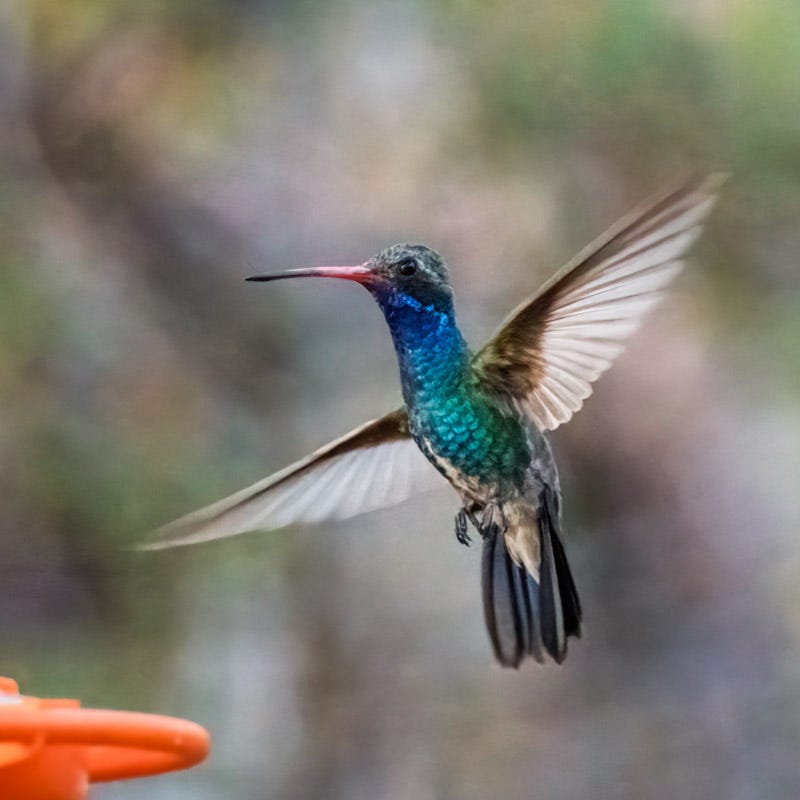
As usual, Hummingbirds are back to southern Arizona in numbers for the season. It is nice to see so many of them flying around again. Hummingbirds at a feeder often will perch, take a few sips, and then back off to hover in place before returning to the feeder port to feed once again. As this male Broad-billed Hummingbird was demonstrating, he would back up to look around for predators or for other aggressive Hummingbirds before resuming to feed.
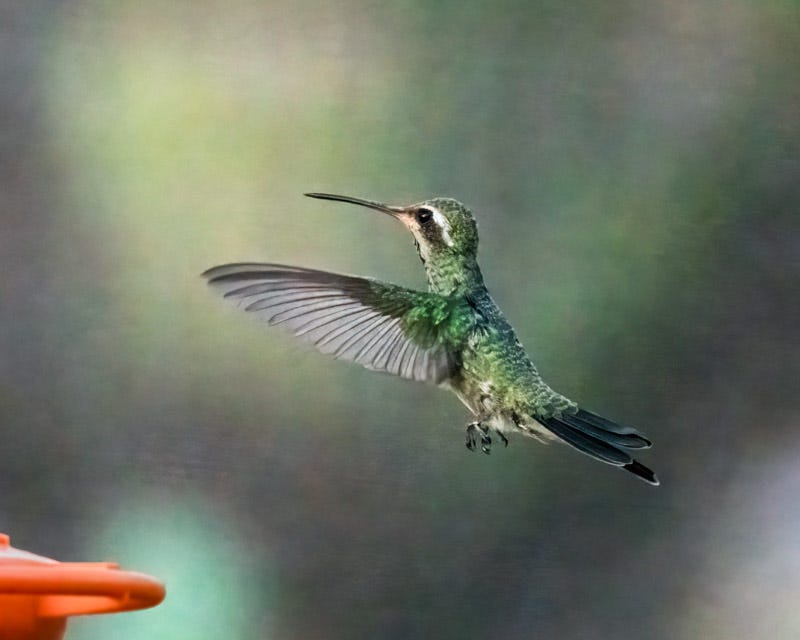
The female Broad-billed Hummingbird behaves similarly. Female Broad-bills do not have the bright blue plumage of the males. They do have a white stripe behind the eye.
The female Broad-billed Hummingbird hovered to feed. Tubular flowers offer the perfect fit for a hummingbird’s long bill and specialized tongue. Flowers with this shape do not offer petals for bees and butterflies to land on but make their nectar available to hovering hummingbirds. These flowers also have evolved to have a higher volume of nectar than other flowers.
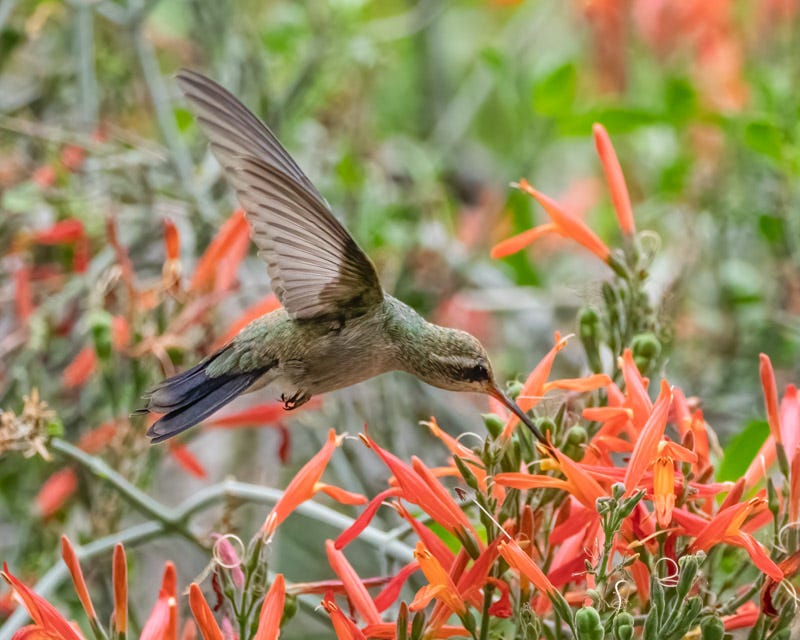
Hummingbirds are the only birds capable of long, sustained hovering as well as the ability to fly in any direction. This allows them to be able to drink from flower after flower in any grouping of flower clusters. Birdnote tells us more about the incredible flight skills of Hummingbirds.
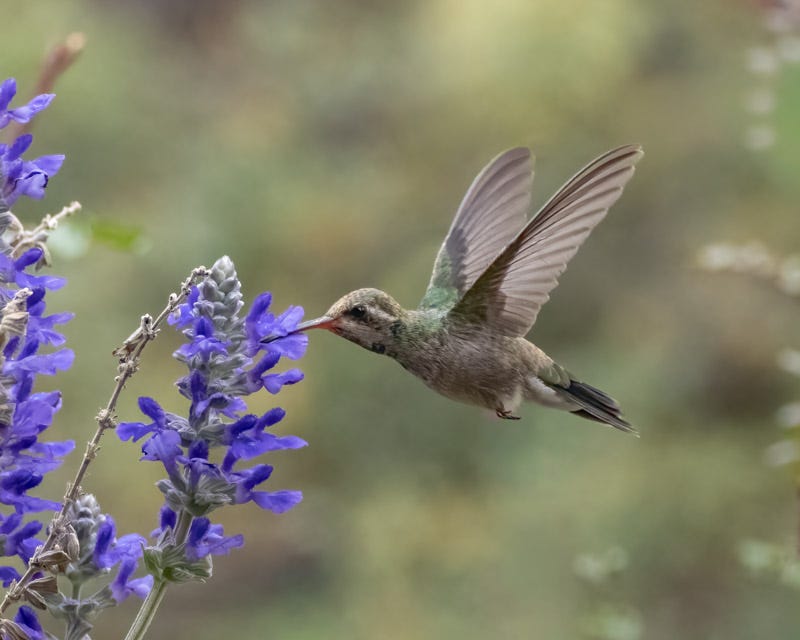
Hummingbirds are known for drinking nectar from flowers and that is what most people observe Hummingbirds doing. Besides feeding at flowers and feeders, Hummingbirds also eat insects! At this time of year if you observe closely you might see Hummingbirds flying around randomly in the air. Upon closer inspection, you learn they are hunting insects in the air. That food source provides protein and minerals to help build muscle, develop beaks, bones and feathers.
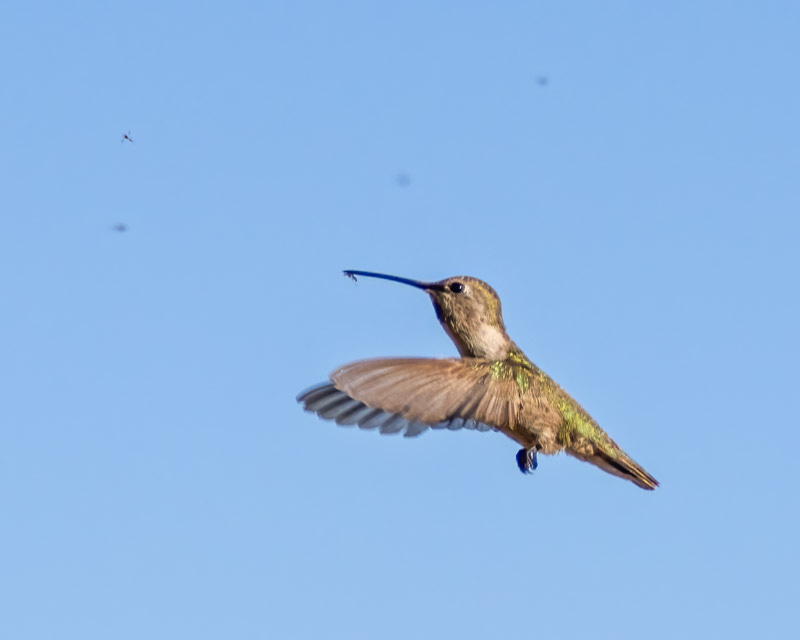
Most birds fly by flapping their wings up and down. Hummingbirds have evolved with a more complex system of flying as explained in this article. They rotate their shoulders in a figure eight pattern and they can ‘bend’ their wings at the wrist. These flight shots show the unique capabilities of their wings.
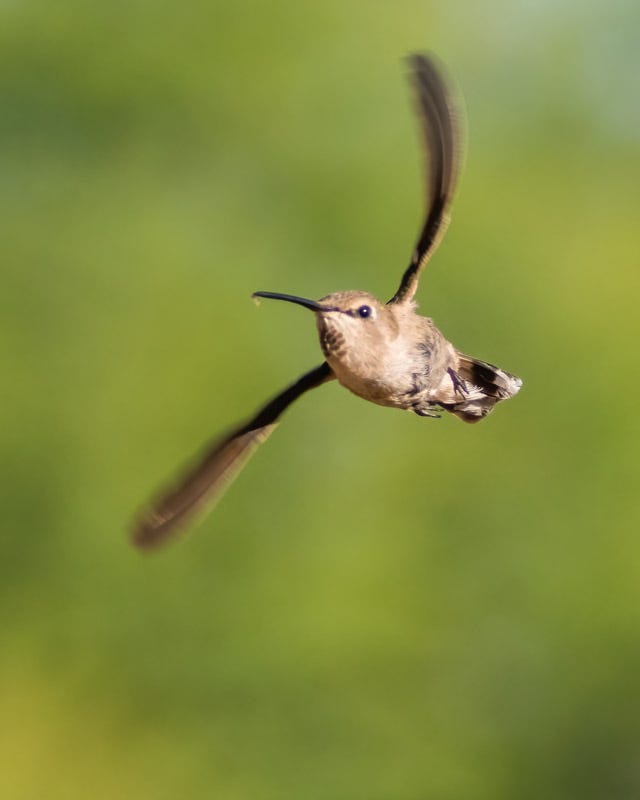
The Hummingbird’s head is still looking ‘straight’ forward even while its body is twisted and its wings are moving in separate directions. Hummingbirds have been measured to flap their wings up to 80 times per second while hovering and more than twice that frequency during courtship displays. My camera’s shutter speed was set at 1/3200 of a second. Even at that speed, it could not ‘stop’ the fast speed of the Hummingbird’s wings which remain a blur.
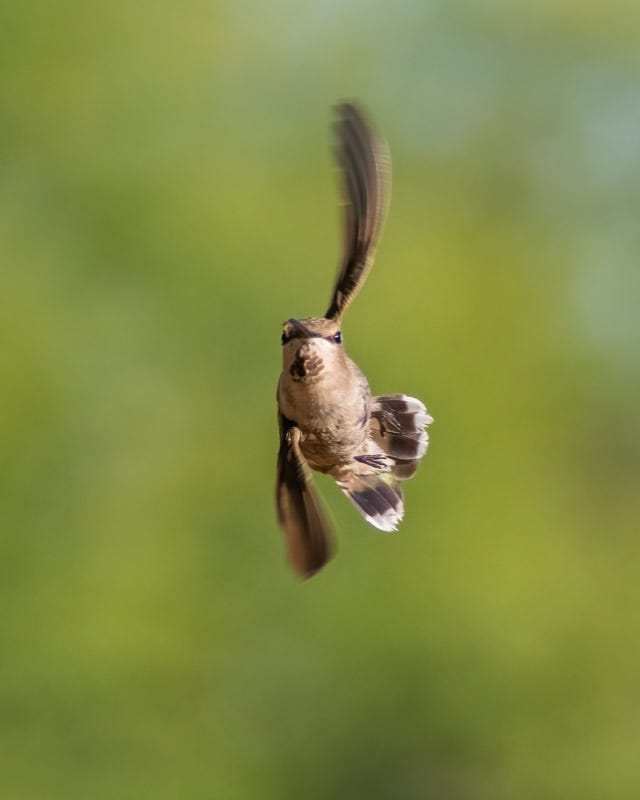
Those flight capabilities allow Hummingbirds to capture the tiniest insect that also may be flying erratically in the air. Studies suggest that insects may actually make up most of a Hummingbird’s diet with estimates of a Hummingbird consuming 1000 or more insects per day. Nectar provides the sugar and carbohydrates for their energy needs and insects provide the protein to build strong bodies.
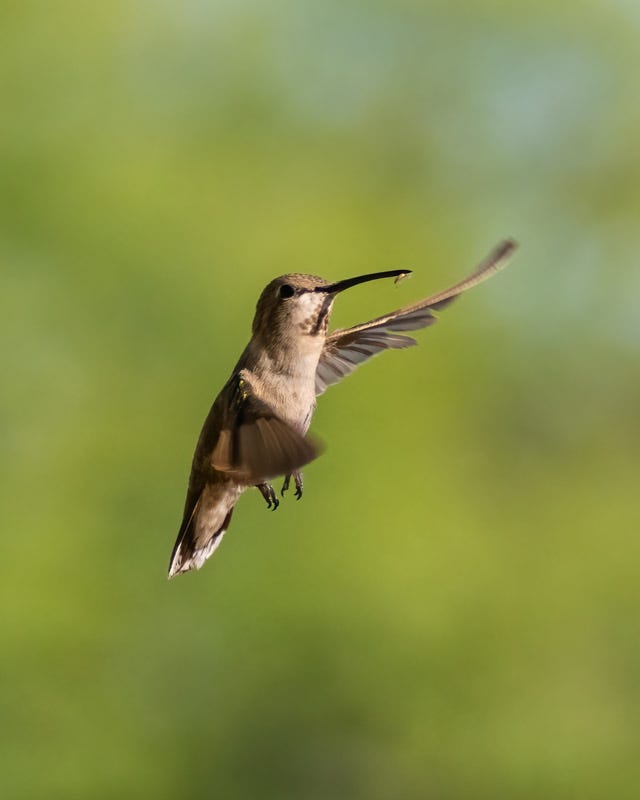
While watching the Hummingbirds feeding in my backyard, one of the regulars finally perched in the open where I could get a good shot of him. This is a young male Broad-billed Hummingbird, just beginning to grow out his blue feathers. While it was in the air and feeding, I hadn’t noticed the blue feathers. Once it perched facing the morning sun, the color of the feathers became apparent. At this angle, you can see how it got its name thanks to the bill which is very broad at its base!
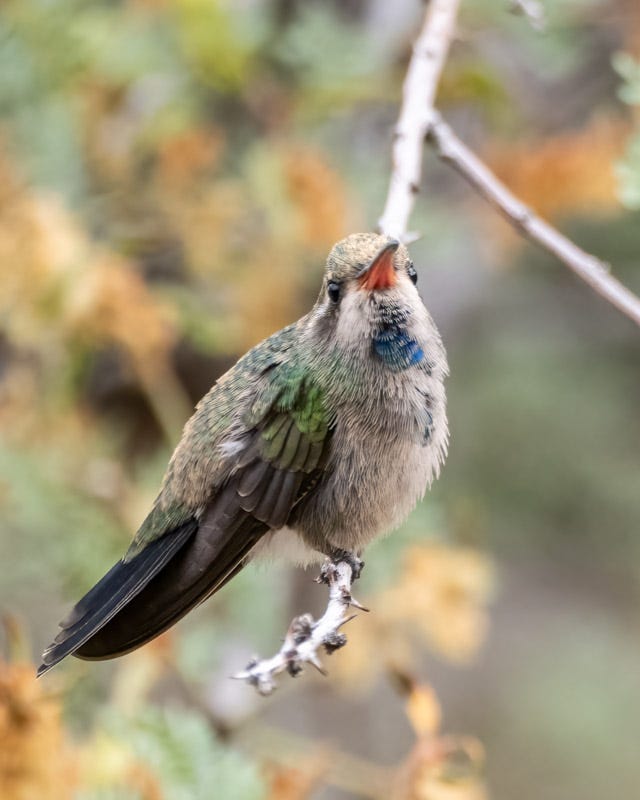
After posing nicely for me, he was off again, busy flying as Hummingbirds do.
Thanks Dan,
Always learning something from your photos, I didn't realize their wings were so flexible and were able to move as they do.
Amazing information you have shared on this tiny little feathered friend! Great pictures Dan. Thankyou 😊