

On the eastern edge of the Santa Ritas, the rolling desert grasslands begin to rise to meet the rugged oak woodlands. Ranchers have created a cattle pond there and keep it filled with well water. This provides critical drinking water for cattle on the range. Surrounded by mesquite trees, it also offers support to countless desert birds and other wildlife.
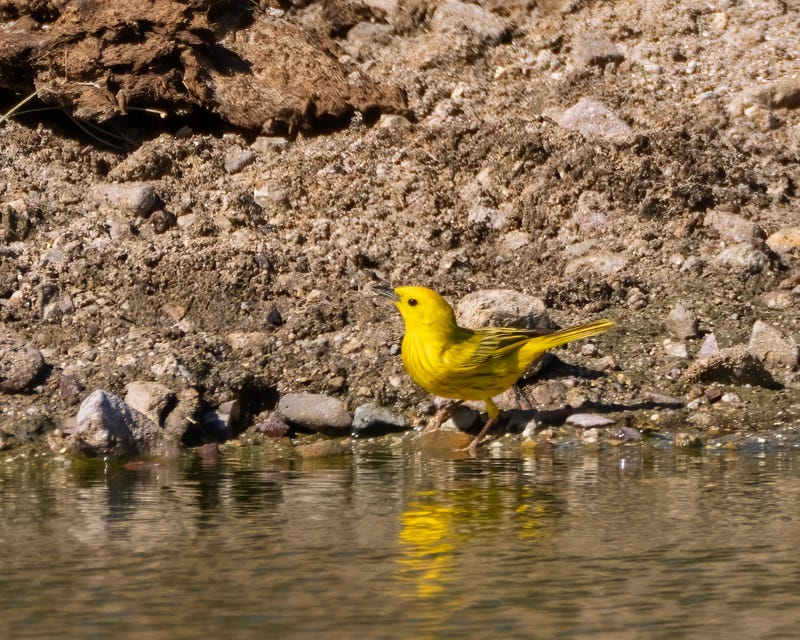
One of my friends often goes there each summer to observe and photograph the birds. I joined him recently. In a little over two hours, we saw 30 species of birds. Below is an assortment of birds at the water to quench their thirst. The male Northern Yellow Warbler is a very bright yellow. A male Yellow Warblers has those chestnut streaks on its breast.
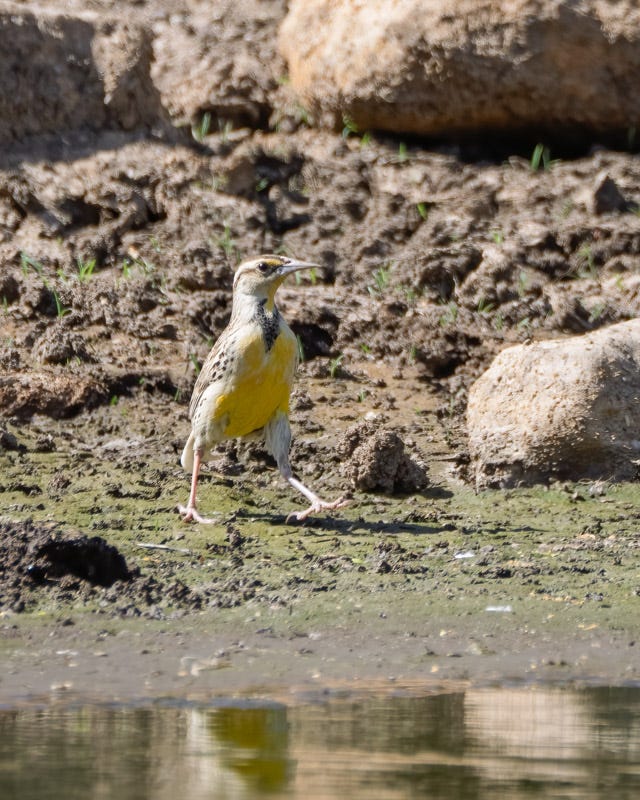
A Chihuahuan Meadowlark came down the slope to drink some water. For years Meadowlarks had been separated into two different species: the Eastern Meadowlark and the Western Meadowlark. Recently, a species named the Chihuahuan Meadowlark was described, separating this bird from what people thought was just a subspecies of the Eastern. Descriptions and rationale for the change can be found here and here.
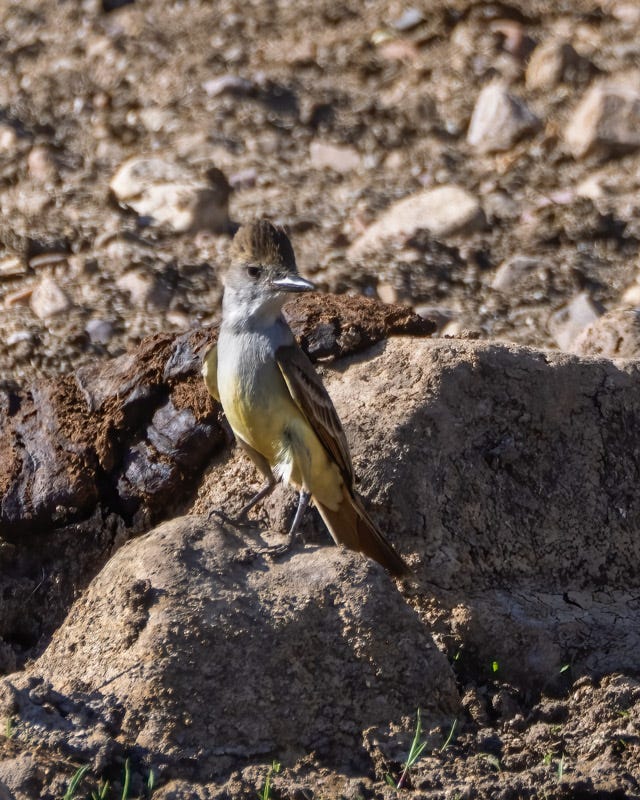
A summer visitor to our region is this Brown-crested Flycatcher. Tucson Bird Alliance tells us more about this late arriving bird.
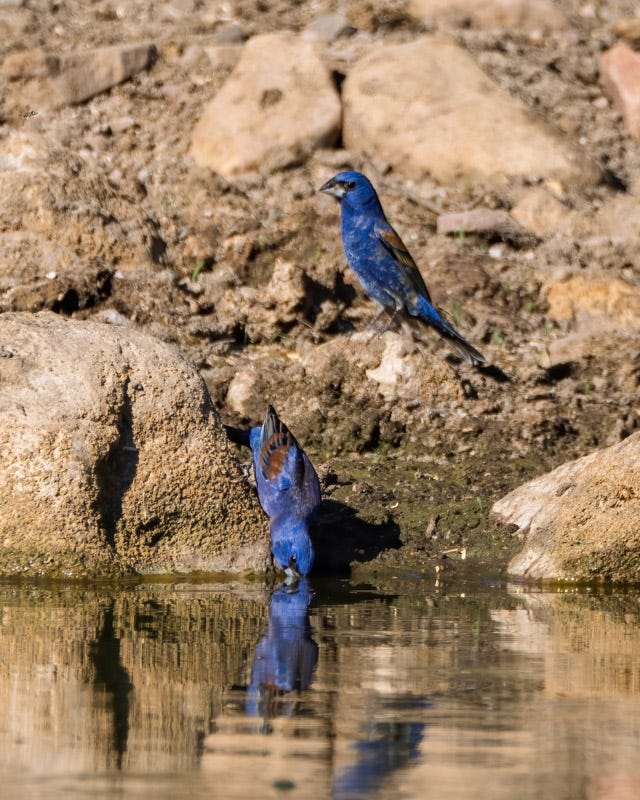
At the stock pond, a Blue Grosbeak appeared and came to the water’s edge for a drink. You might remember this bird from a recent post of mine. While he was there, a second male Blue Grosbeak showed up and patiently waited for his turn to drink. There were plenty of other spots to drink from, but it seemed as if the second Grosbeak was standing guard while the first one drank. In fact, in many of my photos the birds seemed very conscious of our presence. We were perhaps twenty yards away, on the other side of the pond and sitting still. It seemed like quite a distance from the birds, but our presence was unusual and most of the birds appeared wary of us. Indeed, most of the birds drank from the furthest bank of the pond directly across from us.
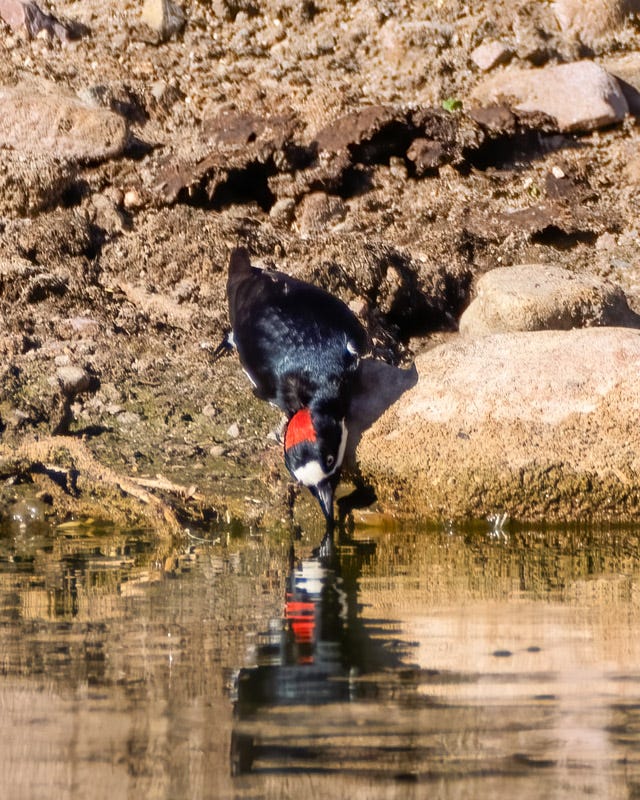
An Acorn Woodpecker came down from the oak trees on the slopes to drink some water. This pond was not in her typical habitat.
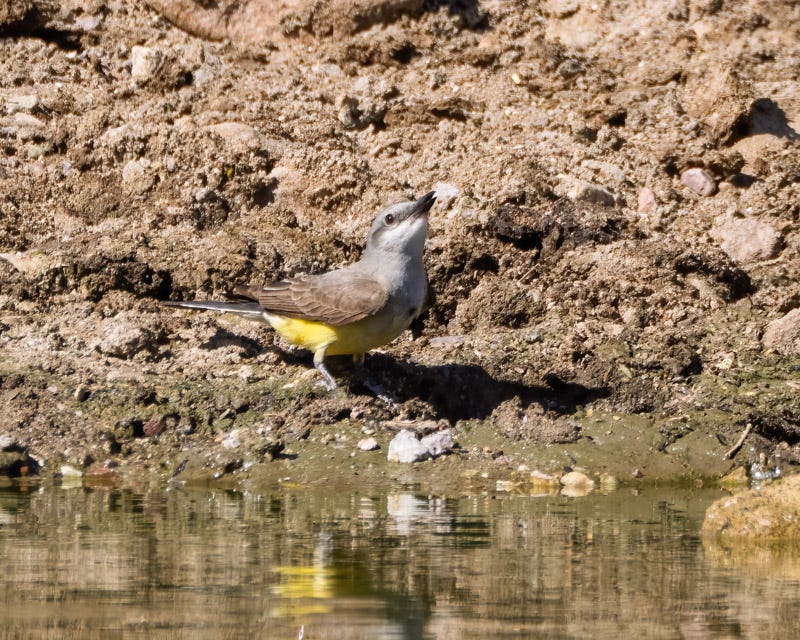
A Western Kingbird showed up. You can see the white, outer tailfeather that is an ID marker for this species. Birds cannot sip water, so they dip their bills in the water and then tip their heads back to let the water run down their throat as this Kingbird demonstrates.
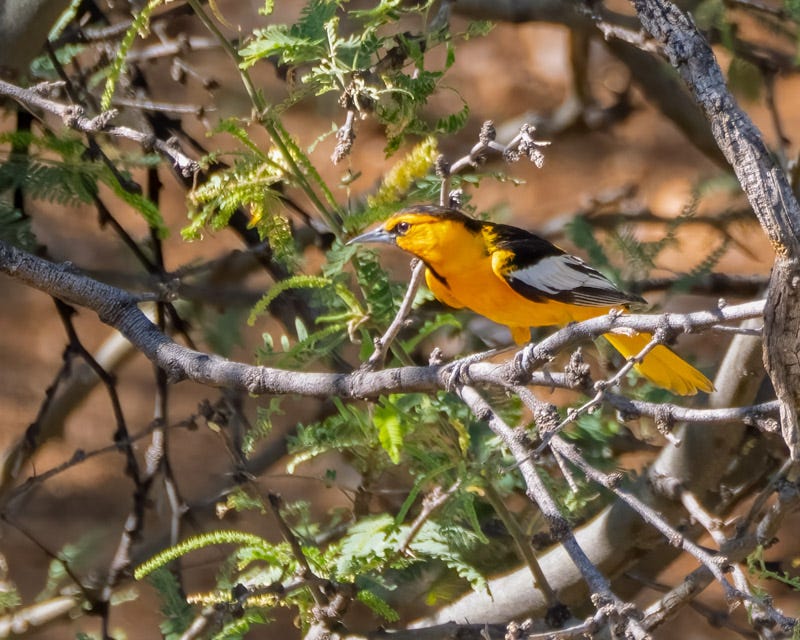
A pair of Bullocks Orioles came in to drink. My shots of the male at the water didn’t come out well, so you are only seeing him in the mesquite trees above the water.
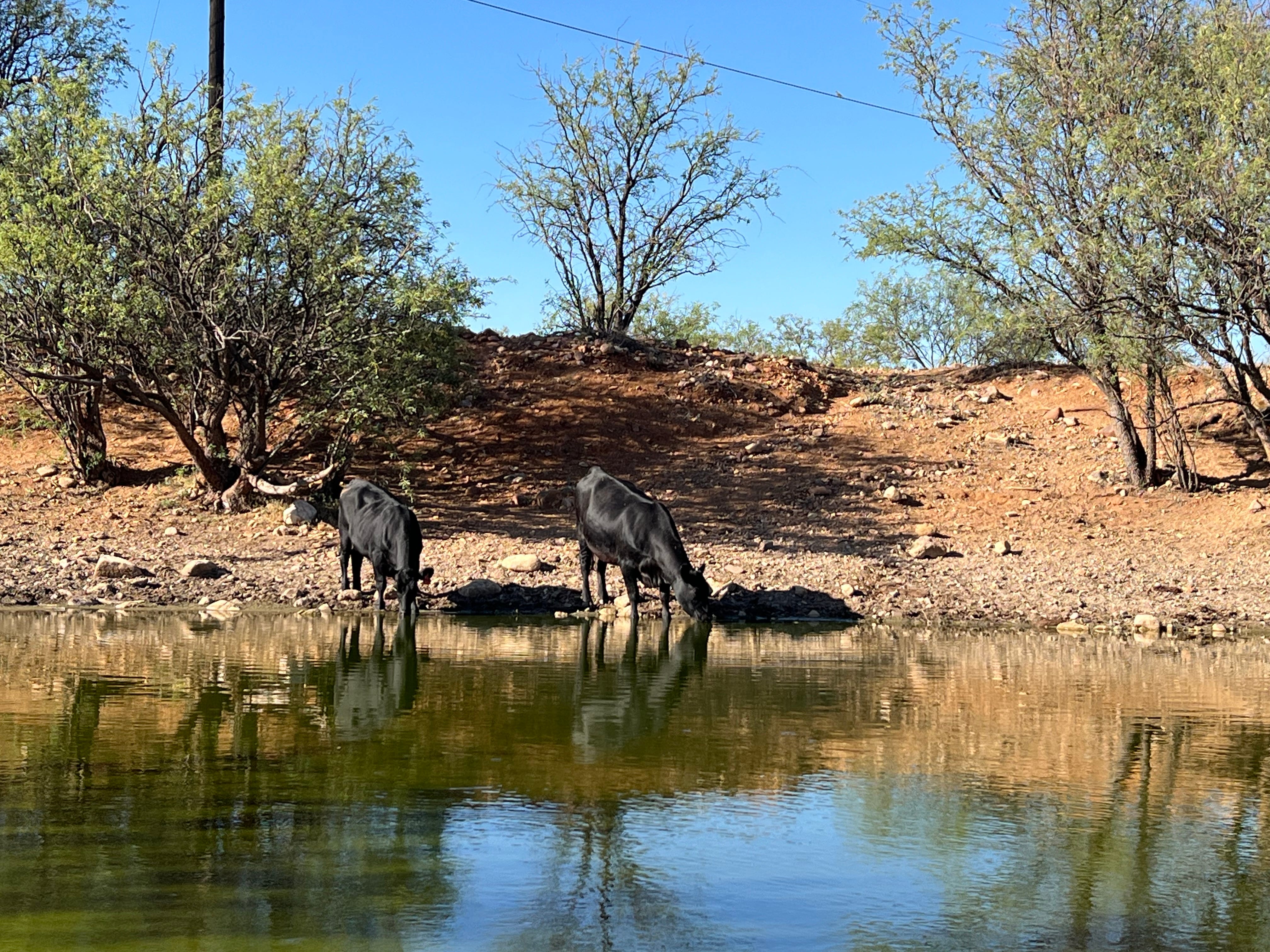
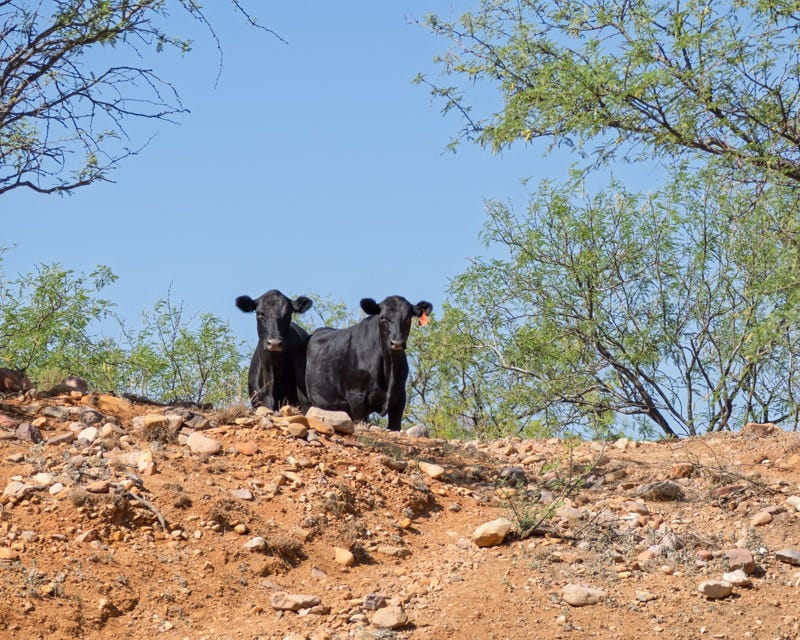
About half of the time we were at the pond, cattle would appear at the top of the embankment. They watched us, not sure what we were doing there and what they should do.
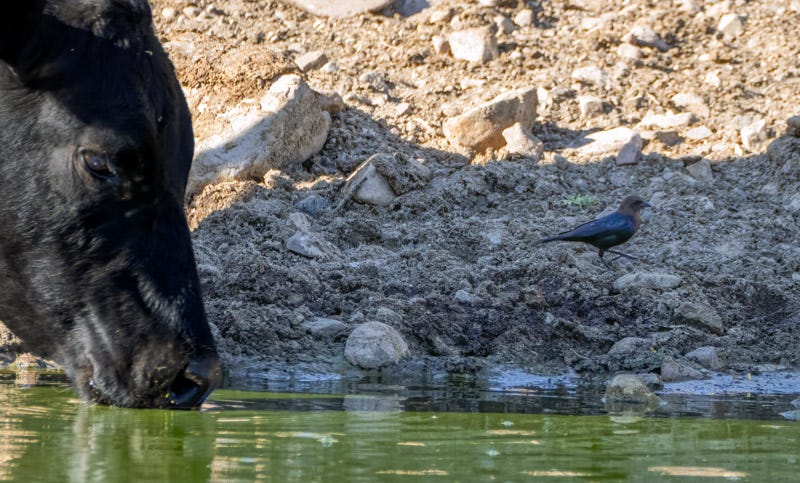
Finally a few of the cattle got up the courage to come down to the water for a very long drink. What bird should appear while the cattle were there? A Cowbird of course, just a few feet to the right of the cow! Brown-headed Cowbirds are a Blackbird species. Historically, Brown-headed Cowbirds followed massive bison herds because the grazing bison would flush insects out of the grass. They adapted to modern cows whose grazing behavior remains a good provider of food for the Cowbirds. Brown-headed Cowbirds have an interesting way of nesting, as described in this humorous Birdnote piece titled Cowbird Mafia.
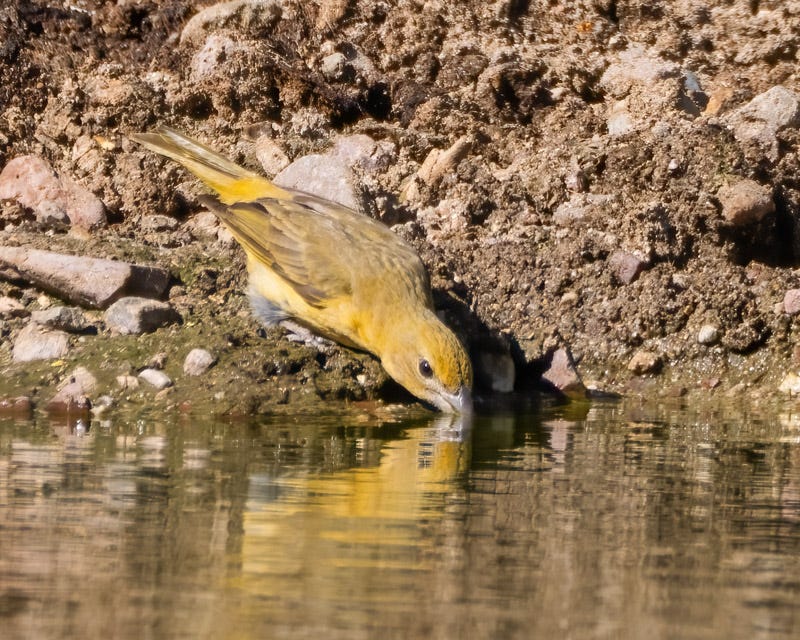
Several Summer Tanagers spent much time at this spot. The female Summer Tanagers are a modest yellow color, much less subdued than the male Summer Tanager’s flaming red color.
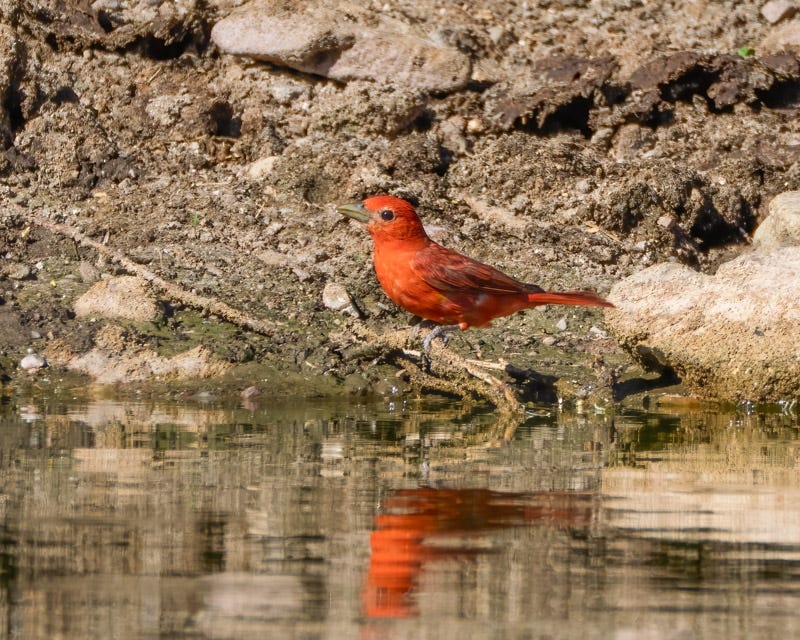
Here is the male Summer Tanager. The Tanagers mostly spent time in the mesquite trees. Tucson Bird Alliance tells us more about these special birds.
There is a small grove of Sycamore trees near the stock pond. I found a Summer Tanager there and will share photos of him in another post. A Vermillion Flycatcher was hunting over and over again from the edge of the pond. She has earned her own post as well. A family of Gambel’s Quail and a Black Phoebe also had their starring moments at the water’s edge. To be continued.....
And they each take their turns...quite the collection of visitors.
Dan, this is the only way I know how to contact you (karynzoldan@gmail.com) - My friend is moving and has camera equipment to give away -- camera bodies, 2 tripods, 9 lenses of different lengths, professional camera backpacks. She has tried various venues with no luck. Do you know someone who might be able to use or you yourself? Please email me. She's moving soon. Otherwise it goes to Goodwill. Thanks