

One of the first gifts of the morning was when I walked by a corner where a well-known Cooper’s Hawk nest was. There were two Cooper’s Hawks in the nest and one of them happened to sit up. I was glad it was not hidden behind the many branches.
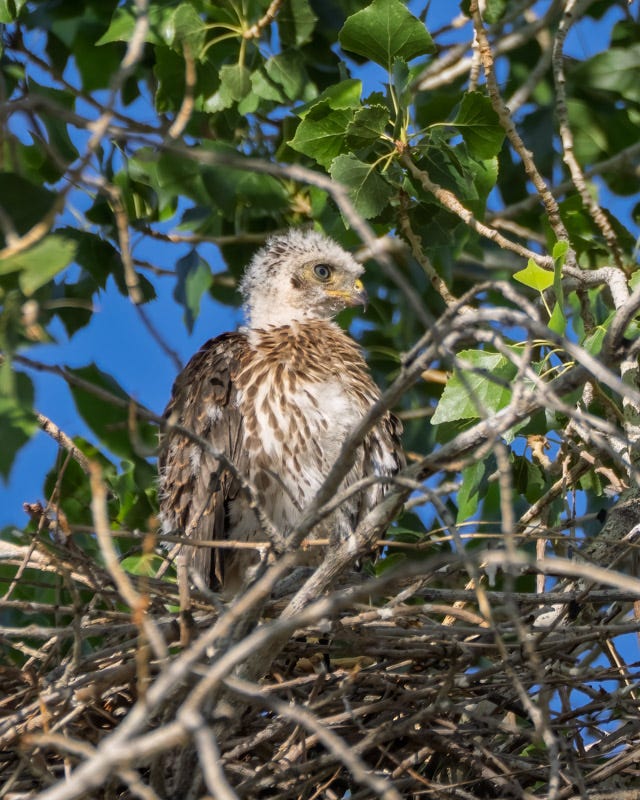
The little Cooper’s Hawk turned its back to me, and then looked over its left shoulder. The bird’s face was still covered with white natal down feathers. At this age, the eyes of this young bird are blue/gray. As it matures the eyes will turn yellow.
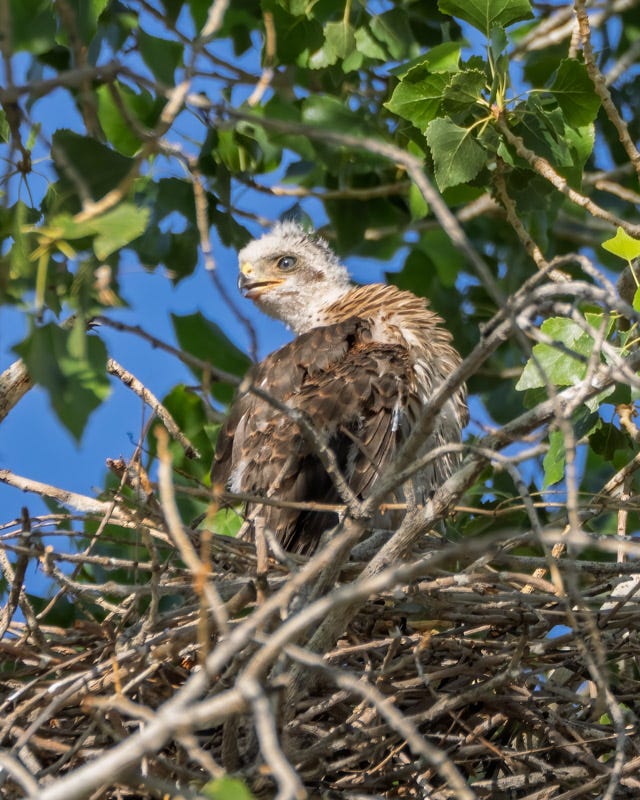
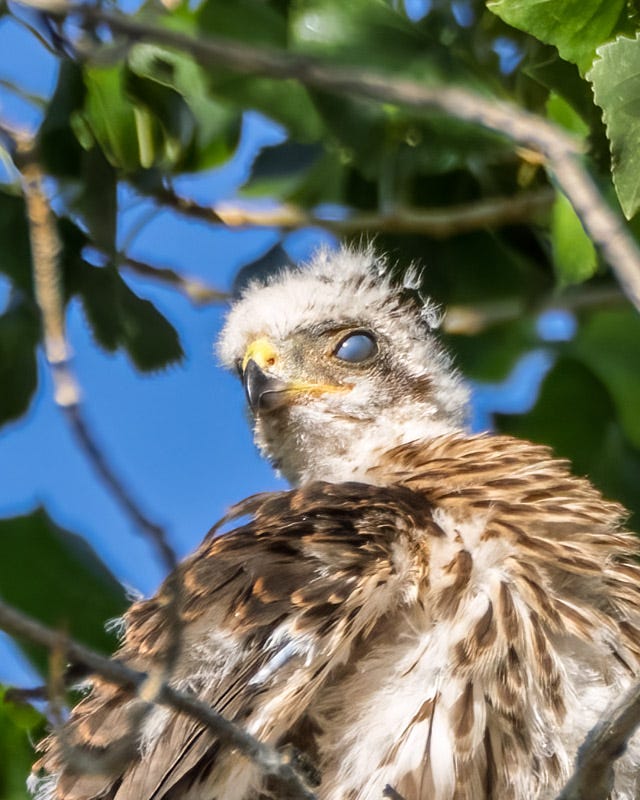
And then the nictitating membrane happened! It is always startling to see this in photos because, in real time, that blink happens faster than our eyes can notice it. If you look closely, you can see some of the white downy feathers just barely hanging to the back of its head. Those have been pushed out by new feathers growing in.
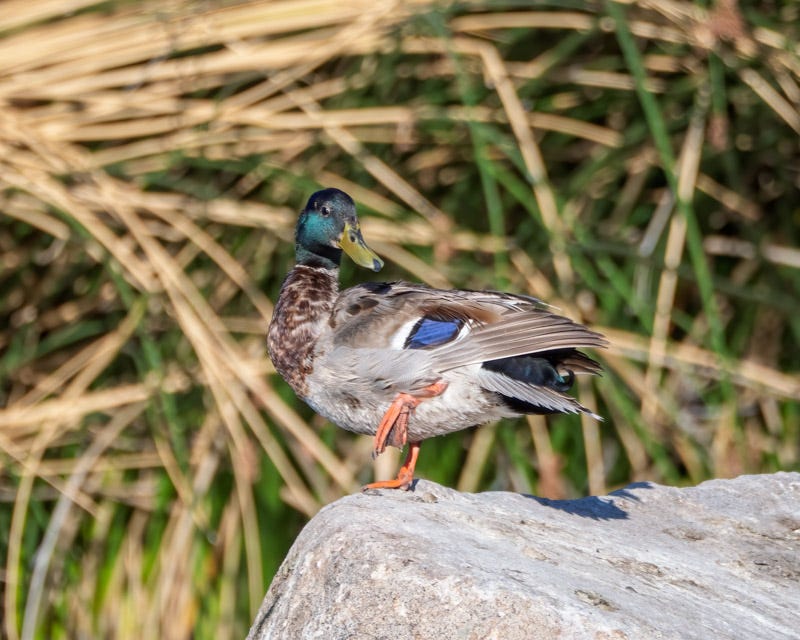
In the pond below the Cooper’s Hawk nest, a male Mallard was busy preening. The bright bluish wing patch is bordered by white and black lines. Usually hidden, that wing patch was revealed during this preening session. The color of that patch is not a pigment, but structural features in each feather break up light to give the wing patch that nice color.
Coming around a corner near the end of my morning walk, I saw a large Kingsnake spread out across the middle of the path. There was a very big bulge in the middle of this snake. It had definitely captured something recently and was just laying there digesting its meal.
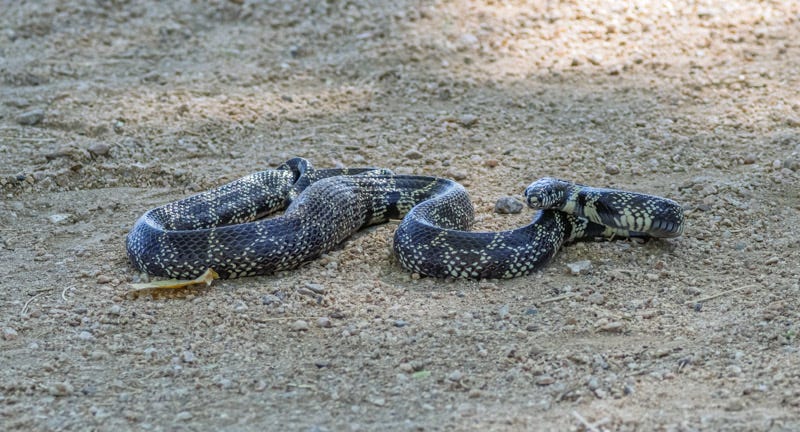
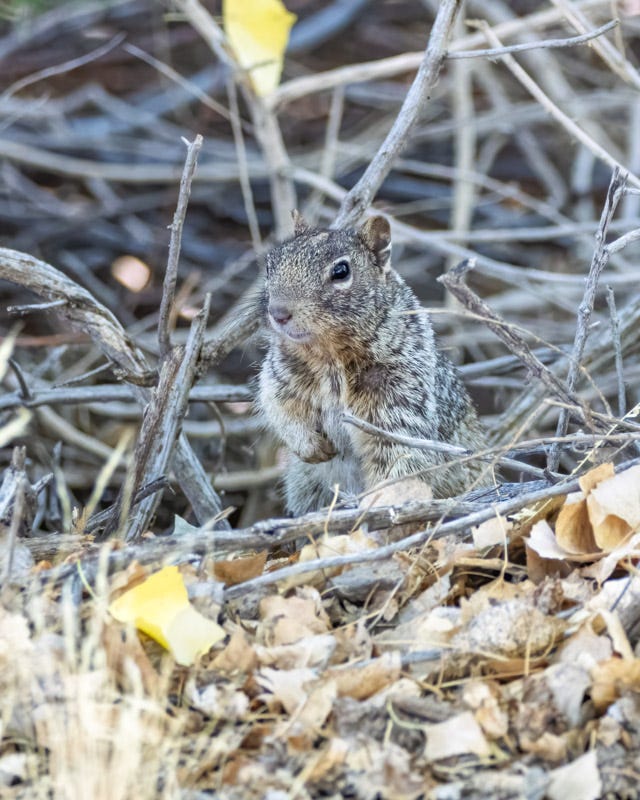
Meanwhile, a Rock Squirrel just off of the path was watching the snake very closely. Occasionally it would turn its back and wave its tail in the air, warning all nearby creatures about this deadly predator.
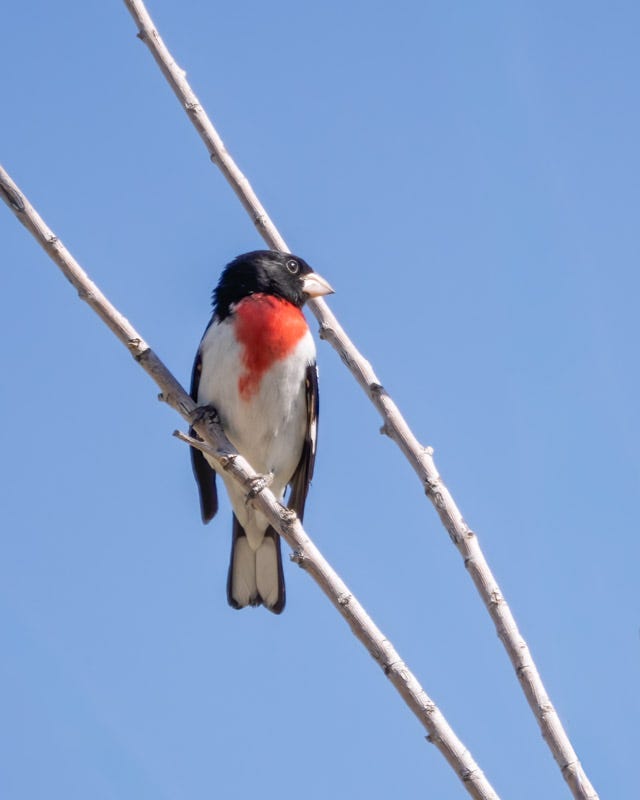
Although the creatures above were very nice to see, my “bird-of-the-day” was this male Rose-breasted Grosbeak. As its name implies, this bird has a very large beak and a rose-colored triangle across its breast.
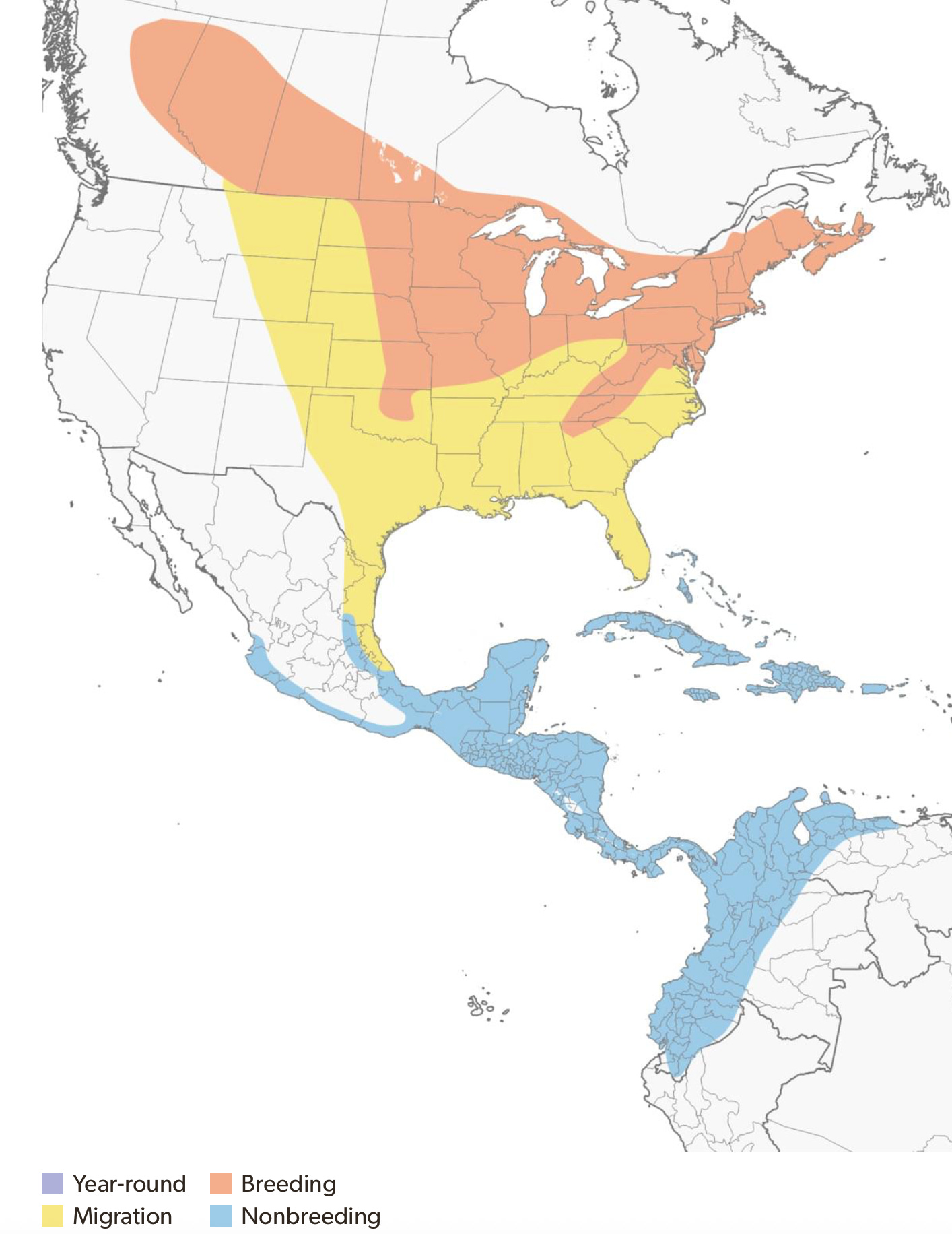
One look at this range map and you might ask what the Grosbeak was doing in Tucson. On the map, Rose-breasted Grosbeaks are not shown to be spending any time west of Texas. While they are rare here, some birds are found in southern Arizona during spring migration. I was fortunate enough to be in the right place at the right time to briefly see the Grosbeak.
The Grosbeak turned around for a second allowing us to see the black and white feathers of its back.
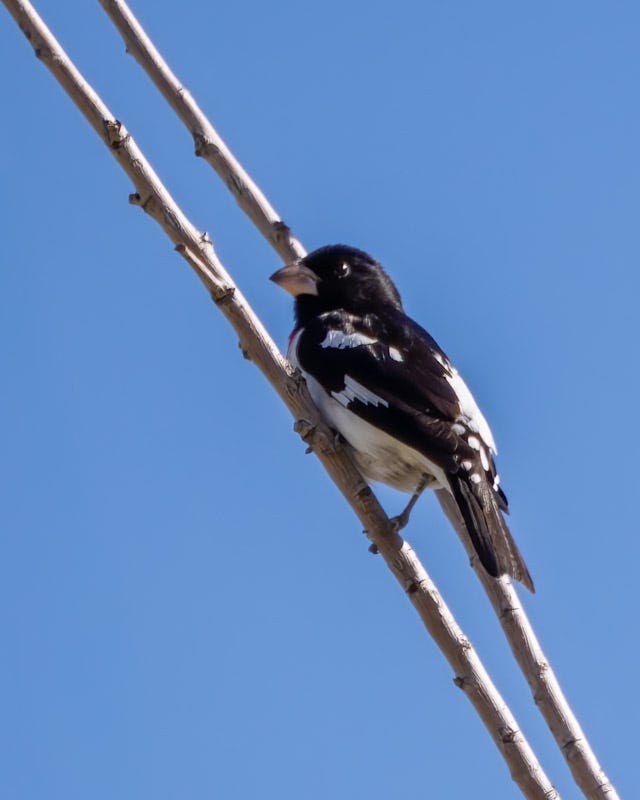
The Rose-breasted Grosbeak turned around once more, then stayed for a bit before flying off to the east and beyond the boundaries of Sweetwater.
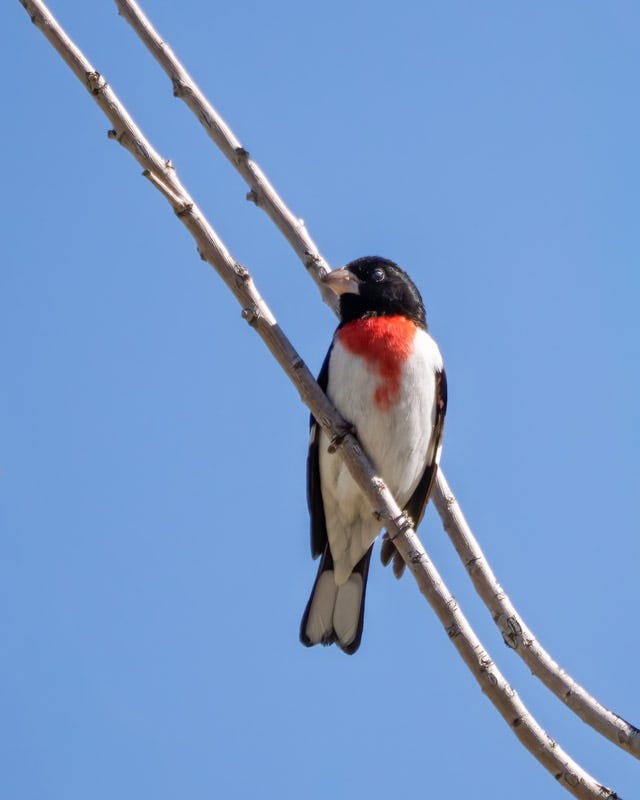
Sweetwater and southern Arizona have a wonderful selection of birds which summer here and an equally wonderful number of birds which winter here. They are dependable enough that you can count on seeing them annually. The surprises pass through during spring or fall migration. Some migrating birds are very regular. Some, like this Rose-breasted Grosbeak, are rare so a sighting like this was very special.
Wow! Great pictures and story! I wonder what the King Snake had for lunch…if only it was a so called president that thinks he is a king.😜
BTW, I had to look up the Kingsnake. Guess it’s the Desert not the Sonoran. Interesting the divergence in a single state.