

These photos were taken on various dates over the past few months and didn’t fit into any of the themed posts I’ve done, but it is their turn to shine now.
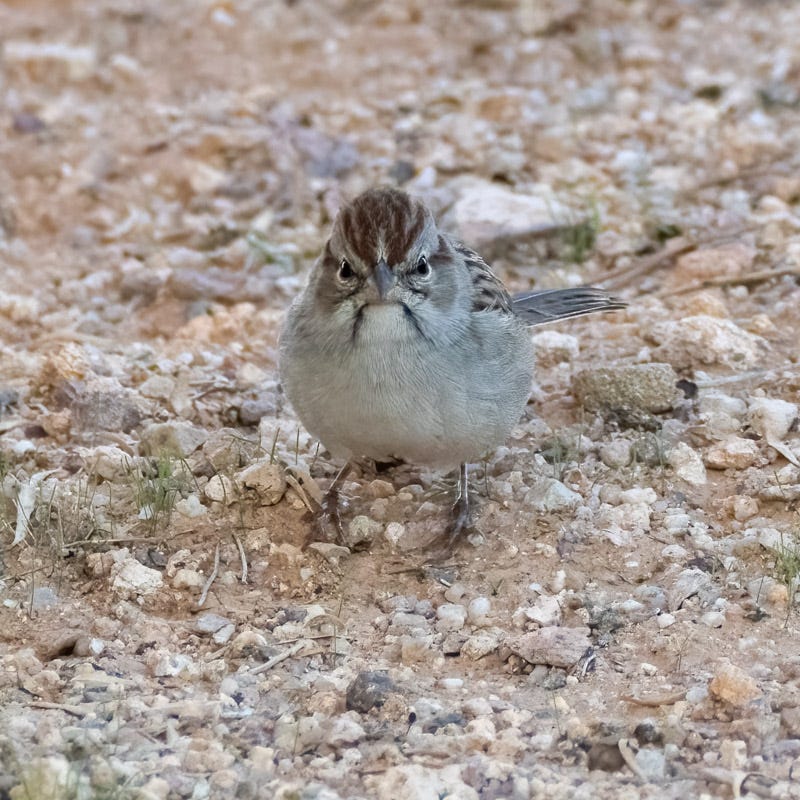
Rufous-winged Sparrows are known for their small rufous shoulder patch (not visible in this shot). They live year round in southern Arizona in what is called ‘desert thornscrub’ habitat featuring mesquite, acacia, hackberry, palo verde, cacti and native grasses. They are “just” another brown sparrow but they do have an “Angry Bird” look.
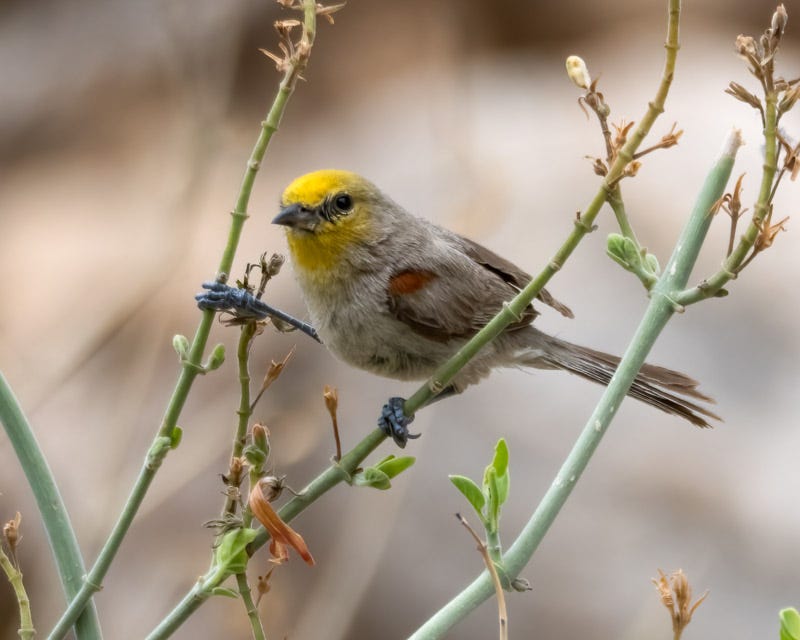
Verdins are common desert birds. They, too, have a rufous shoulder patch like the Rufous-winged Sparrow above does. I like how this Verdin is doing the splits to remain steady.
Red-naped Sapsuckers are a wintering woodpecker. The males have red on their throat, their cap, and the back of their neck (the nape). These birds drill holes in the tree trunks to harvest the tree sap much like the way we humans harvest maple syrup from maple trees.
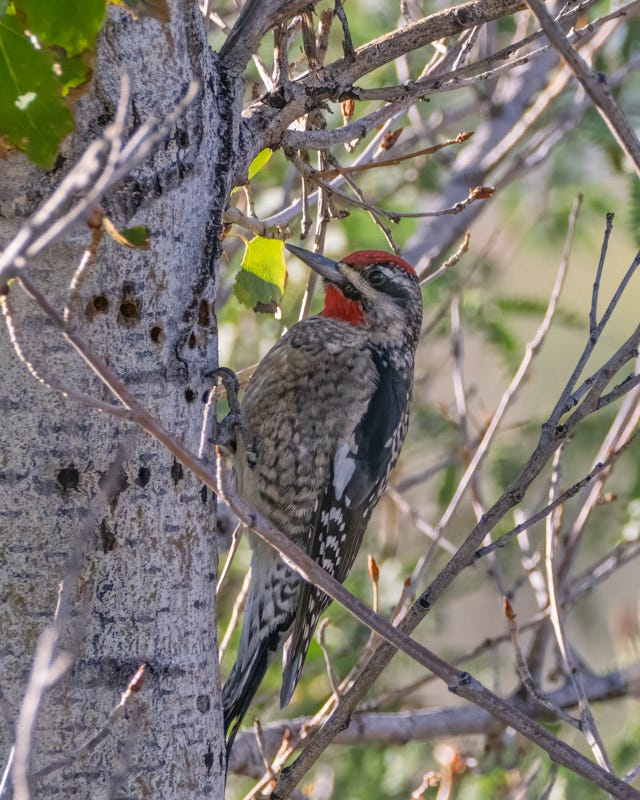
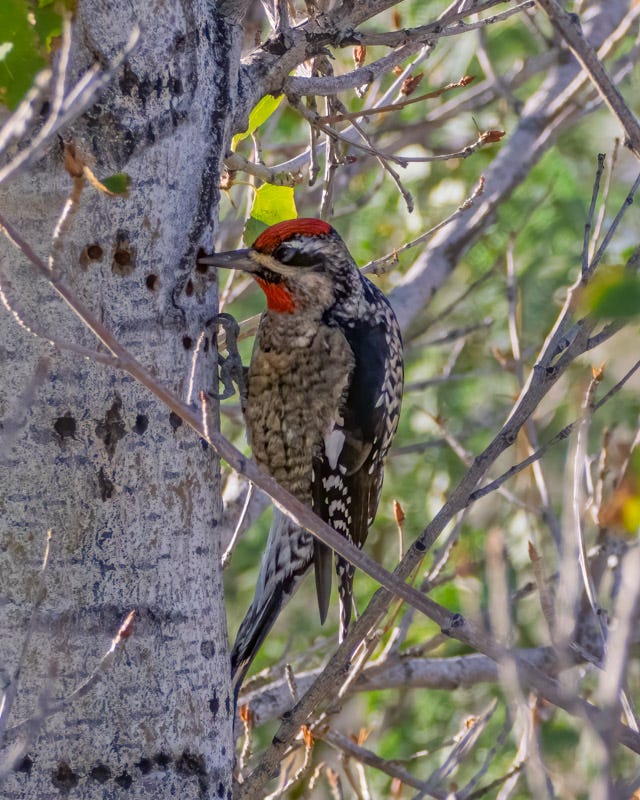
Once they drill a row of holes, the sap flows. These Sapsuckers don’t actually suck the sap, even if their name says so. They do lick the oozing sap using tongues that have brush-like tips. The sap is sugary sweet and also attracts insects which become an additional food source. See how the holes are all drilled in rows?
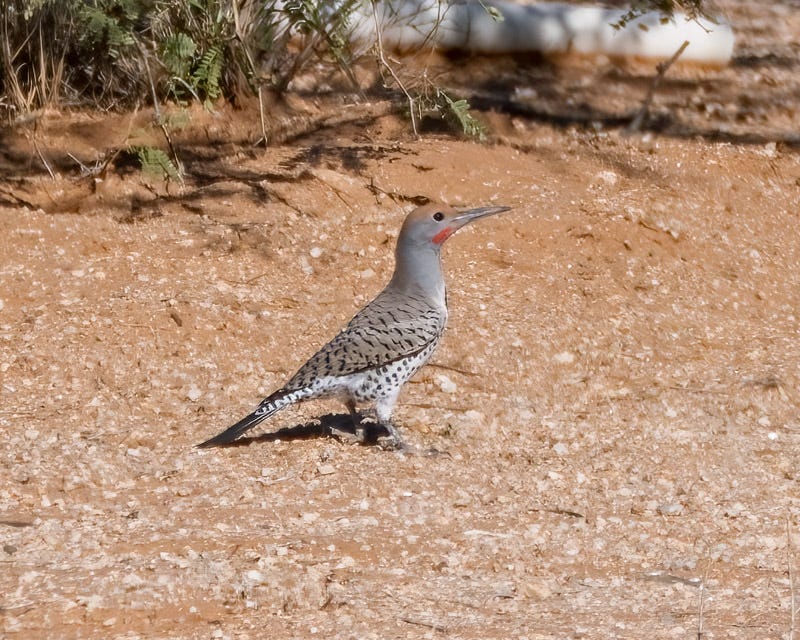
Gilded Flickers are another interesting woodpecker that is a year-round resident in the Sonoran Desert. Gilded Flickers, named for the golden/yellow flight feathers, feed on ants and are commonly seen on the ground where they are finding their meals. The male Gilded Flicker has that red mustache.
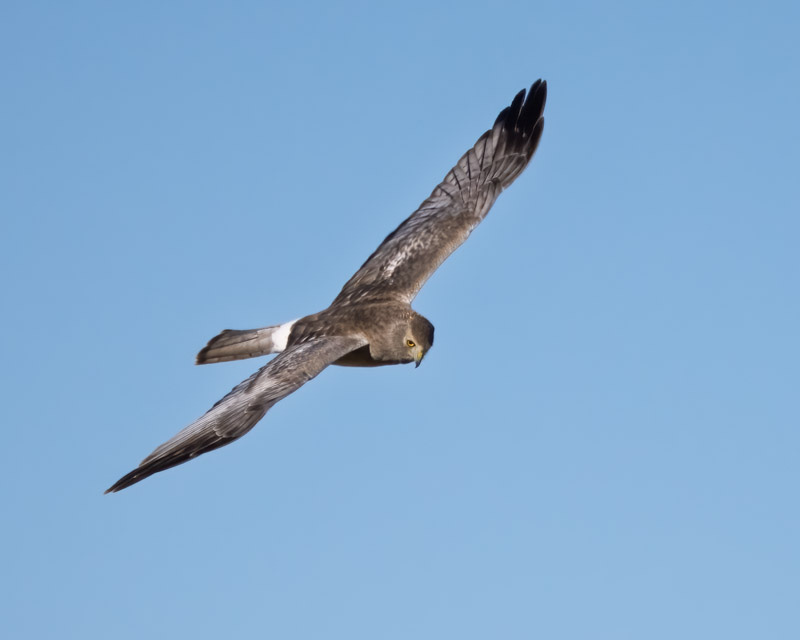
I’ve been fortunate to have some regular views of a Gray Ghost, a winterting male Northern Harrier that I’ve seen in Pima County’s agricultural areas. I’ve shared a number of other photos recently. This raptor uses its hearing to find its prey, flying low and in a buoyant and fluttery manner over flat lands.
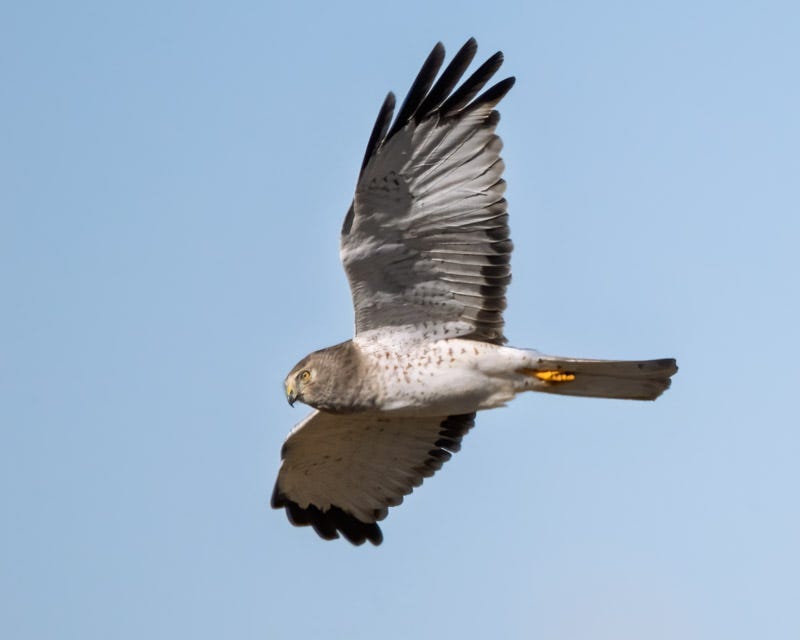
The Gray Ghost may not have seen prey but he’s turning to go back over the same field that he just covered. Female and juvenile Northern Harriers are brown but both male and female Northern Harriers have that conspicuous white rump patch.
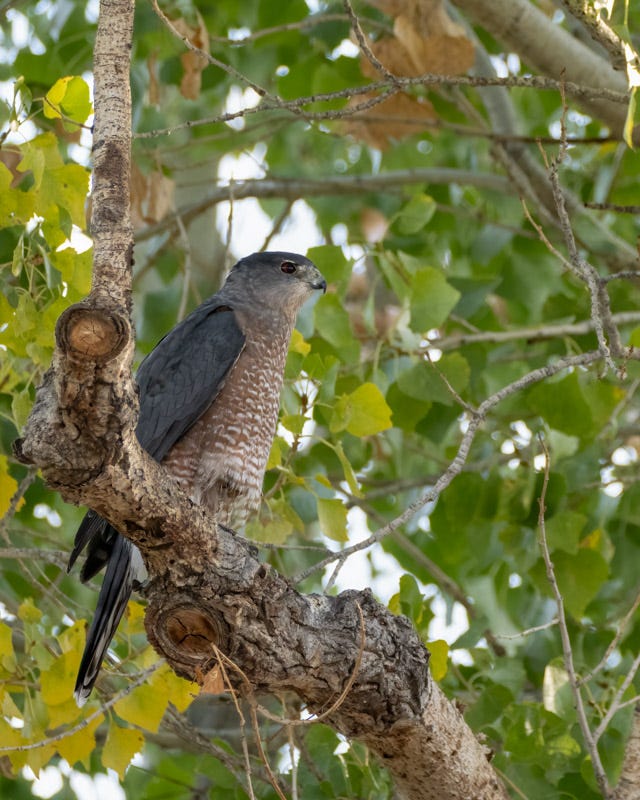
Tucson seems to be the Cooper’s Hawk capital of the US. We often have one of the highest counts of Cooper’s Hawks in the US among the over 2,500 annual Christmas Bird Counts done across the nation. This adult was resting in a cottonwood tree in Sweetwater Wetlands.
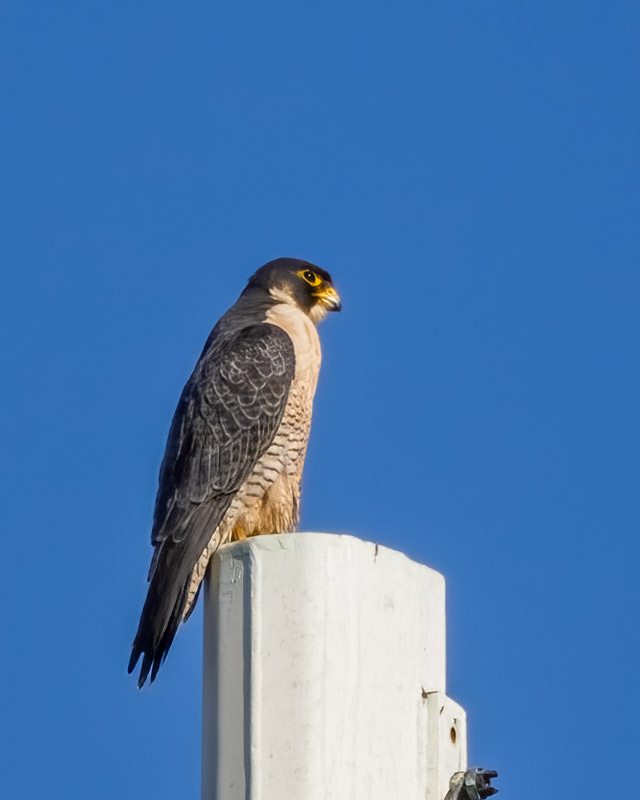
A group of friends and I had one of the ‘areas’ for the Tucson Valley Christmas Bird Count, held last week. We agreed that our “bird-of-the-day” was this Peregrine Falcon, resting on a very tall utility pole in the Rillito River near La Cholla Blvd. The bird sat there for over an hour. Notably not one of the several hundred pigeons we saw on the wires chose to perch on the wires on either side of this Peregrine!!!
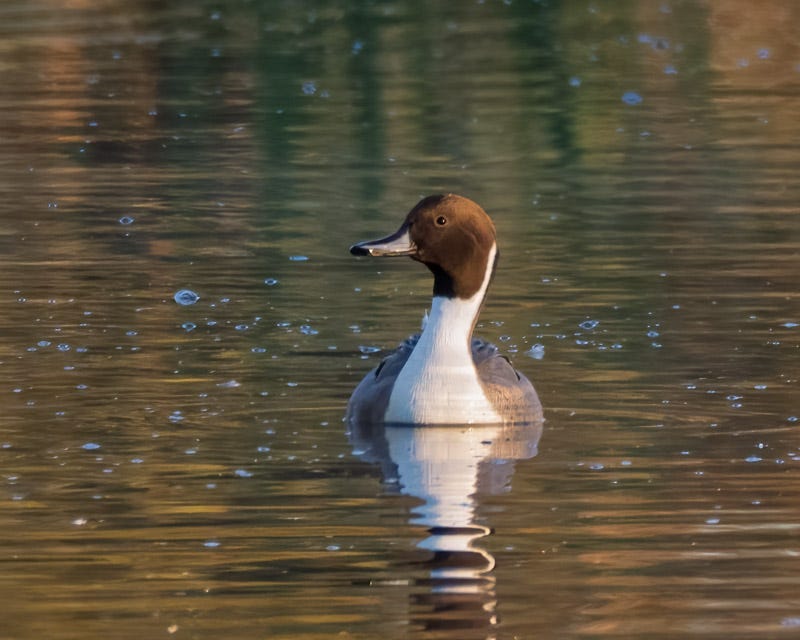
Many ducks have returned to Tucson for the winter. This elegant Northern Pintail had a staring contest with me.
My computer’s desktop is a bit cleaner now. Thanks for letting me clear it out a bit!!
Thank you for this year-end post on the Tucson area's beautiful birds. You are one of the shining lights in our current darkness.
Great collection, from grumpy sparrow to elusive Gray Ghost to some of my favorite ducks. Thanks.