

Juncos are a type of sparrow that has two-toned plumage. As a story from Birdnote declares, “The Dark-eyed Junco is one of the most abundant backyard birds in North America. But it’s not our only junco. In the Southwest, the Yellow-eyed Junco lives in cool mountain forests from Arizona and New Mexico, through Mexico into Guatemala.” We saw Yellow-eyed Juncos in the Chiricahuas. The AllAboutBirds range map shows this to be a unique Southwestern bird in the US.
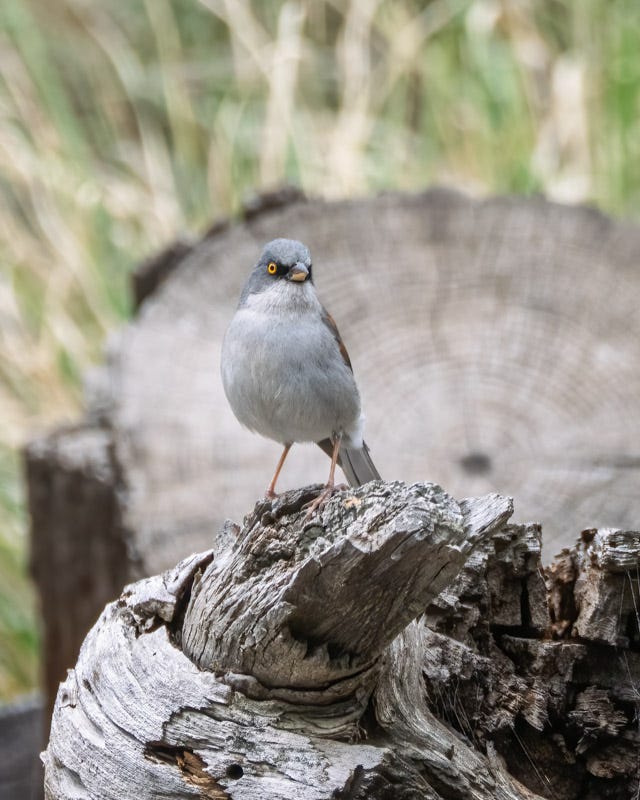
This bird was singing up a storm. We were in this area near the end of April, so birds of all sorts were claiming territories and singing often to court females. You can hear the Yellow-eyed Junco singing in this short Birdnote story.
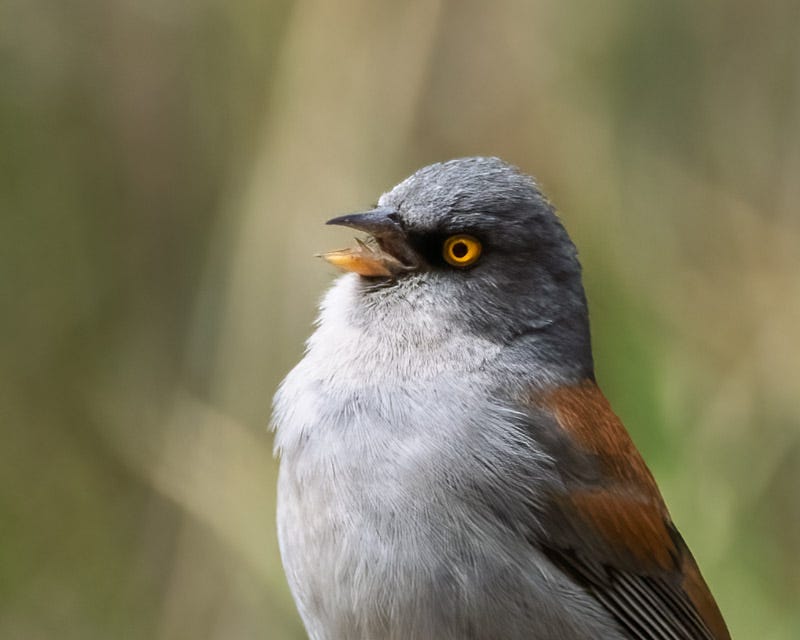
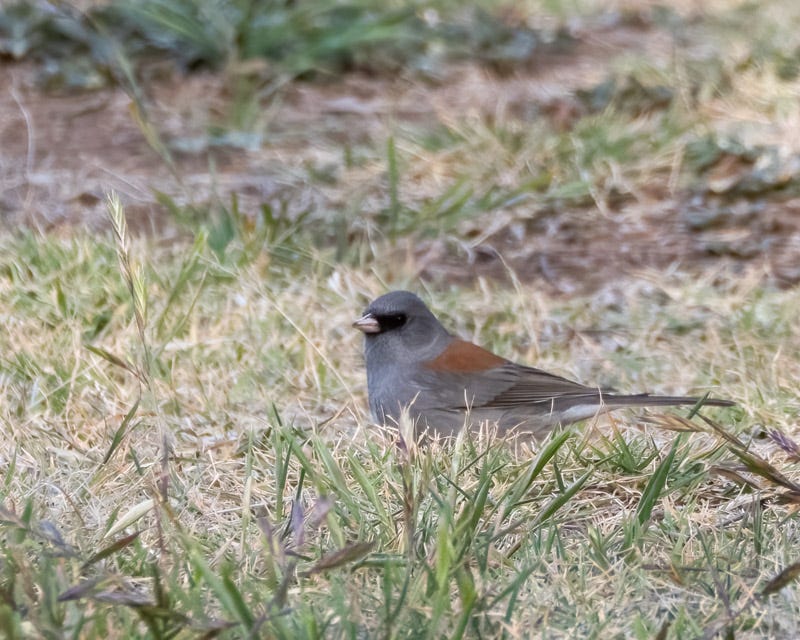
We also saw the Junco that is more common throughout the United States, the Dark-eyed Junco. Its range map is certainly very different from that of the Yellow-eyed.
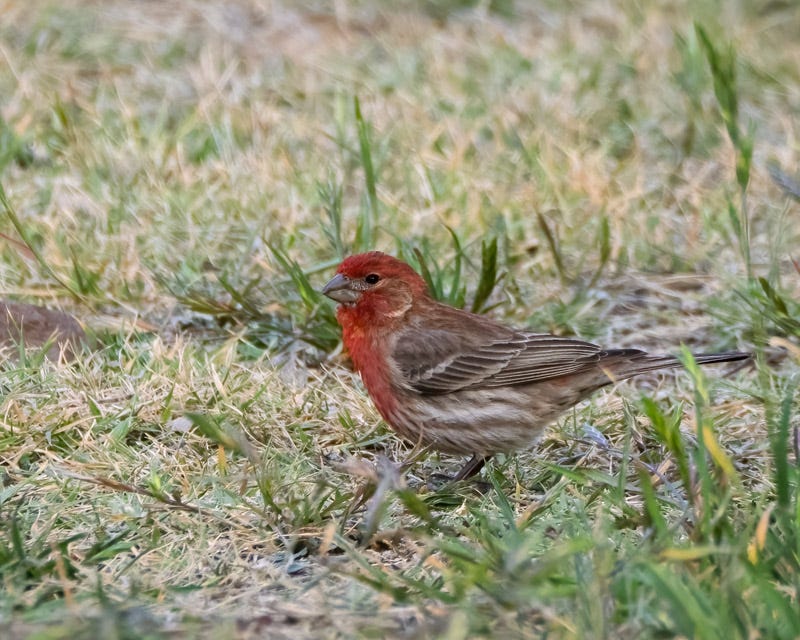
At the Southwestern Research Center, a number of birds besides the Juncos were feeding on the grassy lawn. A classic looking male House Finch was feeding nearby. This one was a brilliant red! Male House Finches get their red color from their diet by eating fruits and seeds that are rich in carotenoids, a natural pigment.
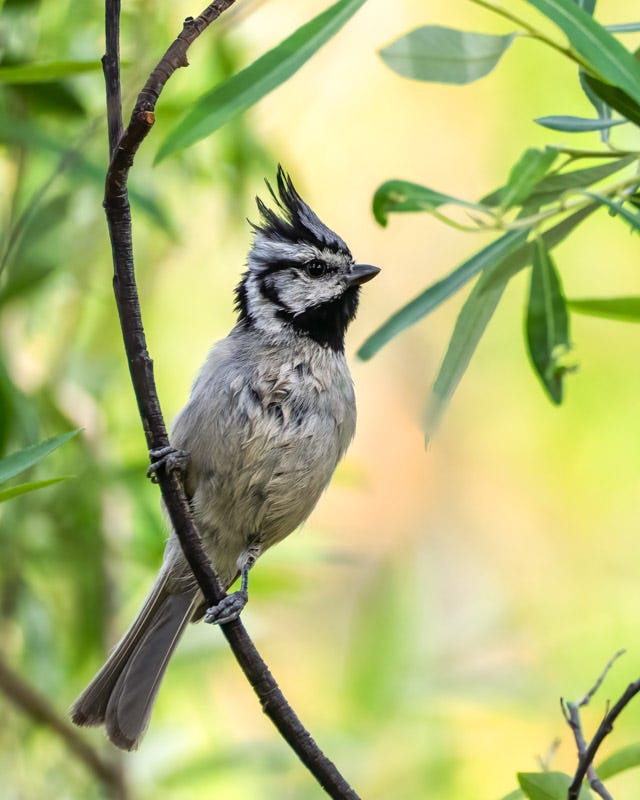
Outside of Portal in the community of Paradise, we spent a few hours on the porch of the George Walker House. Their yard is designed to attract the many species of birds common in that habitat. The Bridled Titmouse made a few appearances. This bird is another unique resident of southeastern Arizona. Its range map is almost an exact duplicate of that of the Yellow-eyed Junco.
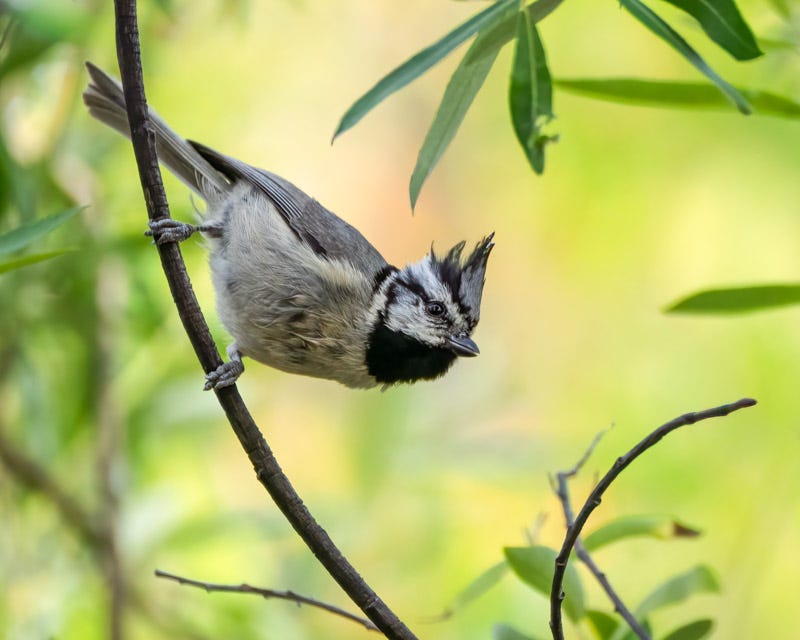
The black and white patterning on its face and a Mohawk gives this little bird a unique look. The Bridled Titmouse are always on the move but they do come out in the open regularly.
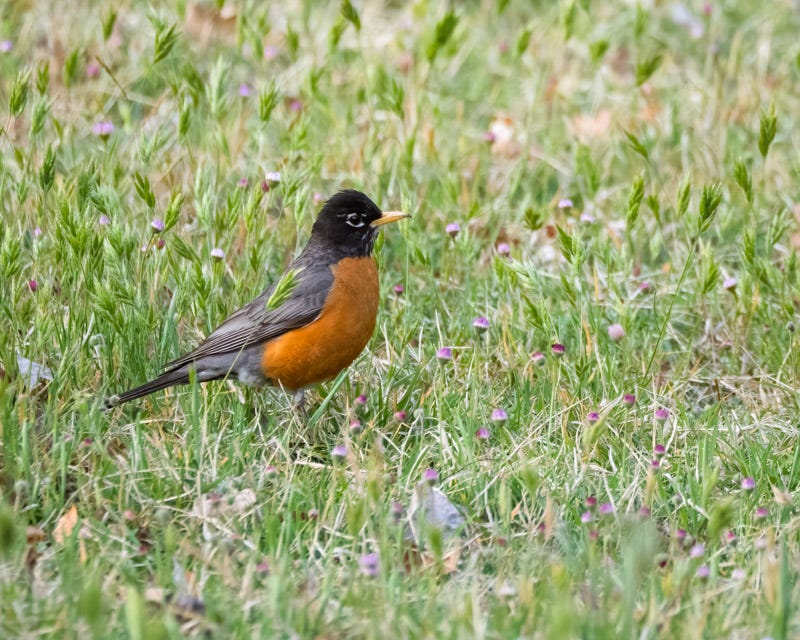
Back at the Research Station, an American Robin was a frequent visitor to the grass outside of our cabin. Robins in our part of the country are not as vividly colored as their eastern cousins. Still, they are unmistakable to ID. Robins are perhaps the most familiar and easily recognizable birds in our country. The range map shows them to be as widespread as the Dark-eyed Junco is.
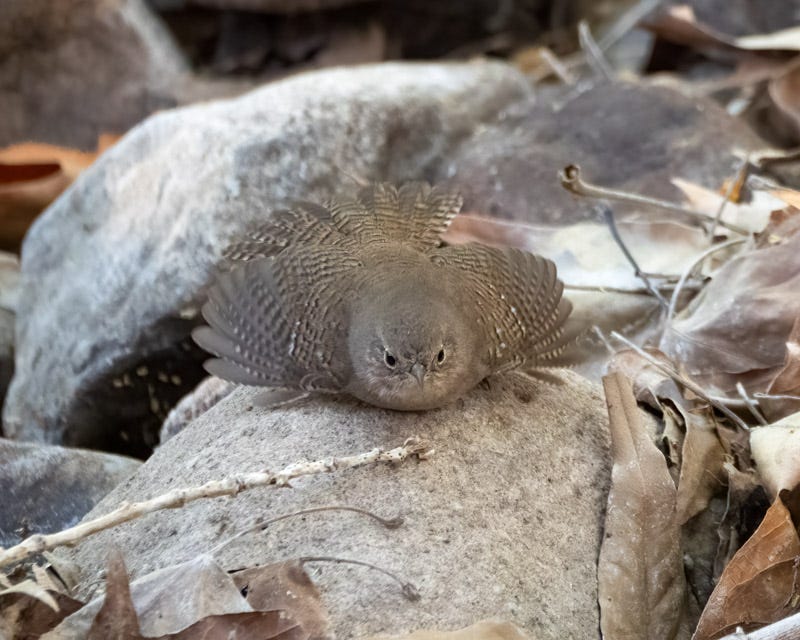
I had seen glimpses of a pair of House Wrens around our cabins but they never were still enough for me to photograph. On our last morning at the Research Center, I went to the side of the creek behind our cabin and just sat there listening to the water. Rather than chasing birds, I thought I’d see if the birds would come to me. After a half hour, a House Wren did appear. He spent time hopping among the creekside rocks looking for prey.
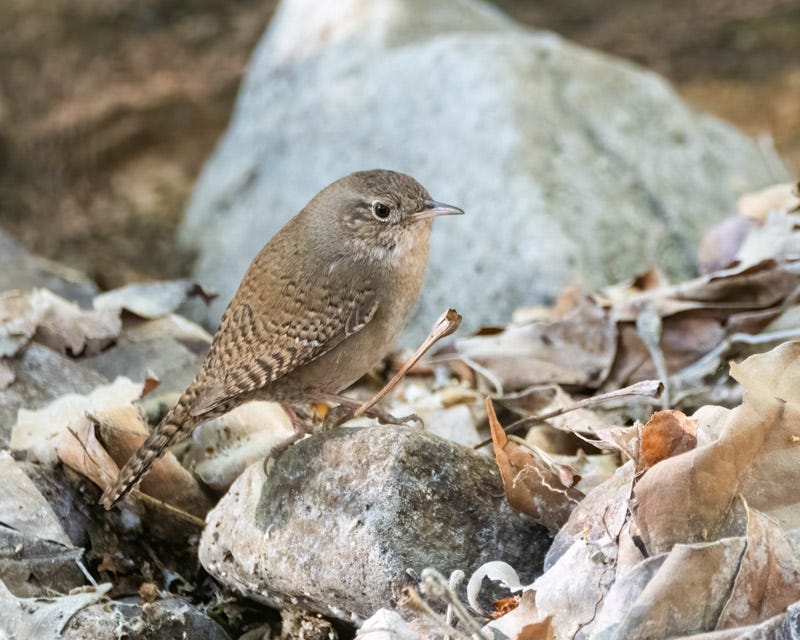
At one point, the House Wren did something that I could only see clearly when I processed my photos later. It looks like the Wren is ‘anting’, a behavior where the bird spreads its wings on the ground encouraging ants to crawl on its feathers to help with feather maintenance. But I didn’t see any ants there and the behavior lasted a fraction of a second. Whatever it was doing, it looked interesting.
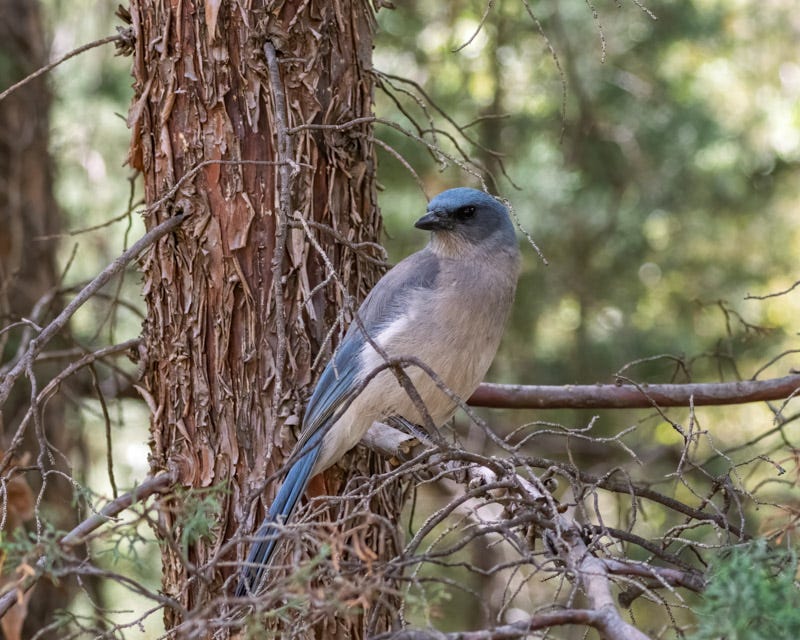
Mexican Jays are ubiquitous in the Sky Islands. They let you know they are nearby and they are inquisitive. We saw this fellow on the trail at the end of South Fork. I’ll bet he’s learned to beg for food from many hikers and tourists over the years. He sure seemed to be looking for a handout.
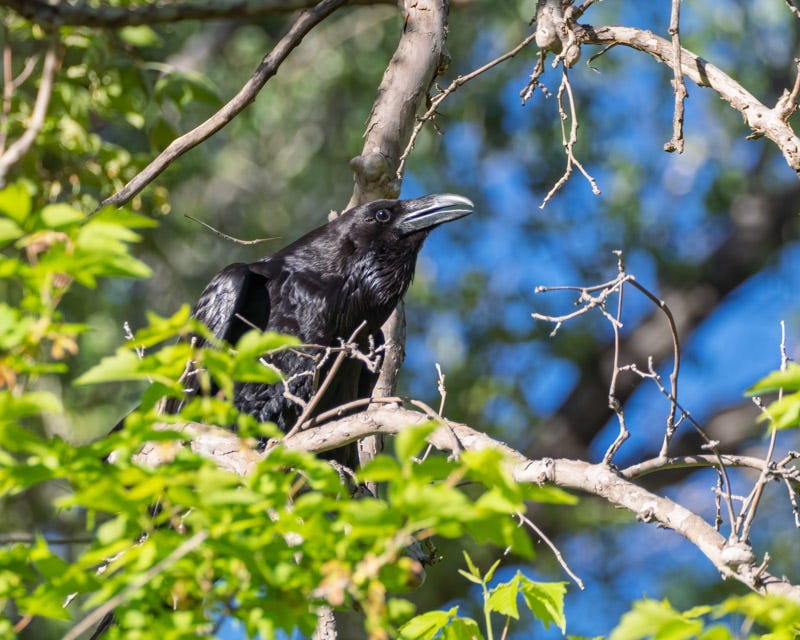
Common Ravens are smart members of the Corvid family and are seen throughout the western part of our country. People from the eastern half of the US recognize American Crows, cousins to these Ravens. American Crows are about the size of pigeons while Common Ravens are nearly as large as Red-tailed Hawks. This Raven flew into a Cottonwood tree while I was sitting on the creekside and then called and called and called.
There were many nice things to see in the Chiricahuas.
Great group of fotos, Dan. You musta had a ball! Beautiful Commercial for touring the Chiricahuas!
Great photos!