

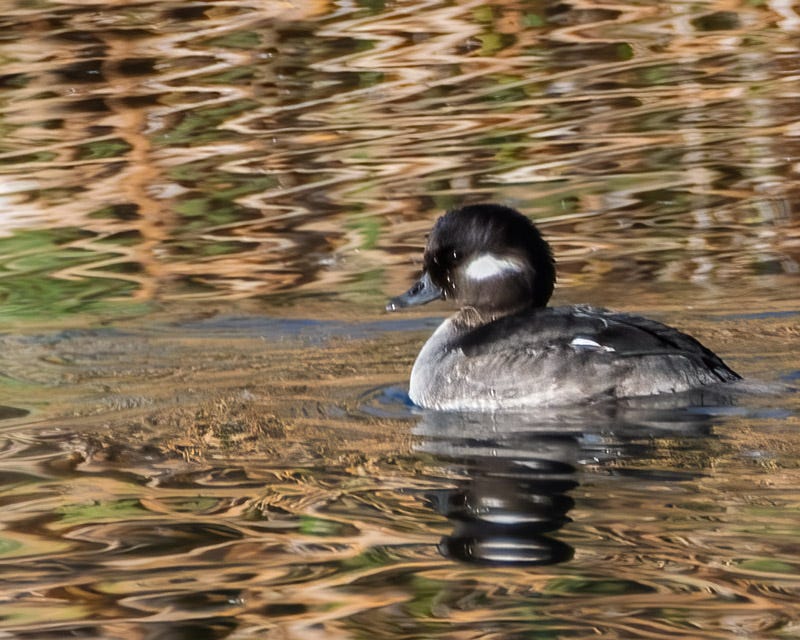
There are many natural and man-made bodies of water that support the winter arrival of a wide variety of duck species in Tucson. One of my favorites is the male Bufflehead. Buffleheads are small ducks that dive for their food. From a distance, the males are dark black and shiny white. When the light is at the right angle, a closer look reveals an incredible iridescence to their heads and neck

The female Buffleheads, although more muted, have an elegance themselves. They are grayish/black with a white cheek patch.
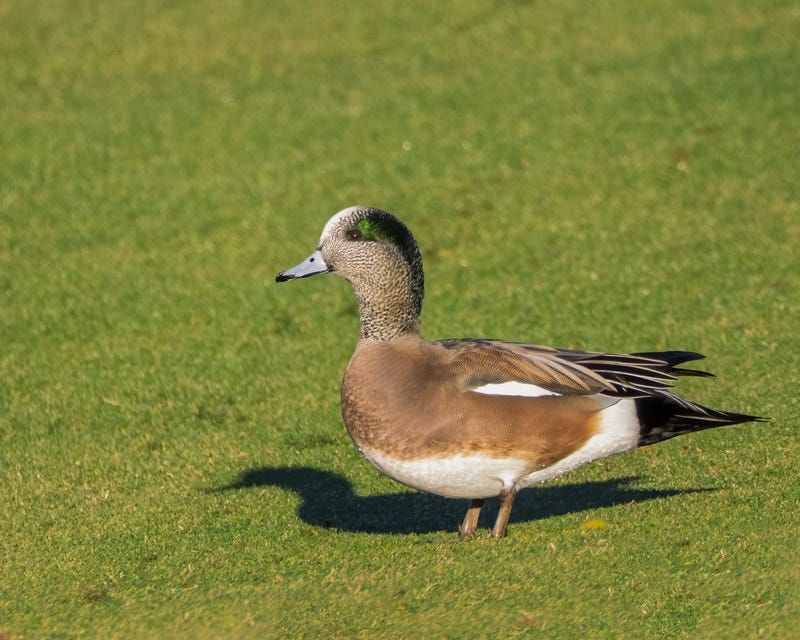
American Wigeons are here in large numbers each winter. You can hear their ‘squeaky toy’ calls from a distance. The male has a white head that once gave it the nickname of “baldpate” duck.
Blue-winged Teals have an understated elegance. This pair continued to turn away from me no matter how much I tried to get a photo of their sides. The male has a blue/gray head with a white crescent in front of its eye. Its body feathers are buffy with black speckles. The blue wing patch giving this species its name is visible during flight.

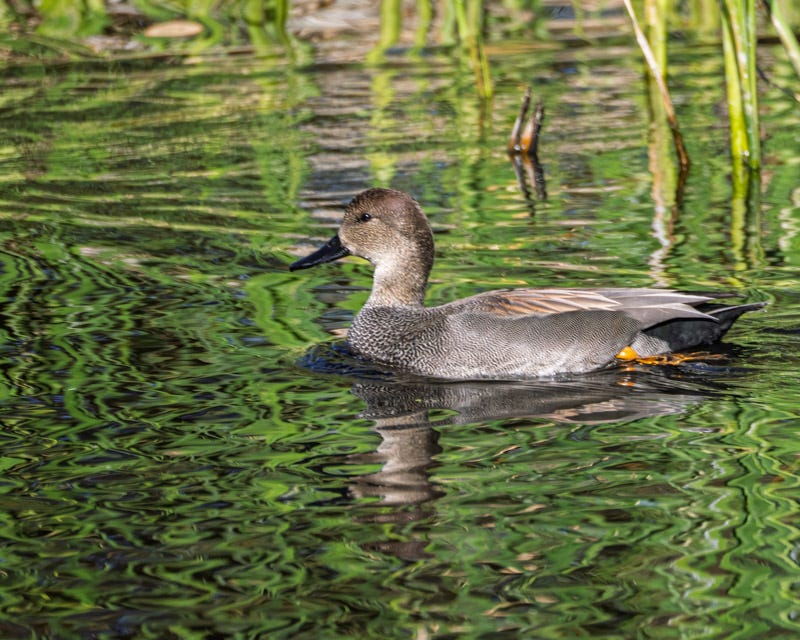
The Gadwall’s feathers are intricately patterned but not as visible from a distance. But the Gadwall’s black rump patch is a good ID marker for this large duck.
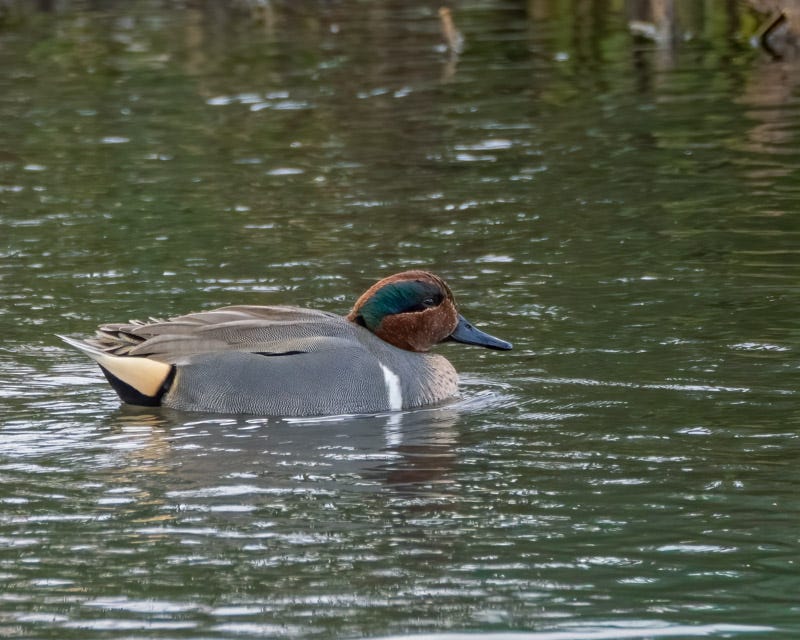
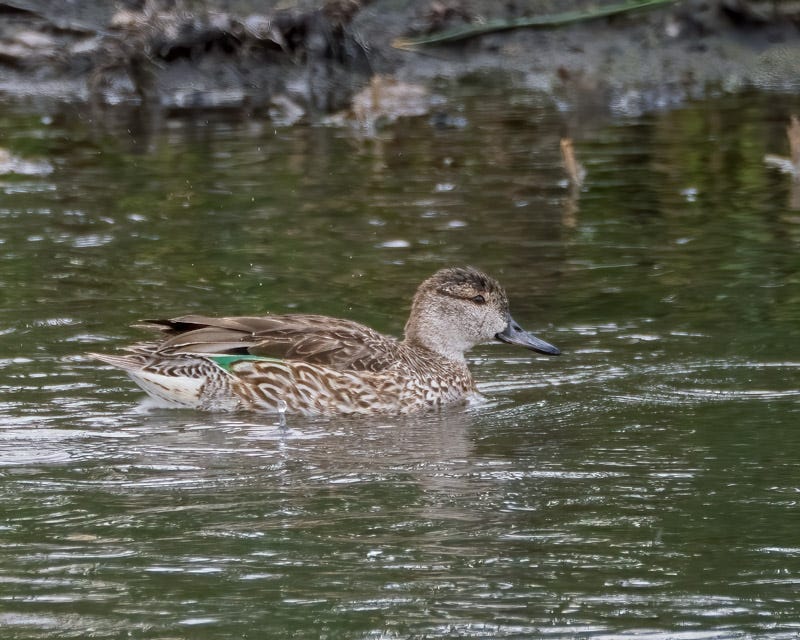
The Green-winged Teal, like other Teals, is a smaller duck. The green wing patch that gives them their name is visible during flight but not usually visible otherwise. The male Green-winged has a green crescent across its cinnamon colored head. Males also have a cream colored rear and a vertical white stripe on the side. Some people look for the ‘white’ on a duck to help with ID from a distance. If you know “where’s the white”, you can identify ducks as this article from the Cornell Lab shares. https://www.allaboutbirds.org/news/wheres-the-white-a-simple-question-can-be-the-key-in-waterfowl-id/
The female Green-winged Teal is rather plain, typical of female ducks. However, she happens to be showing a bit of her green wing patch.
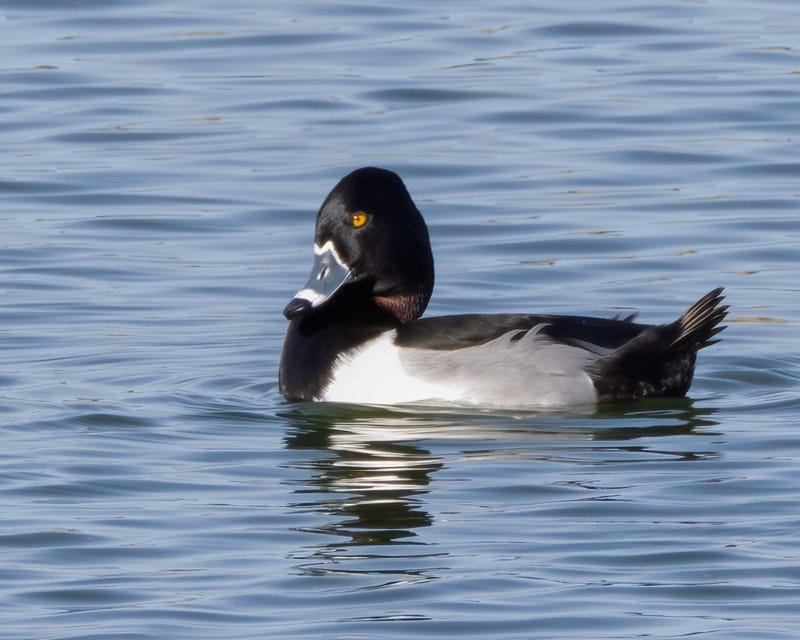
People think that the Ring-necked Duck was misnamed. It has a very prominent white ring around its bill and often people will call it a Ring-billed Duck. Early naturalists often gave birds (and ducks) their common names based on features discovered when the (dead) birds were in their hands. The male Ring-necked Ducks have a coppery ring around their necks that is usually invisible in the field. The duck below is showing its coppery-ringed neck thanks to the lighting and the unusual angle of its head.
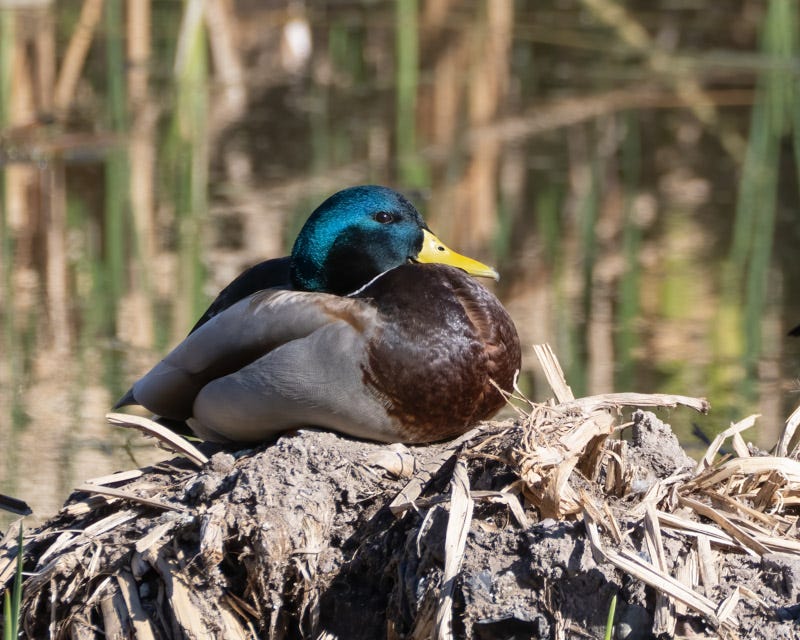
Mallards are the most familiar duck in America. Most domestic ducks were bred from Mallards. The male in breeding plumage has a glistening green head.
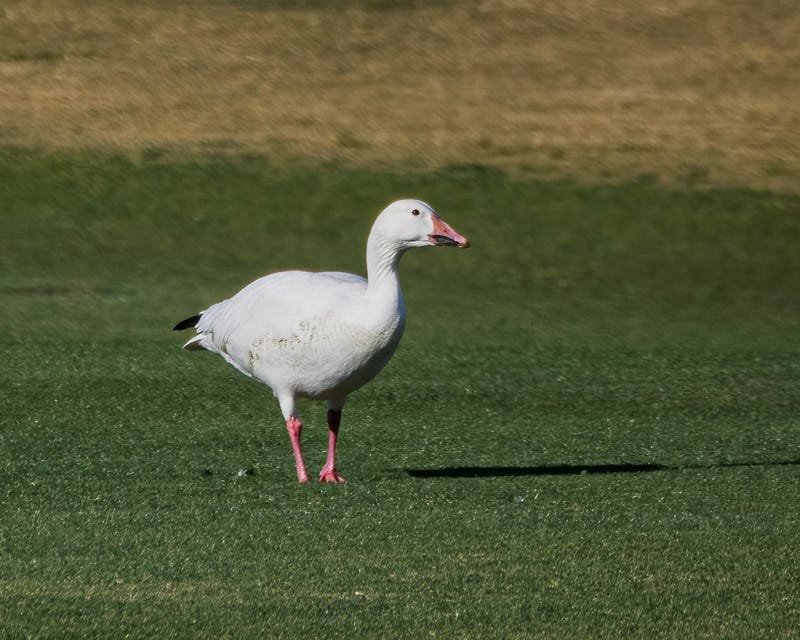
Although not a duck, this Snow Goose is one of just a few that visit Tucson and southern Arizona every winter. This species travels about 4,000 miles to get here from its summer home along the north slope of Alaska or in the Arctic Circle.
This is just a sampling of some of the wintering species of ducks in Southern Arizona. I hope to see and photograph more during the next two months that they are around.
Nice ID shots and info - thanks!
Such beauty! Thank you.