

White-faced Ibises are large, dark, wading birds with an unusual profile featuring a long beak that is described as decurved. “Decurved” means it curves downward. During migration seasons in both spring and autumn these Ibises are uncommon locally but can be seen flying overhead or in shallow muddy wetlands and in the agricultural areas of Marana and Pinal County.
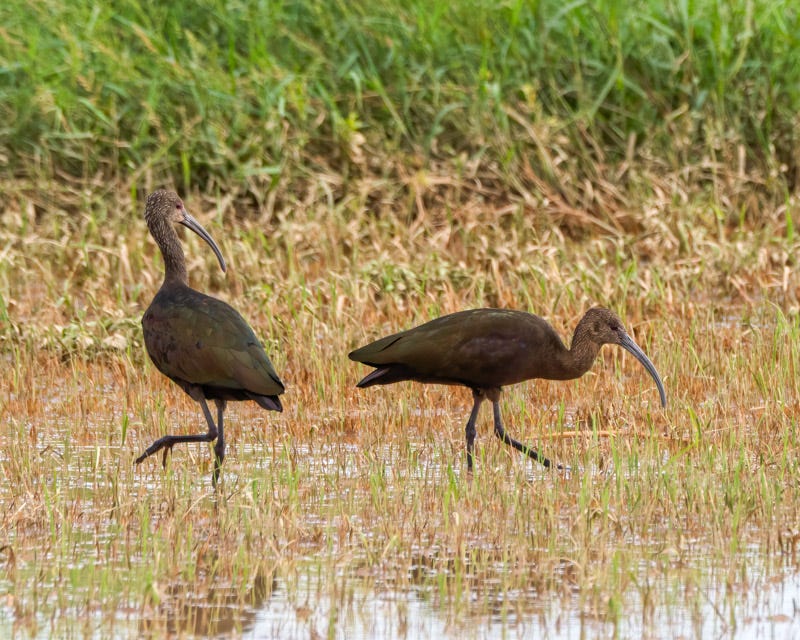
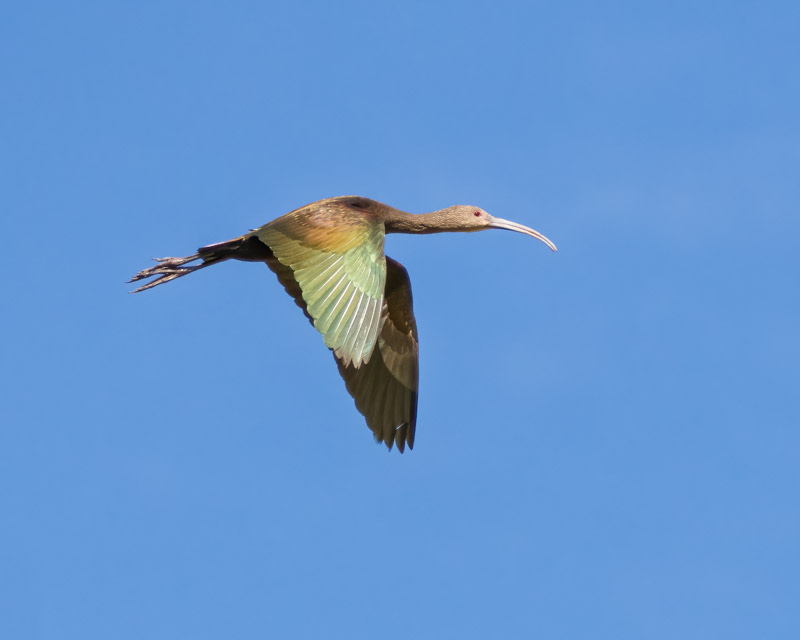
They are as unique looking in the air as they are on land. Their wingspan is about 3 feet wide. Their body length, measured from the tip of their bill to their tail, is about 20”. In flight, the squared off tail with large feet stretched behind contrasts with the outlandish bill.
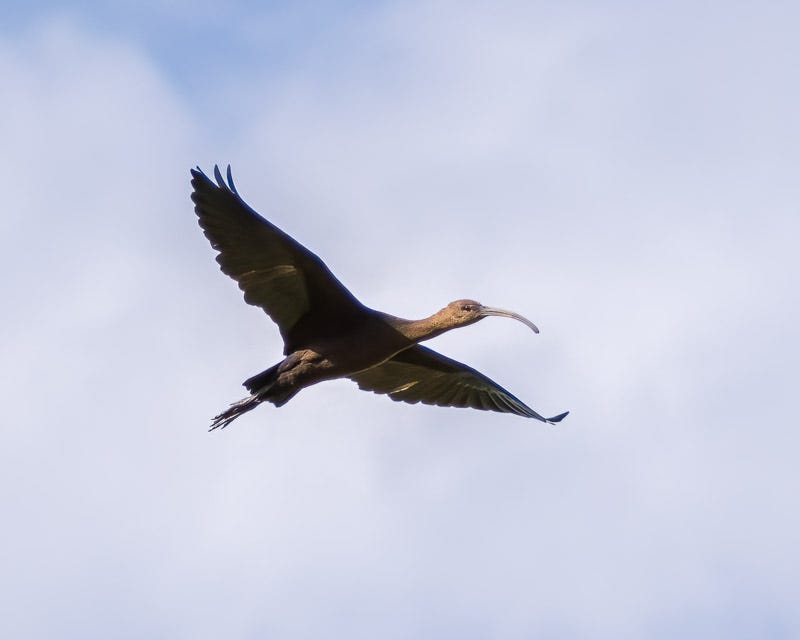
We saw this pair in an agricultural field west of Tucson. There were only two birds but watching White-faced Ibis fly through the air is really mesmerizing.
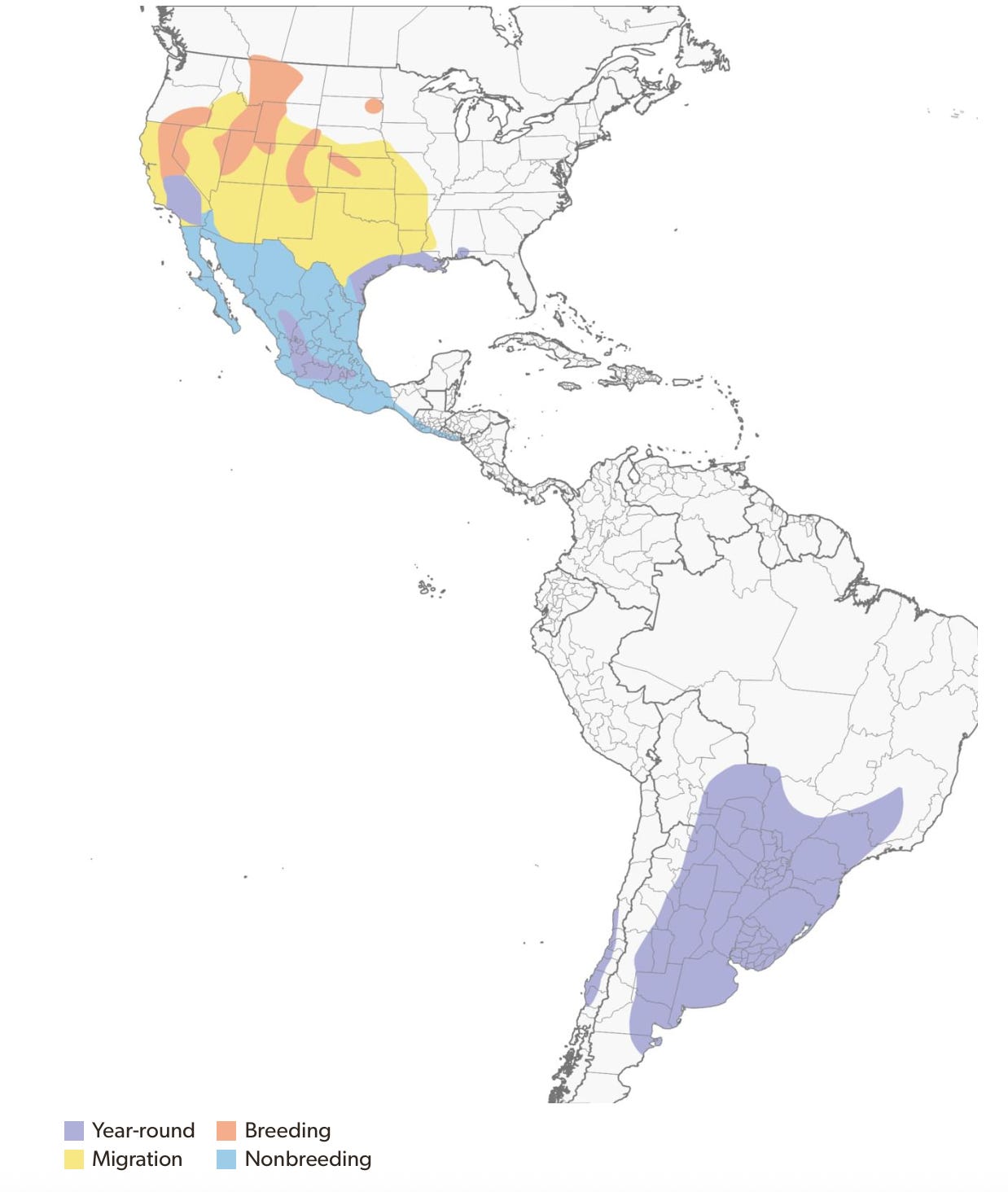
This range map from AllAboutBirds shows the scattered summer breeding grounds of White-faced Ibis. It also shows how widespread their wintering grounds are. On the map below you can see that there is a population of this species in South America. That population does not mix with the North American population and the North American population does not migrate south to South America.
There are times during migration seasons where you can see a flock of White-faced Ibis in the air and, if you are lucky, also find a flock that is resting in mud flats somewhere. Last spring at this exact same location, my friend and I were fortunate to see a small flock that had settled in for the afternoon.
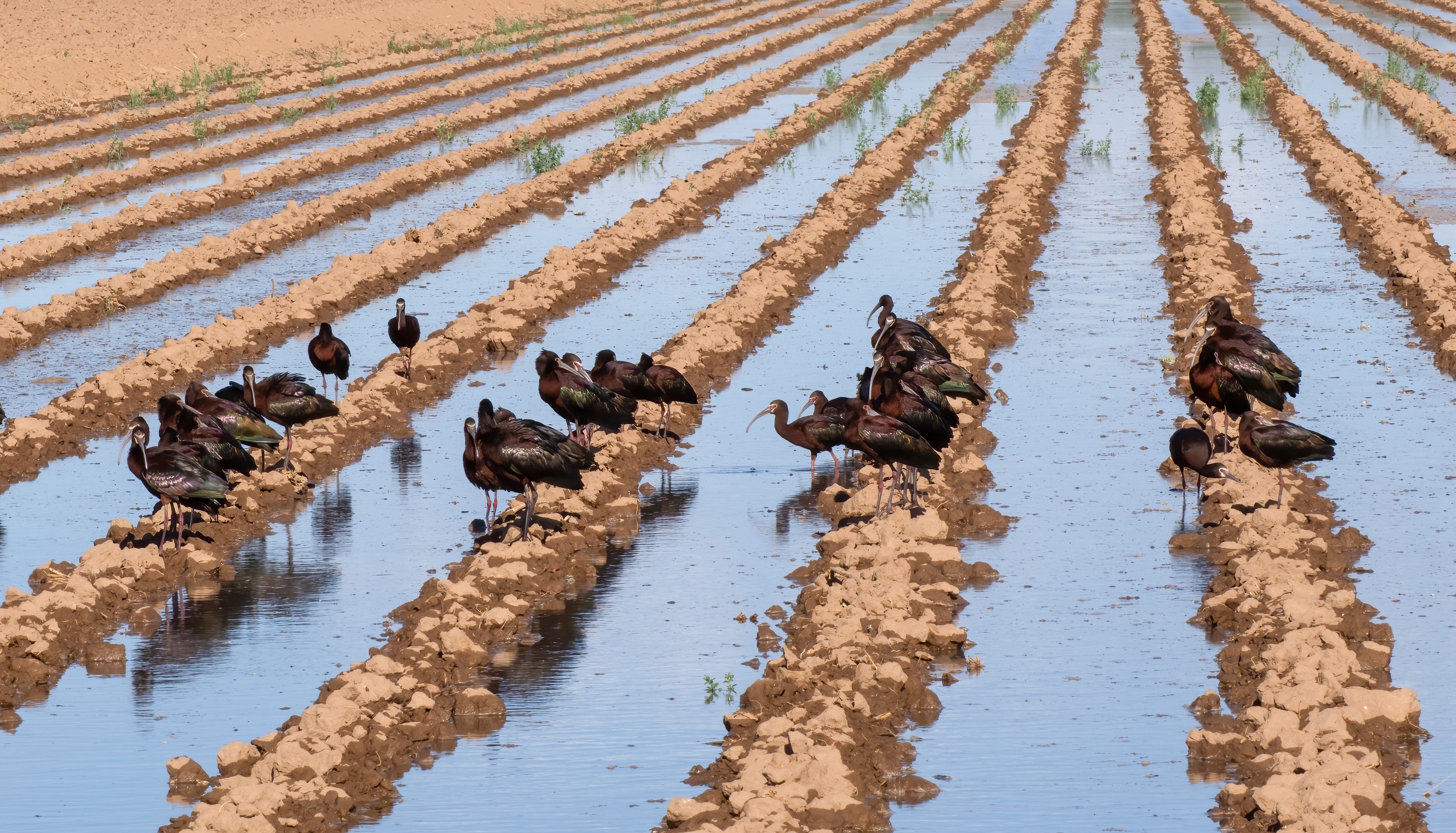
A close-up of one of the birds shows the little white face that they were named after. It really isn’t a white face, but perhaps better described as a white mask around their eyes at the front of their face. During breeding season this feature is present along with one other breeding feature- those red legs.
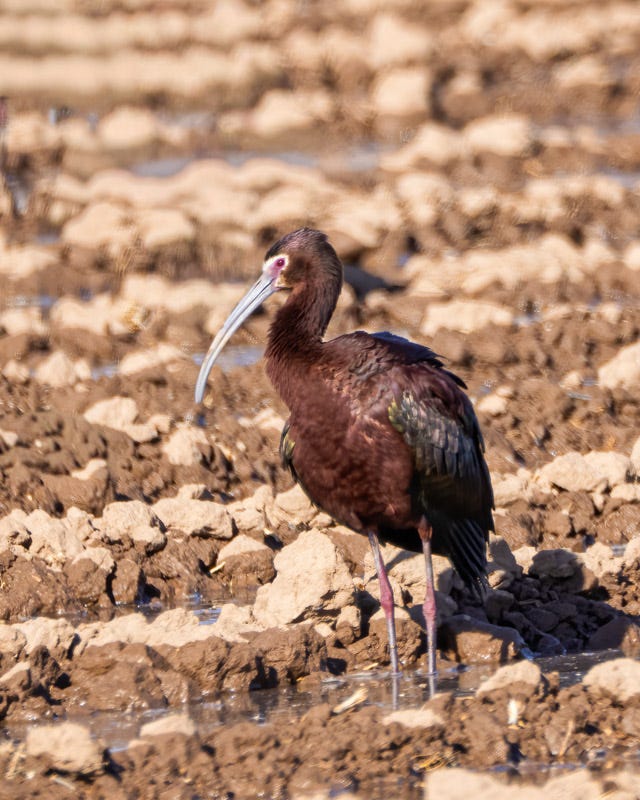
White-faced Ibis have red eyes year-round. In the summer, their feathers have more of a chestnut or ruddy look than the brown that it has during the winter. Their wings appear to be metallic-green or bronze year-round in the right light .
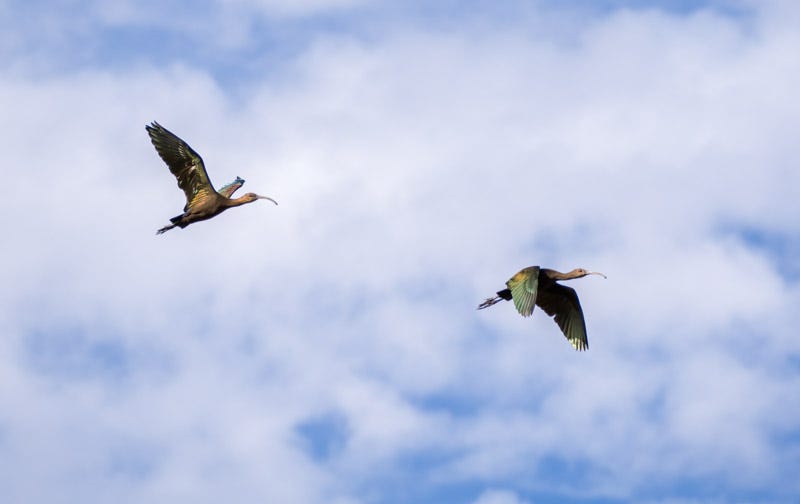
We watched as this pair of birds would feed in a flooded alfalfa field, probing the ground for food with those long bills. Every half hour or so they would take off and circle the fields for a few minutes before settling back down in the same exact field. Backlit, they are very dark looking birds. Still, the unusual silhouette is so different from most other large birds in flight.
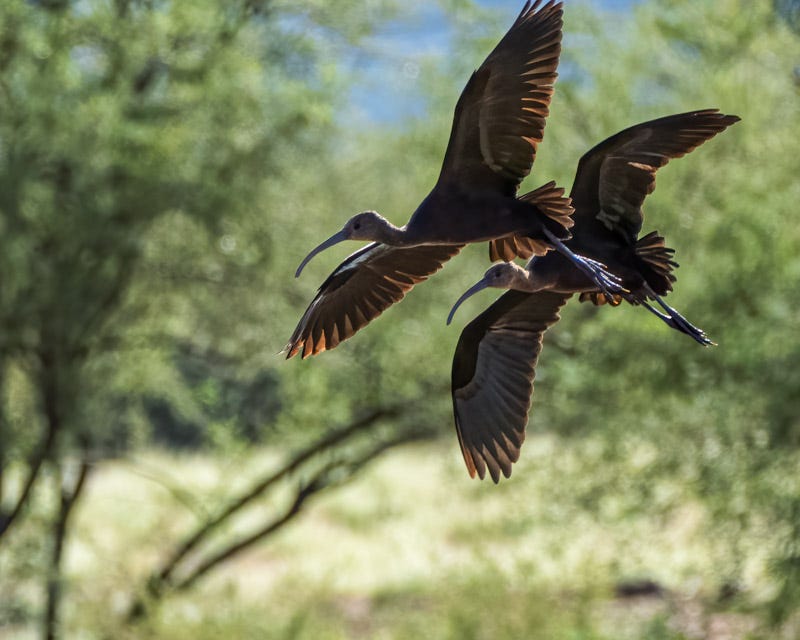
Even as they come down to land, they look so unusual compared to other large waterbirds or raptors.
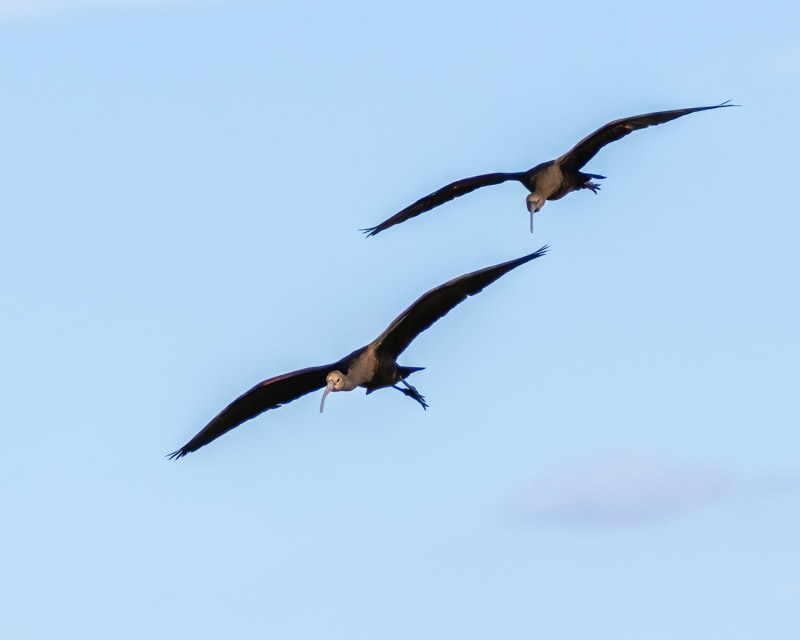
As they circled the farm field, the Tucson mountains and the Catalina mountains were far off to the east.
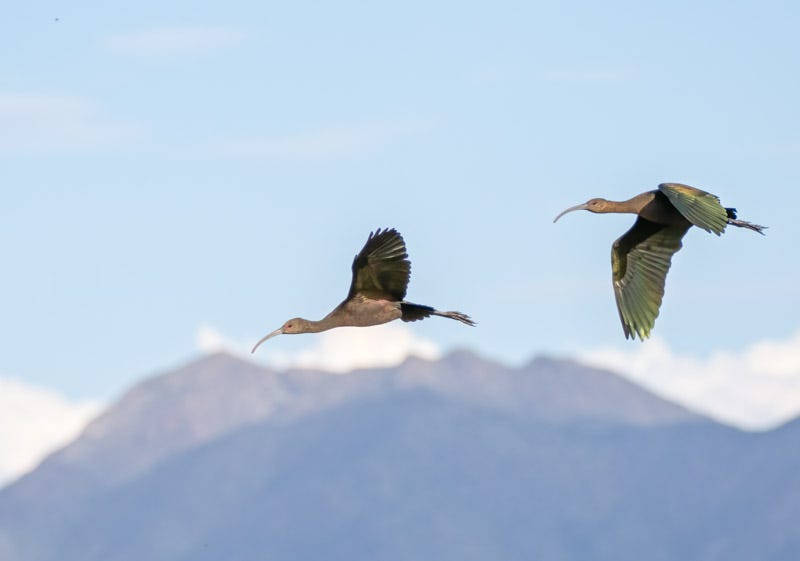
It is possible to find these birds in the right habitat during the winter but they are not very common in our area. That’s what makes any sighting so special.