

There are 17 subspecies of White-tailed Deer in North America and the smallest of them is called the Coues White-tailed Deer. This small southern Arizona subspecies of White-deer was named after Elliott Coues, an Ornithologist who led surveys of the Arizona Territories in the 1800’s. He pronounced his name “Cows” but the small deer are now mostly described as “Cooz” deer. I saw three of these deer feeding in Madera Canyon
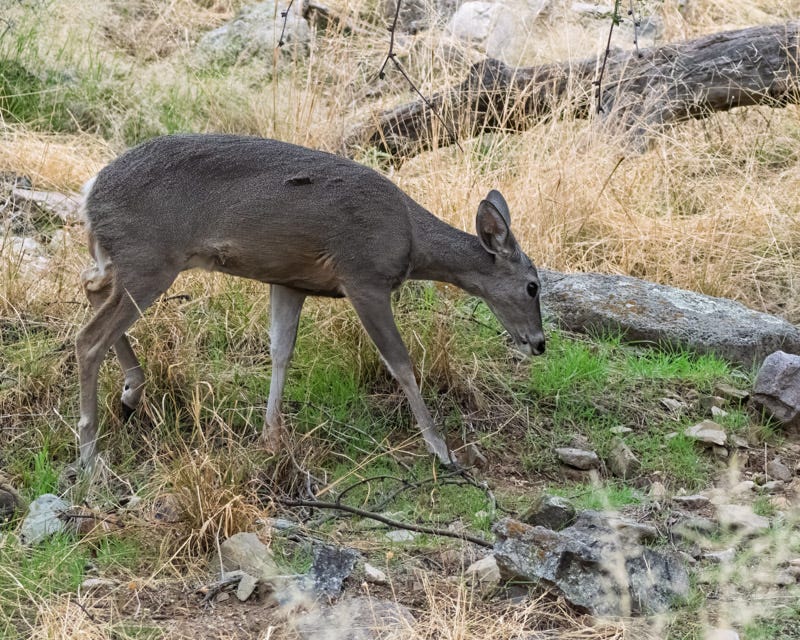
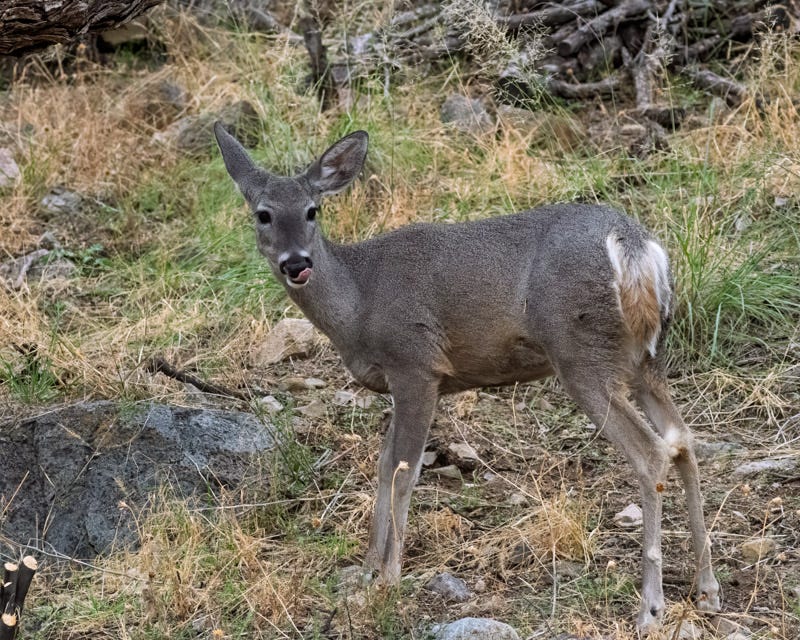
The deer in Madera Canyon are habituated to people but they are always alert. When I walked up the trail a bit to get a better look at this deer it paused to assess what I was doing before returning to feed on the grasses. This deer had a tuft of fur sticking straight up on its side.
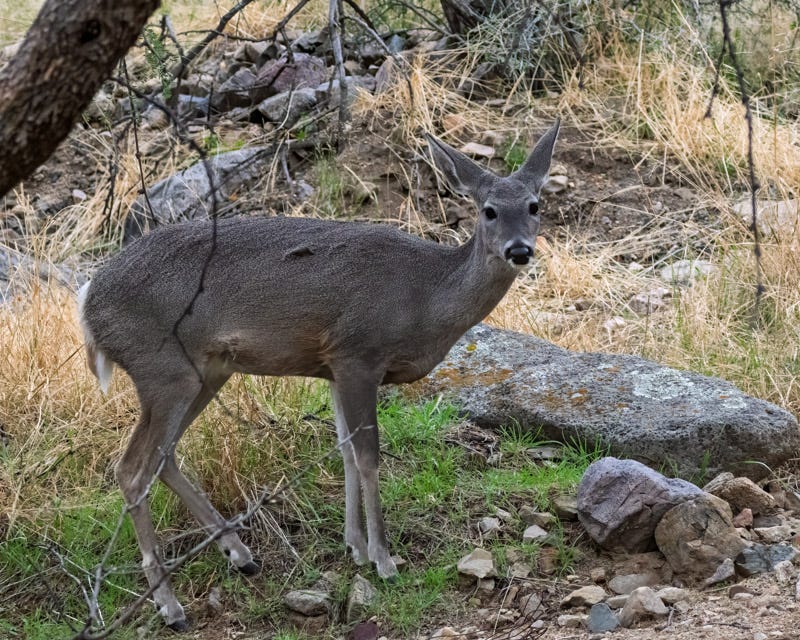
White-tailed Deer are smaller than Mule Deer and the Coues is the smallest of all subspecies of White-tailed Deer. They use three senses to help them stay alive. Their relatively large ears act like radar dishes to capture sound and can rotate 180° to pinpoint the source of noise. Their large eyes offer a wide field of vision to help them see movement. Their acute sense of smell is their primary defense to detect danger from a distance.
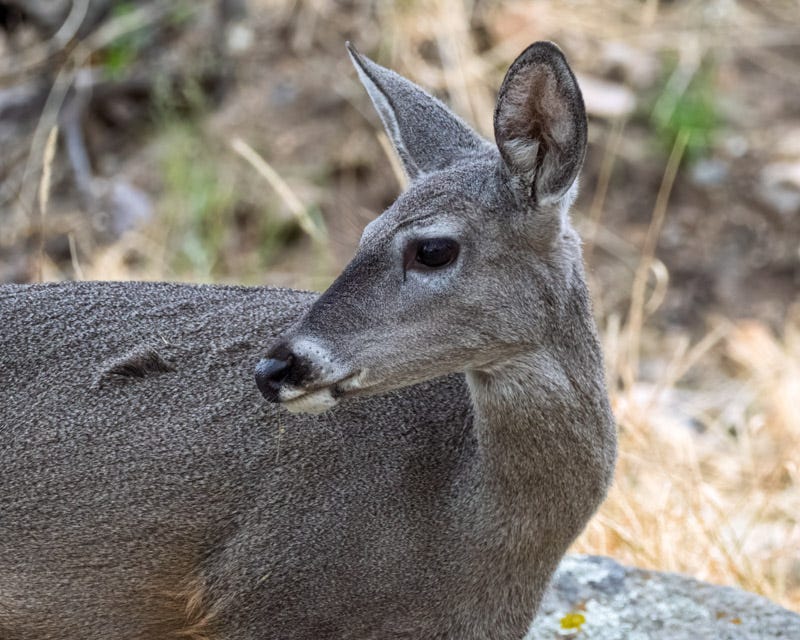
During the winter, the thick fur of these deer is gray. Those winter coats help them to blend into the colors of the winter landscape. Once spring arrives, the deer will shed their winter coats and the new fur growing in will be a more reddish-brown. After feeding for a bit, this deer reversed its direction to move away from me.
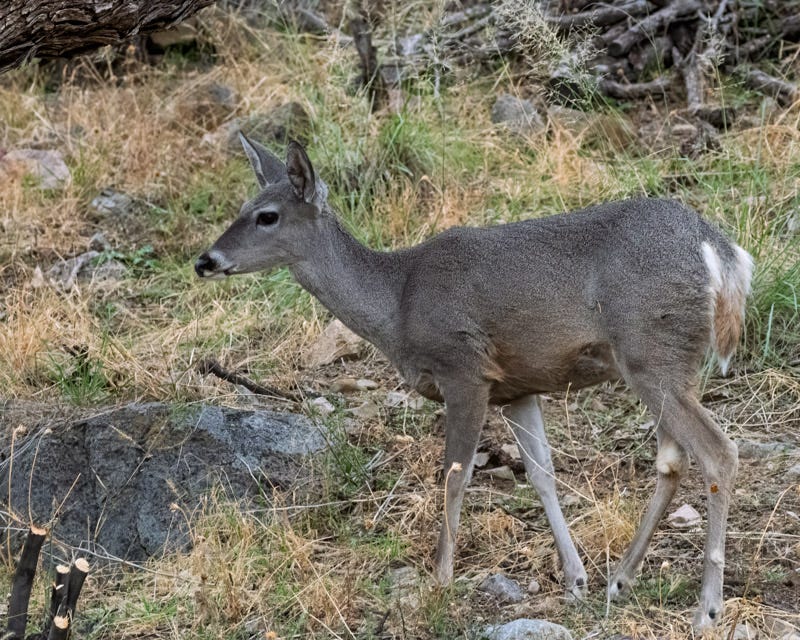
White-tailed Deer lick their nose to moisten it. A moist nose is a more efficient scent collector because scent molecules stick to wet surfaces better than they do to dry surfaces. In southern Arizona’s dry air, deer need to moisten their noses more often to keep them in prime condition. This Coues White-tailed deer likely wanted to be sure it knew all it could about me.
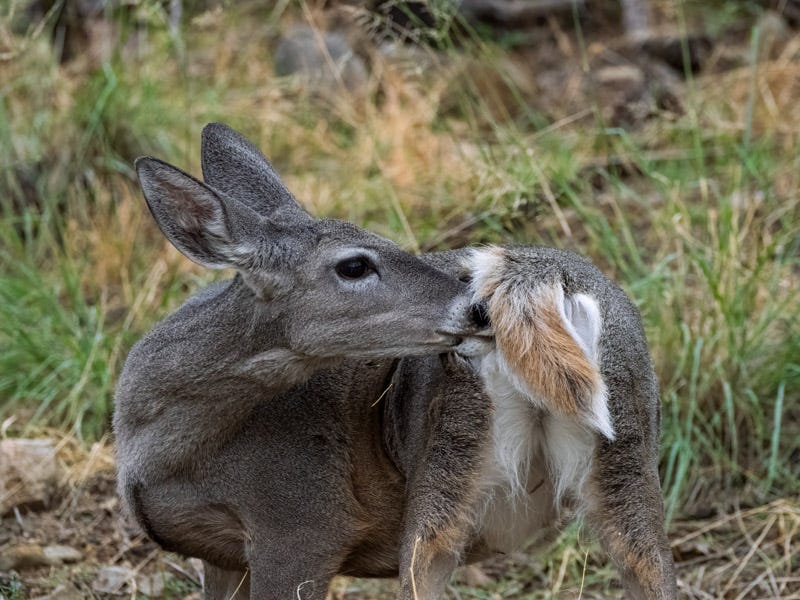
She paused for a moment to clean herself up.
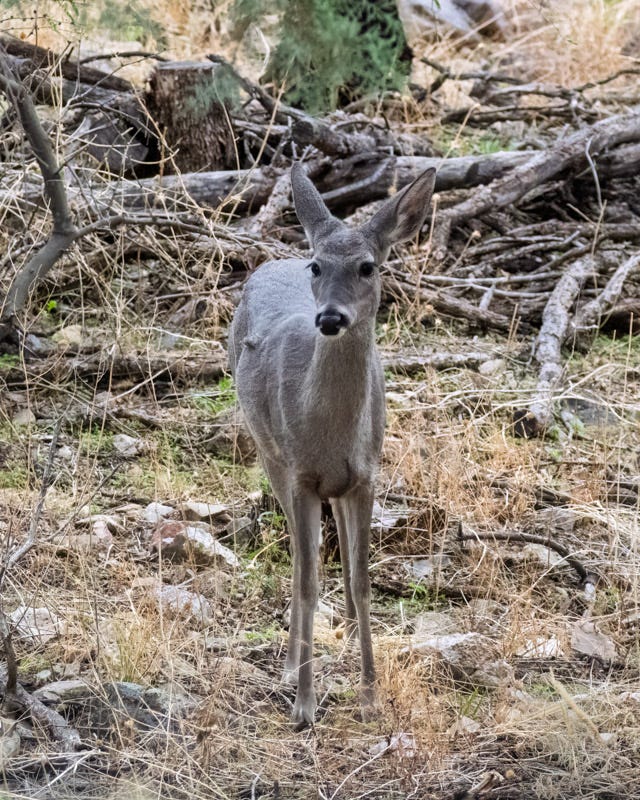
Coues White-tailed Deer are small, with the bucks weighing about 100 pounds and the does weighing around 65 pounds. As big as this deer looked from the side, it was startling to see how small it appeared when it faced me head-on! I thought this was a different, perhaps much younger deer when I saw it. But the unique tuft of hair on its side let me know this was the same deer I had been watching all along.
If you are interested in learning more about Coues White-tailed Deer, Arizona State Parks and Trails shares some good information.
Very interesting as always and thank you for the additional information. I signed up to receive the Arizona Wildlife news. I would really like to see a Coues deer in person because I can't really determine who small they are from the pictures, my dog weighs 110 (Black Lab & Rottweiler mix]
The Coues are such beautiful deer. I was so excited to see some on my way into Madera Canyon last year. Actually thought I had seen a Coues in Tanque Verde but it wasn't until I saw a real Coues in Madera that I knew the previous spotting was mistaken. Thanks for the article.