

Most years southern Arizona has large flocks of Swainson’s Hawks moving through during migration season. In the spring, those birds are flying north to their breeding grounds across the western US and Canada. In the fall, they head south towards their wintering grounds in Argentina. For some reason, large groups of migrating Swainson’s have not been seen this season migrating southward in our area. I have seen a few Swainson’s here and there and posted a few photos in the recent past. Here is my final set of a very small group of Swainson’s that I saw in September.
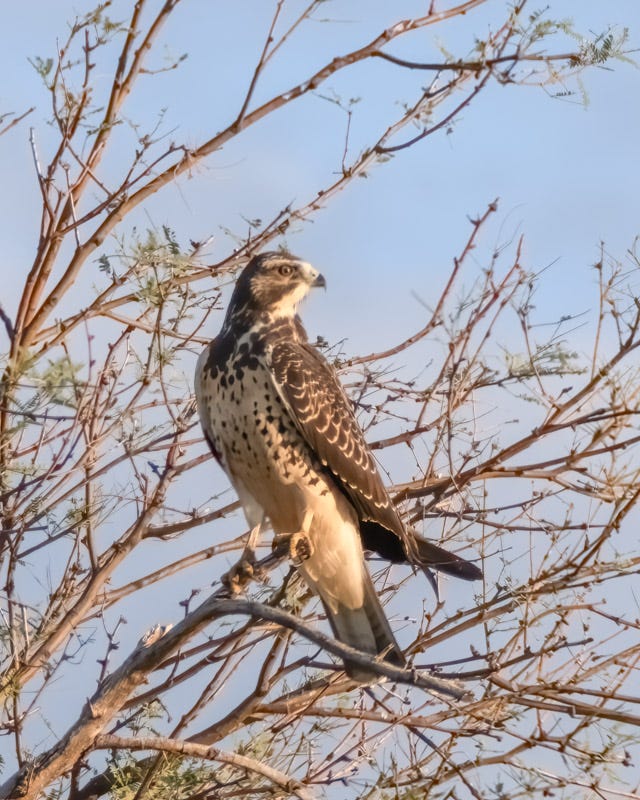
That speckled breast and the lack of a dark bib tells us this is a juvenile bird. It takes up to three years for Swainson’s to reach full adult plumage. The bird’s behavior of remaining perched and checking me out also seems to be that of a young bird.
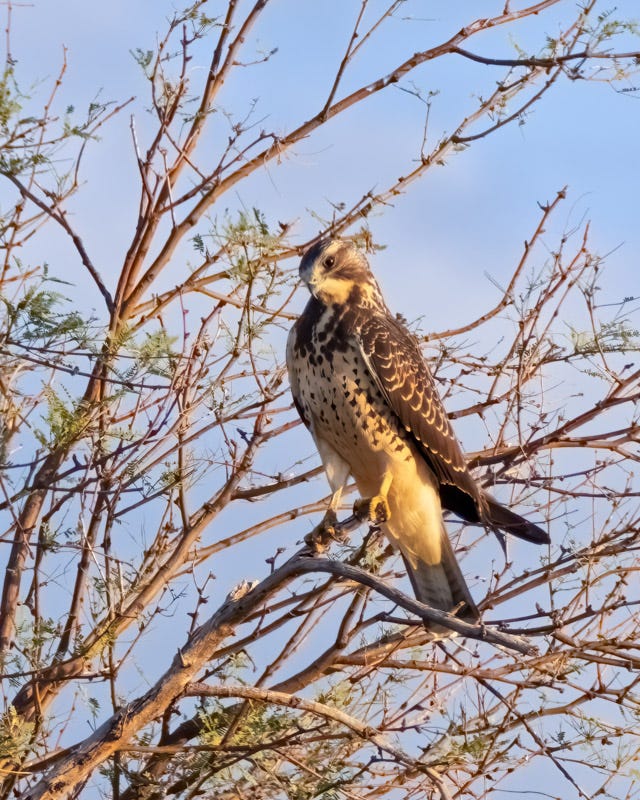
The Swainson’s finally had enough information to decide to take off.
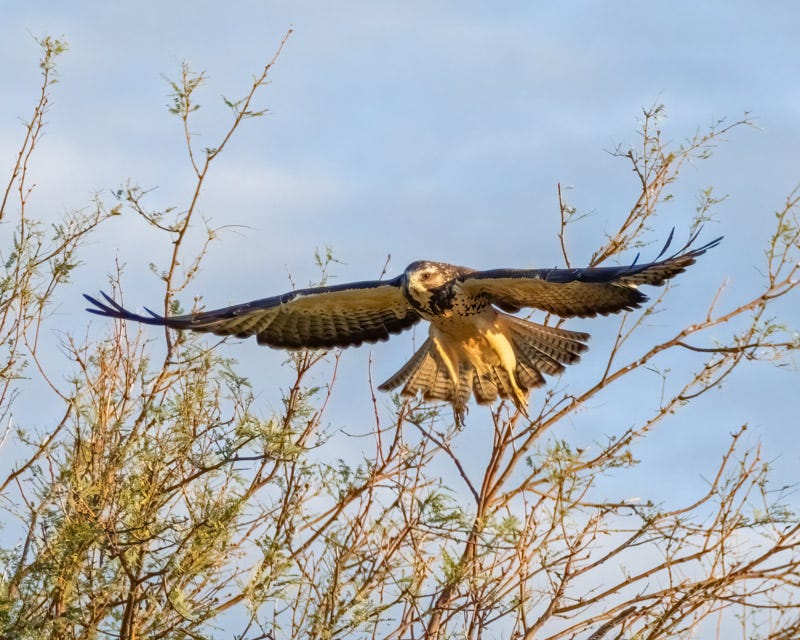
It never ceases to amaze me to watch large birds fly into, out from, or through the dense, tangled growth of a tree without just crashing through the many branches and limbs. I guess they have that flight thing figured out!
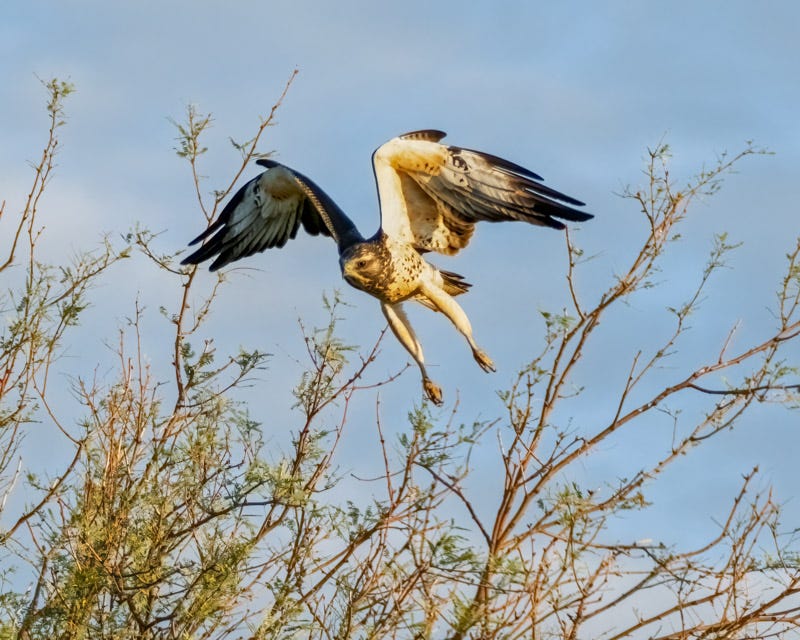
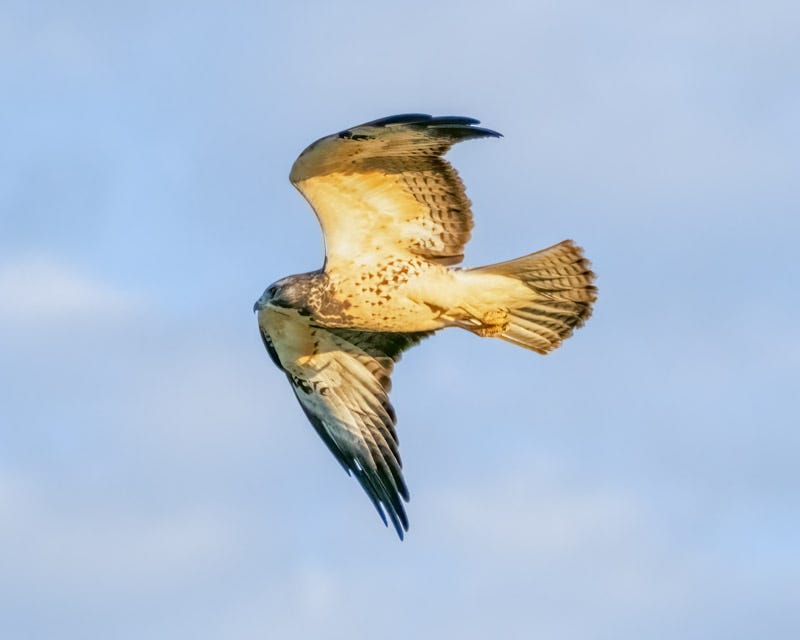
The Swainson’s cleared the tree and took off. You can see the typical light underwing feathers of Swainson’s Hawks. The trailing edge, or flight feathers, of this juvenile Swainson’s is lightly patterned.
Swainson’s Hawks are raptors with one of the more highly variable plumage of any North American raptor. A few mesquite trees beyond the first Hawk’s tree was the perch spot of another Swainson’s. This one had a dark head and throat and its body was uniformly dark brown.
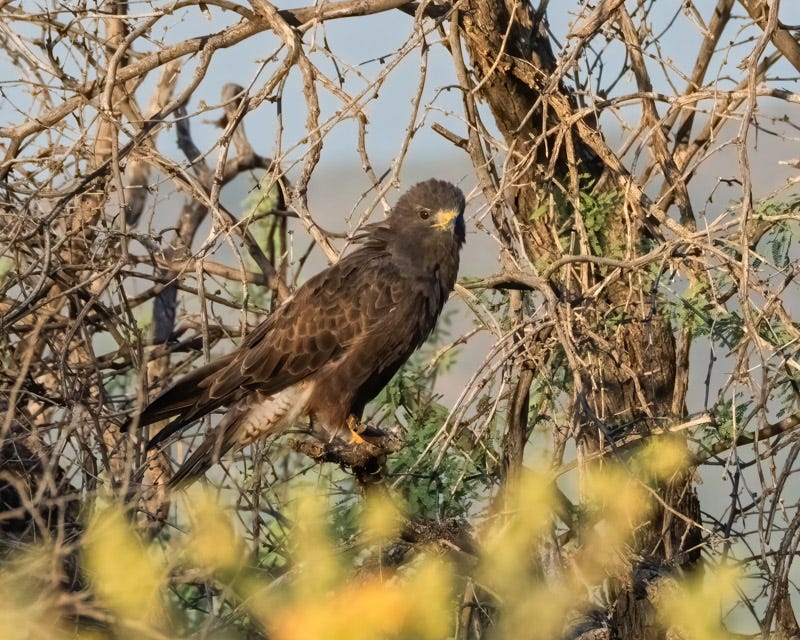
We stopped the car when we pulled even with this Swainson’s. The bird seemed to be thinking about its options. It did take off....
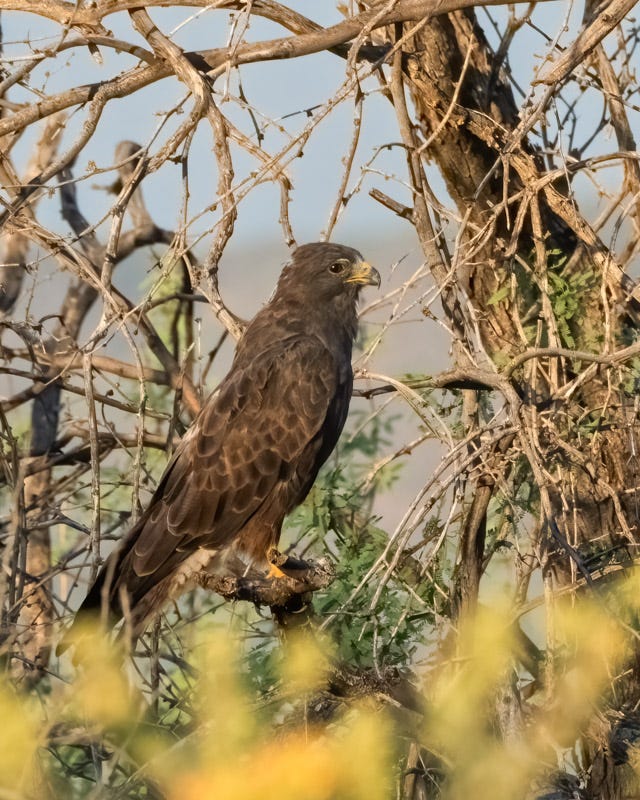
...and landed about 200 yards away atop another mesquite tree.
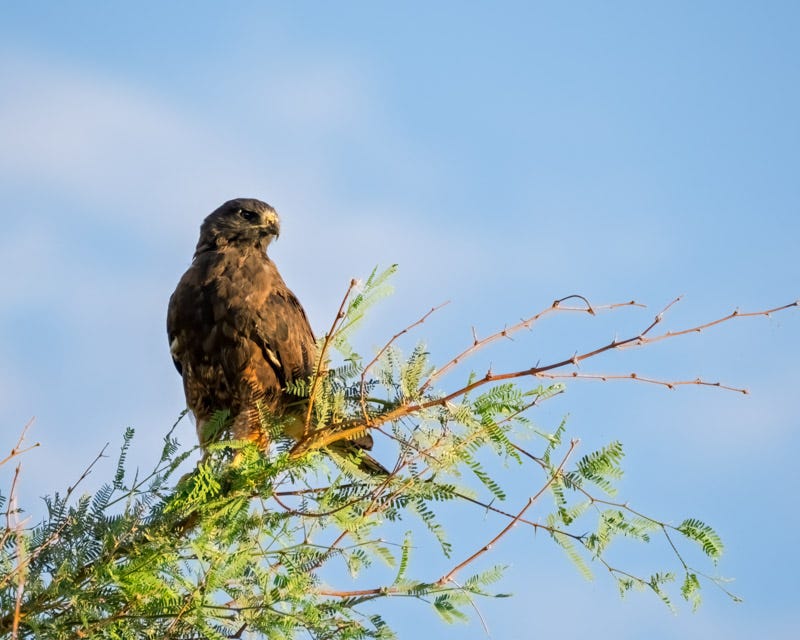
There were a small number of other Swainson’s Hawks at this farm. The sun was behind this one’s back but you can see the large dark ‘bib’ on the bird’s throat above its belly. Adult Swainson’s Hawks have that noticeable bib.
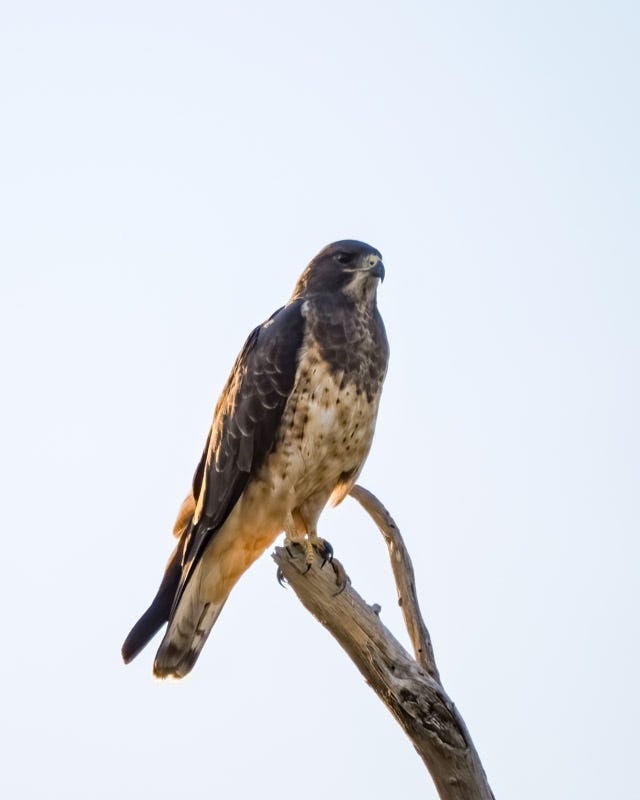
A few other Swainson’s were on the ground in the recently harvested alfalfa fields. Those fields, with the alfalfa cut, offer a great place for Swainson’s Hawks to find prey. After the harvest, mice and insects like grasshoppers and crickets no longer have cover and are much easier for the Hawks to find.
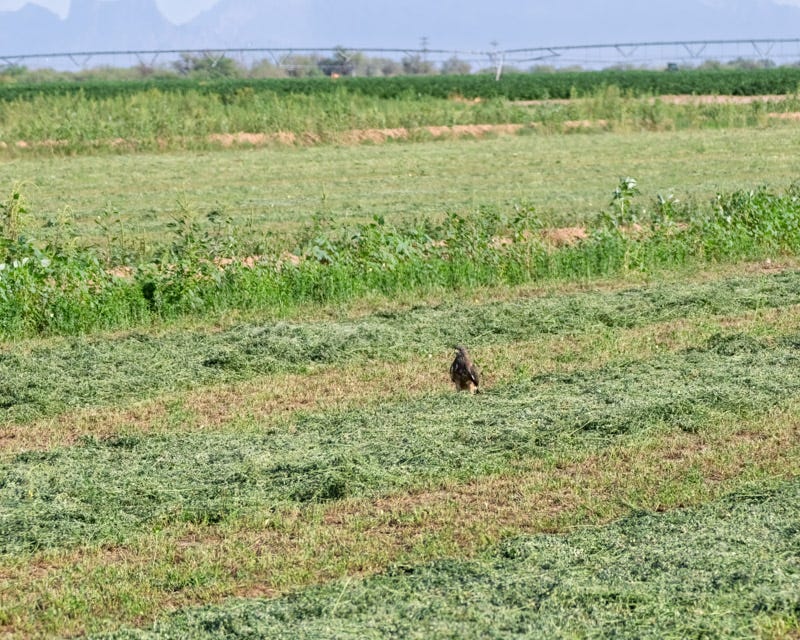
Some of the Swainson’s perched on the berms between the fields. Those berms offer a ‘high’ vantage point for them.
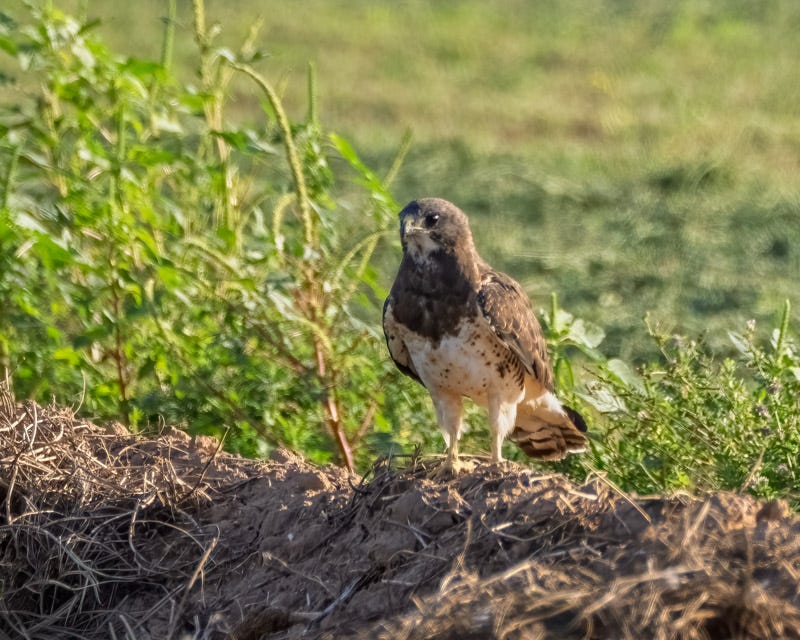
I was disappointed not to see any large flocks of Swainson’s this year. I had hoped to see typical migrating flocks of up to 100 birds each. I think that the timing of this summer’s severe wildfire season likely disrupted their migration. Soaring raptors depend on clear visibility and atmospheric current to travel. The massive fires this summer likely created massive airborne barriers to typical migration patterns. I’ll be looking for the Swainson’s to return in numbers next spring on their journeys north.