

Once the Western Screech Owls in my backyard nest box fledged, they disappeared. I have no idea where they went or how they are doing. So I jumped at the opportunity when I was invited to see some of the Western Screech Owlets that the Arizona Raptor Center was raising.
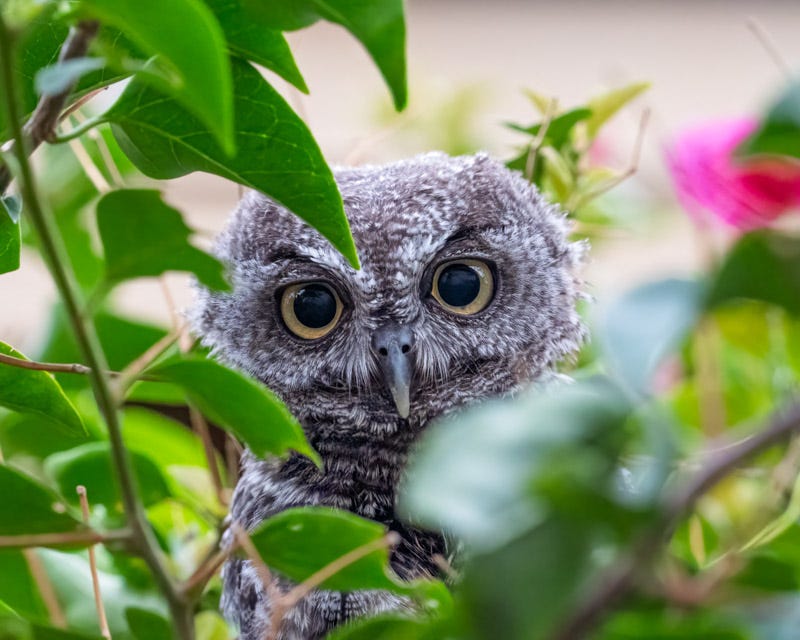
Those Western Screech Owlets were either orphans or young birds that have successfully gone through rehab. They were first placed with adult Western Screech Owls who fed and “raised” them. Then, in something called a “hacking process”, natural fledging is simulated through a soft release method. The Owlets are in an enclosure that has a safe nest box but it is opened to the outside, allowing the birds freedom of movement. The Owlets can come and go as they please, getting stronger and learning to fly and hunt on their own. Meanwhile, food is still provided through specialized openings in the enclosure so that the birds never associate humans with food.
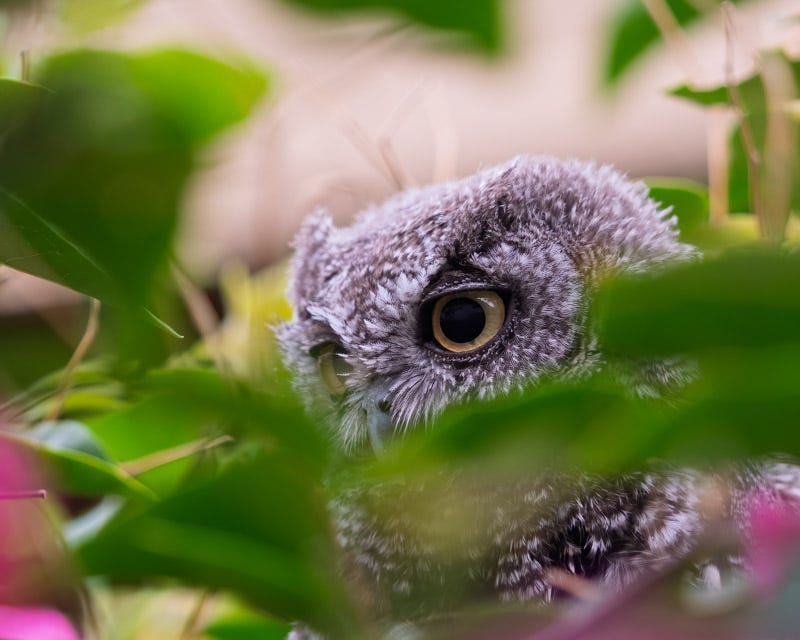
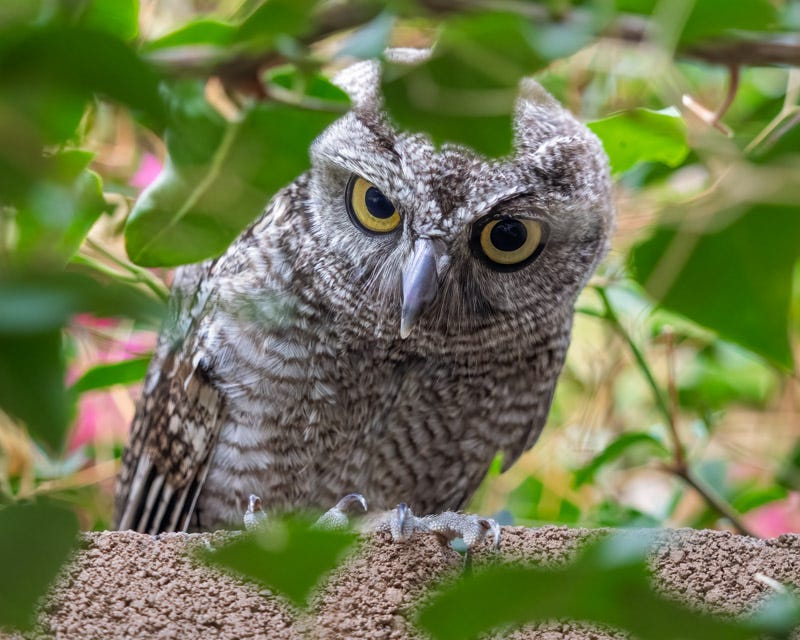
When we were invited to see the Owlets, they had begun spending their nights outside of their enclosure and roosting during the daytime hidden in bougainvillea along the back wall.
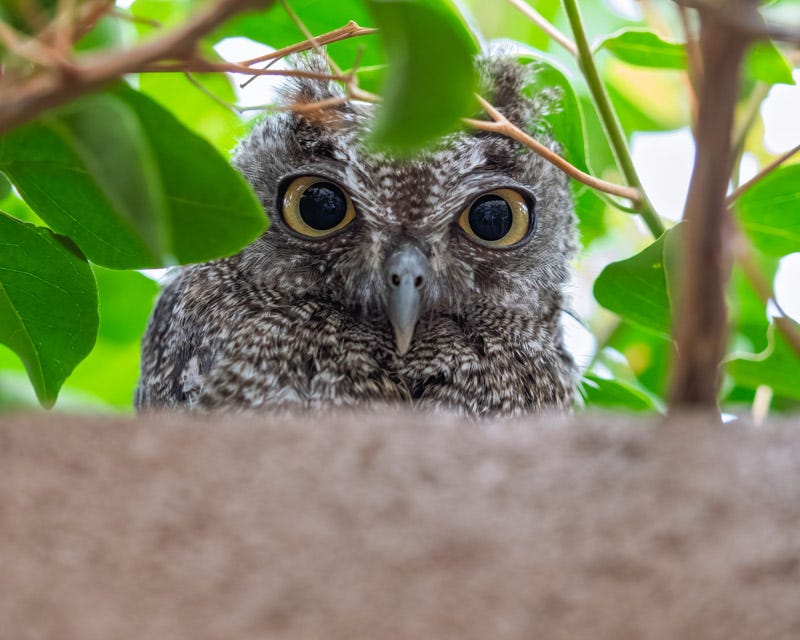
I’ve mentioned the Arizona Raptor Center in recent posts. They are a non-profit group of falconers that rescues, rehabs and releases birds of prey using falconry techniques. Most of the Western Screech Owls that I saw arrive in the southern Arizona ARC group due to common and preventable reasons. Those include landscaping during spring breeding season which causes displacement. Dog and pet attacks are another cause. Rodenticide is yet another common reason.
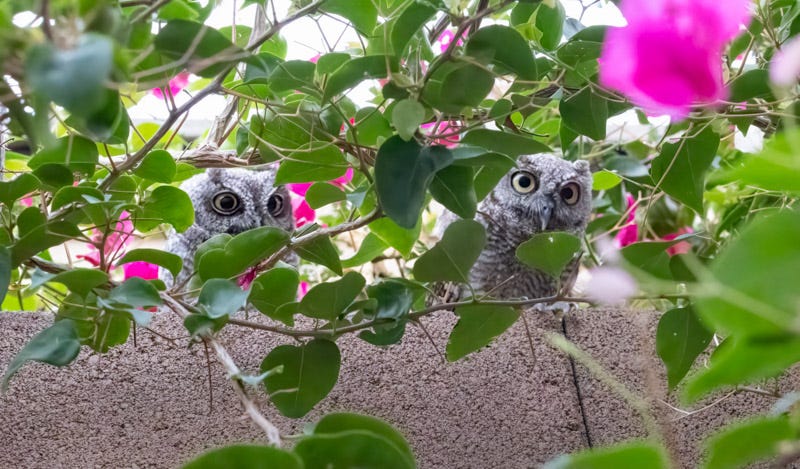
These Western Screech Owlets are still showing their juvenile plumage. Soon, they will begin to grow in their adult plumage through the fall and winter and begin dispersing as well. They will reach their adult plumage and maturity by next summer.
You can learn more about the Arizona Raptor Center at their website.
So cute they are!
Lucky sightings!
😊,! Patti
Dan, amazing and so adorable. Thank you for sharing your love of birds with us.