

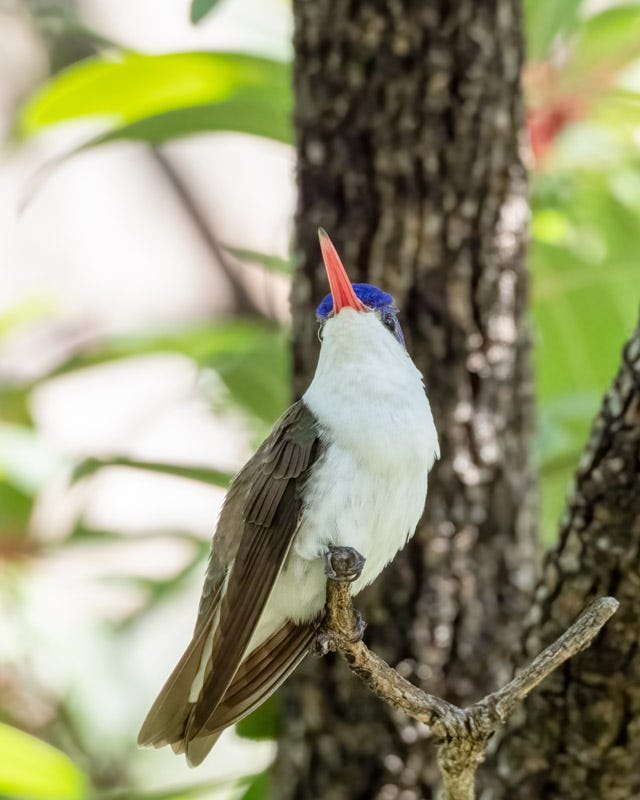
Last week I visited the hummingbird feeders at Beatty’s Guest Ranch in Miller Canyon in the Huachuca Mountains. Migration season has begun and this location, like so many others in southeastern Arizona, is a hotspot for Hummingbirds particularly at this time of year. We were rewarded with nice looks at Violet-Crowned Hummingbirds. Violet-Crowns are the only Hummingbird species in the US that lack a colorful gorget (throat patch).
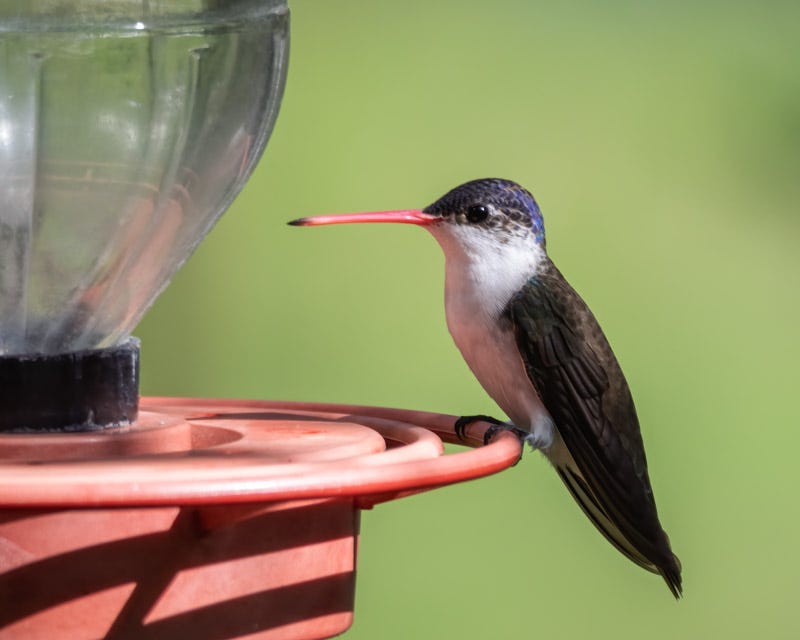
Violet-Crowned Hummingbirds are a Mexican species that is large compared to many of our other more common Hummingbirds. Large means they weigh 0.2 ounces, or the same as a US quarter or 3 sheets of copy paper. Male and female Violet-Crowns look the same with a snowy white breast and throat, the reddish-orange bill tipped in black, and with a crown that glows blue-purple in the right light.
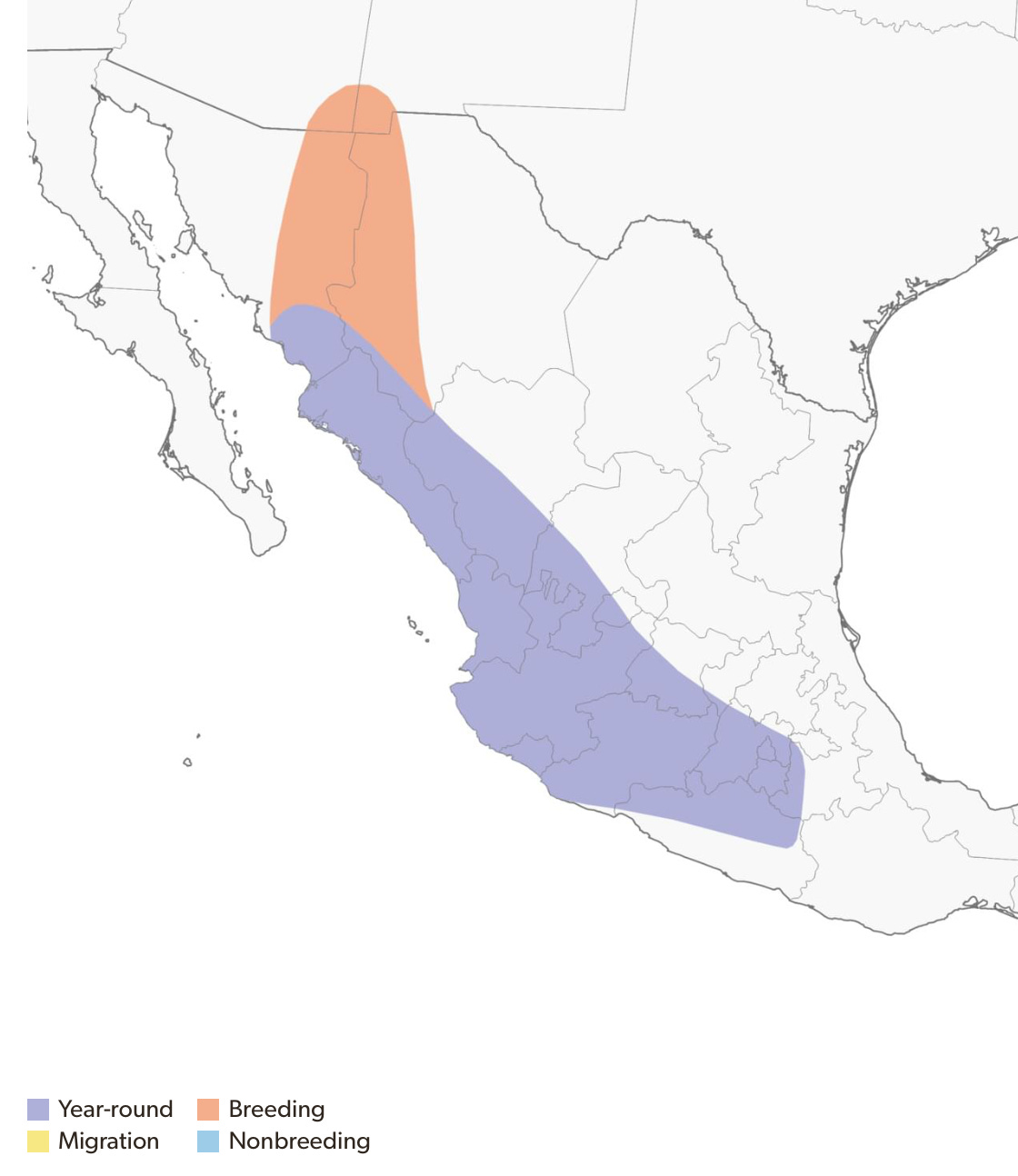
The AllAboutBirds range map shows the only place to see Violet-crowned Hummingbirds in the US where they appear during breeding season. They are not common even during breeding season but can be found in foothill and middle elevation canyon mountain groves. Beatty’s is at 5,700 feet elevation.
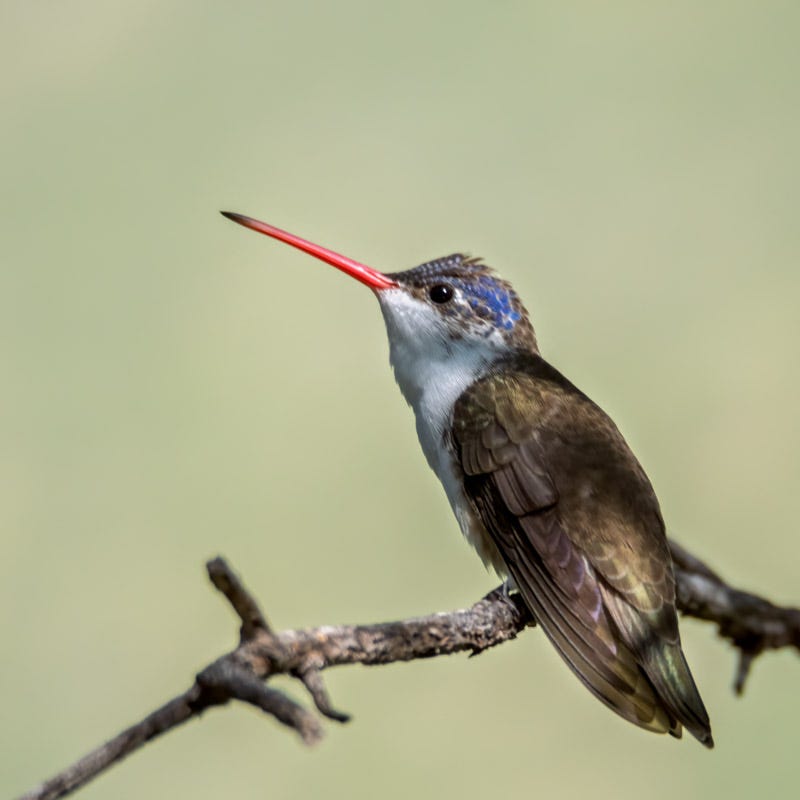
Many of the hummingbird feeders were in shade with some dappled sunlight and the Violet-crowned Hummingbirds didn’t often perch in the open. There were two spots that seemed to be their occasional perch of choice.
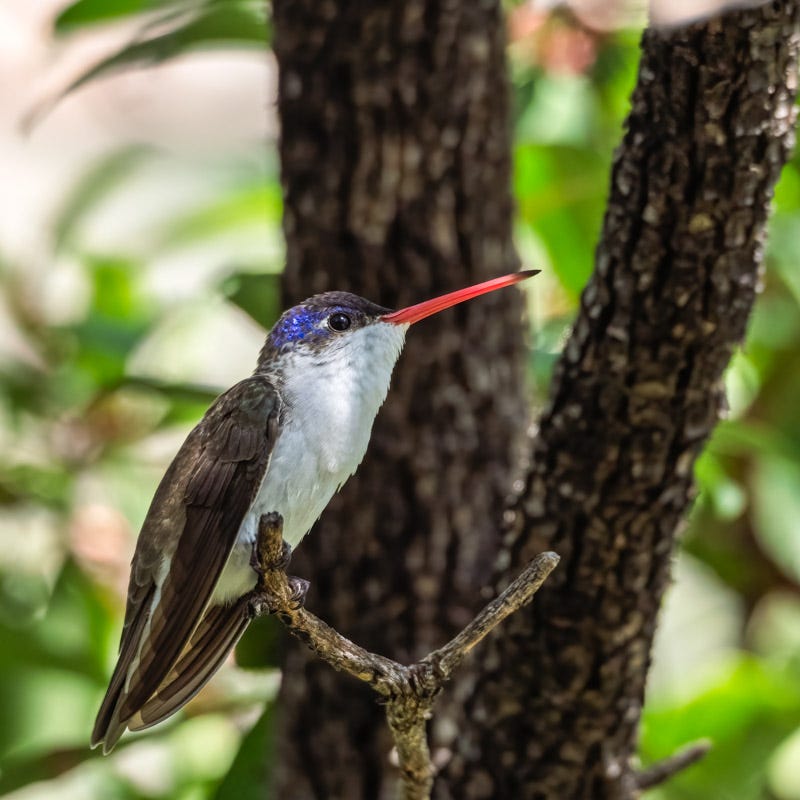
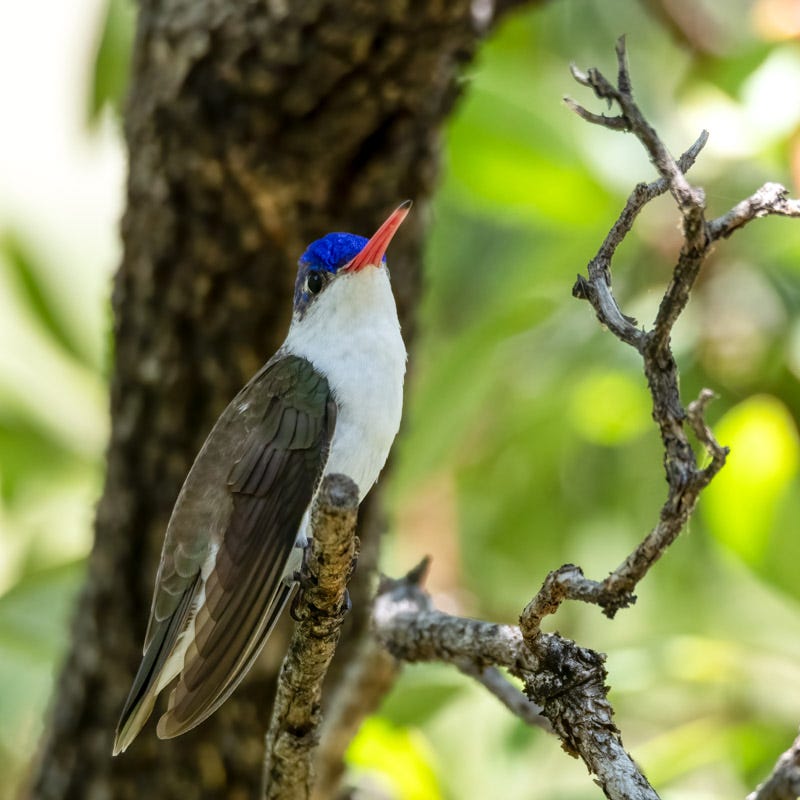
From this perch, when the Hummingbird turned its head, the crown finally glowed in the brilliant iridescent purple color. That color against the white throat and orange bill was quite the combination.
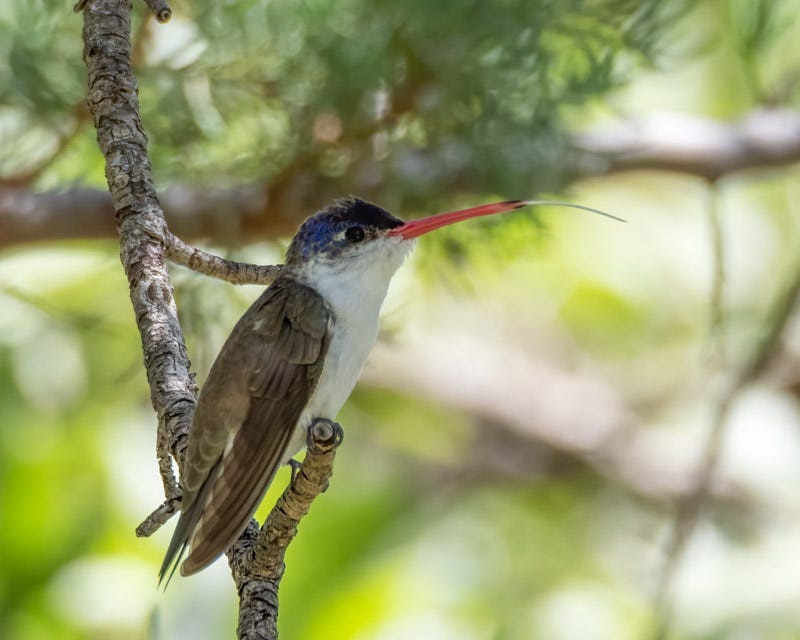
Hummingbird tongues are very complex. Sometimes a Hummingbird will stick its tongue out while it is perched. It might be sampling traces of sugar on its tongue or microscopic air particles. Hummingbird tongues are actually split and loop under the skin and around and behind the skull. So this bird might be ‘resetting’ its tongue system. For more on this unique tongue, you can listen to an NPR Science Friday report.
Once again, a slight turn of the head brings out the full color of this special Hummingbird.
Birdnote tells us more about a Hummingbird’s tongue here.
Great minds think alike, as you'll soon see.
Such pretty birds!