

Common Yellowthroat are present in the Tucson area during the summer breeding season. They can be found near riparian areas and marshland. By found, I mean they can often be heard in those areas. It is not the easiest to see these birds but they might be found if you hear them calling.
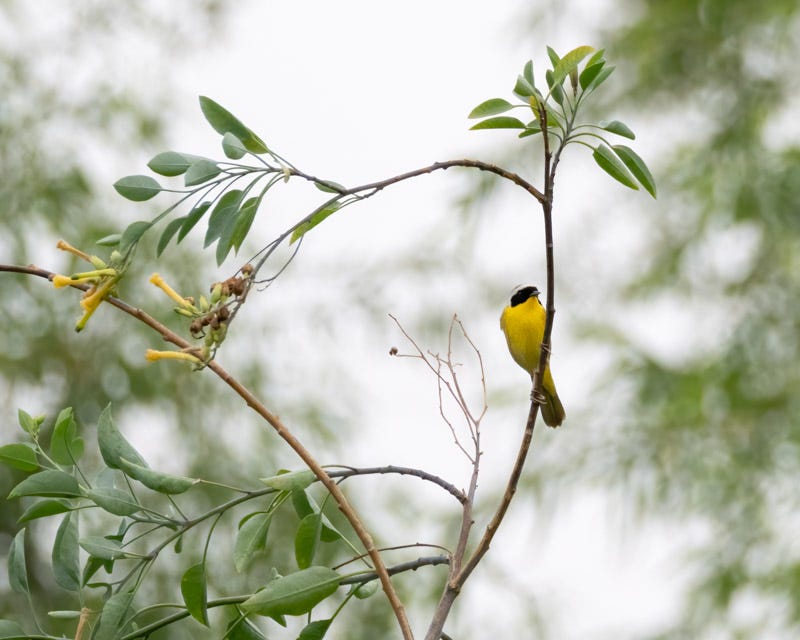
Common Yellowthroat live in dense, low lying vegetation. They remain hidden from predators there and will forage for insects in that thick environment. They are elusive, notoriously so, and seem to skulk around that habitat, generally hidden from view.
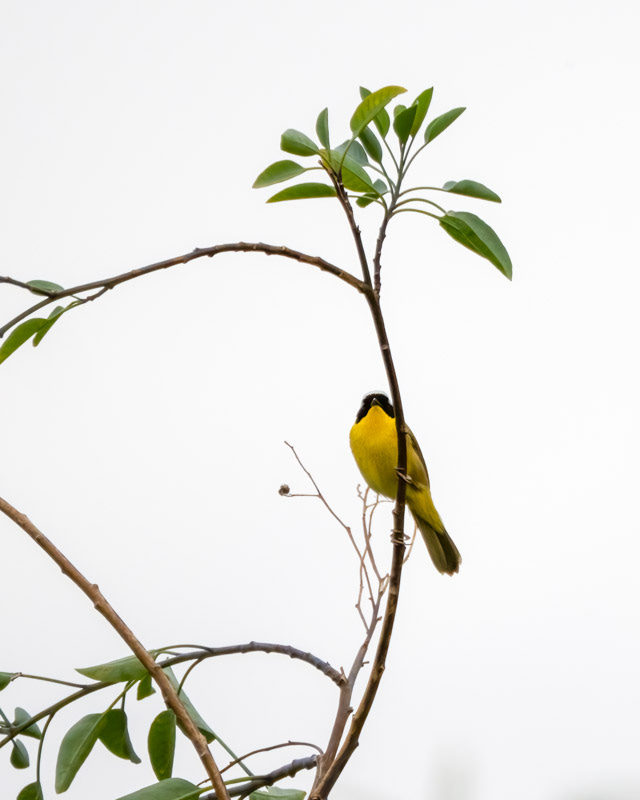
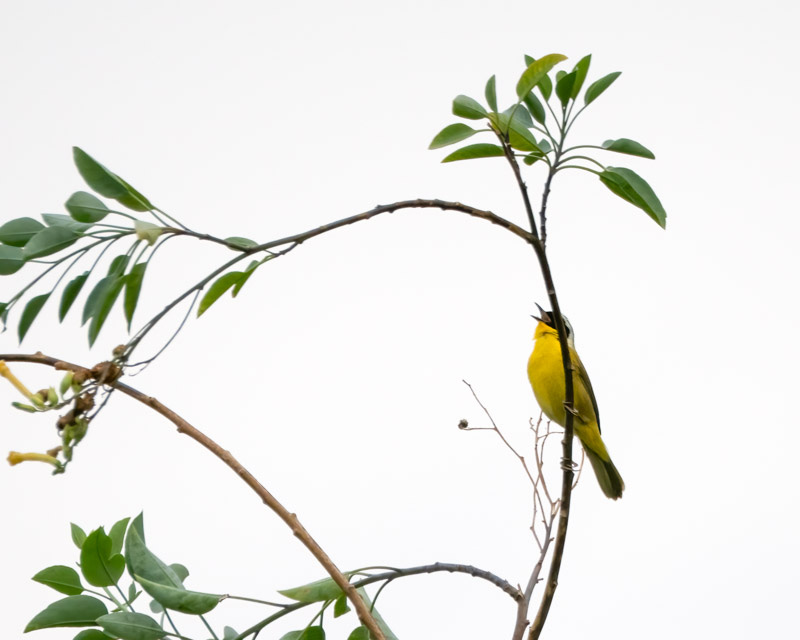
However, the male Common Yellowthroat may sometimes appear in the open and on a high perch, to sing its tell-tale “wichity-witchity-witchity” song. You can listen to its distinctive song on Birdnote and learn a bit more about this warbler. When I heard this bird calling in Sweetwater, it took me a while to find it by scanning all of the reeds. I finally spotted it on a distant tobacco tree plant.
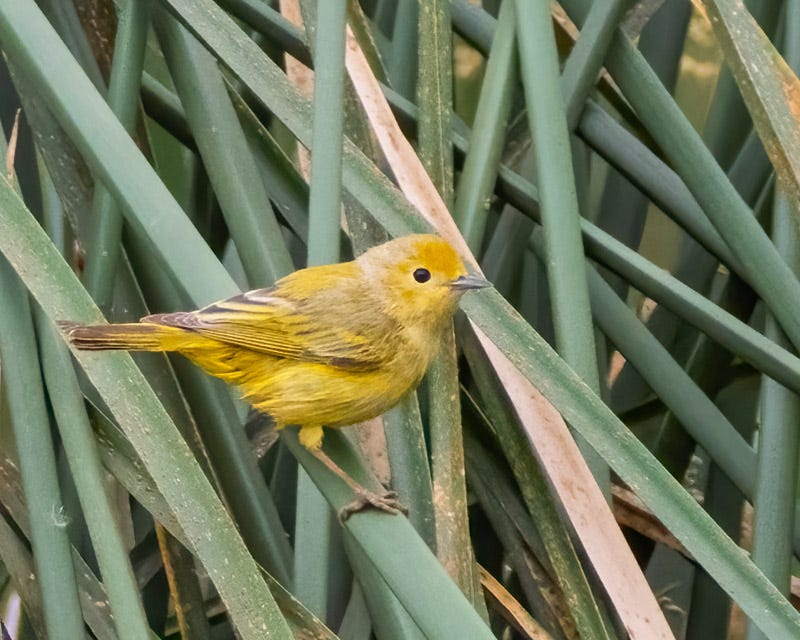
Later that morning I saw another yellow bird appear from within the reeds. It was a female bird formerly known as the Yellow Warbler. Last year a decision was made to split Yellow Warblers into two distinct species to reflect the differences between the Northern Yellow Warbler (the bird below) from the other very closely related bird. The Northern Yellow Warbler is migratory and has genetic differences, different plumages, and different vocalizations from what is now referred to as the Mangrove Yellow Warbler.
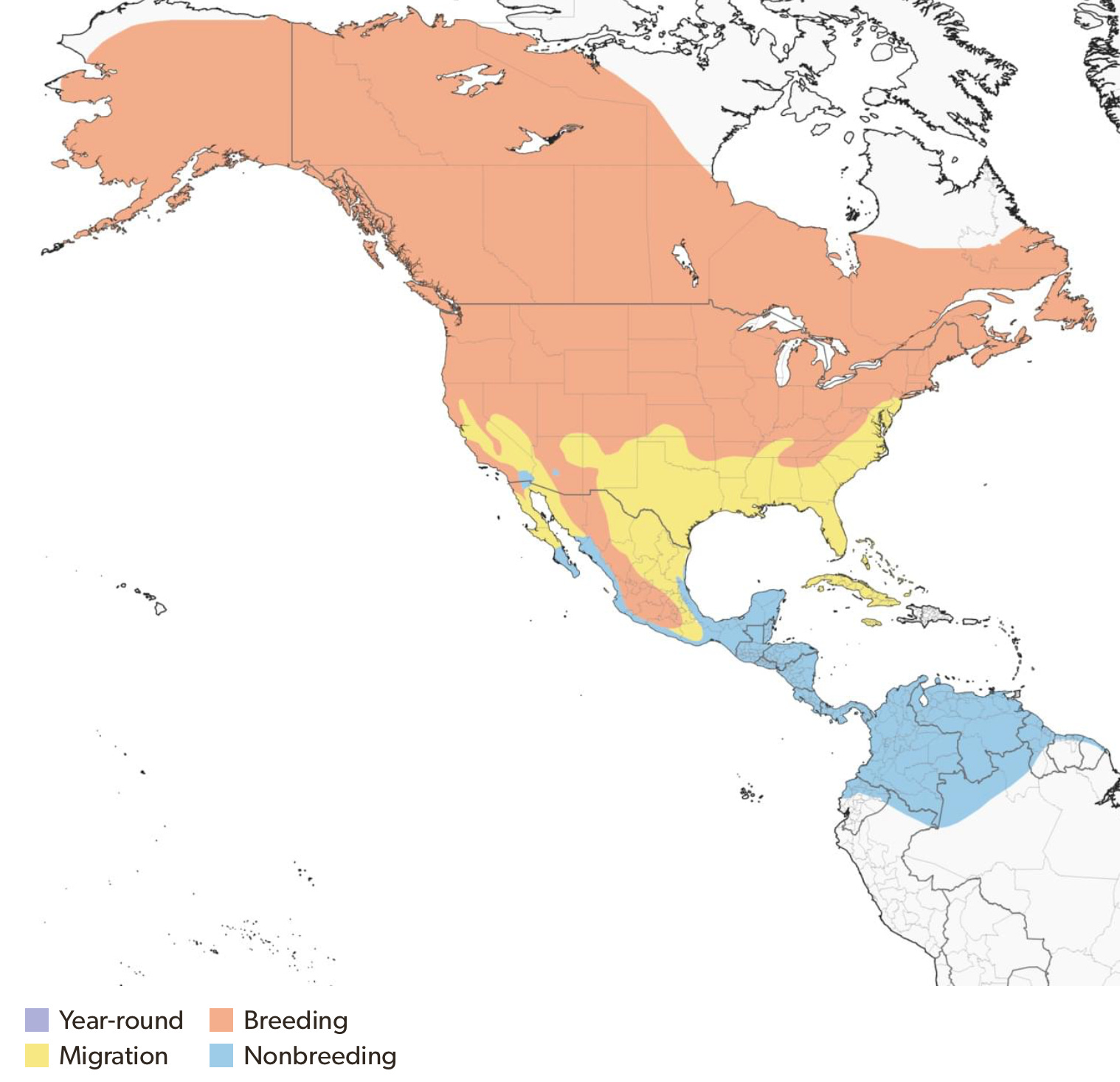
This Northern Common Yellowthroat traveled quite a distance to get to Tucson as this range map from AllAboutBirds shows.
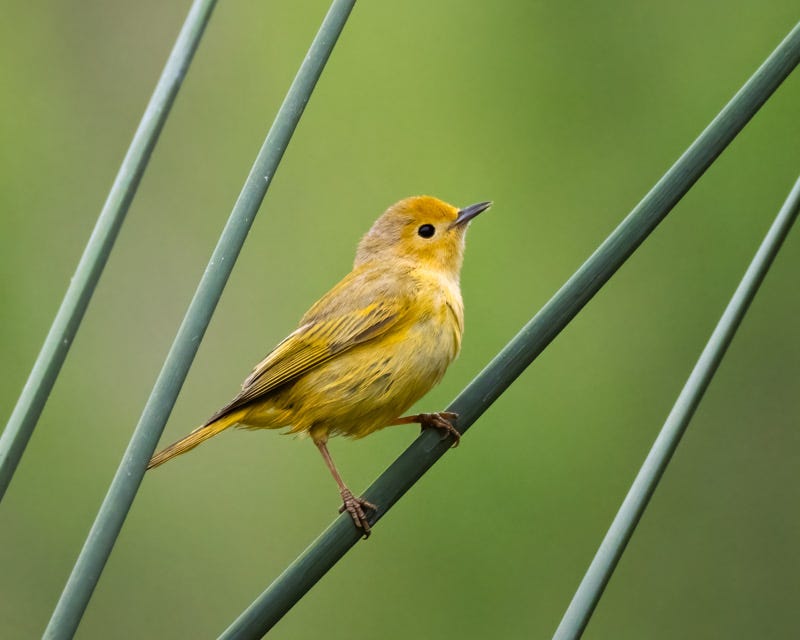
Northern Yellow Warblers show up in Tucson during the spring and remain here through the summer. Much like the Common Yellowthroat, these Warblers have a distinctive song that you can hear in this Birdnote report. Some people say the Warbler is singing “sweet-sweet-sweet-I’m so sweet.”
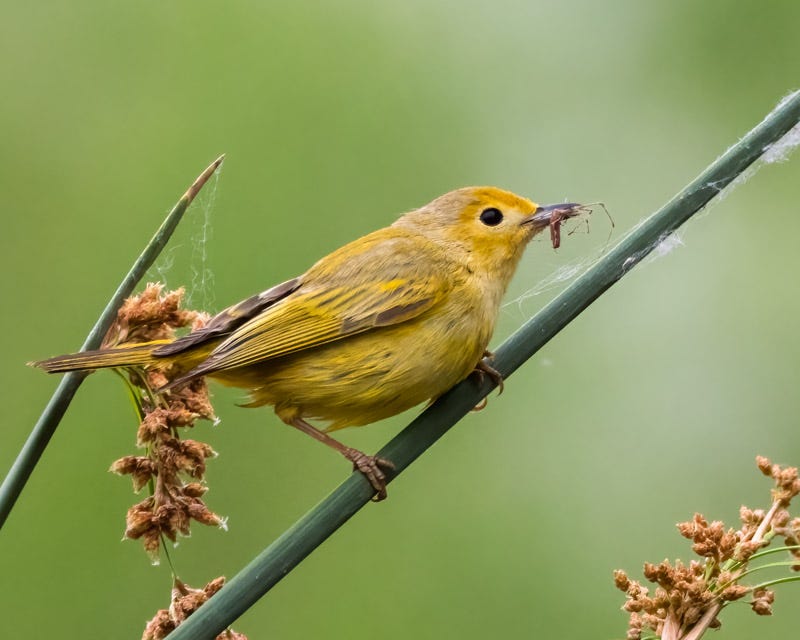
Warblers primarily eat insects and this Northern Yellow Warbler was no exception. After giving me looks out in the open, the Warbler grabbed what looked like an Orb Weaver Spider. The long legs and long abdomen makes me think that is the spider, but I’m not certain.
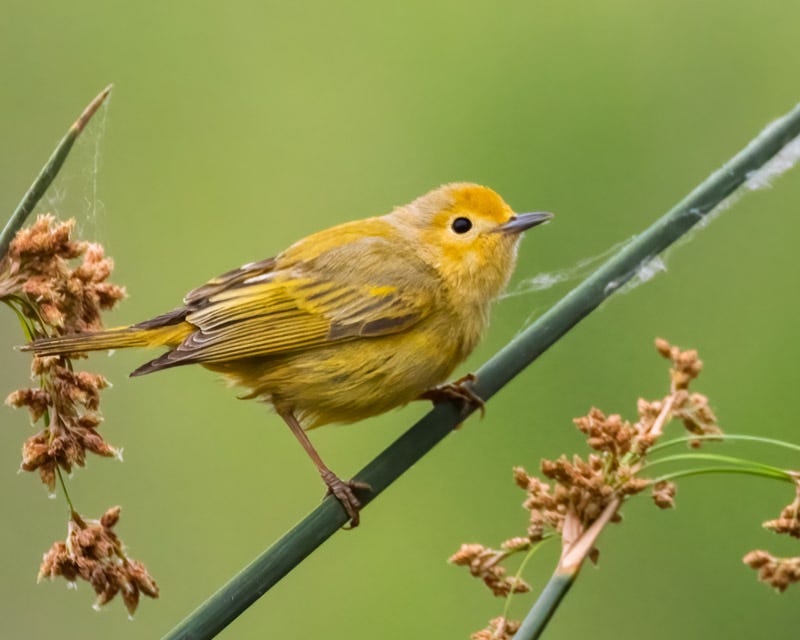
This shot was taken right when the Warbler swallowed the spider. You can see the lump in her throat as the spider made its way down
These yellow birds do stand out from others.
Their colors are as unique as their song. Thanks Dan
Very nice!