

I have participated in this Tucson Bird Alliance fundraiser for a number of years now with a group of friends who meet monthly to bird at a local golf course. You can read about our team and donate to us here . The Tucson Bird Alliance (formerly known as Tucson Audubon Society) works to protect birds, protect habitat, and provide education to ensure that birds can be enjoyed by all for generations to come. I benefit from TBA through their field trips and educational programs. I volunteer for them at the annual Southeast Arizona Bird Festival every August and Tucson Bird Alliance uses some of my photographs for their social media and educational materials.
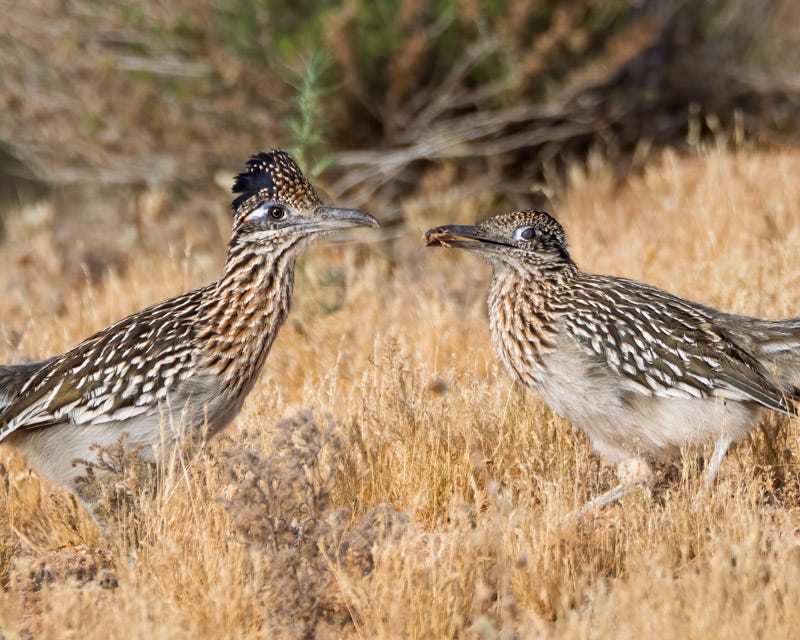
A few weeks ago we “scouted” the location for our birdathon date later in April. The golf course sits adjacent to a large expanse of desert. The mixture of desert habitat with creeks and ponds, lush grasses and thick vegetation provides for a variety of birds and wildlife. You might remember the breeding pair of Roadrunners that I posted about recently. Those were at this site.
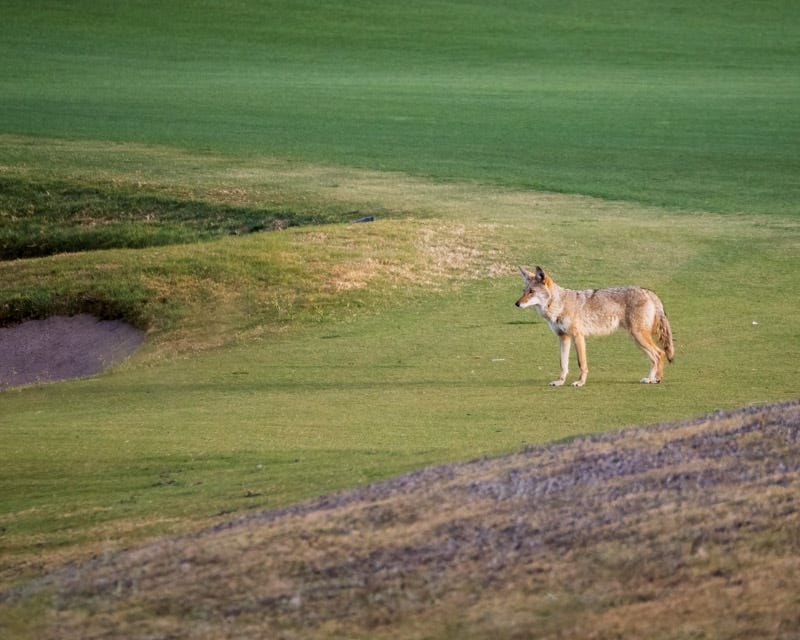
We saw some coots eating grass on one of the first fairways. A coyote emerged from the desert and began to chase them, hoping for breakfast. Needless to say the birds had other ideas and they winged it into the nearby water. All the coyote could do was look forlornly at any number of choice meals that were just beyond reach.
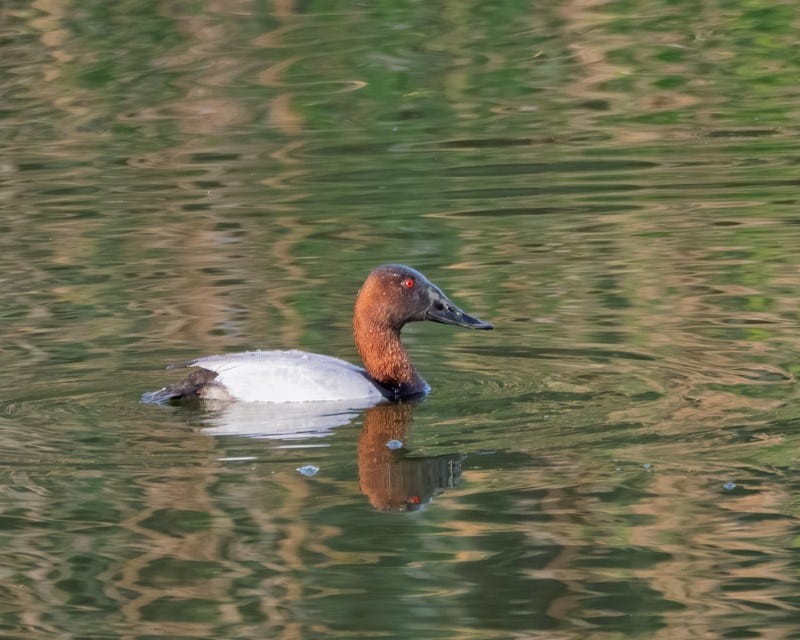
That pond held the last pair of wintering Canvasback ducks. This spot usually hosts a number of Canvasback pairs but the others seem to have already taken off for the breeding season homeland. Canvasbacks are large ducks and, with that sloping forehead, some people think they look aristocratic. It is a distinguished look. The males have that rusty head and the whitish, “canvas” back. Breeding males have red eyes.
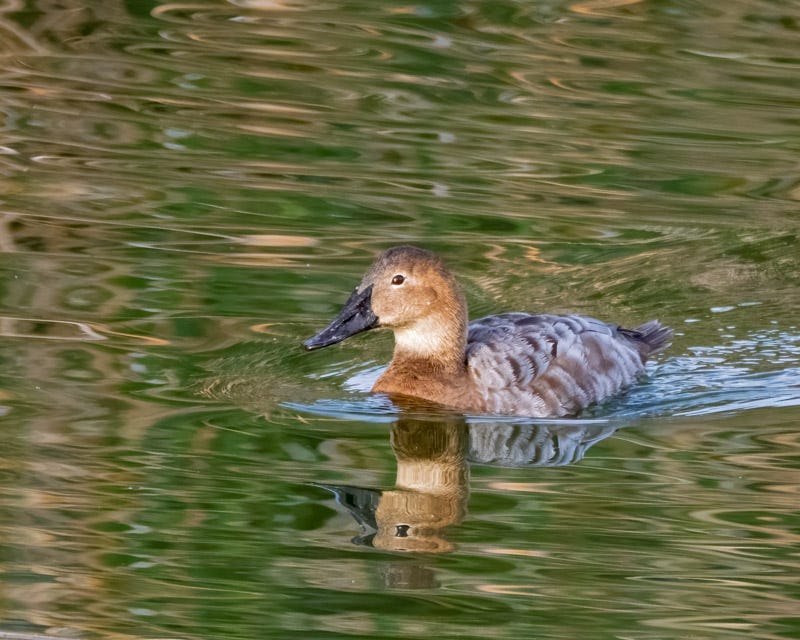
Female Canvasbacks have the same sloping forehead and black bill as the males, but they have a lighter facial plumage. This Canvasback also has more intricate patterning on her back than most females have. She also has dark eyes, typical of female Canvasbacks.
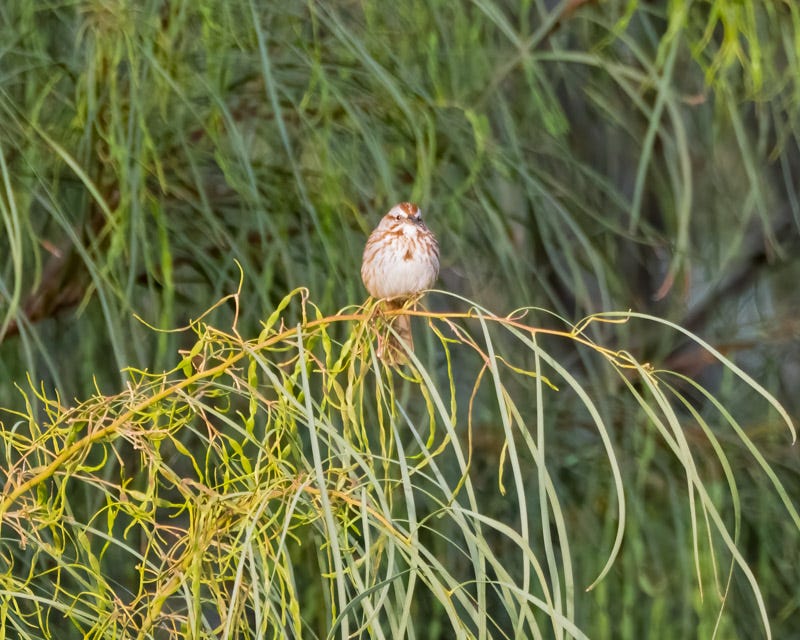
Song Sparrows are winter visitors to Tucson and can be found in areas close to water. This Song Sparrow popped up out of the thick vegetation. Our Song Sparrows are much lighter than the Song Sparrows in northern areas. The streaks on its belly merge into a noticeable spot. You can learn more about Song Sparrows from a short video at AllAboutBirds.
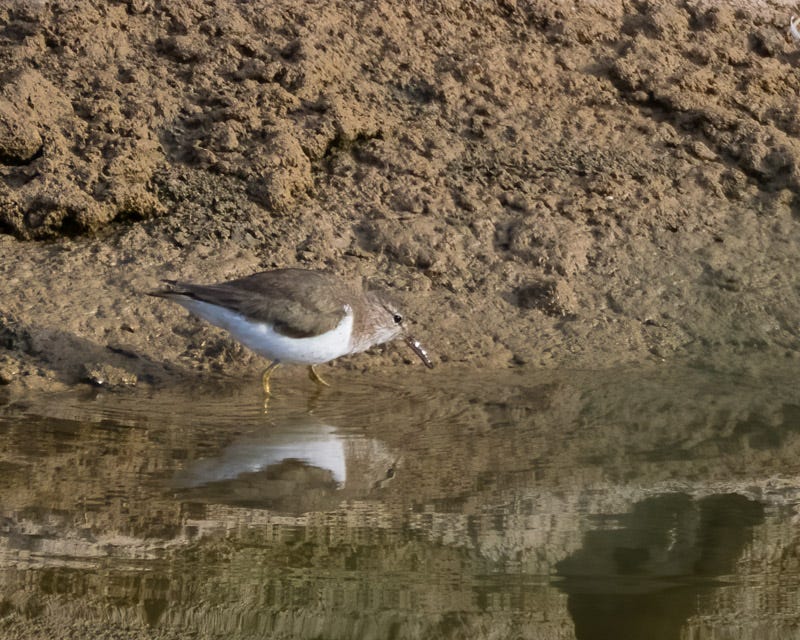
This golf course has Spotted Sandpipers through much of the year. They are not spotted when they are here in the winter. During their breeding season the spots emerge. People rightly think of Sandpipers as shorebirds, and the Spotted Sandpiper is indeed a shorebird. However, it doesn’t need an ocean shore to survive. This species is the most widespread Sandpiper in the United States and can be found near most kinds of freshwater.
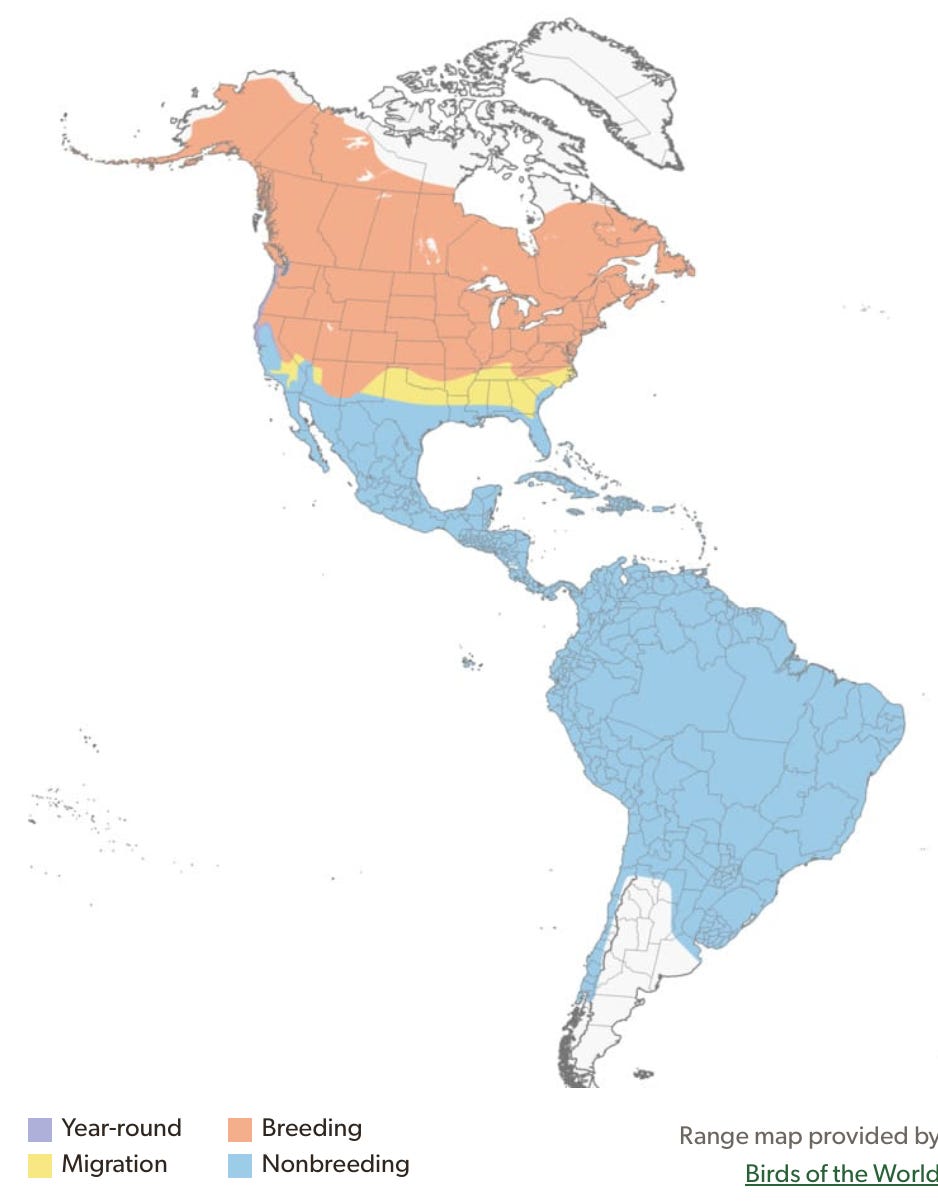
The range map from AllAboutBirds shows you how wide-ranging Spotted Sandpipers are in our hemisphere.
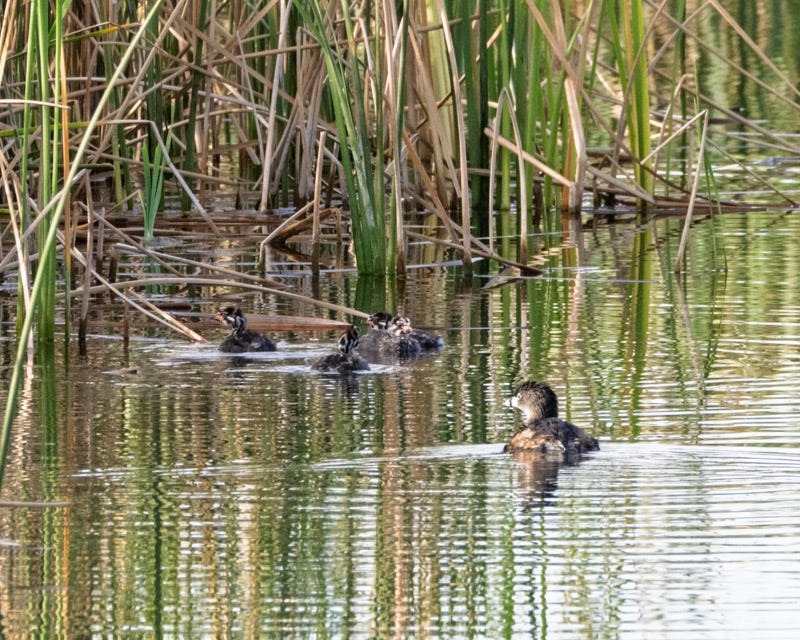
Pied-billed Grebes bred early this year. Perhaps the warmer winter had an impact on their timing. We saw this family with four chicks at a distance and mom was keeping a close watch over them. They remained hidden in the reeds as we got closer. These chicks have been referred to as Grebettes, but I like the term Grebeling. I hope to get closer looks at them the next time I see them.
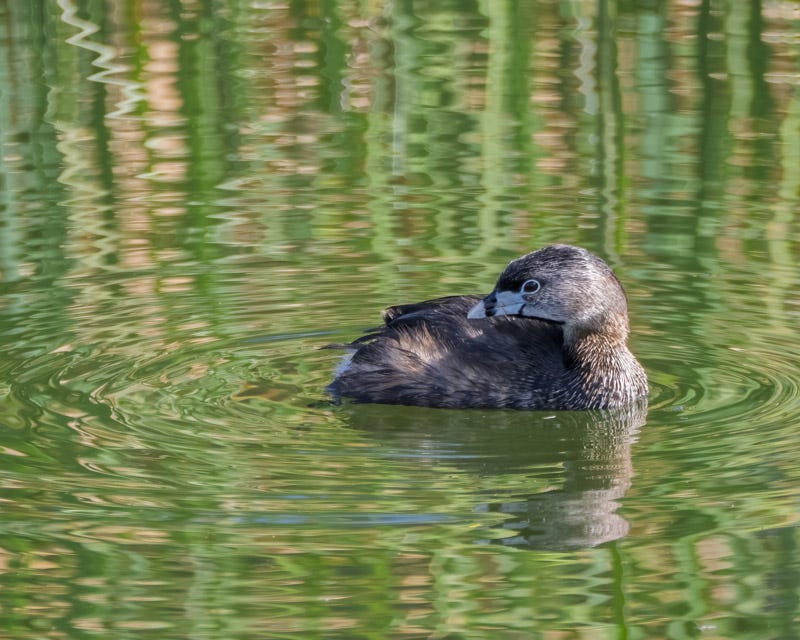
There was an adult Pied-billed Grebe on another pond. This bird was preening when I saw it. Pied-billed Grebes are diving birds but do so in an unusual way. They can just sink slowly into the water by trapping air or water in their wings. They can dive, but they also can act just like a submarine and lower themselves into the water.
We enjoy birding at this location because of the varied types of habitat which offer us a wide variety of birds. We are going to head back there again in the middle of April. If you would like to support our Birdathon Team, you can do so at any time during the month of April at this site. Don’t feel obligated to help but any support will make a difference for birds and the environment in the Tucson area. Thanks for your kind support.
Sometimes the donation page can be confusing. Always be sure to note the name of our team (Birdies, Bogeys and Eagles) when making a donation. Thanks!!
Good luck on the Birdathon. A worthy cause!