

In late September on the day before Hurricane Polo hit the Tucson area with huge rainstorms we were at our regular golf course hoping to enjoy the birds as well as the cool temperatures. Soft clouds were rolling in ahead of the storm, blanketing the full moon.

It was a good morning, and some of the special things we saw came in threes. There was a Say’s Phoebe hunting from a Fourwing Saltbush. Say’s Phoebes are in Tucson year-round but during the summer months there are fewer because many have gone north for breeding season. We see more here during the winter months and this was one of the arrivals.
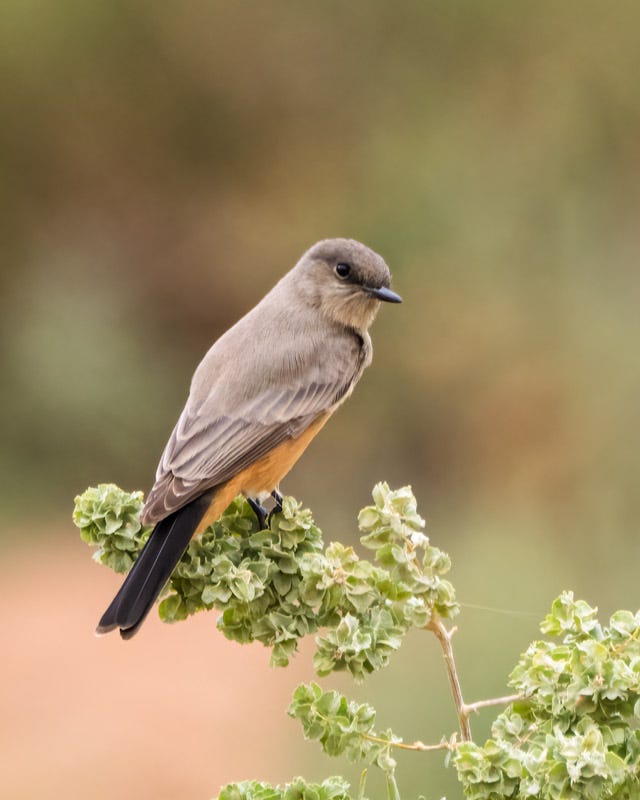
Say’s Phoebes are medium-sized Flycatchers with gray-brown backs and a light orange wash to their bellies.
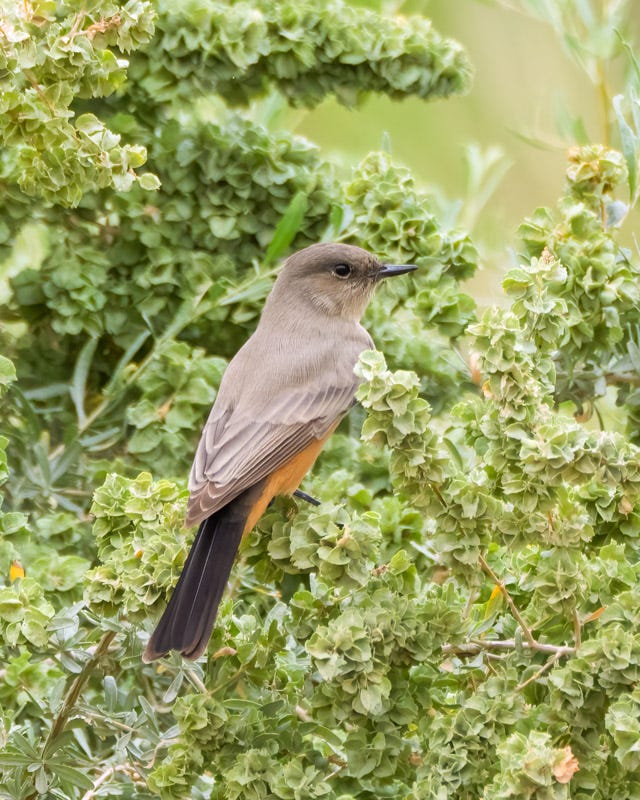
And then the bird did what Say’s Phoebes do. It caught a Damselfly for a quick snack.
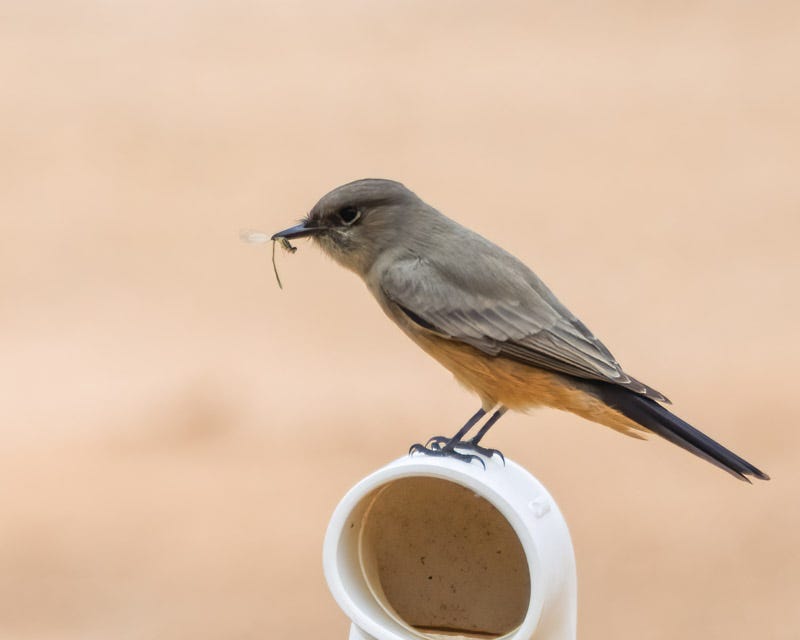
A birdie on a golf course is a good result for a golfer and a birdie like the Say’s Phoebe is a good sight for us. Golf courses are also built with hazards to test a player’s skill and strategy. Hazards like sand bunkers and water are common features, but we came across a different hazard- a Diamondback Rattlesnake.
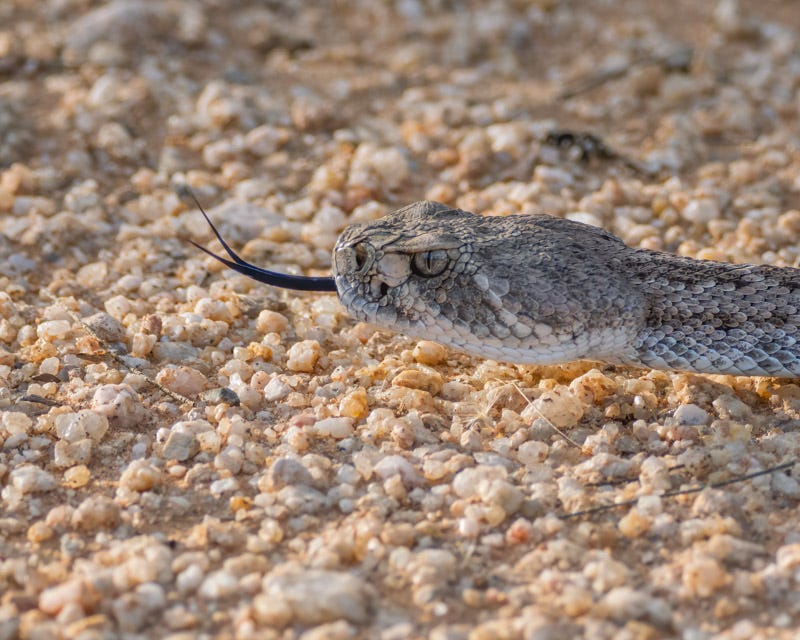
As we walked along a dirt path just off the course, I saw that my friend was standing two yards from the Rattlesnake, unaware of its presence. I called out to him and we all stopped to watch as the Diamondback moved slowly past us in search of breakfast. You can see the scales that form half of the diamond pattern on its back.
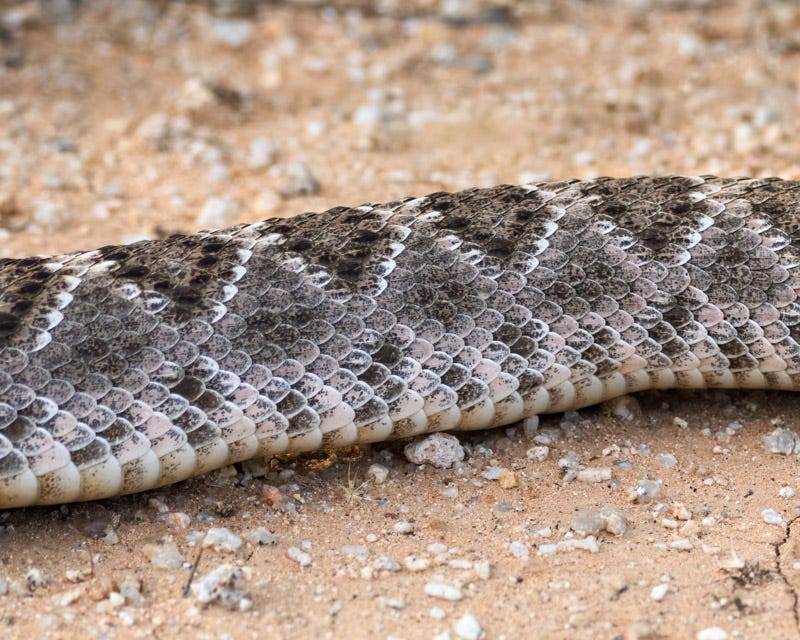
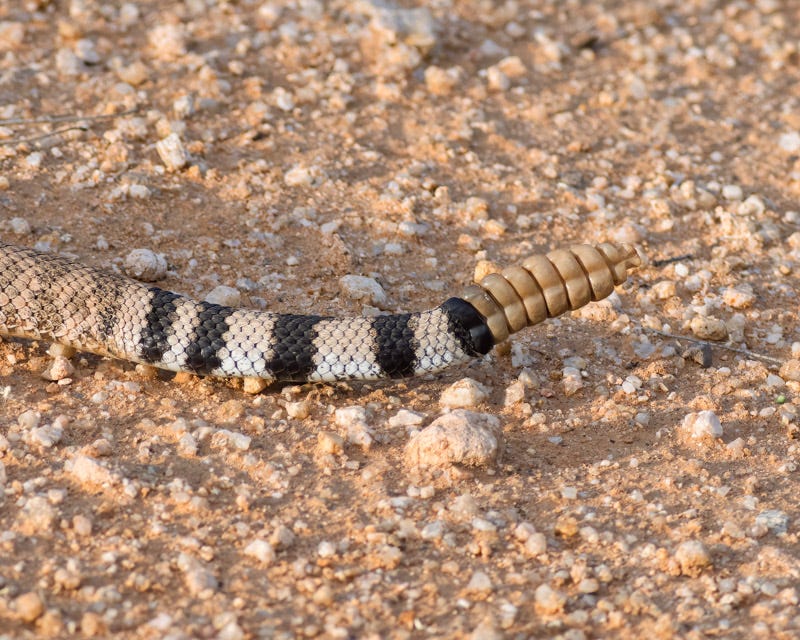
It is an urban myth that you can tell a rattlesnake’s age by counting its rattles. Rattles often break off and the snake adds a new rattle every time it sheds its skin which can happen multiple times in a good year. It was fascinating to watch the snake glide past us unbothered by our presence.
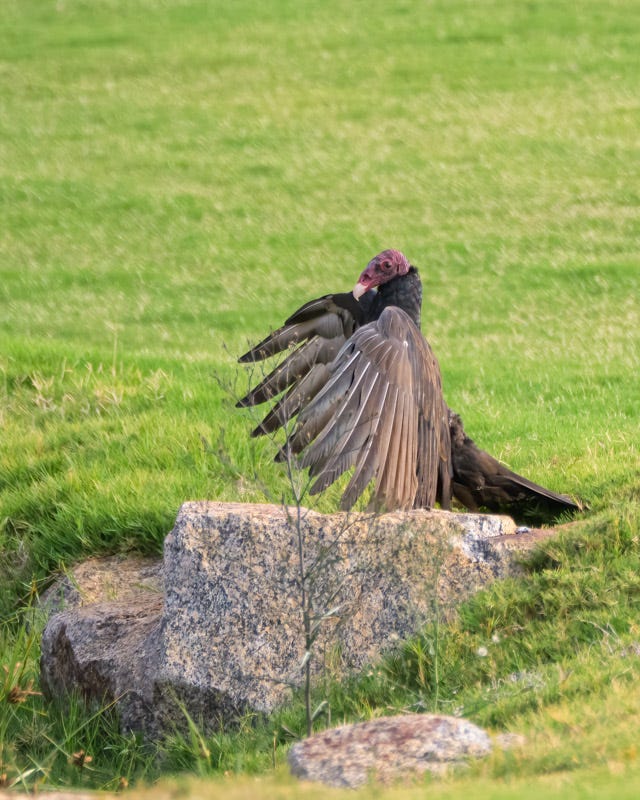
Turkey Vultures are a common sight in the Tucson skies these days as they migrate south from their breeding grounds. We came across one that was perched on a rock next to a small creek. It spread its wings in what is called the horaltic pose. Because of the time of day, it was likely warming up.
The bird was in our direct path and as we headed towards the Turkey Vulture it eventually felt uncomfortable with our presence.
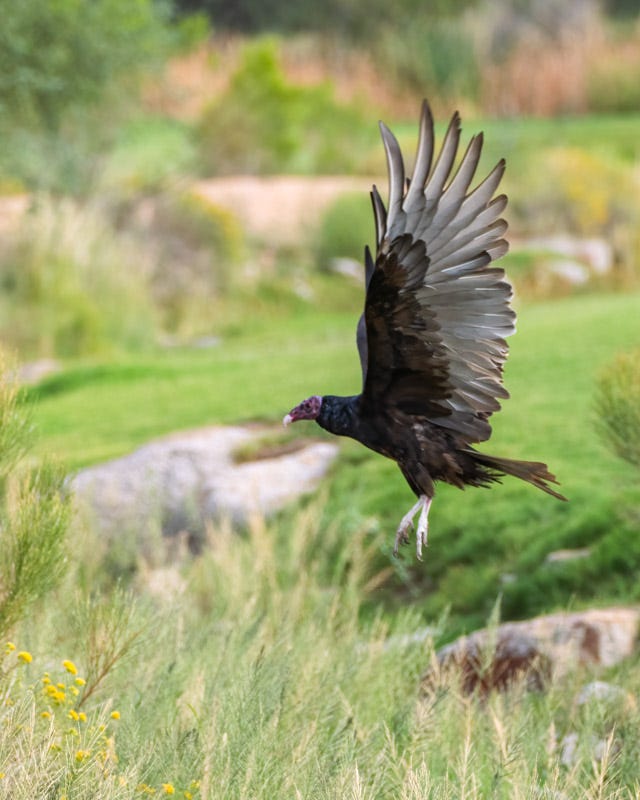
Turkey Vultures are large birds with a six foot wingspan. Most of the time when we see Turkey Vultures in the air, they are soaring and are not flapping their wings. However, those huge wings can power the bird’s flight when necessary.
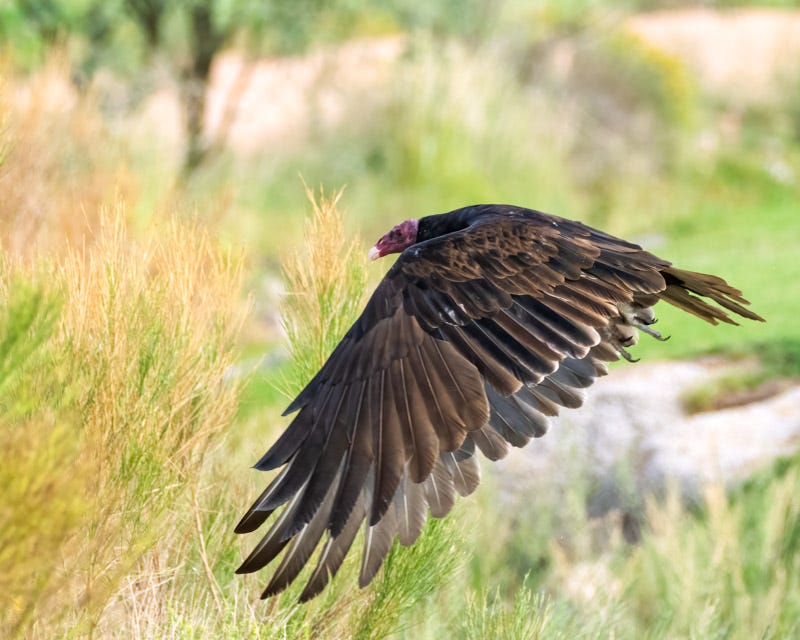
It cleared the ground, caught a thermal and began to soar on the warming air.
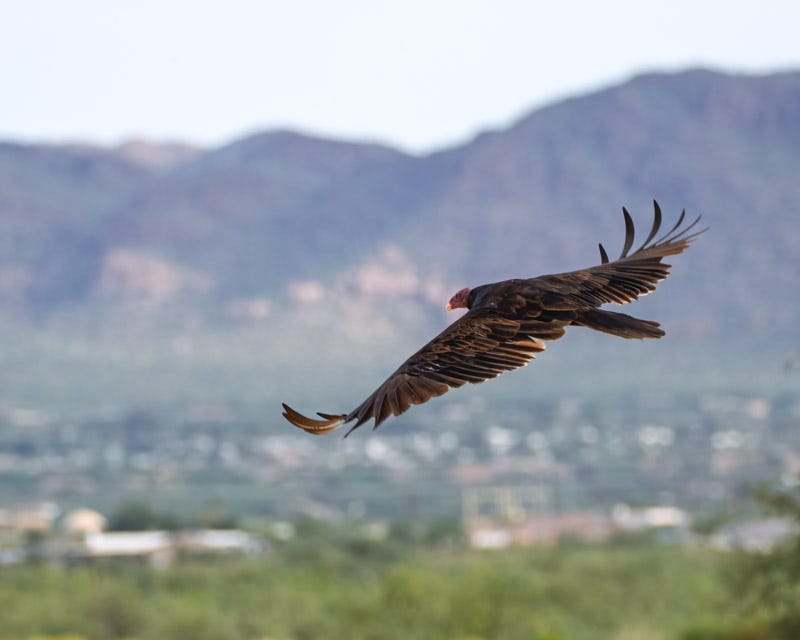
We began the morning under a sky full of puffy clouds. As we walked, the desert woke up. Besides the many birds, dragonflies, and beautiful greenery, we enjoyed the good looks at these three local residents. Three was definitely par for the course.
Great combo!