

One morning I decided to sit on my back porch and watch the Hummingbirds buzzing through the yard. At this time of year there are many juvenile Hummingbirds around. That morning there were several juvenile Costa’s Hummingbirds that caught my eye.
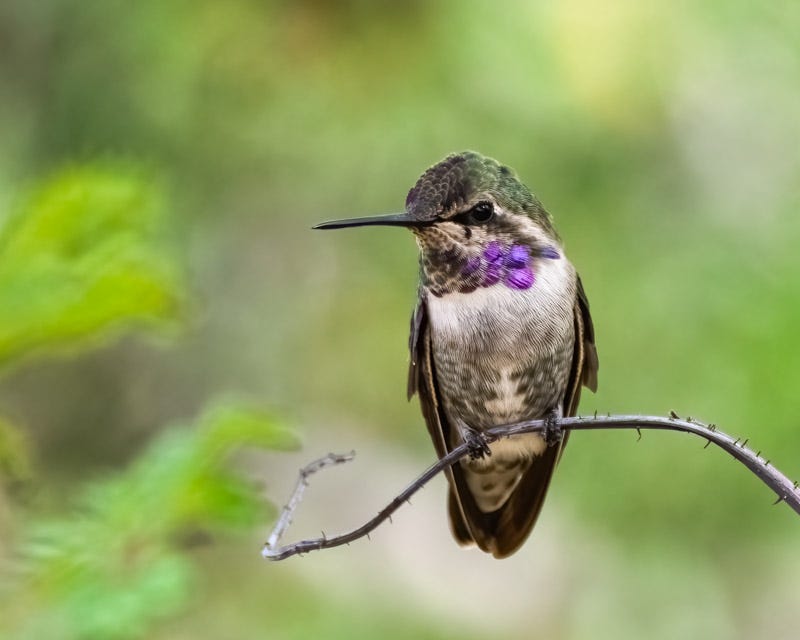
Male Costa’s Hummingbirds are known for their bright violet/purple gorget, or throat feathers. In an adult male, those feathers flare out wildly to the side of their neck like an overgrown mustache. The birds I was watching were all juveniles with their purple gorget feathers just beginning to grow in. The bird below is barely growing in his new head feathers and his new throat feathers but he does already have that long mustache on his right side.
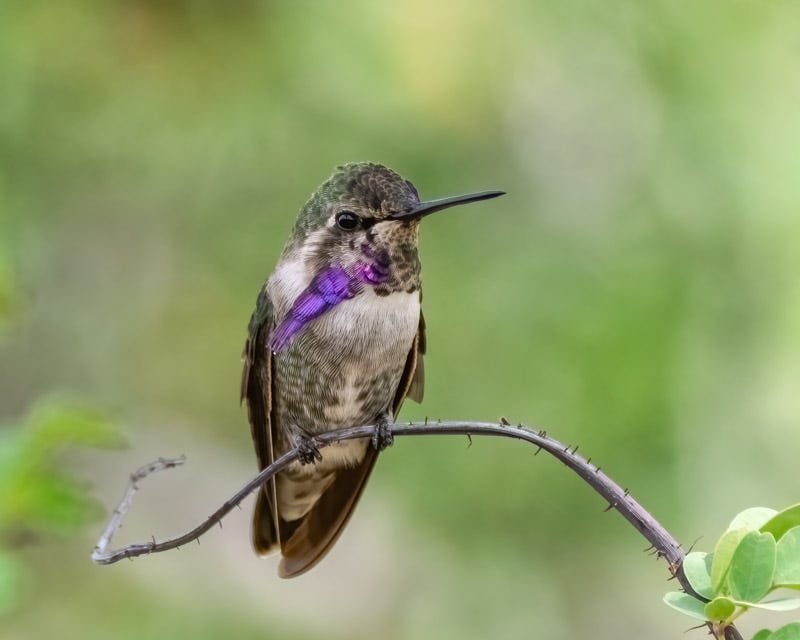
When the bird turned to the left, you could see that the feathers did not grow symmetrically. His left side doesn’t have those long feathers yet. You can begin to see some of the purple on his head though now that the light is hitting those feathers just right.
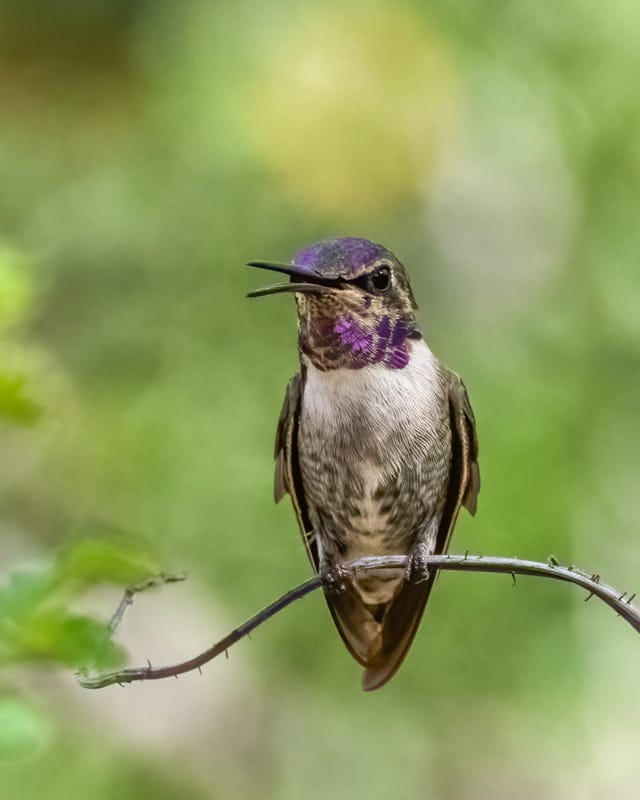
The next picture is a different Costa’s Hummingbird. This young male is starting to grow in his gorget feathers.
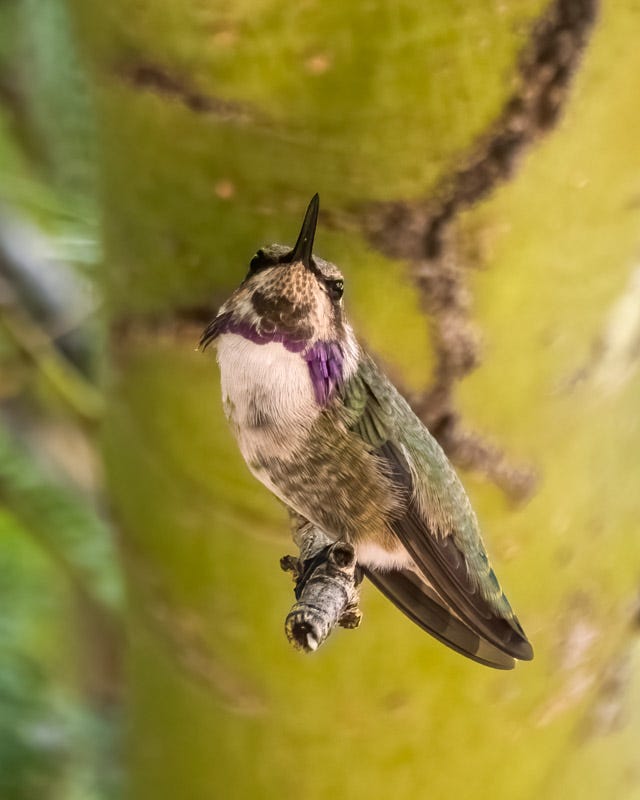
Here is the third of the three juvenile Costa’s that I watched for an hour. Each one of them had slightly different facial colors. All three engaged in continuous chases in battles for territory. Despite the fact that there were many more feeders in my front and backyard than there were hummingbirds and plenty to go around, none of these birds considered sharing the feeders.
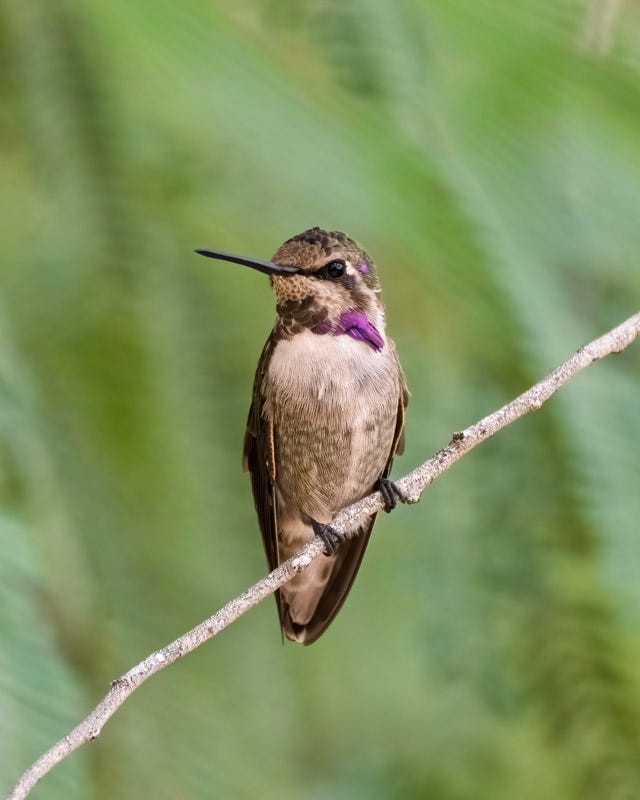
Costa’s Hummingbirds live in the Sonora and Mojave deserts as well as coastal areas along the Gulf of California. They are the most common Hummingbird in my yard. I do have Broad-bills that are regular residents. Anna’s, Rufous, and Black-chinned Hummingbirds migrate through at this time of year.
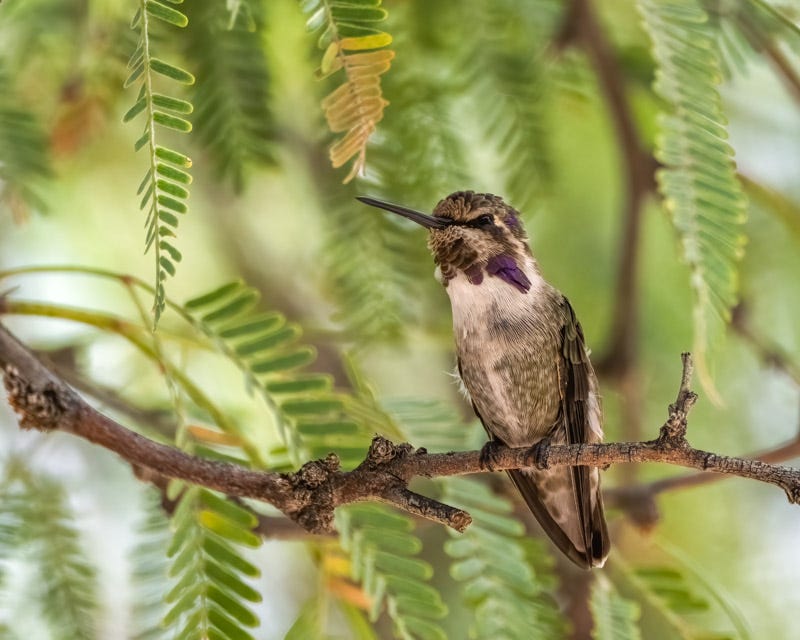
You can learn more about Costa’s Hummingbirds at this Tucson Bird Alliance page or at the AllAboutBirds site.