

American Coot babies, or chicks, are always so adorably ugly. Typically, an initial sighting elicits both surprise and amusement. Coot chicks can swim within hours of hatching, and they swim out in the open and so energetically. You just have to smile at their bald heads with bright orange/red skin, the red beaks, and the stiff but curly, orange hair-like plumes around their neck and head.
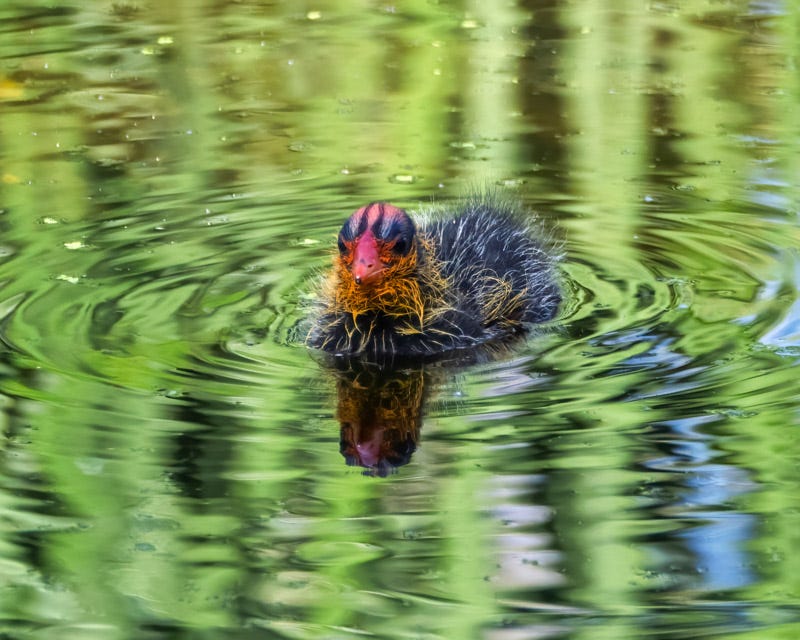
Coot chicks can swim well right after hatching, but they cannot feed themselves. They follow their parents around begging for food. Those teeny wings add one more comically cute element to their looks.
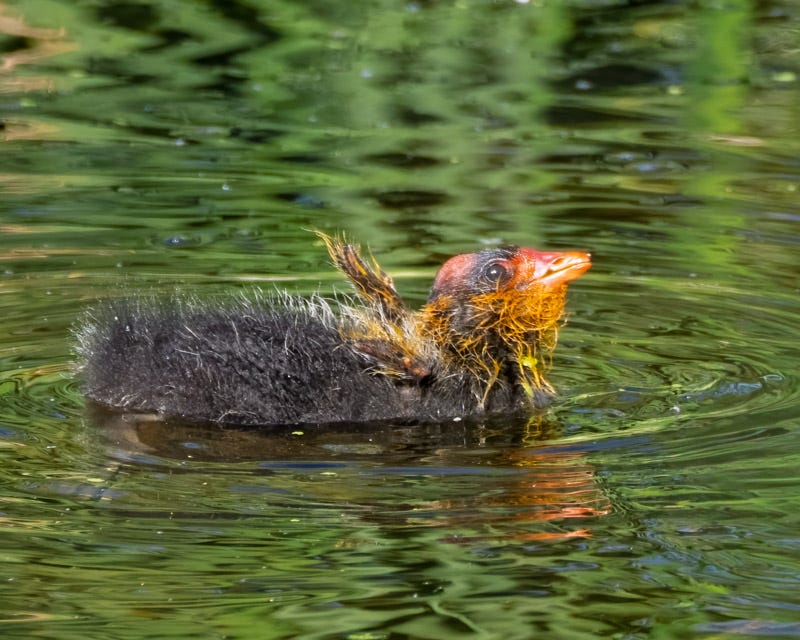
The bright head colors apparently attract and stimulate parent birds to feed the begging young. Mother Coots actually add more carotenoids to the later eggs, resulting in the youngest chicks having the brightest colors. That is thought to help the parent Coots to know who the weakest and youngest chicks are to enable them to attract the most feedings by the adults.
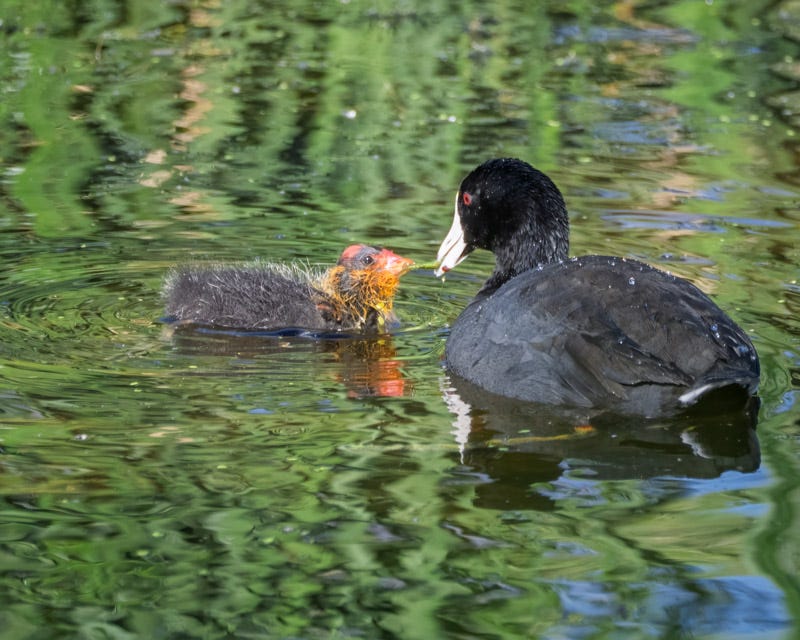
American Coots primarily feed on aquatic vegetation. Parents will directly feed their young bill-to-bill for the first two weeks. The young chicks also need to be fed insects and aquatic animals for the protein their growing bodies need.
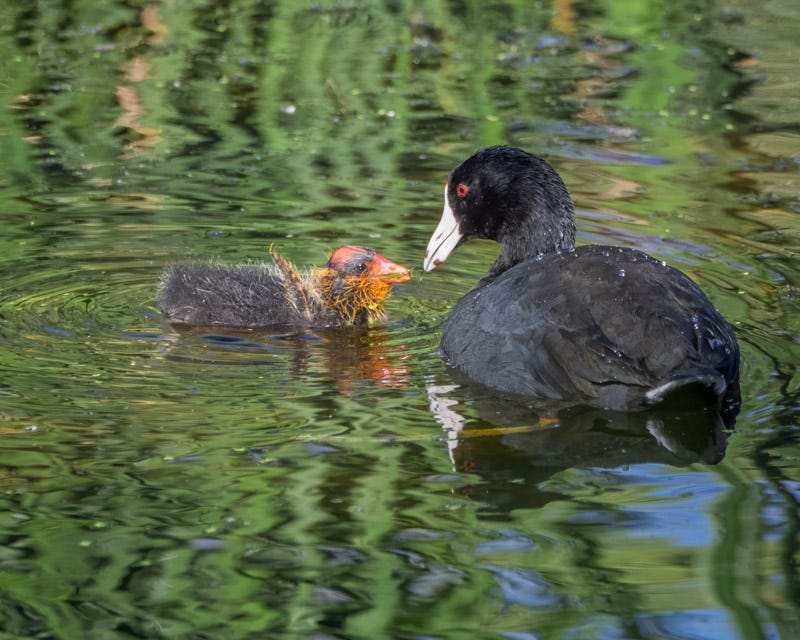
That little chick sure seems satisfied as that last bit of green goes down its throat.
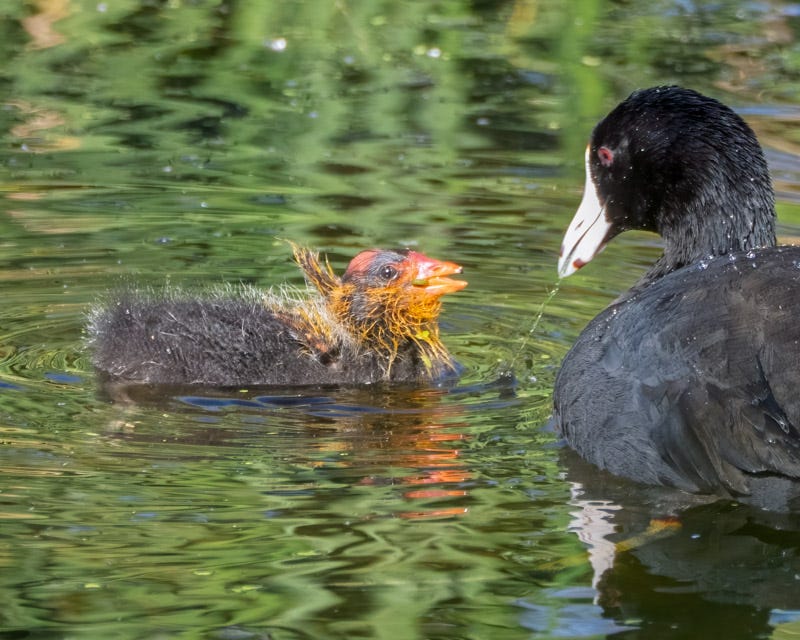
Three weeks later and the Coot chicks have grown rapidly. The chicks are already foraging on their own but still will remain near their parents and still beg for food. It’s much easier to have Mom or Dad bring you food than it is to go get it yourself! These two headed towards Mom, who emerged from a food search under the water.
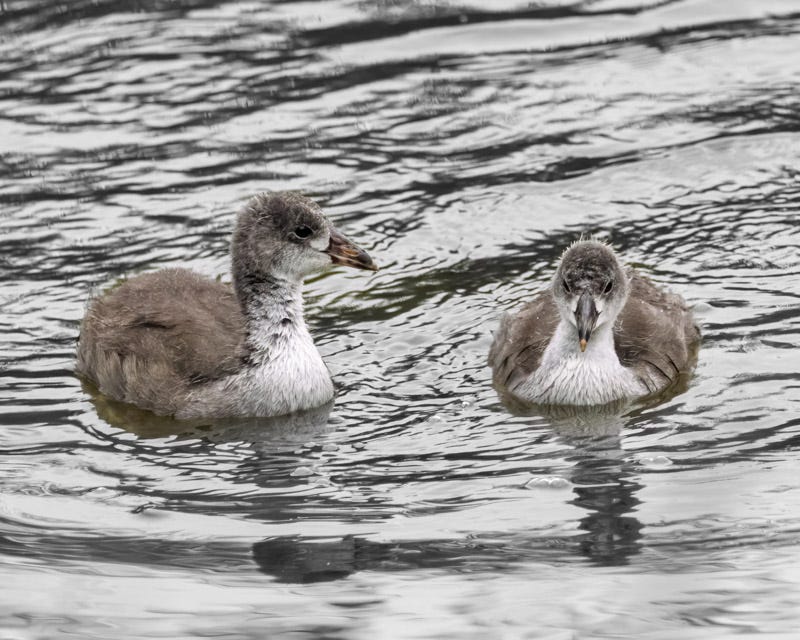
Sometimes the loudest and largest young Coot may need reminders to be a bit less dependent. The adult Coot ended up grabbing the youngster by its neck and pushed it down, almost submerging the head in the water before letting go.
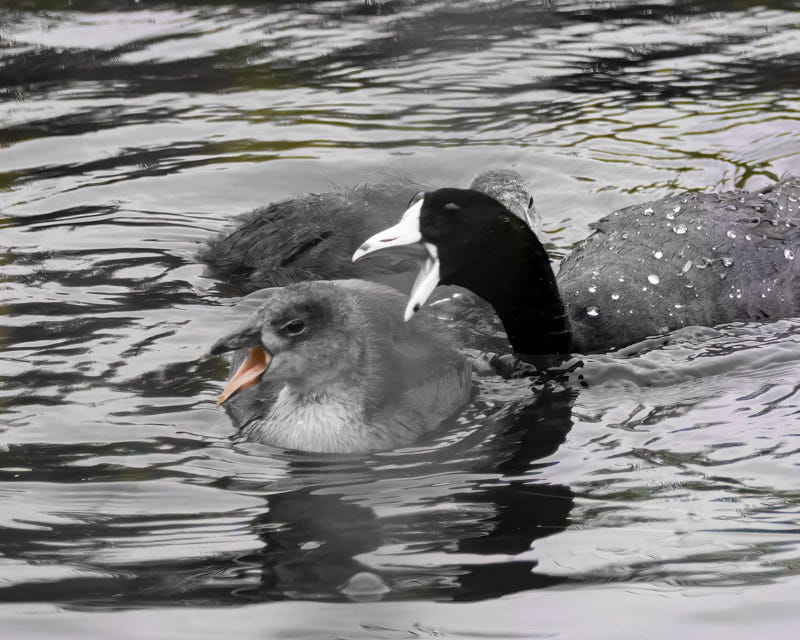
That Coot got the message and swam away. The youngest Coot received nicer treatment. “Mom always liked you best”, said Tom Smothers. The water on the adult Coot’s back was from the recent dive under the surface of the pond.
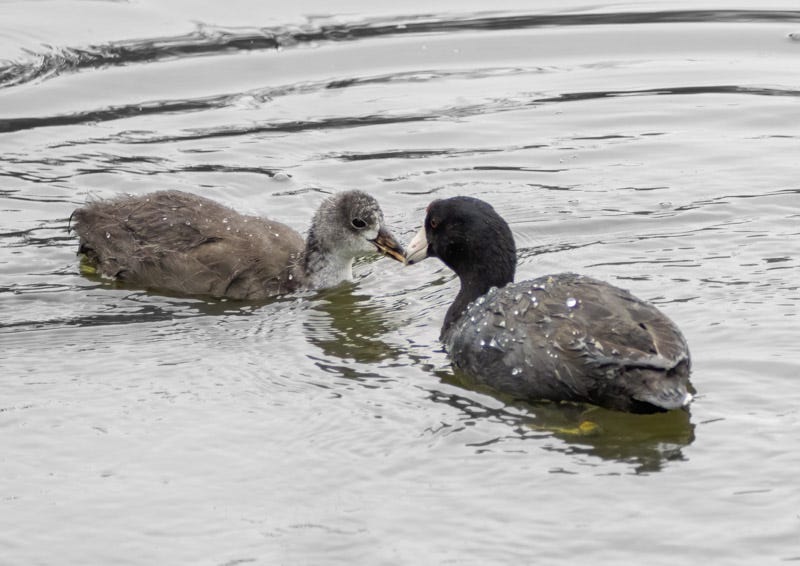
After the food exchange, the adult and younger swam off together.
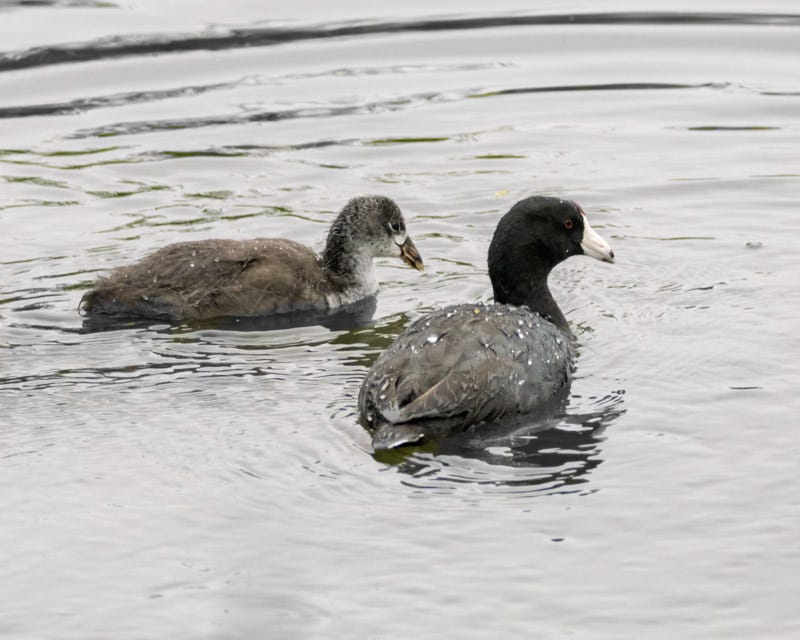
Adult Coots are devoted parents. The chicks will be fully independent at about two months and will attain adult plumage at the age of four months. Until then, young coots are always aware of where Mom or Dad are.
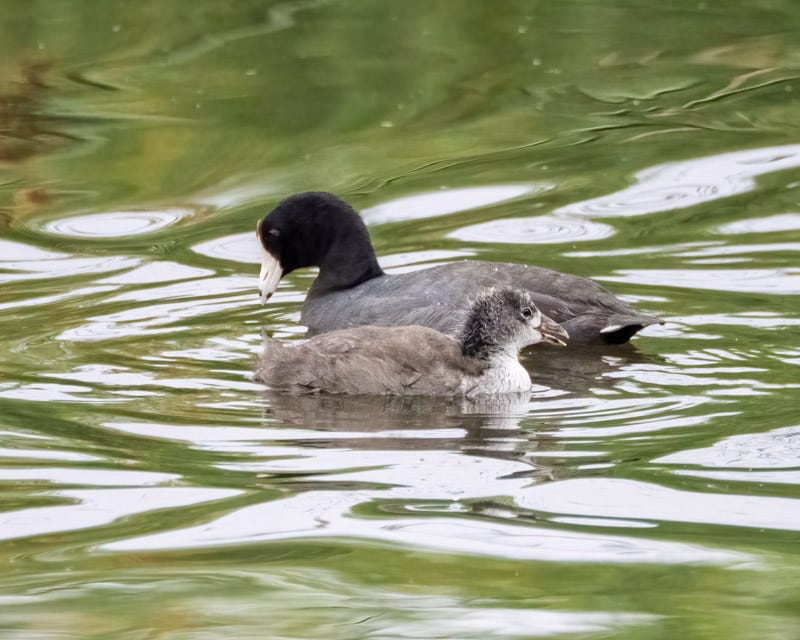
The chick left Mom after a bit and then did some preening and self care.
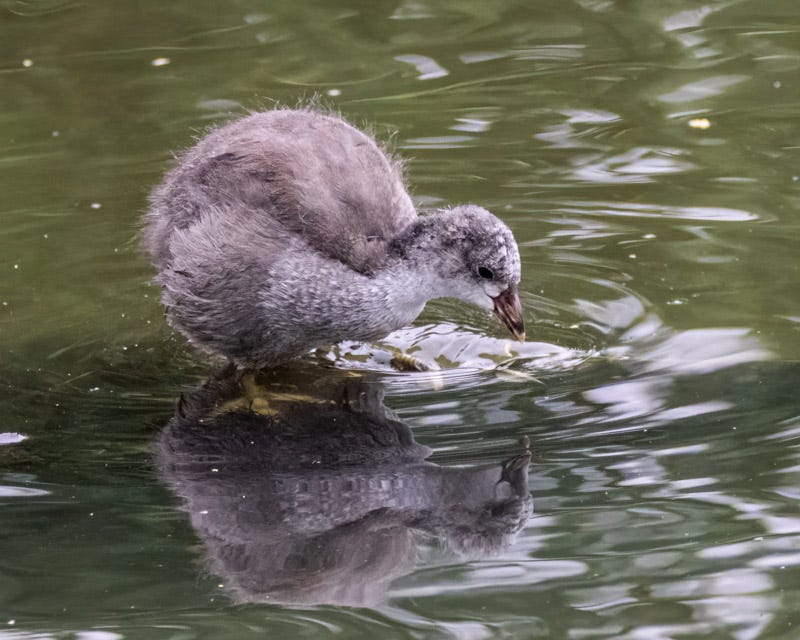
Adult American Coots may not be the most attractive birds, but because they are always out in open waters, their behaviors are easy to observe. Watching little Coots growing up is so entertaining.
Our Birdathon efforts continue in support of Tucson Bird Alliance. Thank you to Laura D., Lisa U., Anonymous Friend, Jennifer O., Deb V., Michelle J., Elaine G. and Richard B., Emily M., Katrina S., Deanna M., Corinna P., Barbara L., Shelly A., Deanna R., Iris Y., Laura R., Joann V., Mai S., Candace A., and Mary K. for your kind donations to our Birdathon efforts. Our team “Birdies, Bogeys, and Eagles” is raising money throughout the month for the Tucson Bird Alliance. You can read more about it on our Birdathon Team page here. We will be in the field birding today, Monday April 13, and hope to report back to everyone later this week. Donations will be continue to be accepted throughout April. If you do wish to donate, please remember to list our team name. Thank you!!
What an amusing set of blog photos and notes. I've never seen any Cootlings that young and that "interesting" looking. So glad their parents love them.
Amazing colors on those babies!
Thanks, Dan