

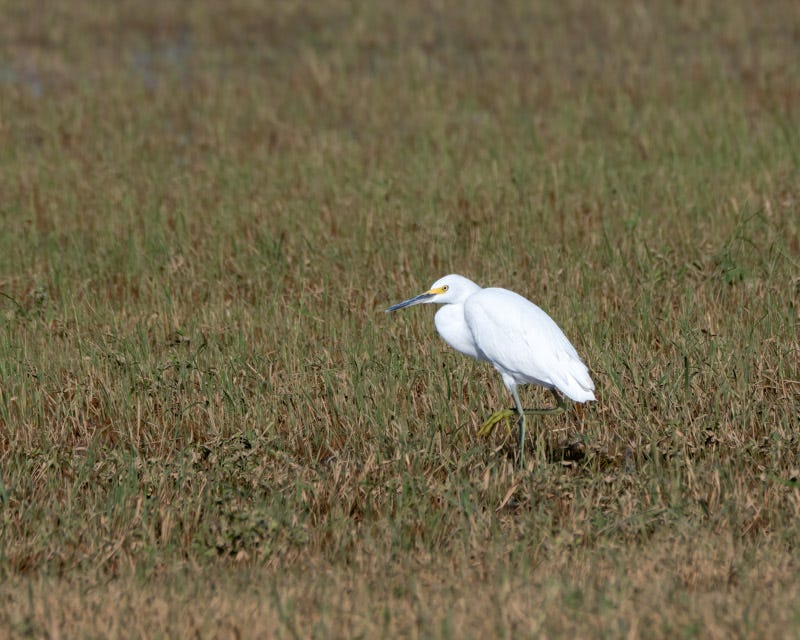
Migratory Snowy Egrets begin arriving in southern Arizona in middle to late September. It is always nice to see the first Snowy Egret of the year. I was visiting one of my favorite farms with friends when we spotted a Snowy Egret in the distant field.
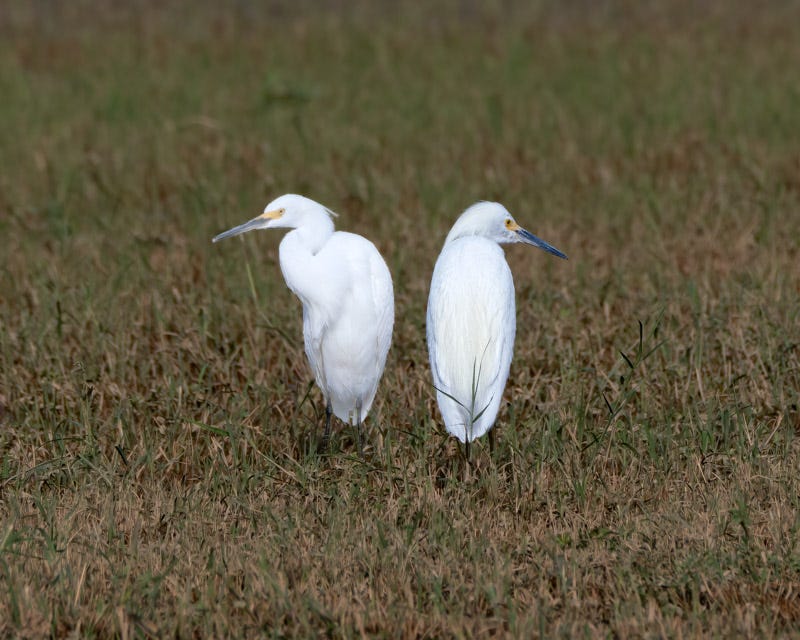
What’s better than one snowy egret? Two snowy egrets!
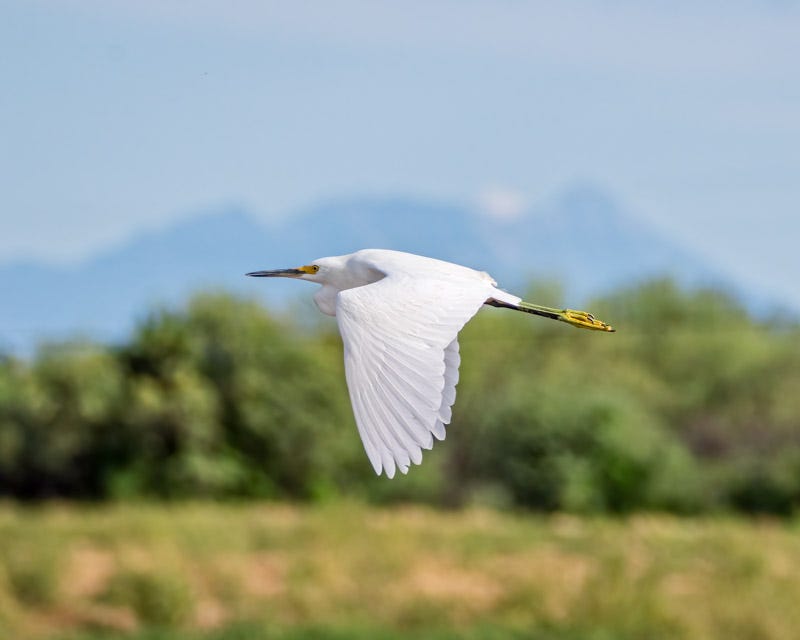
Snowy Egrets in distant fields or in shallow water are beautiful. When they take to the air, the graceful slow flight accentuates their beauty.

Snowy Egrets fly with their long neck tucked in and their dark legs tipped in yellow feet straight behind them. These days, when not in breeding season, their feet are not as intensely yellow but are a bit duller or yellowish-green.
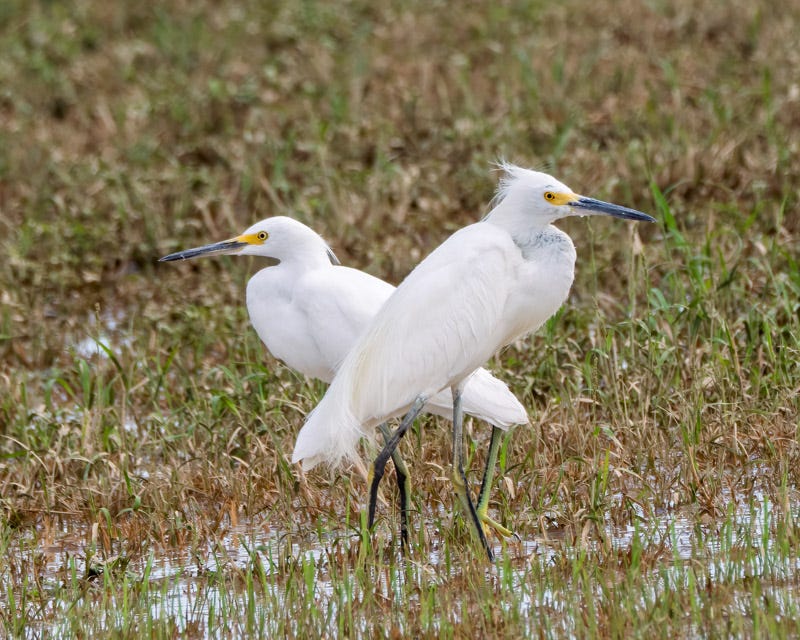
This was an interesting pair of Snowy Egrets. Snowy Egrets generally migrate alone or in small groups. This pair could have traveled together and now are likely resting, still searching for their winter home.

Both birds are adults. The apparent size difference may be a feature of their posture or what they are standing on. The gray on the neck of the Egret on the right may be due to the bird still being in mid-molt, missing some neck feathers which allows the gray skin underneath to show.
We drove around the farm fields but kept returning to this one flooded field that the Egret seemed to prefer. Every half hour they would take off and fly, circling the greater farm area before returning to the same watery field. As this bird takes off, you can see the spray of water that its legs throw behind.
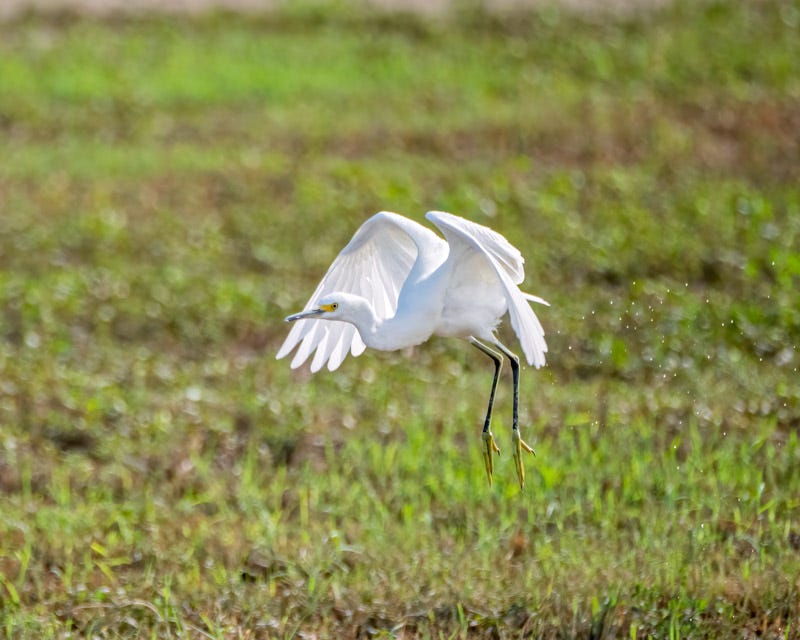
As it began to tuck up its legs and power forward with a strong downward push of its wings, water continued to trail in the air behind it.
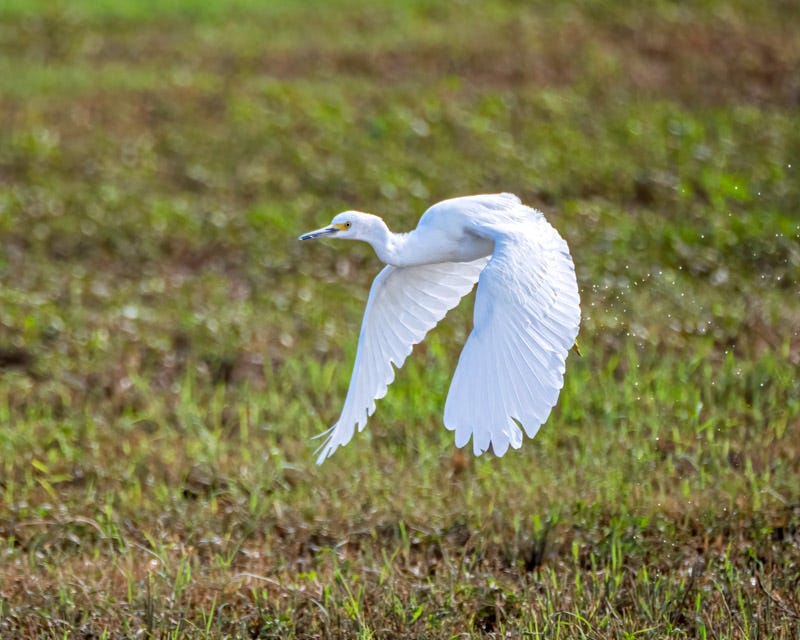
Finally reached cruising speed. Its legs stretched straight behind it as it flew forward just across the surface of the field.
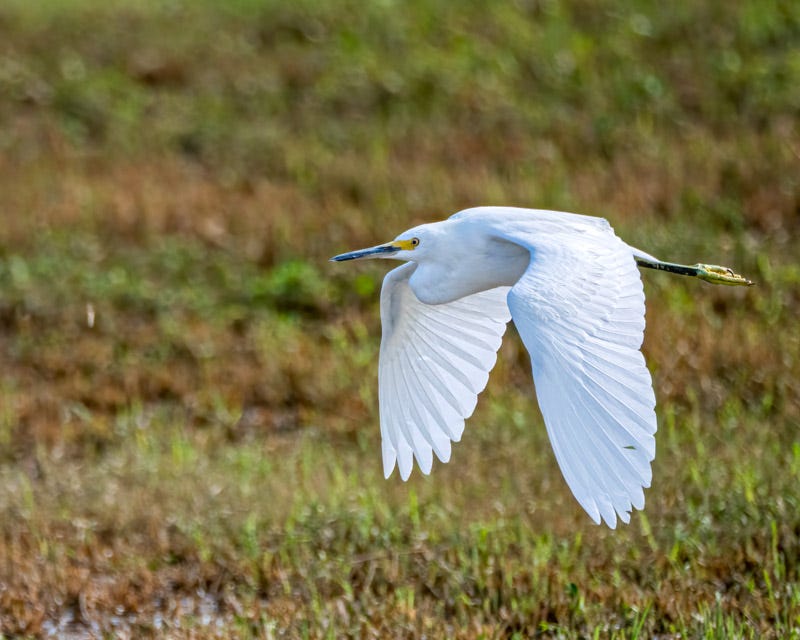
The Egret began to climb into the sky
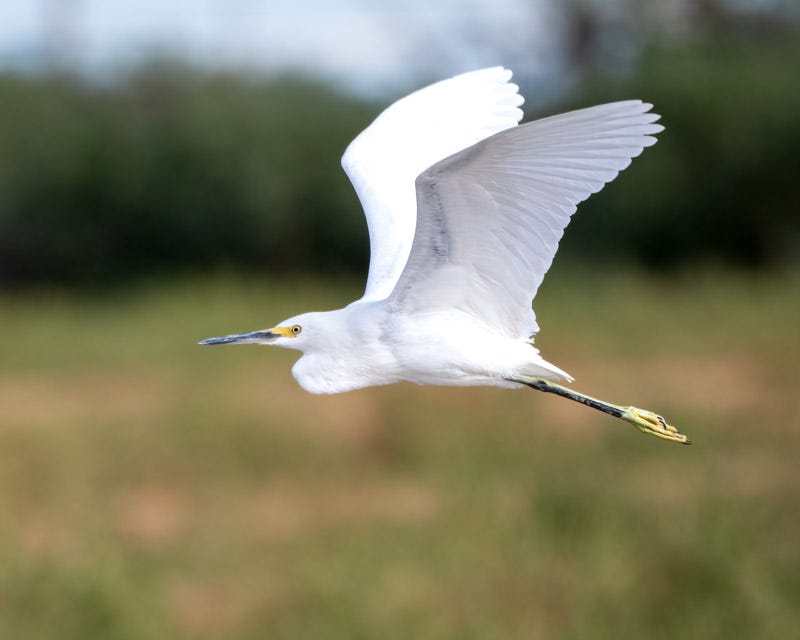
In the air, the Egret flew with steady and strong wing beats. Its wingspan is between three and four feet tip to tip. The bird itself is about two feet long, beak to tail, and the Snowy Egret’s legs are just under one foot long.
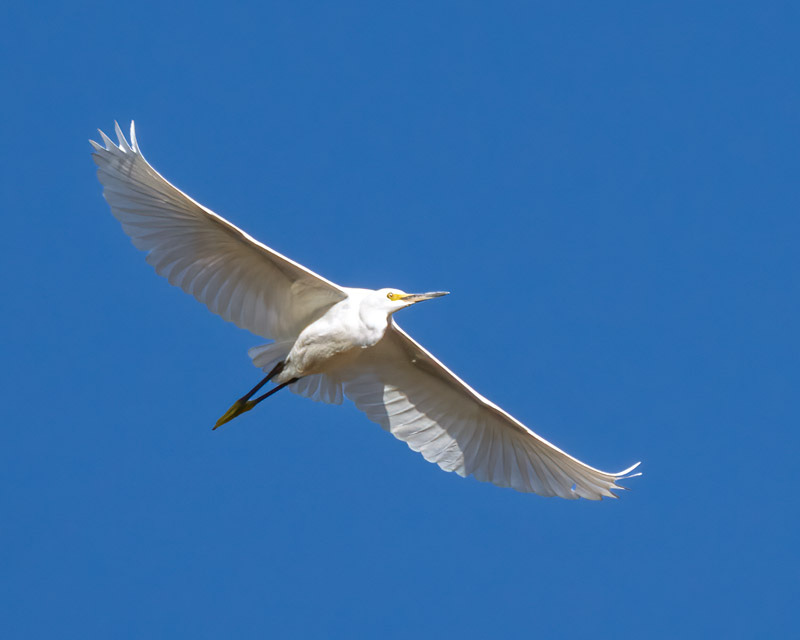
Snowy Egrets are smaller than both Great Egrets and Great Blue Herons. Snowys are medium sized wading birds. Cornell’s AllAboutBirds site begins its overview of Snowy Egrets with “Among the most elegant of the herons, the slender Snowy Egret sets off immaculate white plumage with black legs and brilliant yellow feet.” https://www.allaboutbirds.org/guide/Snowy_Egret/overview
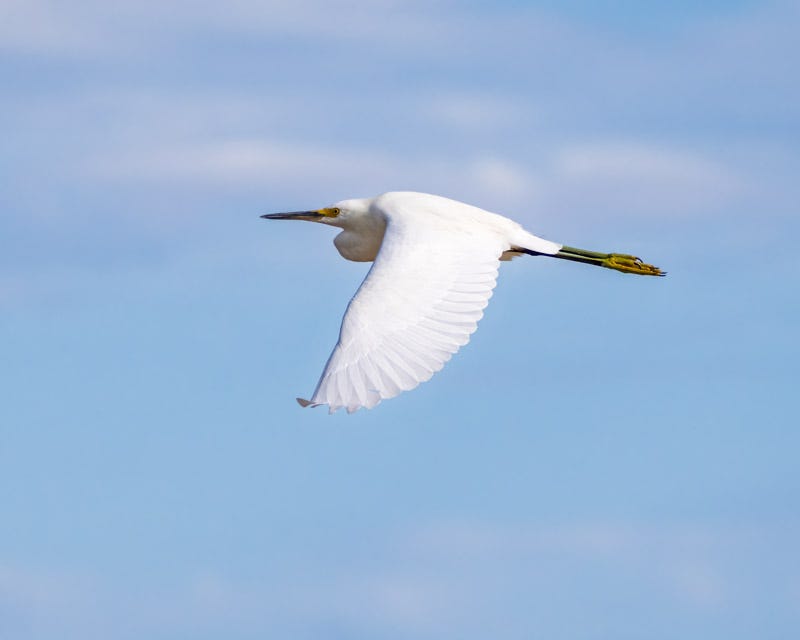
The AllAboutBirds site has this to say about Snowy Egrets: Populations have rebounded from severe losses in the late nineteenth century when masses of Snowy Egrets were killed for their long breeding plumes which were used to decorate women’s hats. Concerned citizens curtailed the plume trade in 1910 within North America, although hunting continued longer in Central and South America because of demand in Europe. Once safe from plume hunters, Snowy Egrets rebounded in numbers and even extended their original range. They can be found throughout the U.S, with the exception of some of the more northern states, and Central, and South America. Their biggest continuing threat is habitat loss: more than 100 million acres of wetlands in the U.S. have been drained since colonial times. Since Snowy Egrets spend more time feeding than many other herons, they may be especially sensitive to environmental changes that reduce available prey. The future of this and many other wetland species depends on coastal wetland conservation across North and South America.