

The Bald Eagle continued to work on trying to make that “fish” clean enough to eat. All we could do from the shore was watch and wait. The fishing lines, along with anything attached to them, may have been brought into the tree by the Great Blue Herons catching the lines on their bodies and bringing the lines up into the tree. It is also possible the Herons would grab a fish that was hooked and carry the fish along with the lure and line up into the tree. You can see strands of fishing lines in this picture.
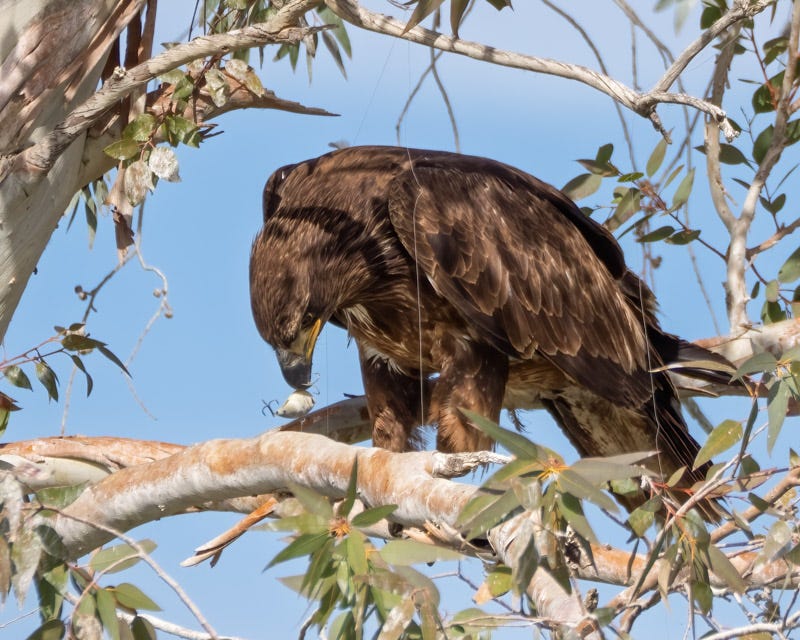
Suddenly, we saw the lure plummet down and splash into the water. Somehow the Eagle had freed the weighted lure which dropped harmlessly below, taking the deadly hooks with it. The Eagle must have been perturbed at its loss but we all breathed a sigh of relief.
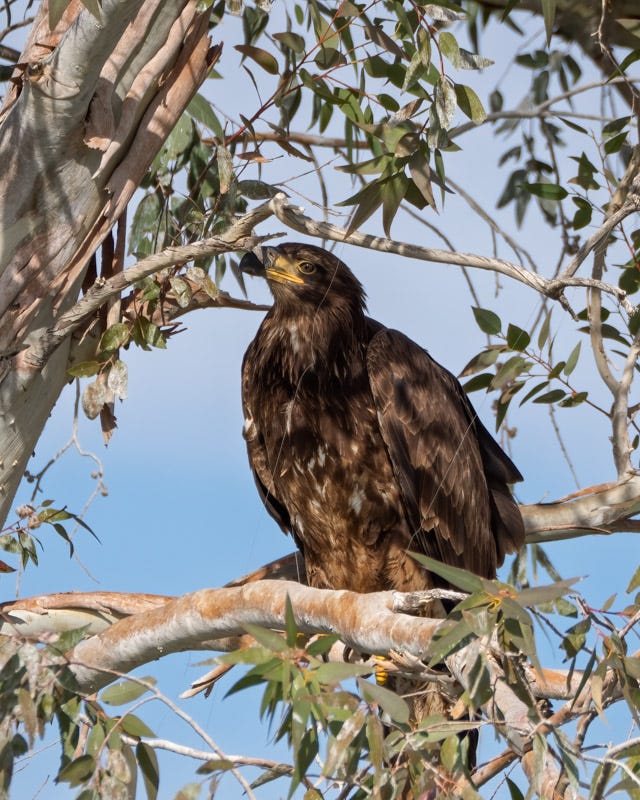
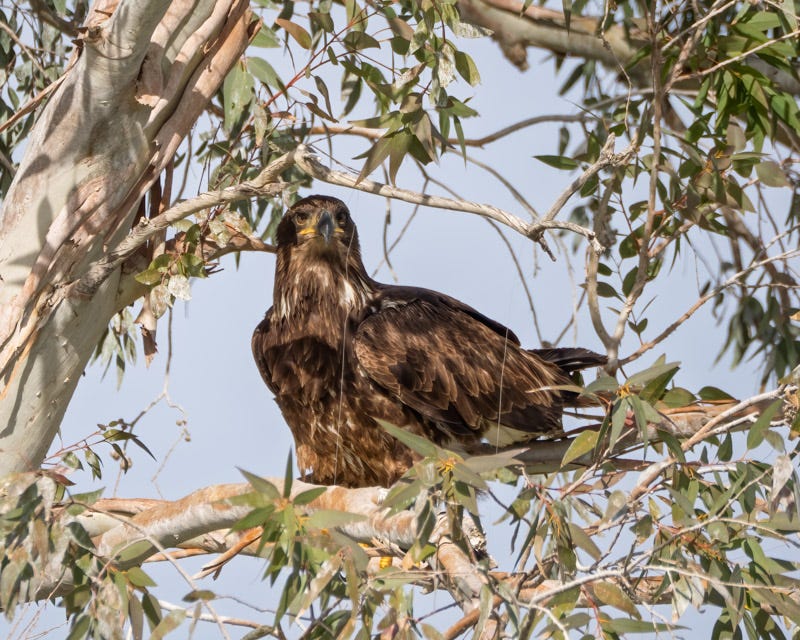
At that point, the Bald Eagle stared at the group of onlookers as if to say, “What are you all staring at?”
The Bald Eagle flew from the tree towards the southern end of the park. It circled around and then landed in a short mesquite tree at the shoreline. After a minute, it took off again and flew back to the eucalyptus tree, landing on the back side.
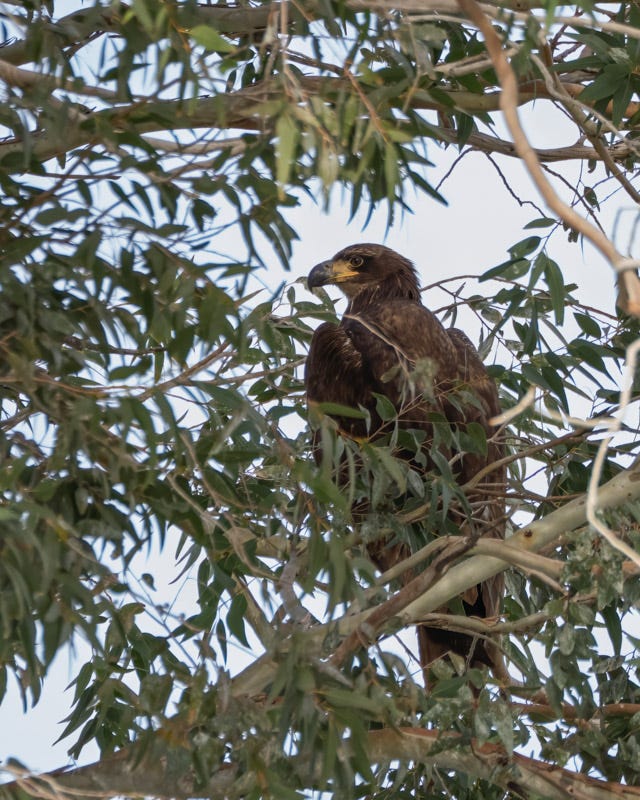
We walked around the lake in hopes of getting a more open look at the bird. Once there, we could see the upper half of its body well.
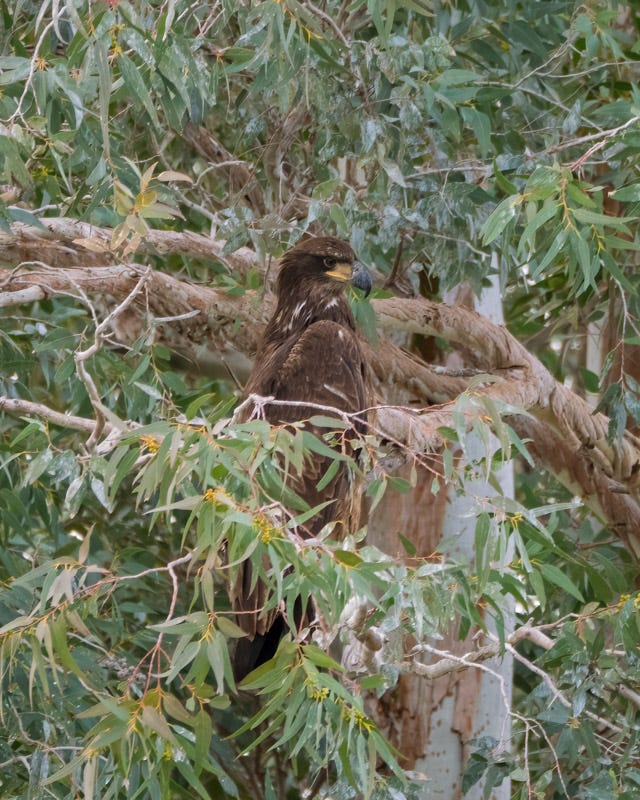
It was sitting upright and continuing to turn its head back and forth. Here, it is looking backwards. Raptors have 14 cervical (neck) vertebrae. Mammals, which includes humans, have only seven neck vertebrae. Because raptors have fixed and immobile eyes, this feature of their necks allows them to turn their heads quite a bit. Eagles and hawks can turn their heads around 180+ degrees as seen in the photo below. The Eagle is facing to the right but looking to the left. Owls are able to turn their heads 270°
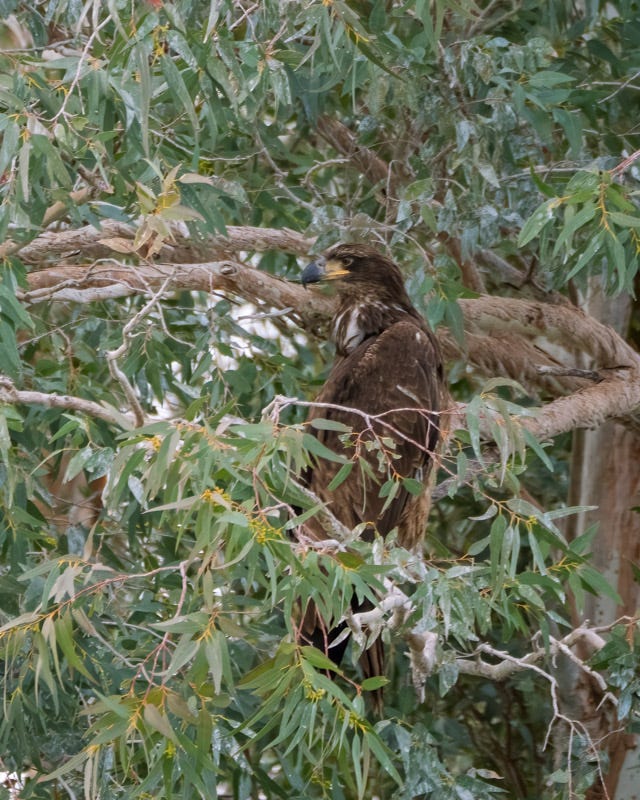
After two hours of Eagle watching I thought it was time for me to go home. I began walking back around the lake when my friends called out to me. They found another vantage point to see the Eagle without as many leaves blocking him. We all snapped a few photos and then the Bald Eagle took off once more.
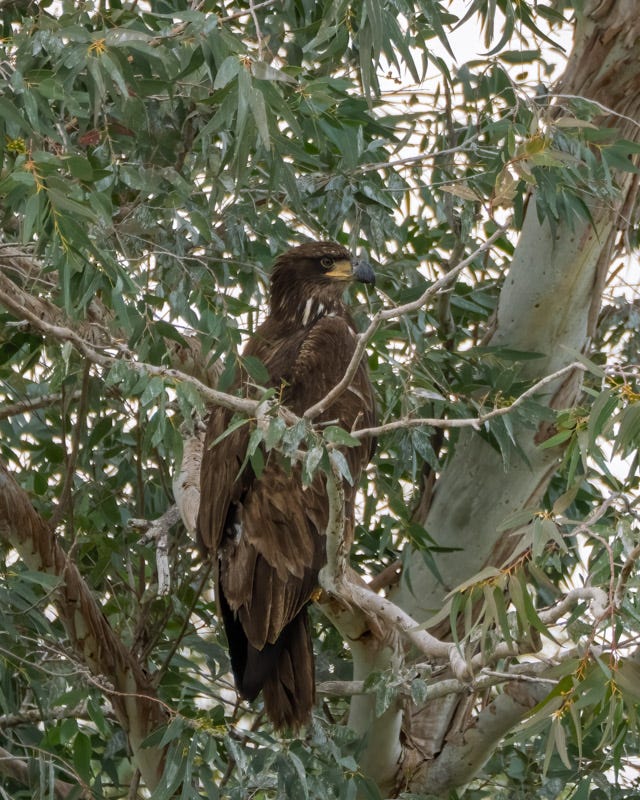
It circled the lake once more and headed over to a nearby transmission tower. Often it has been seen perched on either a telephone pole or a transmission tower.
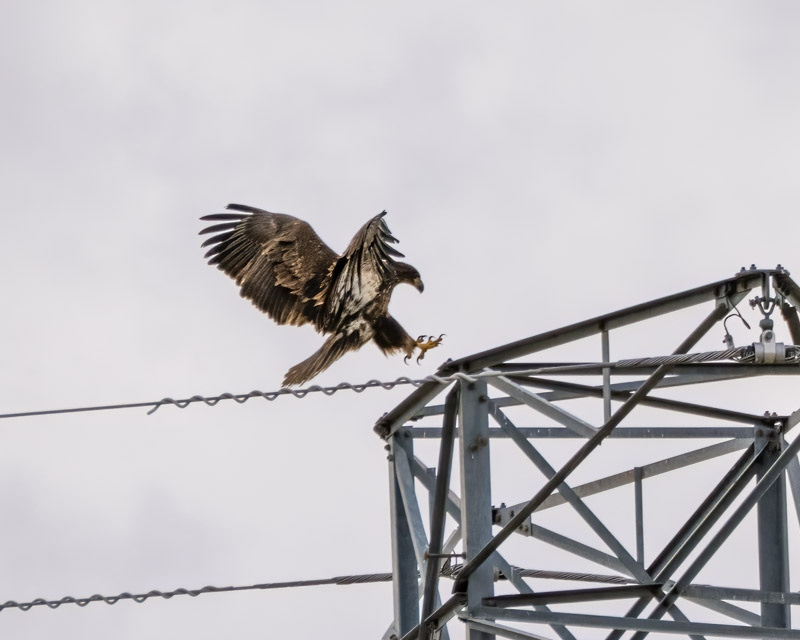
As of now, the Bald Eagle remains in Tucson. At some point it is likely to fly away to a better location. It’s been a real treat to watch it and I hope it has a long and successful life.
Great job Dan. I am pleased that I was able to share part of this experience with you. What a thrill it was to have a Bald Eagle in Tucson.
Dan, what a great ending to the fish lure cliff hanger! A great relief. Superb photos, too. I love the action shot of him landing on the tower. Those talons!