

Each fall Tucson Water works with the Tucson Fire Department on a controlled burn of the park. The purpose is to remove invasive plant species and dead vegetation and to clear out overgrowth which also helps to control mosquito populations in the wetlands. It also results in a more varied habitat for wildlife viewing. Here is a TV news video of last year’s burn. On a recent morning with friends, my favorite sighting at Sweetwater was this wintering Northern Harrier flying by in search of breakfast.
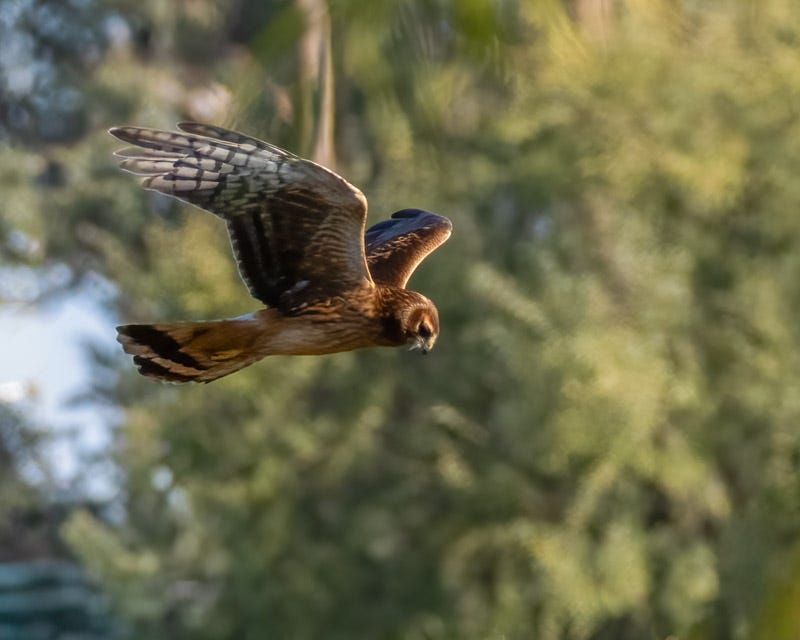
Northern Harriers were once named Marsh Hawks. Their common name changed in 1982, and the reason is explained nicely by Ron Dudley, a retired Science Teacher and creator of a wonderful blog called “Feathered Photography”. The Harrier group of birds are named for their “harrying” hunting style, which involves flying low to the ground to persistently chase and “harass” prey.
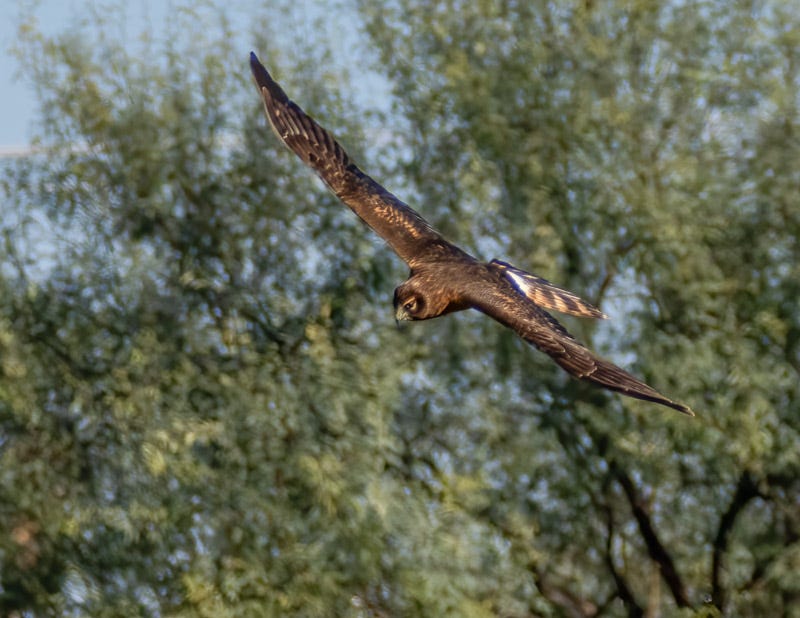
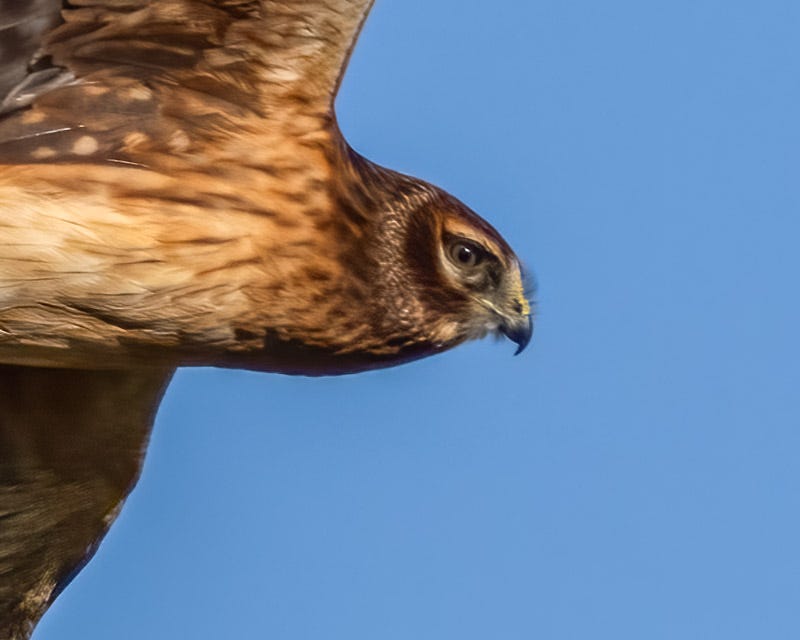
Besides having incredible vision, Northern Harriers are raptors who use their hearing to aid in locating their prey. They hunt facing the ground and have an owl-like look to their flattened face. Their facial feathers form a facial disc to aid in hearing. Recent studies reveal more about how they evolved to develop superior hearing.
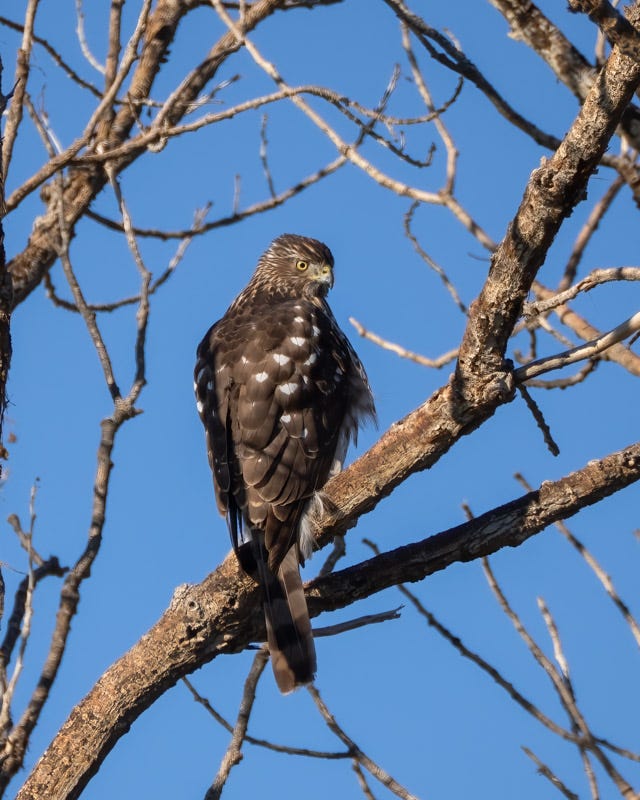
Cooper’s Hawks are present throughout the Tucson valley and a few are residents of Sweetwater. This brown juvenile had his back to us while perched in a bare winter tree.
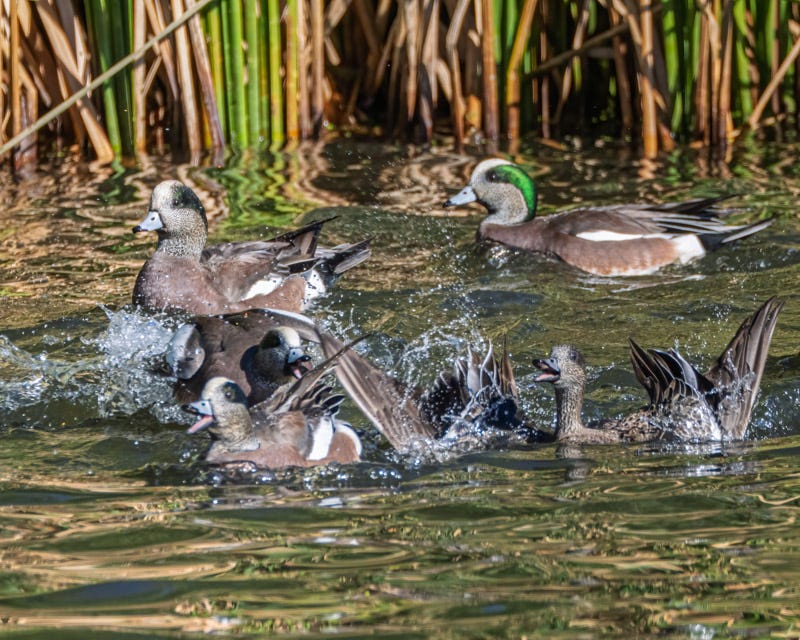
American Wigeons are a common wintering duck in Tucson and there were a number in the ponds at the adjacent Agua Nueva Park. American Wigeons were once called “Baldpate” ducks due to the males’ white head. Studies of wintering American Wigeons have shown that there are usually more males than females present at this time of year. This makes competition on wintering grounds by males for partners very intense. We saw this play out as a group of males began competing for a female. Things were calm on the water until an explosion of overt aggression and mass chasing of one of the female Wigeons began.
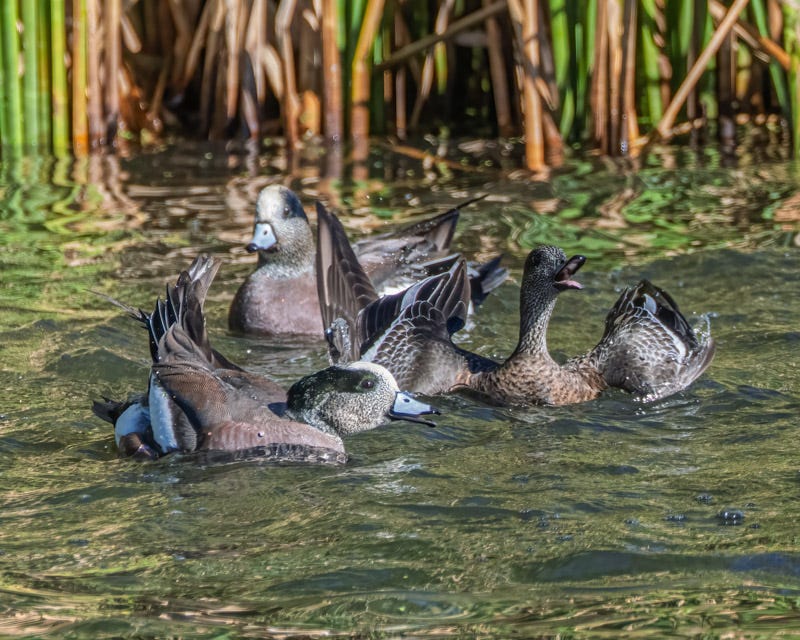
The males chased the female and chased each other while they vied to be the chosen one. The noise and action was intense but short lived and things calmed down. I’m not sure what was resolved at that moment but I expect those behaviors to repeat throughout the season.
During the walk we saw a few Northern Flickers including one who was very stationary on the trunk of a palm tree. In the west, Northern Flicker males have a red mustache and have red feather shafts. These are large woodpeckers and you can see how, like all woodpeckers, they use their stiff tail feathers as a brace for stability on a tree.
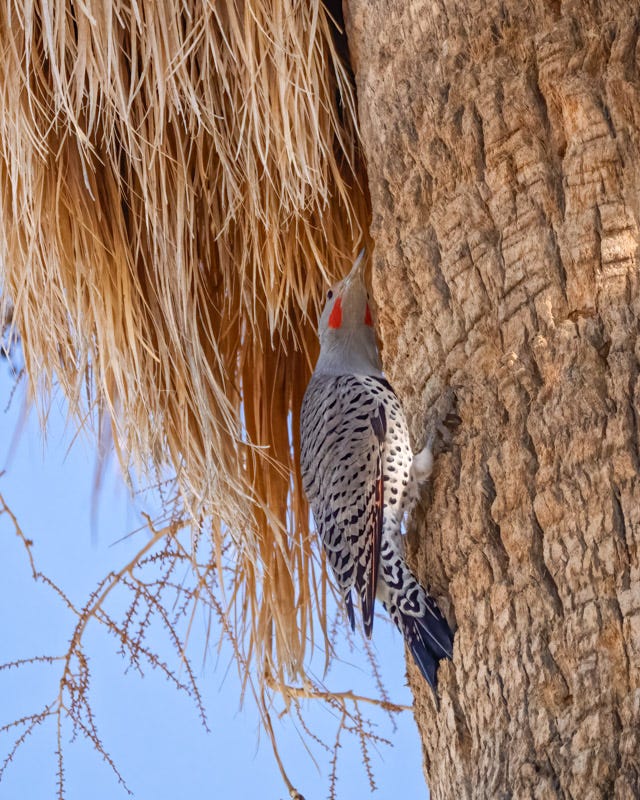
Birdnote tells us a bit more about how the Northern Flicker differs in looks from other common woodpeckers of our area.
Our visiting American Wigeons can be found at almost every city park that has a pond or water feature of some kind. This Birdnote piece tells us about their feeding pattern but it also lets you listen to the Wigeons’ very distinctive calls. It doesn’t “quack like a duck!”
Love the pattern in the wings. Thanks
Definitely one of my favorites when visiting the area. Thanks for the update.