

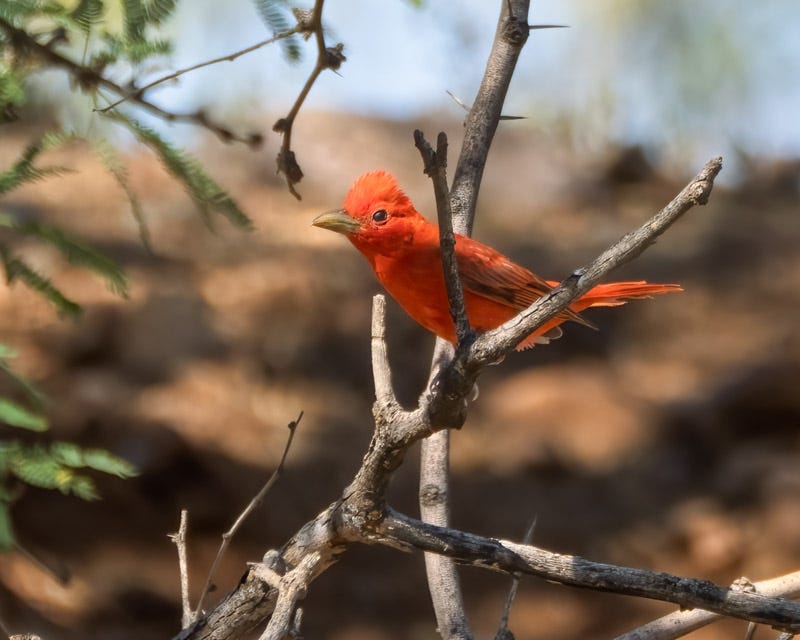
We saw a few of America’s very red birds at the stock pond. There was a red male House Finch there. We briefly saw a bright red male Vermilion Flycatcher. But the reddest of the red birds was a male Summer Tanager. Summer Tanagers are the only birds in the US that are a solid red color. (Remember that male Northern Cardinals have a small blackface mask!)
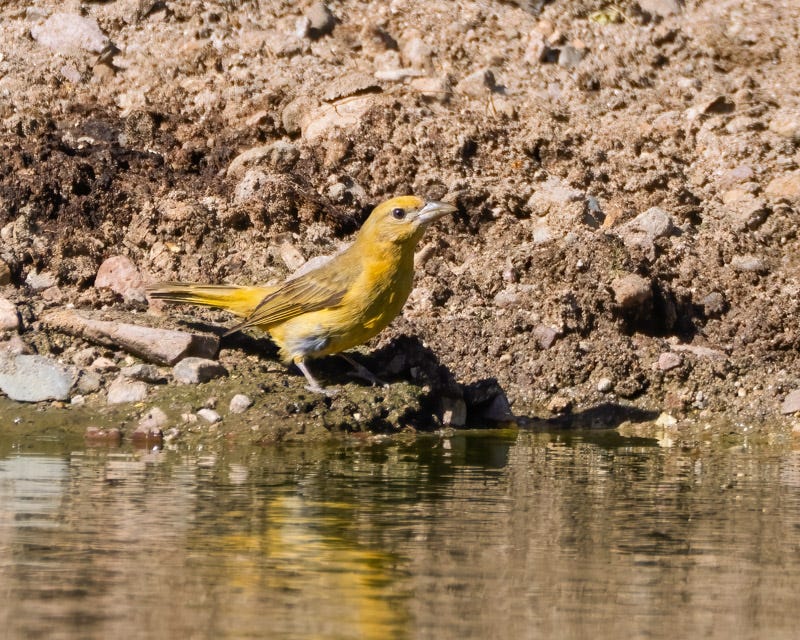
The female Summer Tanager came to the water’s edge to drink. These birds have a yellow-ish overall color to their plumage. They do have the same body shape and thick bill that the male Summer Tanager has.
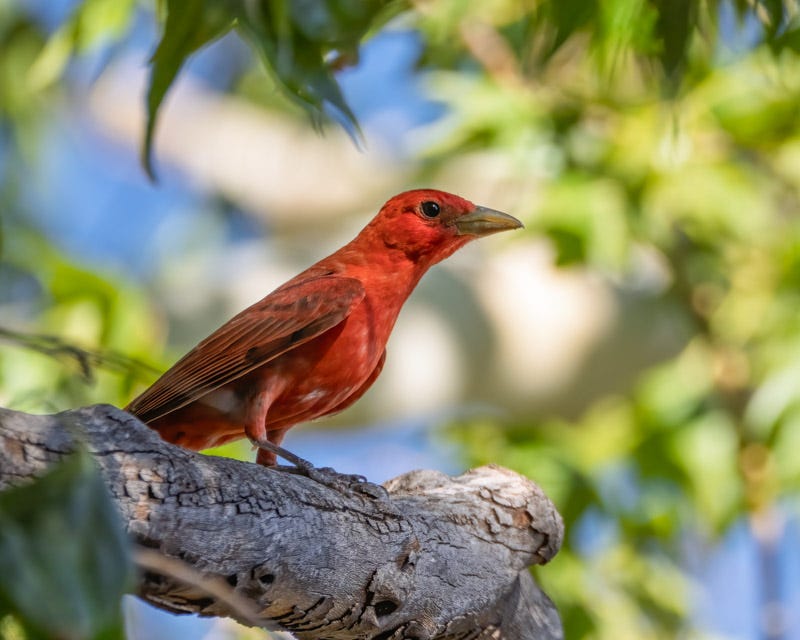
The male Summer Tanager did not hang around very long. Later on I took a walk over to a nearby small grove of sycamore trees. I quickly spotted a summer Tanager whose red plumage stood out among the broad green leaves of the sycamore trees.
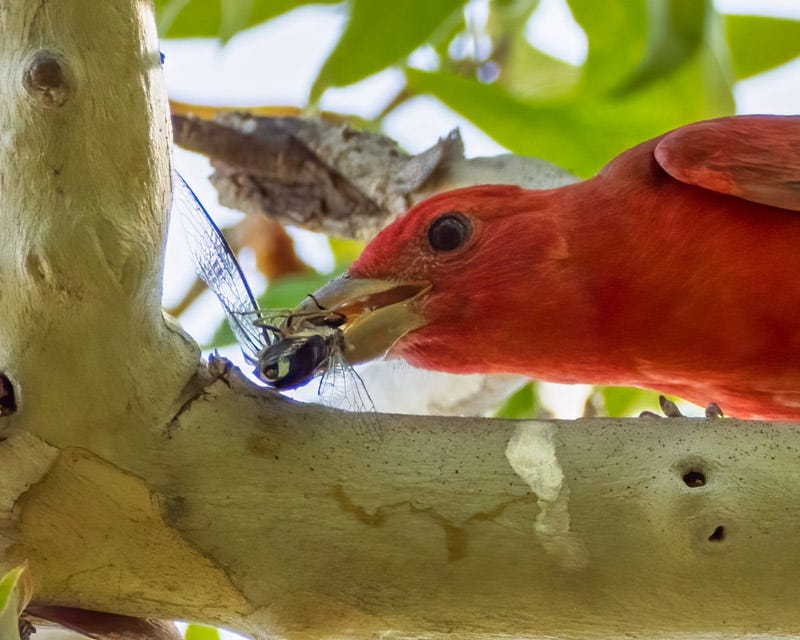
As the Tanager flew around, I tried to follow it to get an open look at it. I realized it had captured a very large insect. Summer Tanagers are said to be specialists in eating bees and wasps. They can catch airborne insects and they also glean insects on the trees. These Tanagers also eat a wide variety of other invertebrates, as well as fruits.
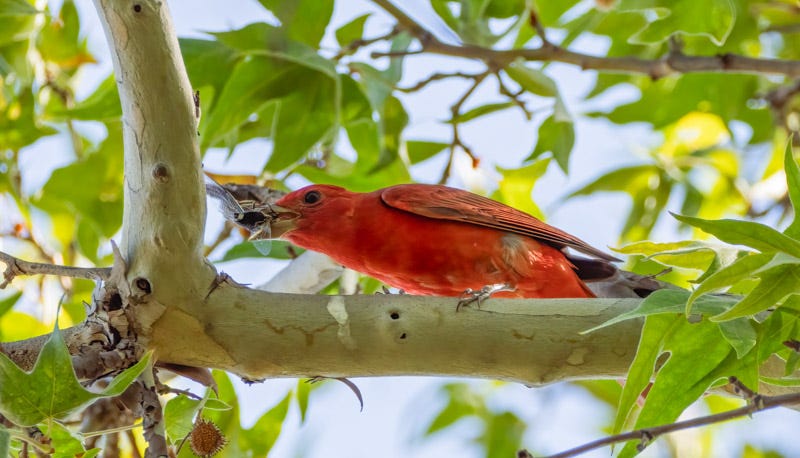
I am not certain what insect this Summer Tanager caught. It looked like a cicada to me. Whatever it was, it seemed like a substantial snack.
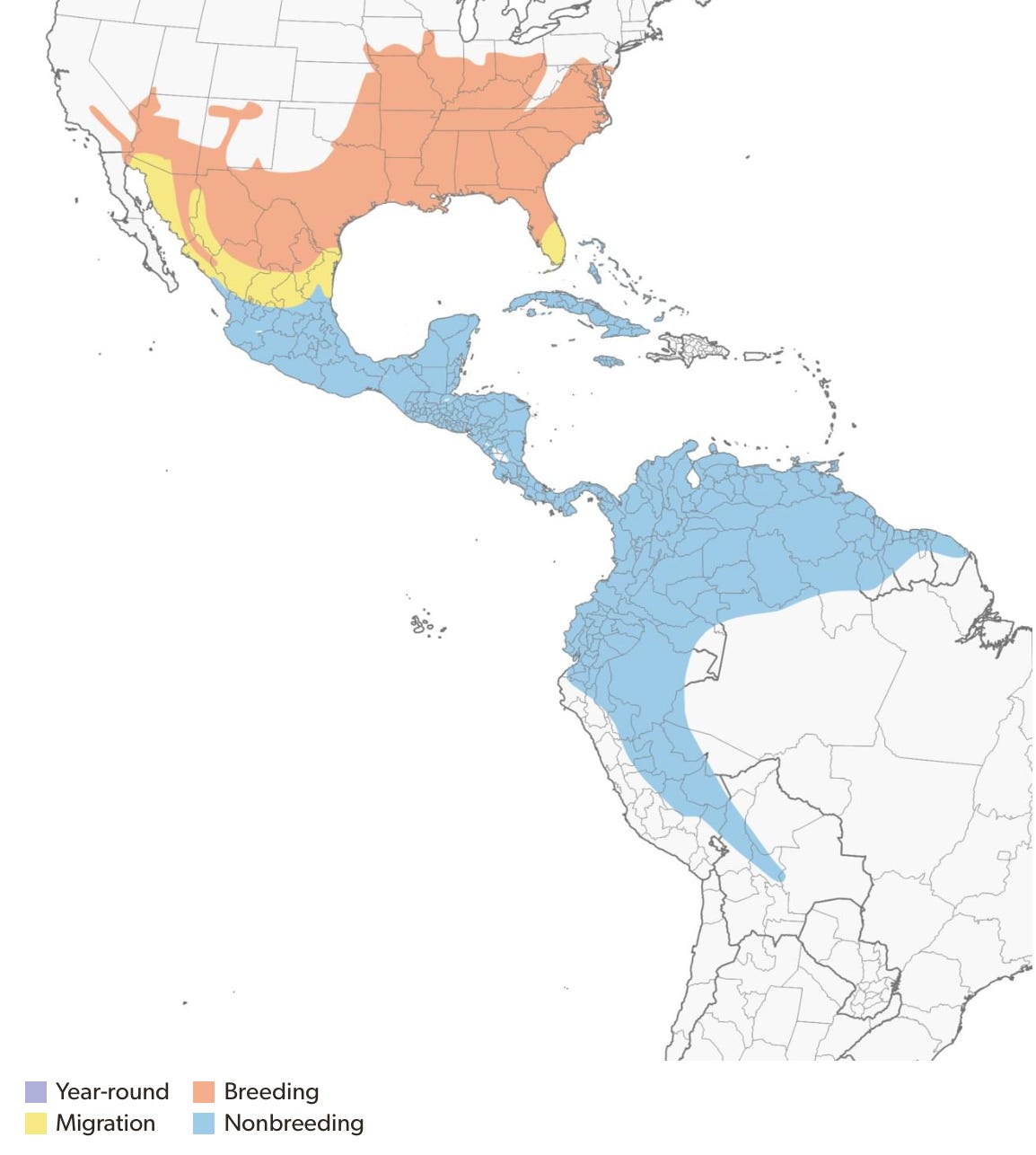
During their breeding season, Summer Tanagers are common in much of the United States, but they are long distance migrants. Check out the AllAboutBirds range map to see where they winter (in blue) and where they summer (in orange).
For more on Summer Tanagers in the Southwest, read Matt Griffiths’ article at the Tucson Bird Alliance website.
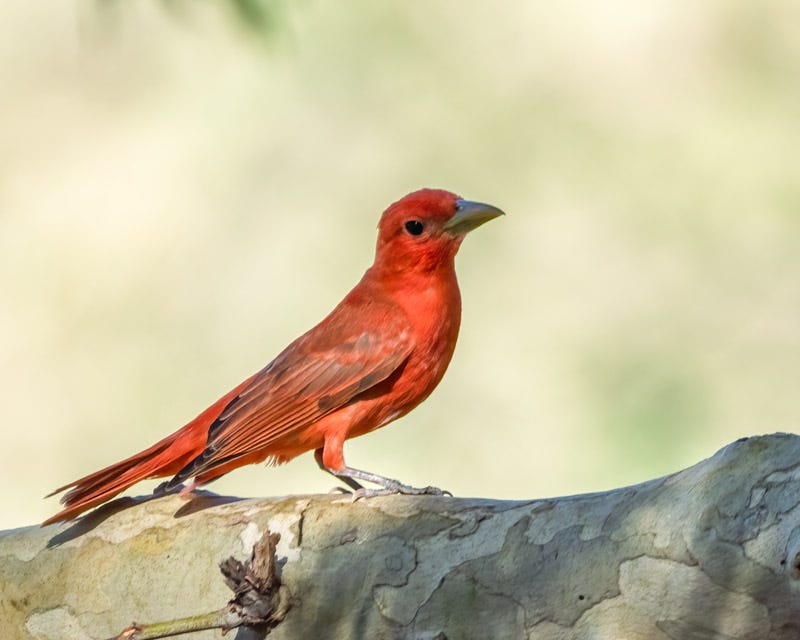
After keeping the Summer Tanager company in the sycamore grove for a while, I would have been happy for more time but the Tanager decided to head out to some nearby mesquite trees. It gave me one final parting glance before flying off.
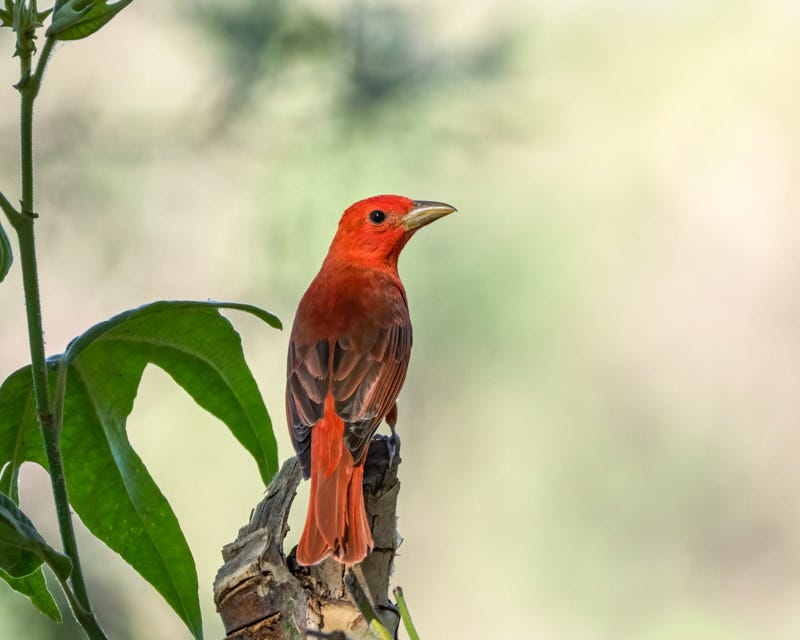
Summer Tanagers are yet another bird that makes birdwatching in southern Arizona a wonderful hobby. Learn more about these birds from Birdnote.
Beautiful birds!
Thanks Dan, I really love your photos of the Summer Tanagers!
As always, I appreciate your stories!