

Larger Herons and Egrets tend to stand out conspicuously in open parts of wetlands. The Green Heron is a smaller bird with shorter legs, and most often is found at the edges of the water. Green Herons will look squat, perhaps even hunch-backed, as they wait to find prey. It had rained the night before we arrived at El Rio Preserve and raindrops still clung to the grasses.
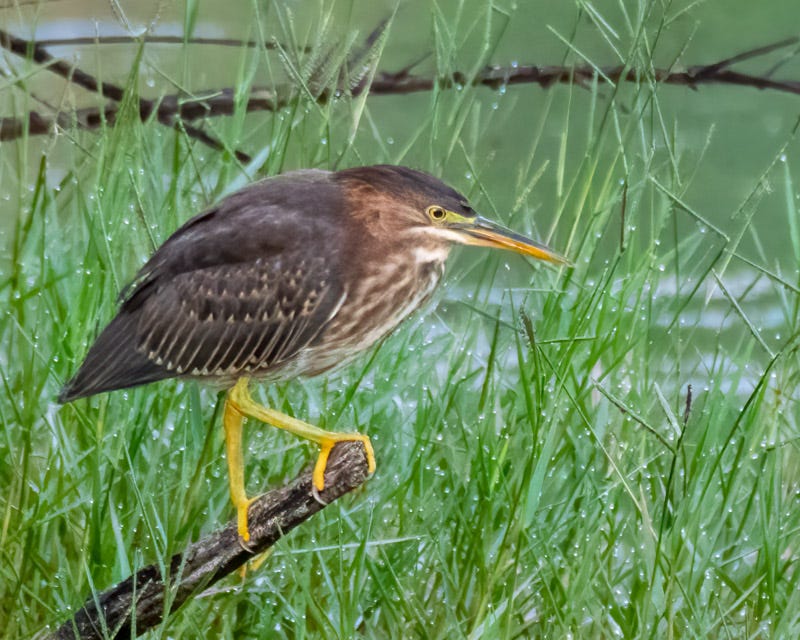
Suddenly, the Green Heron stood straight up, straightening its long neck to look off in the distance!
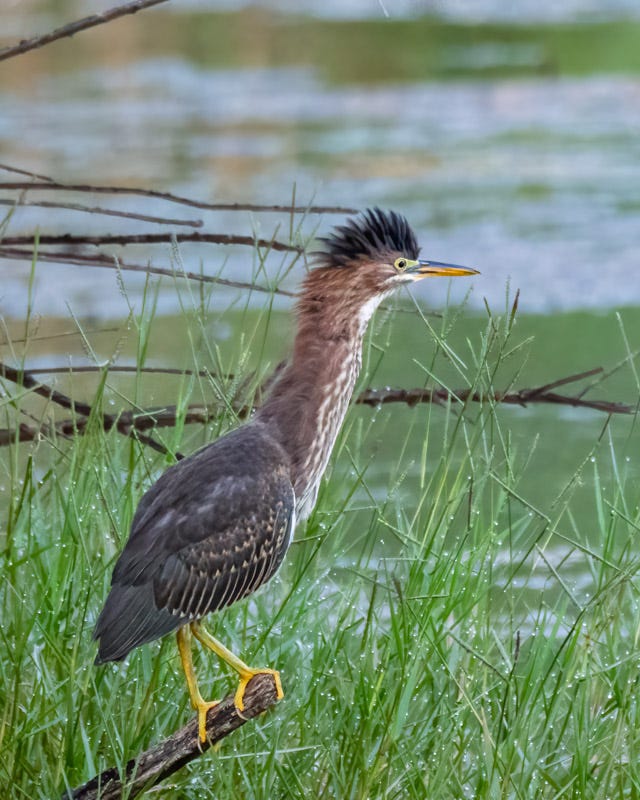
There were several Green Herons at El Rio that morning. Here, this Heron was again looking short and round. Its long neck was folded tight and its feathers concealed how much its long neck was coiled. It crept forward while still looking rather chunky. Audubon shares more about the necks of Herons.
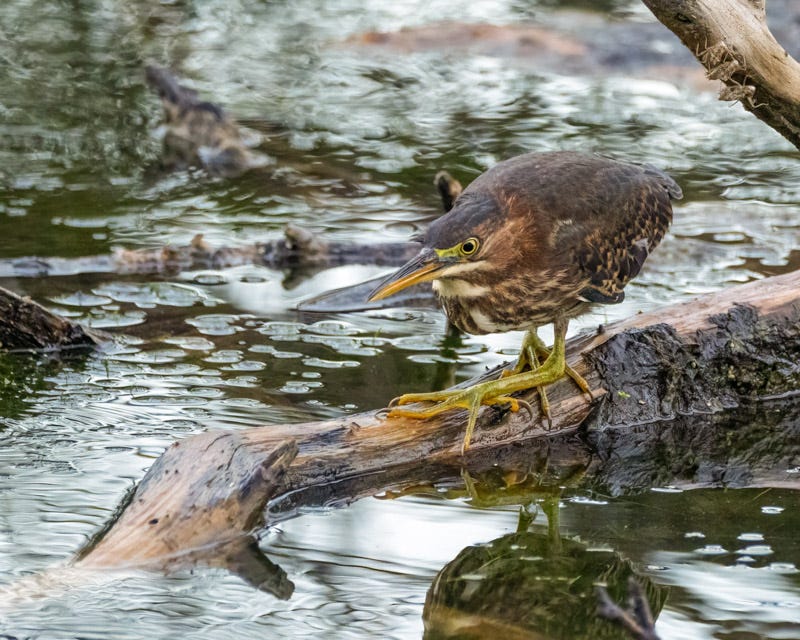
Suddenly, the Green Heron snapped its head forward. Green Herons have roughly 20 vertebrae in their necks compared to we humans that have 7 in our necks. Those bones are uniquely shaped to allow the Heron to coil its neck at rest, but then to power it forward suddenly.
One Green Heron flew to a far edge of the Preserve. It perched and didn’t hunt but remained in a crouched position. It was looking across the water.......
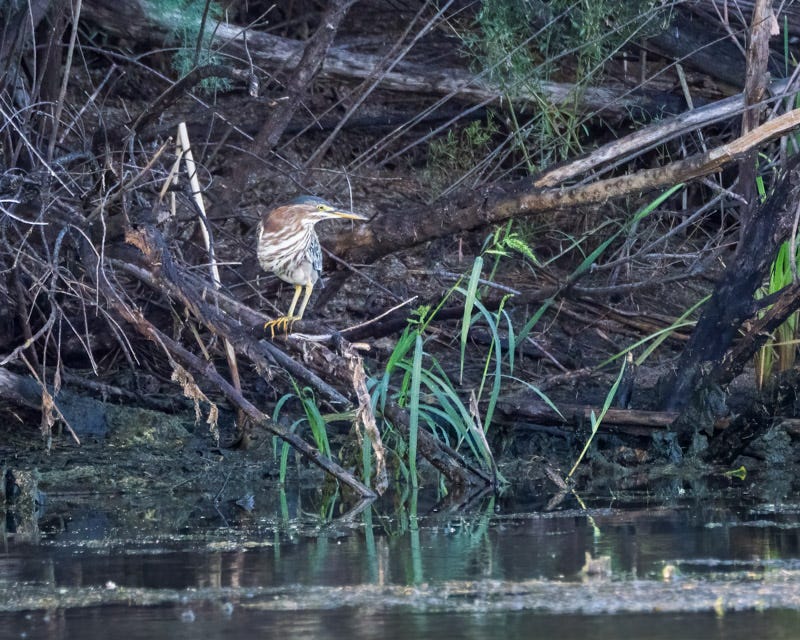
....at another Green Heron perched atop a submerged tree snag. That Green Heron was doing its best to be tall and look off in a different direction from the other Green Heron.
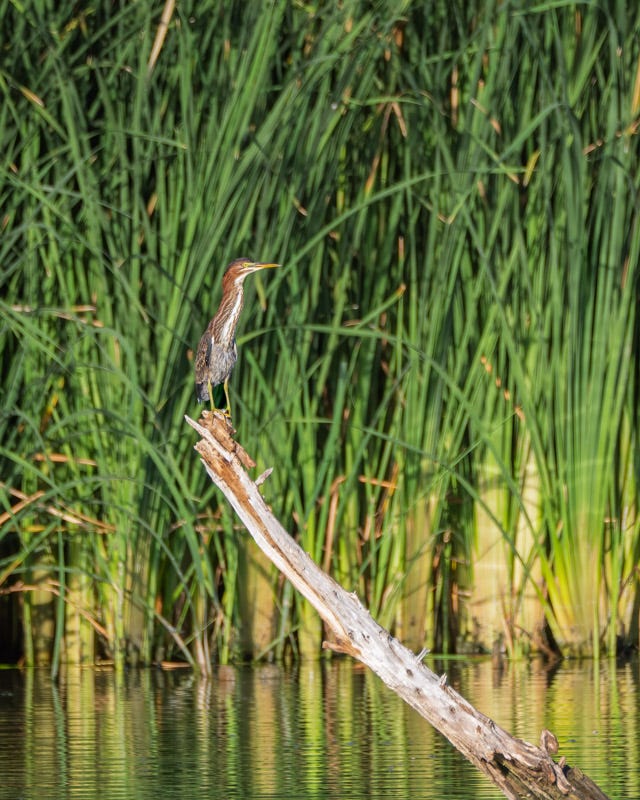
As we walked around El Rio, the Green Herons would occasionally fly to different hunting spots. Some spots were used over and over again. This Green Heron was not crouched down but instead stood up in a relaxed position.
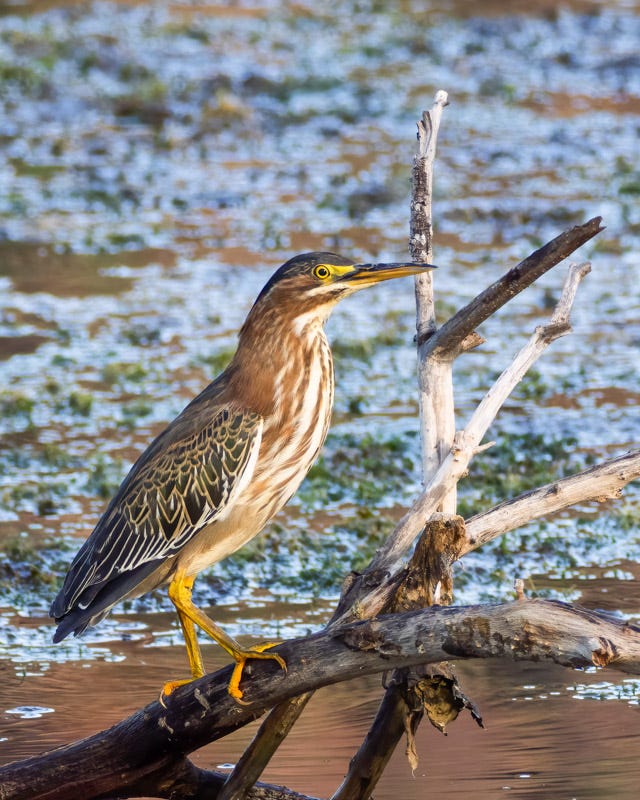
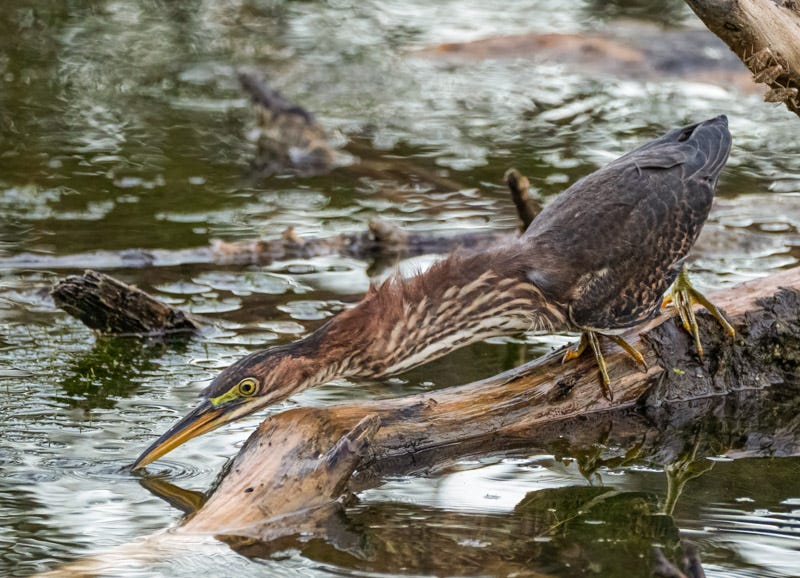
And, when finally deciding to hunt, it never moved its feet. Instead, it bent over and, with its neck coiled, was focused on the water intent on finding a small fish to grab.
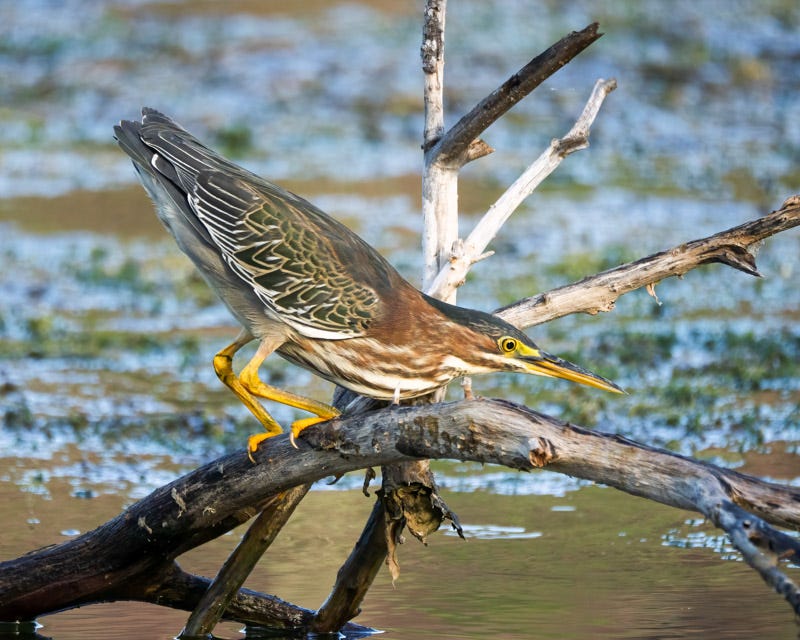
That neck was spring-loaded, and when a fish came near, the Green Heron attacked at lightning speed.
You can read more about these shape-shifting birds at Tucson Bird Alliance. Birdnote also has a nice vignette about this unique Heron.