

The Sky Islands of southern Arizona is the place to go if you want to see Hummingbirds in the US. The second largest Hummingbird species in the US, Rivoli’s Hummingbirds can be found during the summers in mountain canyon groves and conifer forests. They are the size of Sparrows.
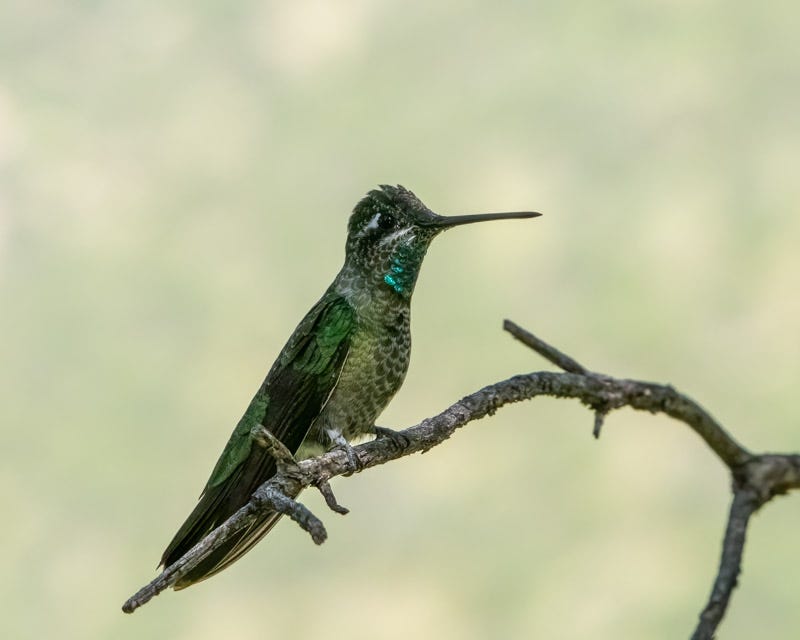
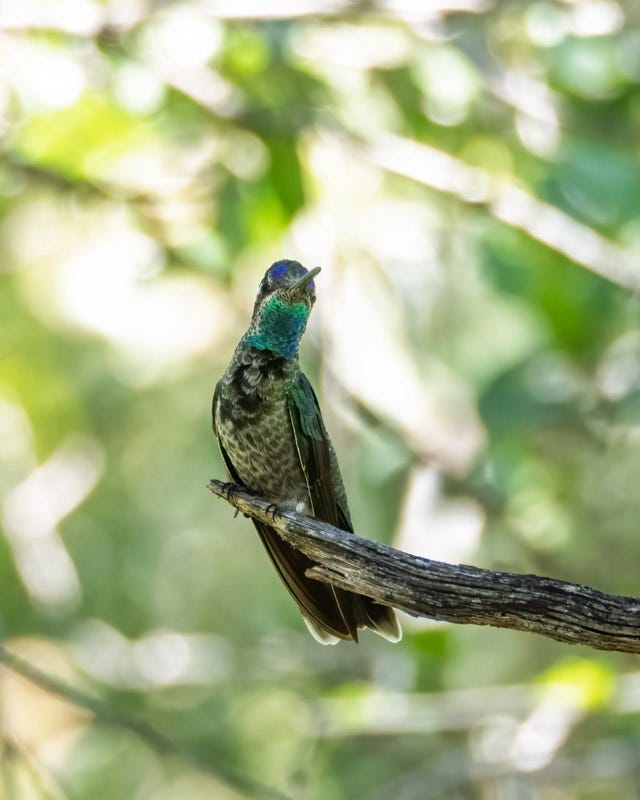
Although their name was officially changed from Magnificent to Rivoli’s in 2017, these birds in the right light are truly magnificent looking. My photos from that morning only hint at this, but the males have a turquoise gorget and a purple crown. With their dark color and large size, they dwarf the other Hummingbirds that they share the feeders with.
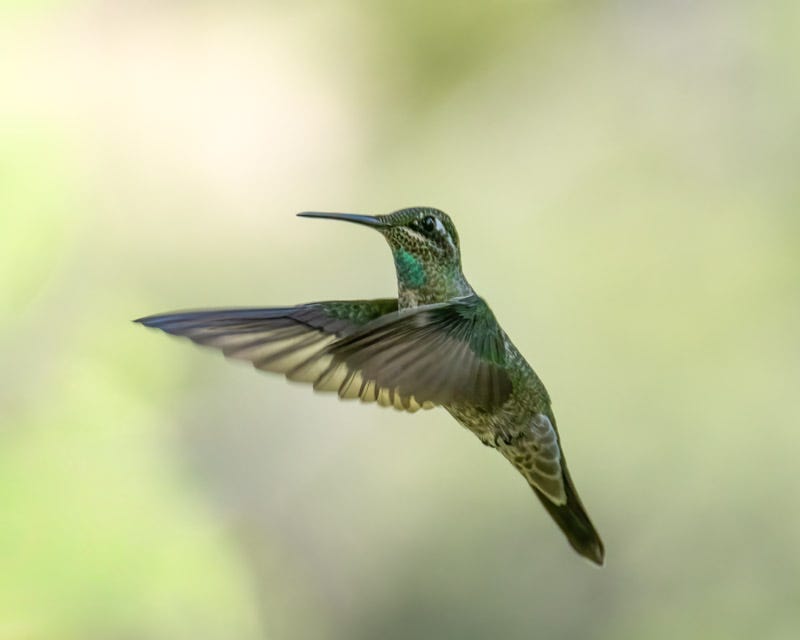
Rivoli’s have one of the highest known heart rates of any animal with a backbone, ranging from 420-1,200 beats per minute!
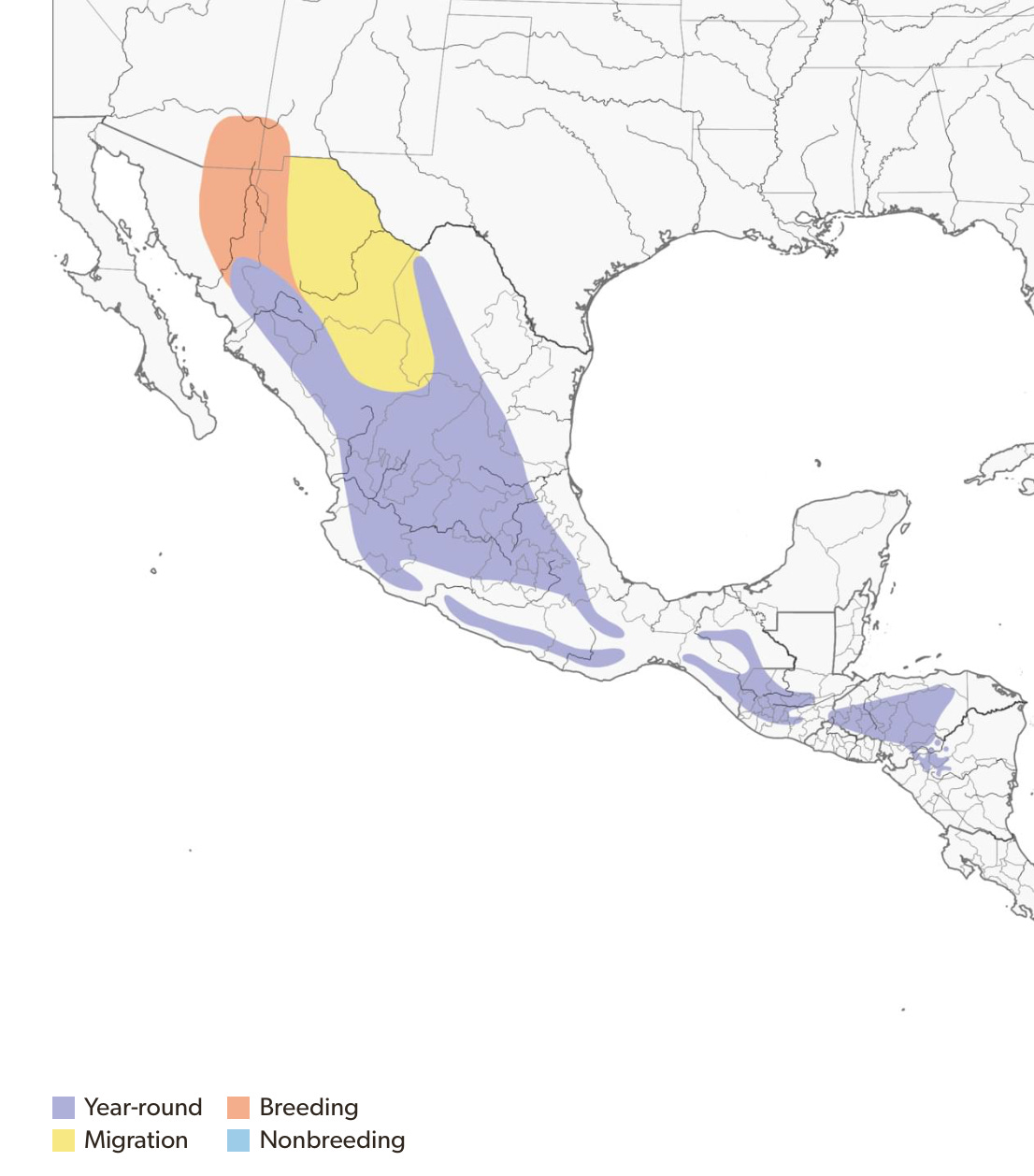
Here is where Rivoli’s can be found in the US:
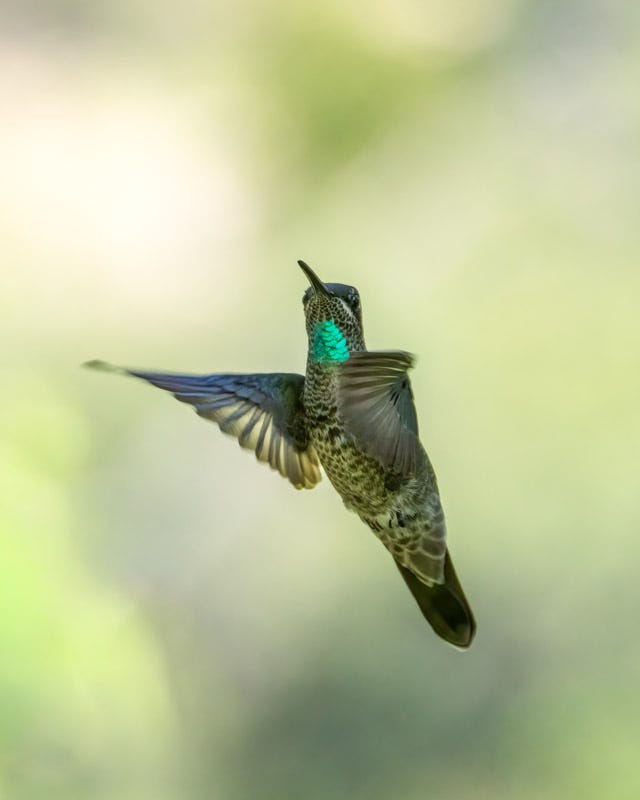
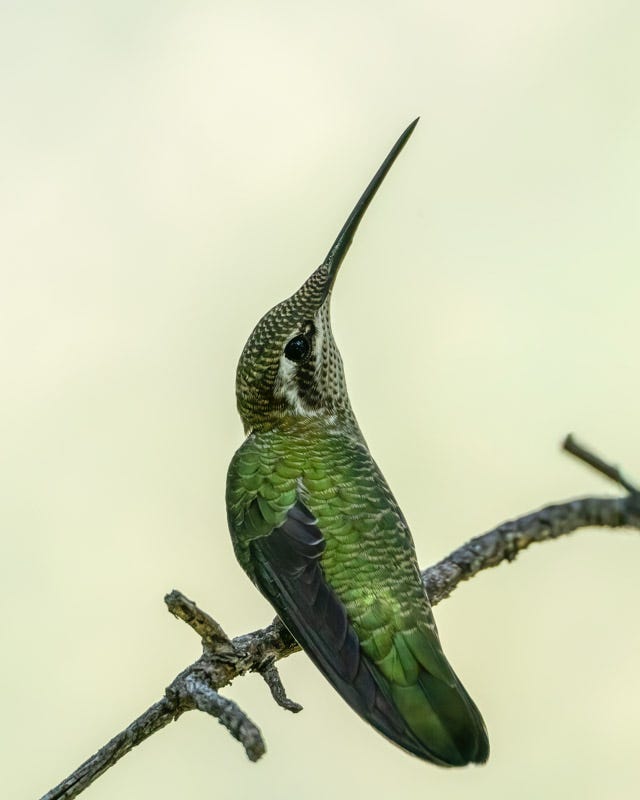
I was able to capture a bit of this bird’s purple crown. It’s not much, but at least you can see a hint of what could be!
One Rivoli’s Hummingbird perched on a twig for a while. In the shade, none of the feathers glowed, but the clear background allowed for a crisp look at this bird.
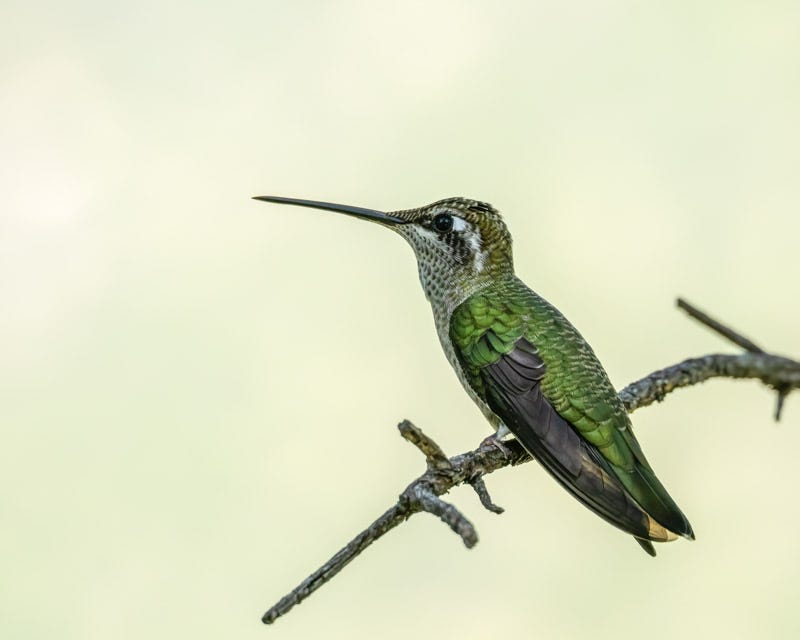
Apparently, this was an important twig. It is the same twig that a Violet-crowned had been using (as can be seen in my most recent blog post). While the Rivoli’s was perched and minding its own business, a Violet-crowned Hummingbird felt like protesting its presence. Below you can see that the Rivoli’s has alerted, and is in a defensive position compared to the photo above.
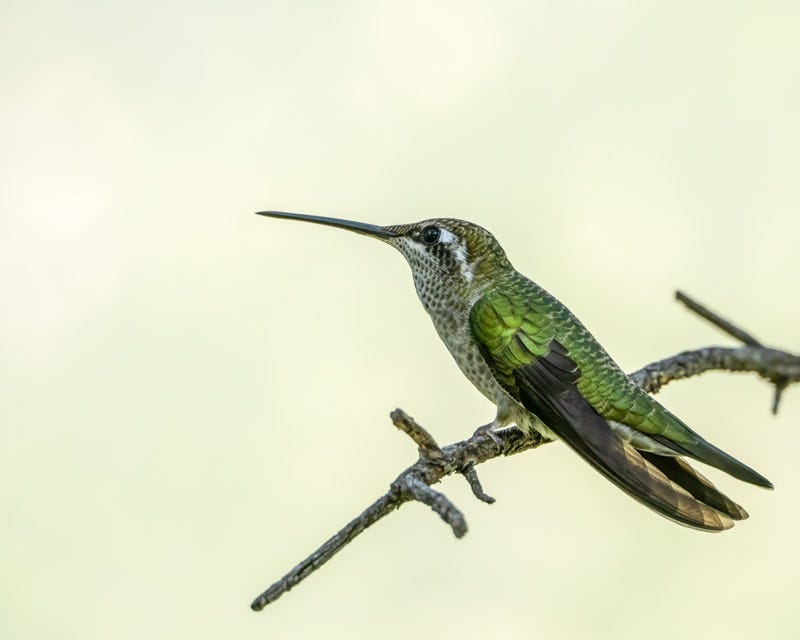
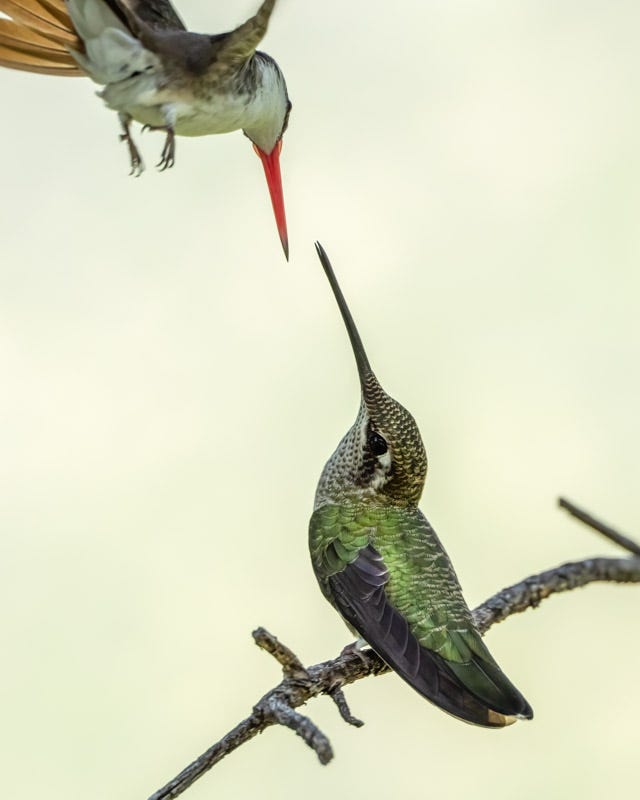
The Violet-crowned made an offensive pass at the Rivoli’s.
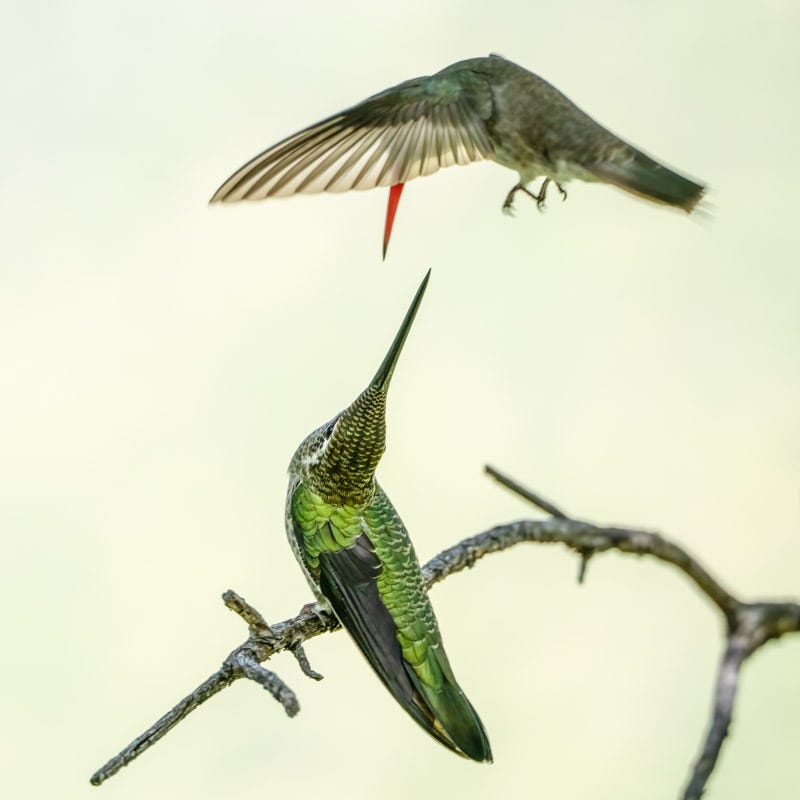
As the Violet-crowned Hummingbird continued to fly around the area, the Rivoli’s Hummingbird remained alert and watchful.
The Violet-crowned made another attacking pass. While the Rivolio’s is much larger than the Violet-crowned, Violet-crowned Hummingbirds are a more aggressive species. Despite weighing almost half as much as the larger bird and being a few centimeters shorter, the Violet-crowned Hummingbird is very assertive around ‘its’ feeders.
Finally, both birds flew off. For a nice reference to Rivoli’s Hummingbirds, see this Tucson Bird Alliance piece.
Evolution wired Hummingbirds to defend their sources of food. With such high rates of metabolism, and scattered flower patches in nature, Hummingbirds evolved to be very protective of their sources of nectar. Their survival instinct hasn’t changed and even though we see feeders as a rich and easy source of food for all hummingbirds, they still feel the need to defend what they see as a personal resource. You can read about this behavior here.
What an amazing opportunity to witness that! You captured it so well. Stunning pictures. The details you add add such depth to what you experience. Thank you for letting us all share in your adventures 😊🙏
They're like small dogs. All they have is their moxie, and it's often enough.