

Although we have a number of nice raptor species in southern Arizona year-round, cold weather always brings us wintering raptors. Driving through desert flats and agricultural areas often presents opportunities to see some of those wintering raptors. On a recent drive in a neighboring county, I came across a few of these birds. I never did get shots of birds in flight but I did get photos of the few who stuck to their perches.
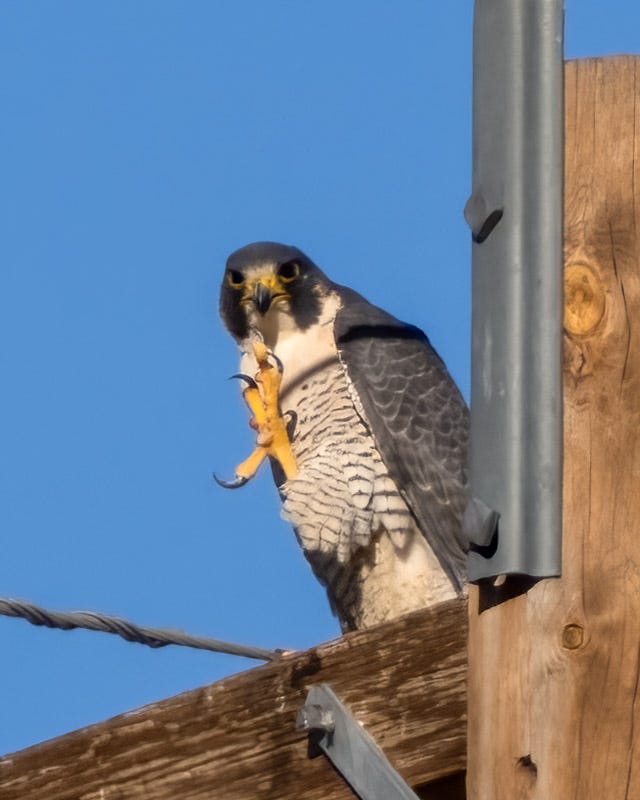
Peregrine Falcons are always stunning birds. They prey on other birds and have very long toes allowing them to reach through the prey’s feathers during a high speed flight and grab the bird in mid-air. Often they’ll first “make a fist” with their feet and knock the bird out of the sky. Then they’ll use their long toes to grab the bird as it falls. In this shot, the Peregrine Falcon had been cleaning its talons with its bill and, as it lowered its feet, got lost in thought leaving an open foot stalled in the air. Look at those long toes with sharp, curved talons at the end of each one!
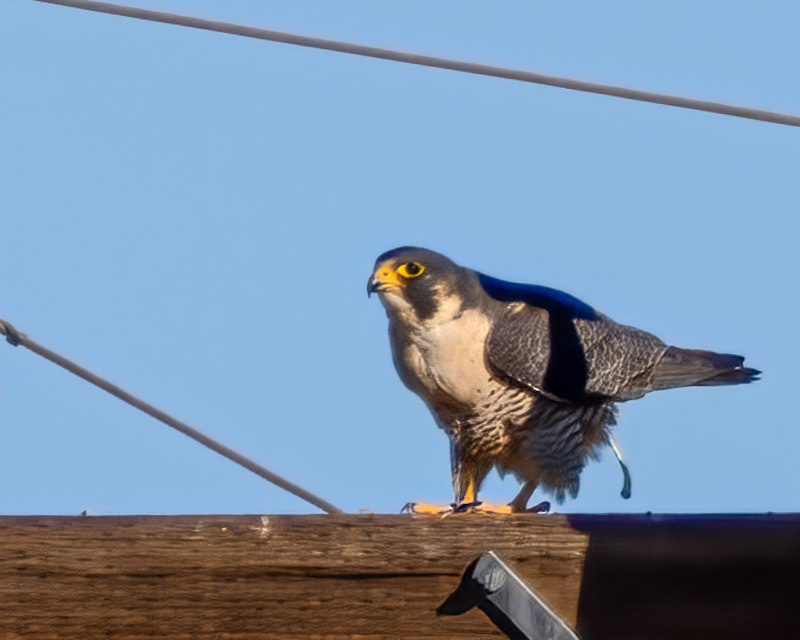
Many raptors “lighten the load“ just before they fly. This helps to reduce their body weight to make flying more efficient. Peregrine falcons are known as the fastest animal on earth. They circle high up in the air, looking for prey, and when they tuck in their wings and go into a steep dive (called a stoop) they have been recorded at 240 mph. It benefits the Peregrine to weigh as little as possible when it takes off.
A very special wintering bird of prey here is the Ferruginous Hawk. Ferruginous Hawks are the largest soaring hawk in North America. Their name comes from the rusty color of their wings and back, which we only get a hint at in this photograph. We can see the bright white feathers on its belly.
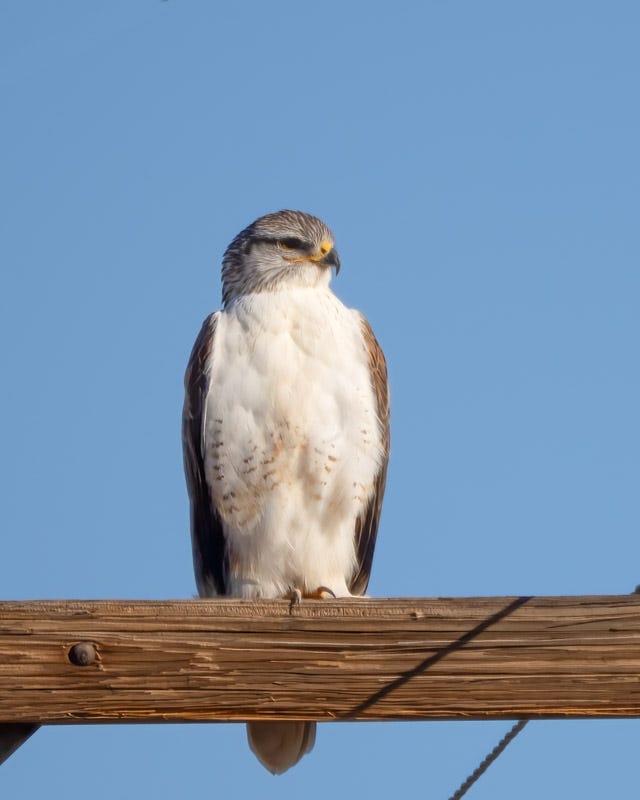
This Ferruginous Hawk was very relaxed. You can see that it is just perched on one foot. Its other foot is tucked up under the feathers to keep warm. For more information on the Ferruginous Hawk, go to their site on AllAboutBirds.
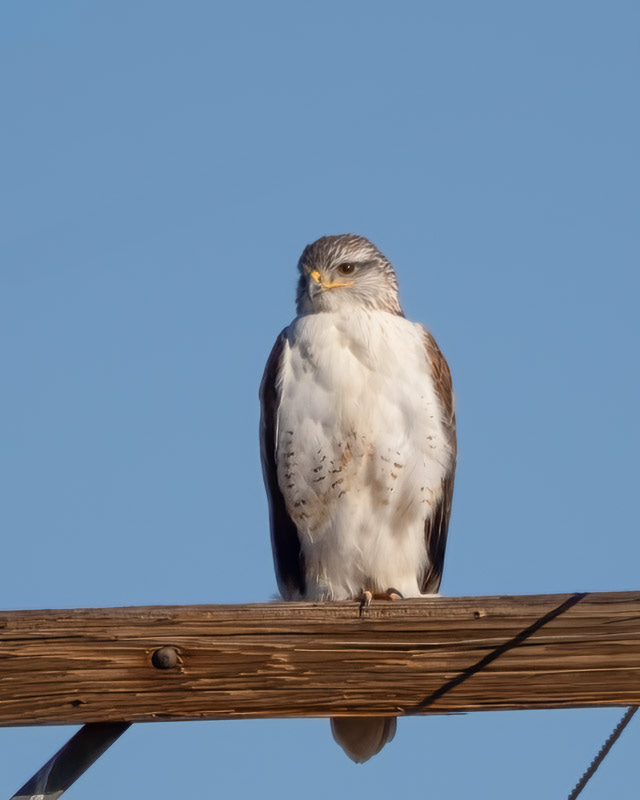
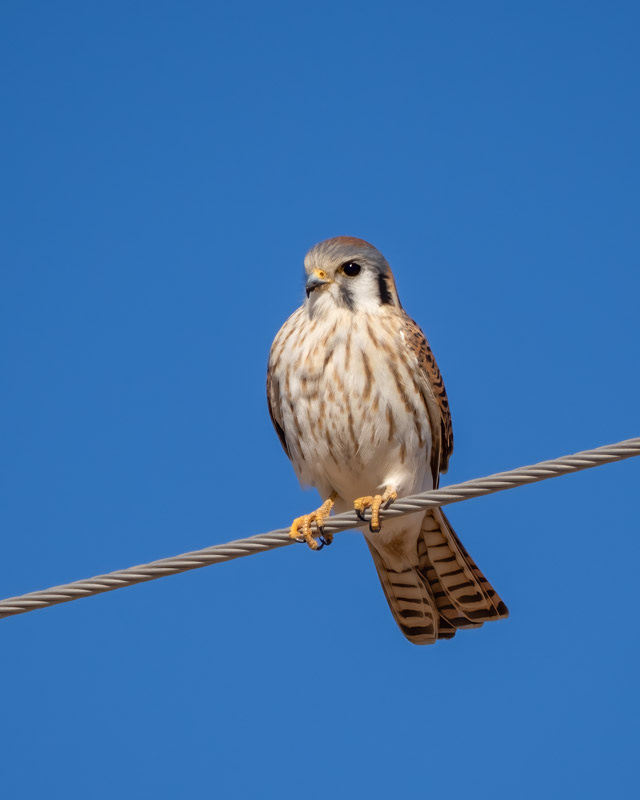
We do have American Kestrels in southern Arizona year-round. During the winter months, our population is augmented by many other American Kestrels that have flown south for the winter. This is a female American Kestrel as evidenced by the streaks on her belly and by the narrow black bars across the underside of her tail.
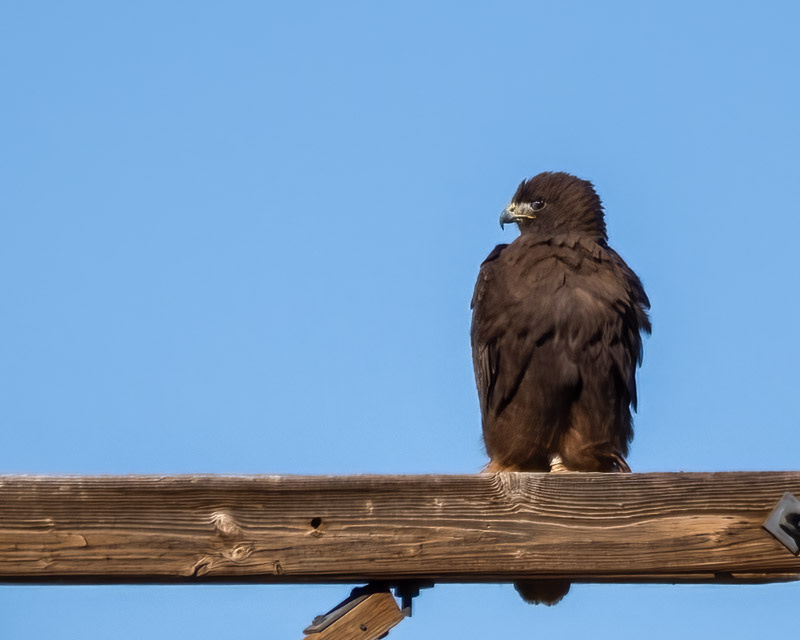
This Red-tailed Hawk was spotted perched along the road. It looks very different from a normal Red-tailed Hawk because of its very dark feathers. This is referred to as a dark morph Red-tailed Hawk. It looks like there may be a band on this bird‘s ankle. It could’ve been trapped at some point as part of a study.
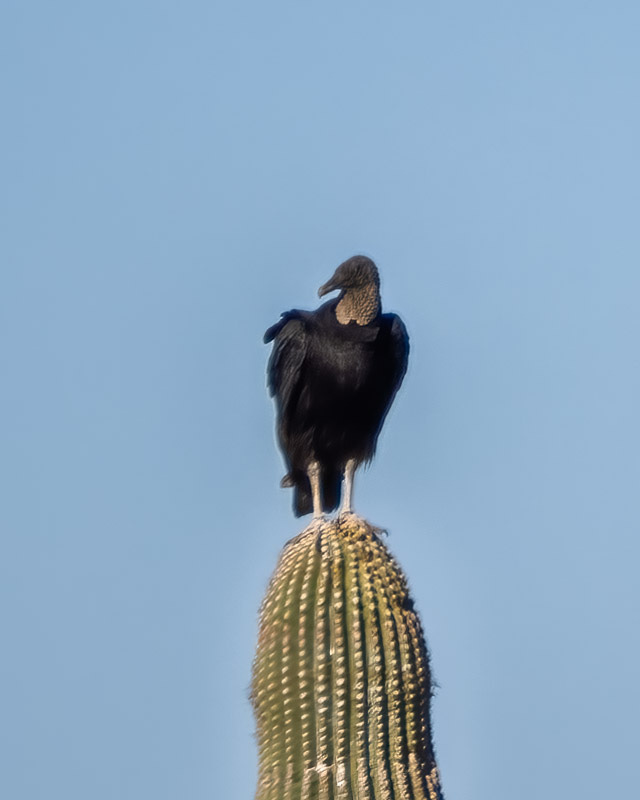
This Black Vulture was perched on a Saguaro Cactus perhaps 50 yards from the dark morph Red-tailed Hawk. Black vultures do not have the keen sense of smell that a turkey vulture does. They make up for that by following turkey vultures to carcasses. For more on Black Vultures, see their AllAboutBirds page.
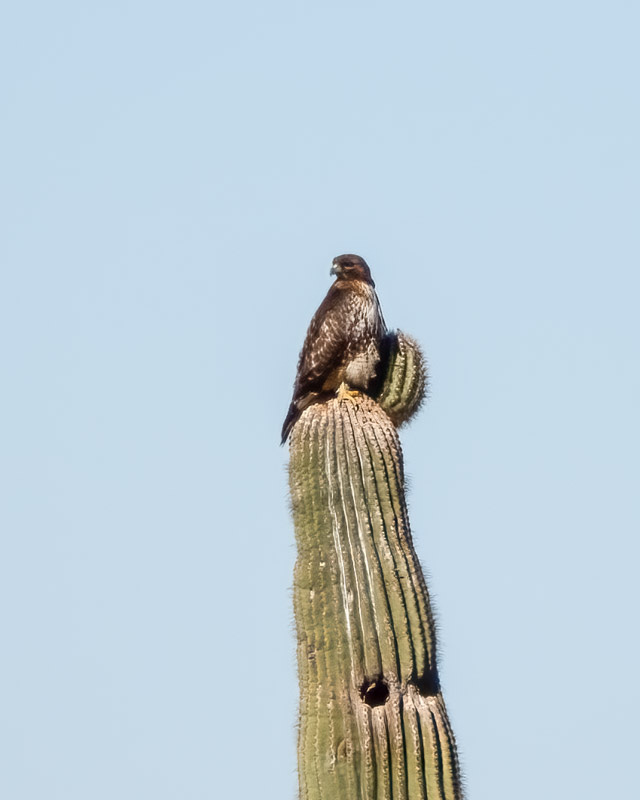
Perhaps 75 yards from the Black Vulture was this Red-tailed Hawk. There are very, very many Redtails across this farmland during the winter. The dark morph Redtail is a regular there and it mates with a normal looking Redtail. Perhaps this bird pictured on the saguaro below, perched so close to the dark morph, is its partner.
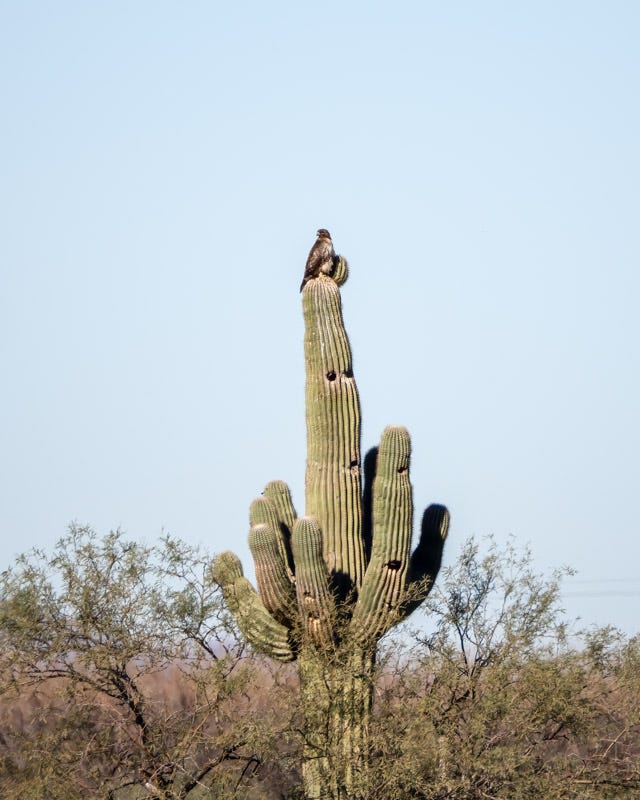
Here is the same photo, cropped a little bit closer for you to get a better look at the hawk. Notice that the cactus is covered with white-wash. That tells me this is a very common perch for these large birds of prey.
Raptors are Birds of Prey. They are apex predators and they seem to embody both freedom and power. Mankind has always had a fascination with and admiration for raptors. I can sure see why.
These are incredible pictures!
Many thanks!
Do you ever have events where you speak in public regarding the area birds?
Excellent job, Dan.