

Almost 1,000 people registered for and attended this year’s Birding Festival, held the second weekend in August. Many attendees were from Tucson, but many others came from around Arizona and across the entire United States. From the moment you arrived in the Festival hotel’s parking lot, you knew you were in for a good weekend.

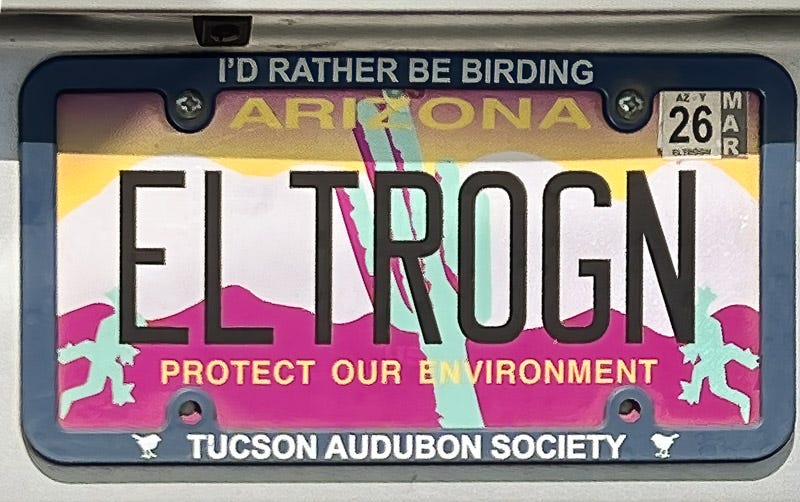
People buy personalized license plates to express their individuality and to showcase their hobbies and interests. Birders are no different, and the parking lot offered a glimpse into the field of Birding. (To learn more about any of the birds highlighted in this post, click on the links provided!) One target bird for people coming to southern Arizona is the Coppery-tailed Trogon, formerly called the Elegant Trogon. The bird’s official name has been changed but we know what this car owner was thinking of!
Great-tailed Grackles originated in tropical lands but by the 1880’s reached the southern borders of the United States and continued to expand their range. Many people know them as “Costco Parking Lot Birds”, but they are very intelligent birds with a huge tail and loud, raucous calls.

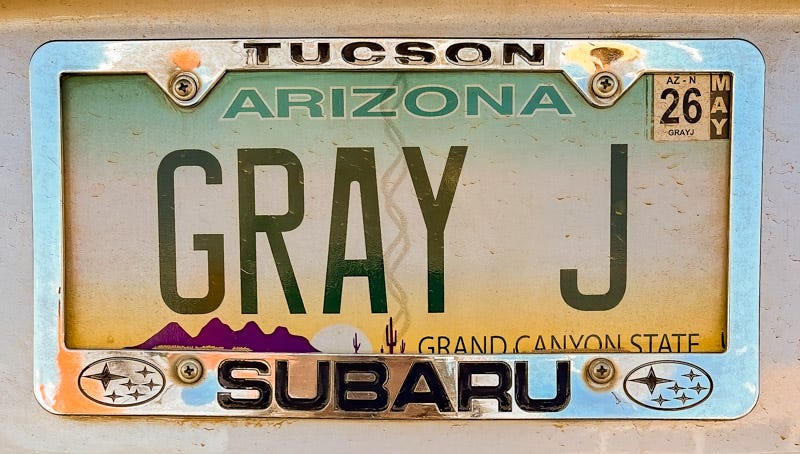
The Gray Jay was renamed the Canada Jay a decade ago but is still a very special bird. These birds belong to the Corvid family and are very intelligent. You can find them in the boreal forests in Canada and Alaska. They have adapted to survive year-round in that harsh climate and even breed during the heart of the winter!
Great Egrets are large birds with snowy white plumage. Their near extinction in the late 1800’s helped to inspire the modern conservation movement and the Great Egret is the logo of the National Audubon Society.

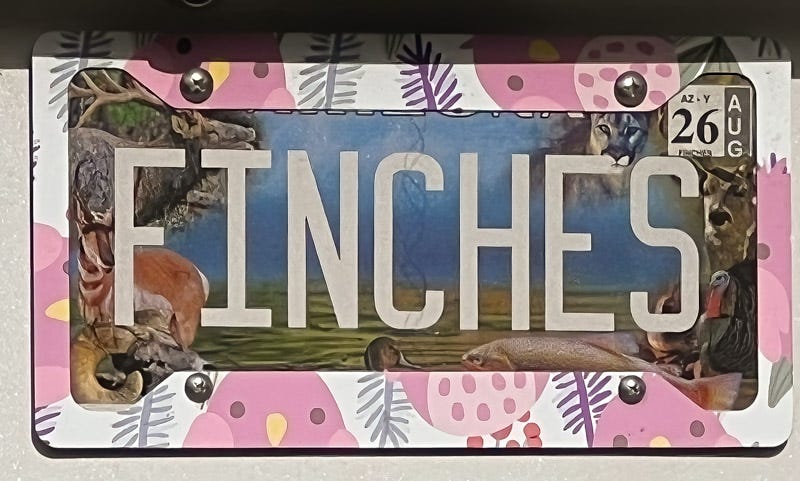
There are many Finches around but in Tucson Lesser Goldfinches and House Finches are the most common. House Finches were originally a species of the American Southwest. In the 1940’s, pet shop owners in New York illegally imported House Finches and, in an effort to help sell the birds, renamed them “Hollywood Finches”. Authorities cracked down and the vendors released the birds, which resulted in these Southwestern birds spreading across the entire eastern United States.
American Kestrels are the smallest and most colorful of the six Falcon species in the United States. They are very pretty birds but are nevertheless fast and fierce hunters.

One day I hope to see a Snowy Owl. It probably won’t happen in Tucson, but I can dream. They are birds that breed in the Arctic and have extremely thick feathers to help them thrive in that climate. Because Snowy Owls hunt during the daytime, sightings are very special. Harry Potter’s Owl Hedwig was a Snowy Owl.

In 1954, J. R. R. Tolkien wrote “The Lord of the Rings.” In a poem describing the hero Aragon, Tolkien wrote “Not all those who wander are lost.” It has been adapted by many people who enjoy nature, whether through camping, hiking, or birding.

Not all of us live our life like Aragon did, but Birding is something anyone can enjoy at any level and it does offer a spirit of adventure and exploration.
You can read about the benefits of birding in Psychology Today, the Atlantic’s article “All the Cool Kids are Birding”, National Geographic’s article on Amy Tan’s journey into birding, or in Audubon’s “Yes, Birding Does Change Your Brain.”
Of course, you can also just download the Merlin Bird ID app, sit on your back porch and enjoy the birds in your yard!
Im in the Merlin camp!
I would love to experience the magic of seeing a Snowy Owl….let’s continue to dream about it happening one day😊 Love the license plates…so fun!