

(Due to a few responses to my first “yardbird” post, I’d like to explain the term. In slang, a “yardbird” can refer to a prisoner or inmate confined to a prison yard. It can refer to an inexperienced military recruit doing menial work. Some readers also referred to the storied ‘60’s British band The Yardbirds whose first hit record was “For Your Love”. For birders, a yardbird refers to a bird commonly seen in your yard. So now you know, and on to my yardbirds……)
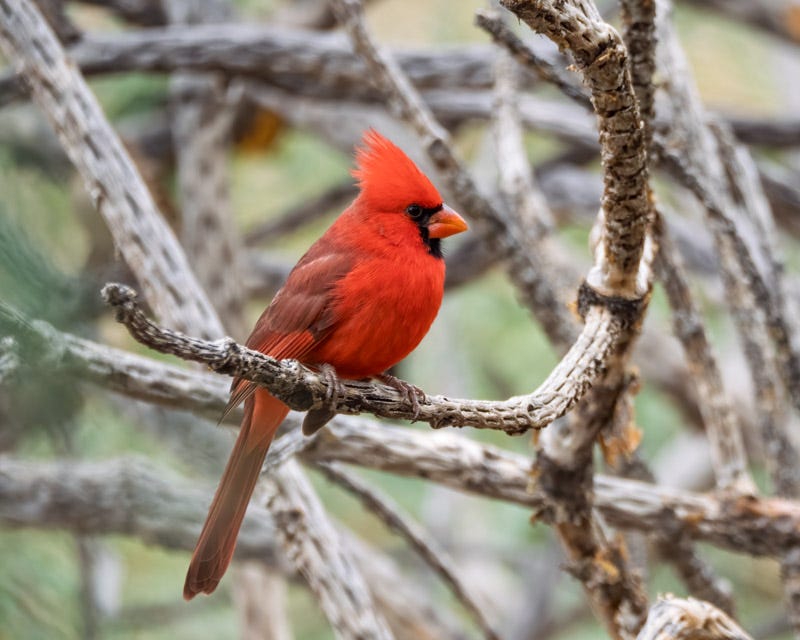
The male Cardinal returned a number of times. It’s hard not to share his photos so here is another one.
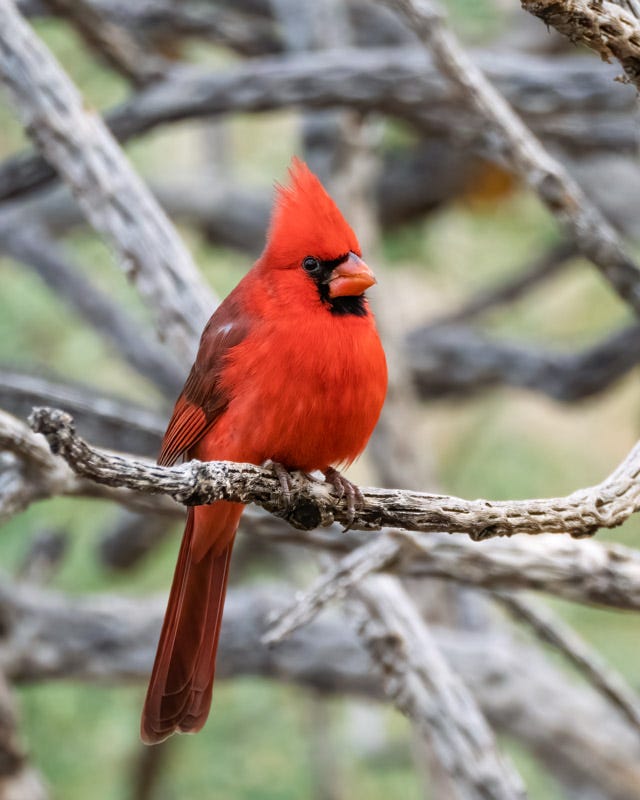
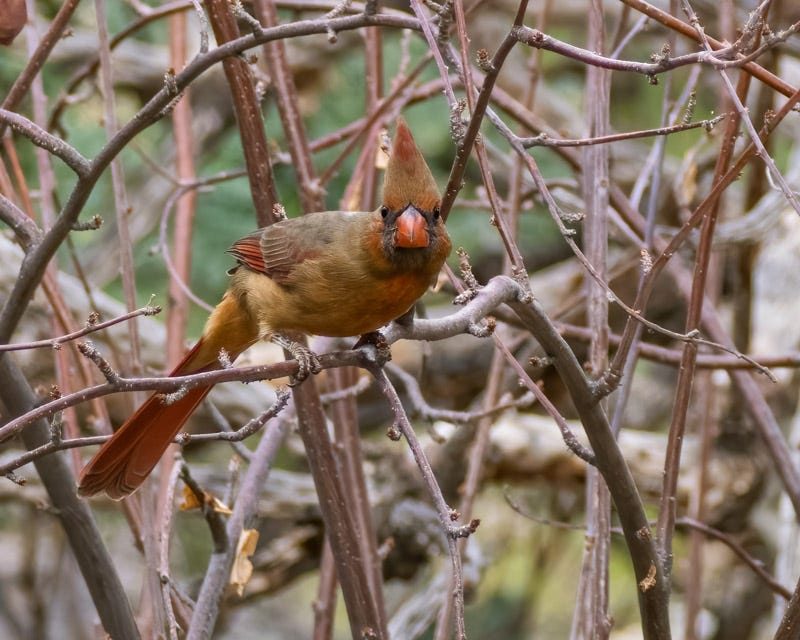
The female also visited often. The feeding pattern for the Cardinals was always consistent. They first fly to an outlying perch, often the cholla cactus. They wait a moment or two until they determine the coast is clear. Then they fly to the sunflower feeder. They may take a seed and fly off or they may remain on the feeder, eating a few seeds before flying off and disappearing into the desert. If they are hungry, a few minutes later they will return and repeat that behavior.
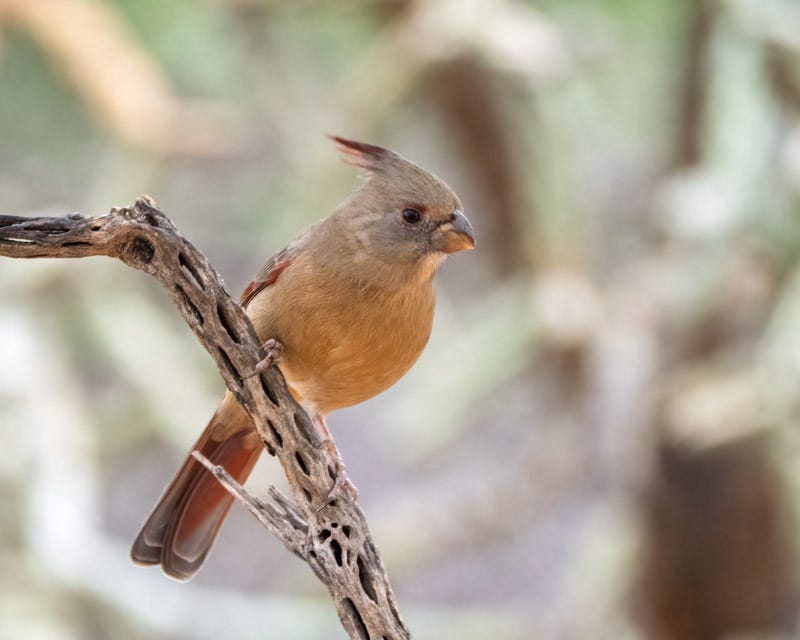
The female Pyrrhuloxia spent more time in the yard that morning than the male did.
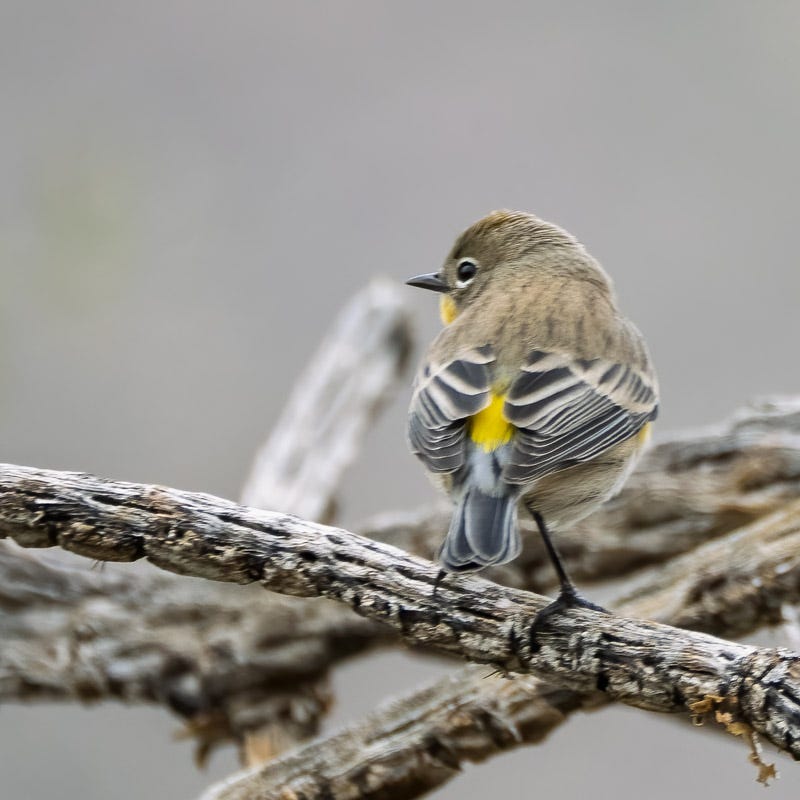
Yellow-rumped Warblers are winter visitors to Tucson. I rarely see them in my yard or neighborhood but can see them easily in riparian and more flat desert areas. They have yellow on their sides and the Audubon’s subspecies of Yellow-rumped Warblers have yellow under their throat. The winter colors are more subdued than during the summers.
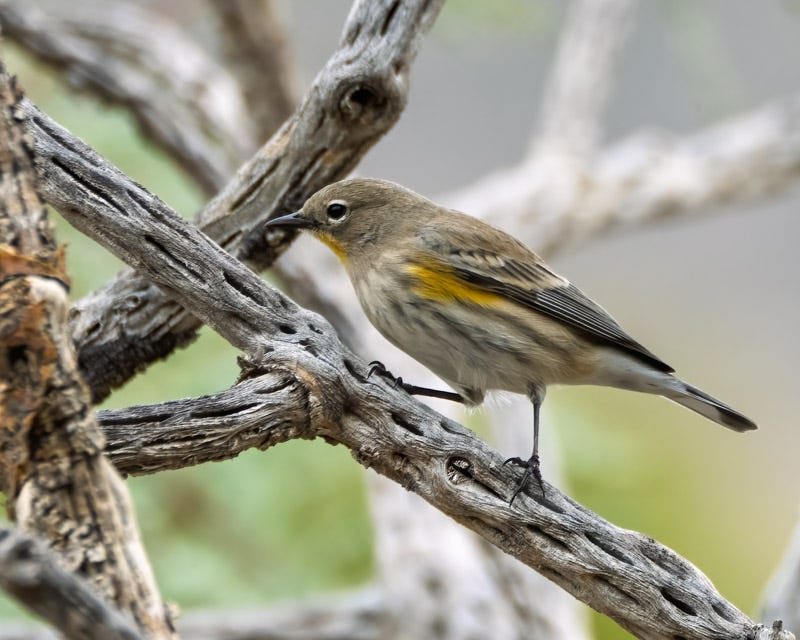
Why are they called Yellow-rumped Warblers? Well, they are warblers and.......
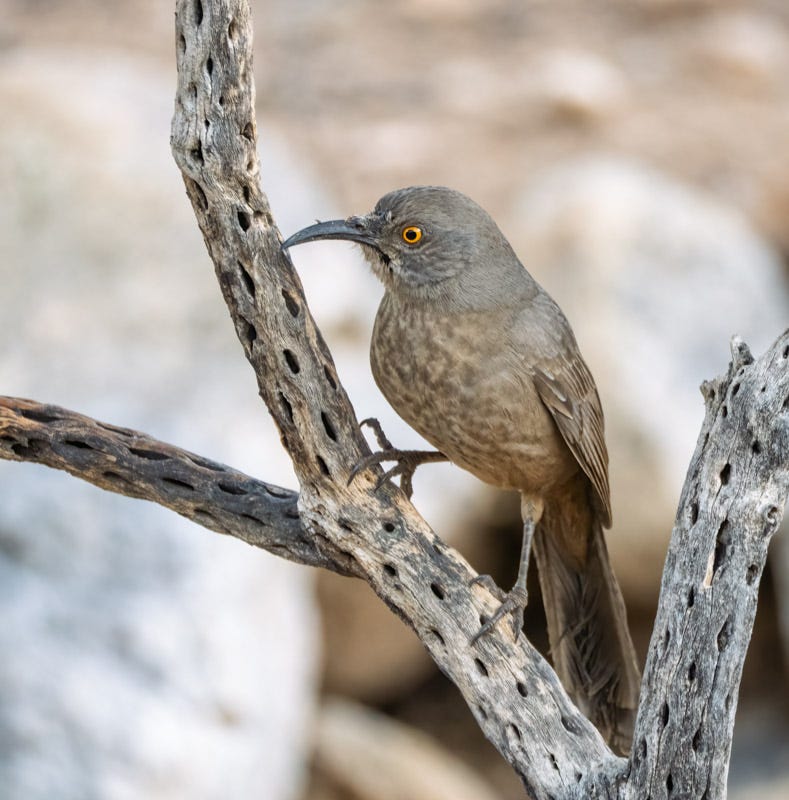
Along with all of the brightly colored desert birds, I also have the plainly colored Curve-billed Thrasher. It is a grayish brown with a spotted belly and an orange-yellow eye. It may be plainly colored but nobody matches its large curved bill. Curve-billed thrashers are closely related to mockingbirds and sing complex and variable songs. You can listen to a sampling of their many songs and calls at their Allaboutbirds page.
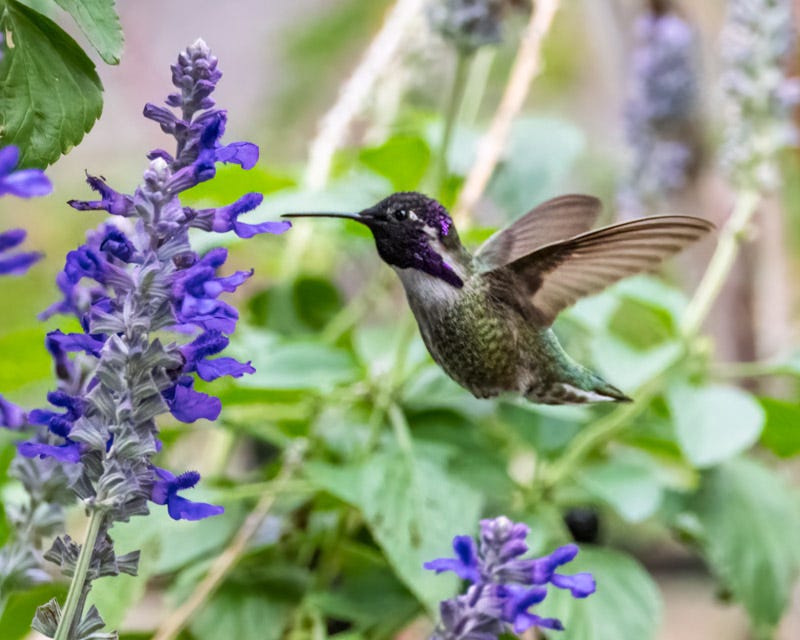
A male Costa’s Hummingbird visited the salvia flowers.
House Sparrows are a fairly plain bird that does not have a big fan base. I seem to have small flock that spend time deep in the Texas Ranger plant in the front and also use the bird bath in the backyard. They are very entertaining to watch. In this shot, the male House Sparrow is in the back and two female House Sparrows are in the foreground. I like the curl or flip in his feathers as he splashes around in the water.
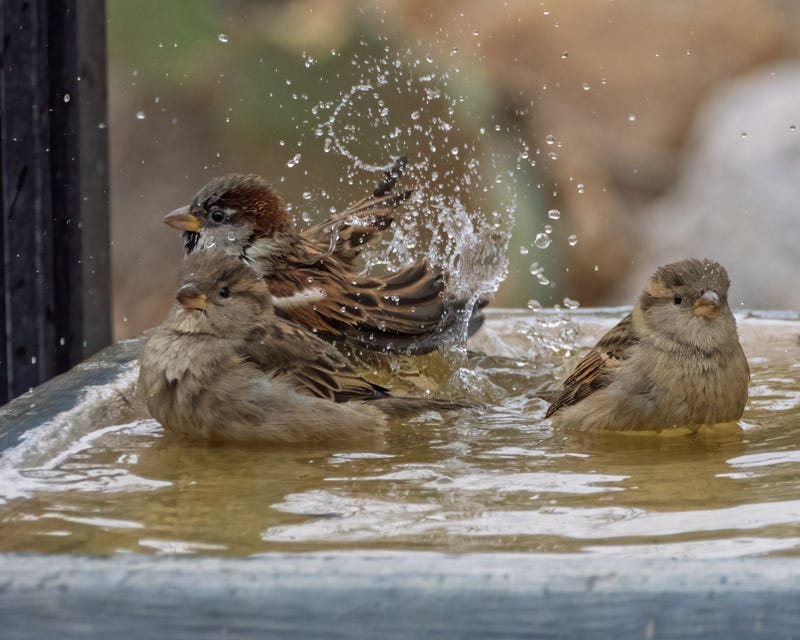
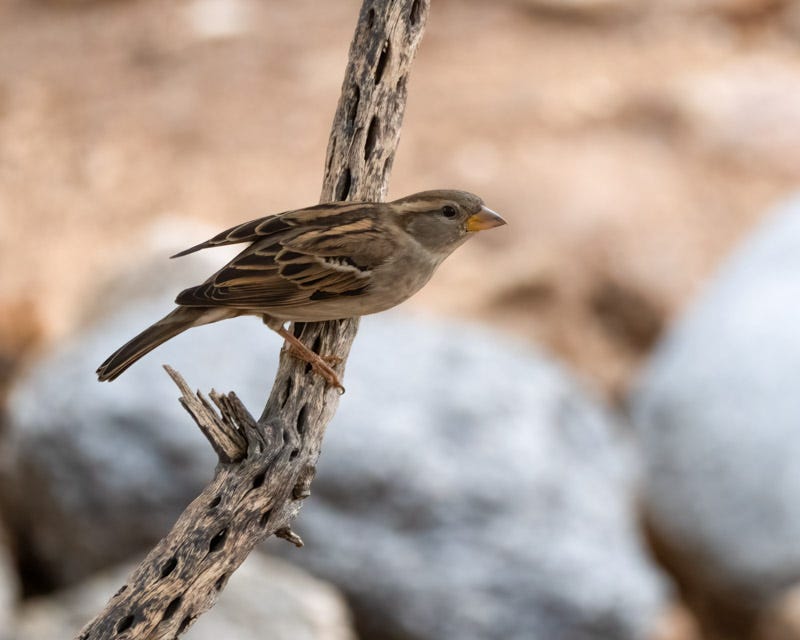
A female House Sparrow awaited her turn to take a bath.
Here’s one more look at the Cardinal to finish this post.
I hope you enjoyed the morning on my porch.
The female cardinal’s expression is priceless as is your explanation of the yellow-rumped warblers name source! 🤣 Thank you for sharing your yard birds. They are all lucky birds!
Dan, I love your photos and explanations!