

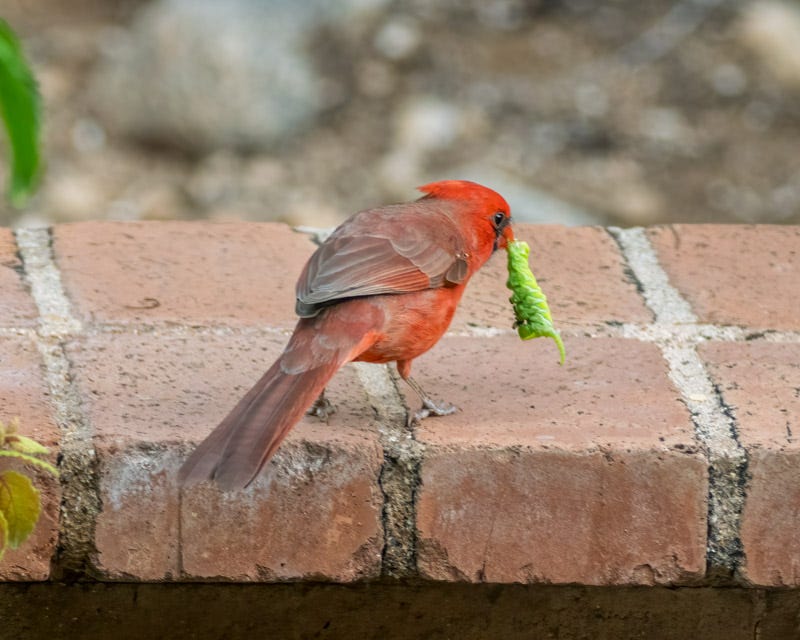
Northern Cardinals, with their very thick bills, have a reputation as seed eaters. Many people see Cardinals at their backyard feeders cracking open and gobbling up sunflower seeds. And yet, if we are lucky and in the right place at the right time, Cardinals can reveal themselves to be omnivores. Their bill serves as a strong nutcracker, opening up hard shelled seeds, but almost a third of an adult Cardinal’s diet consists of animal matter. Recently from my bedroom window, I saw a Cardinal moving amidst the thick leaves of a tecoma yellow-bells plant. I ran to get my camera and by the time I returned, the Cardinal was on the ground and holding a juicy tobacco hornworm. This insect is the caterpillar stage of a Sphinx Moth.
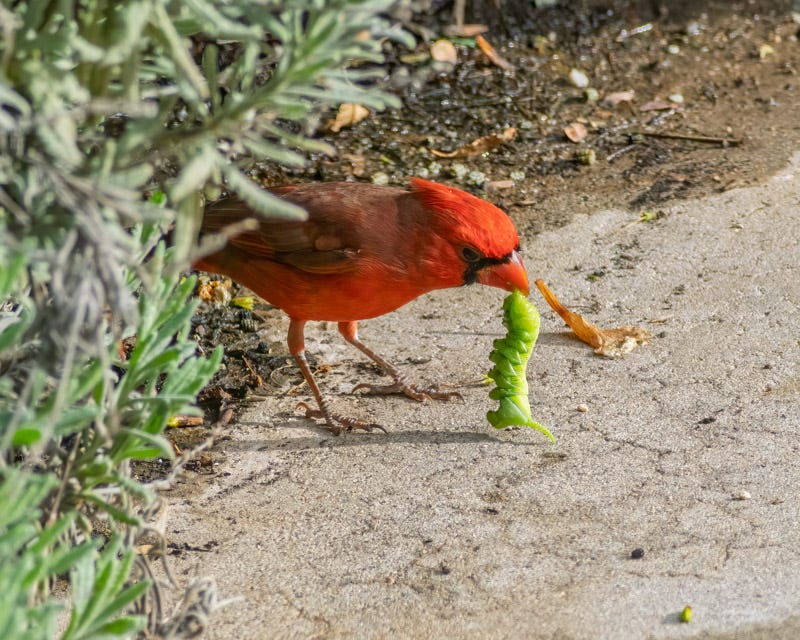
This series of photos were taken over a period of about one and a half minutes. As you look through them you can create a video in your mind of what was happening. In the photo above, the Cardinal had carried the hornworm down from the plant. A few seconds later, the Cardinal withdrew under cover but the hornworm was laying on the ground with liquid evidence that the Cardinal had begun preparing it to be eaten.
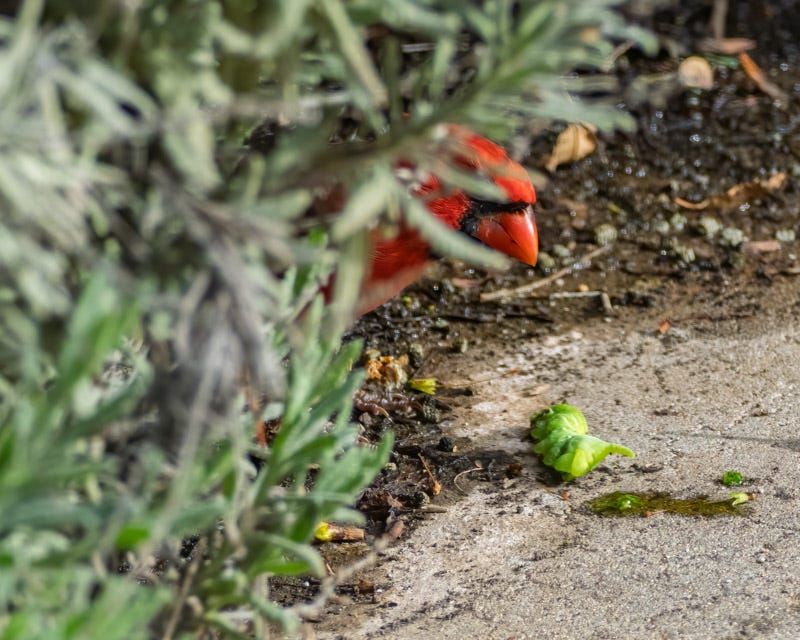
The Cardinal picked up the hornworm to continue the food preparation. Cardinals will thrash the caterpillar on the ground for a few reasons. It needs to first subdue its prey and it also needs to tenderize the tough body.
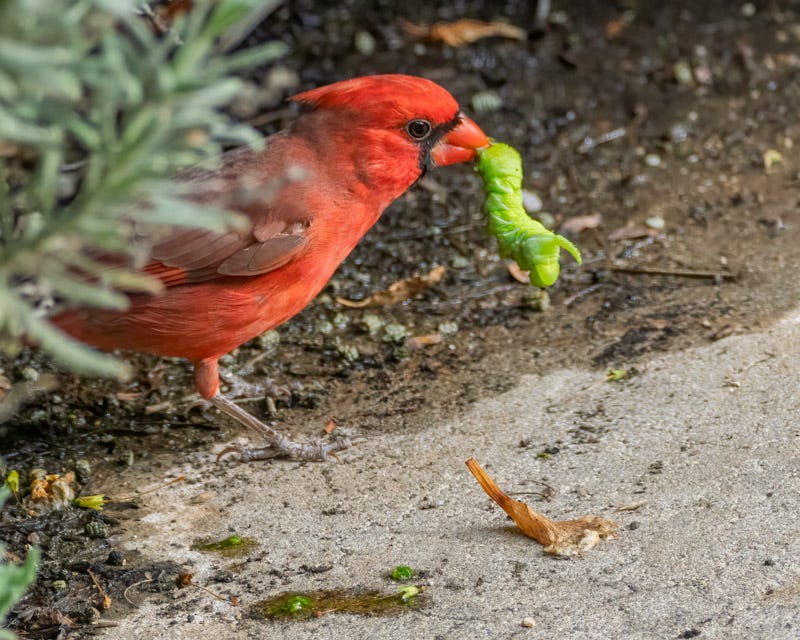
A very important reason for this food prep is to empty the caterpillar of its gut contents and any toxic materials that the caterpillar may have eaten. To do this, the Cardinal uses its bill to first bite off an end of the caterpillar.
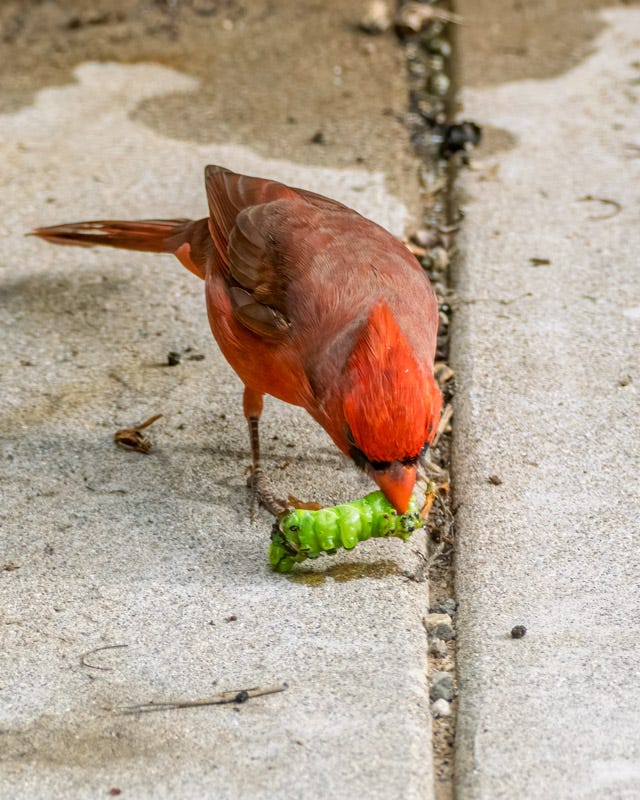
It then flings the caterpillar around to force out and empty the gut contents. That is the liquid that is evident on the ground wherever the caterpillar had been during this process.
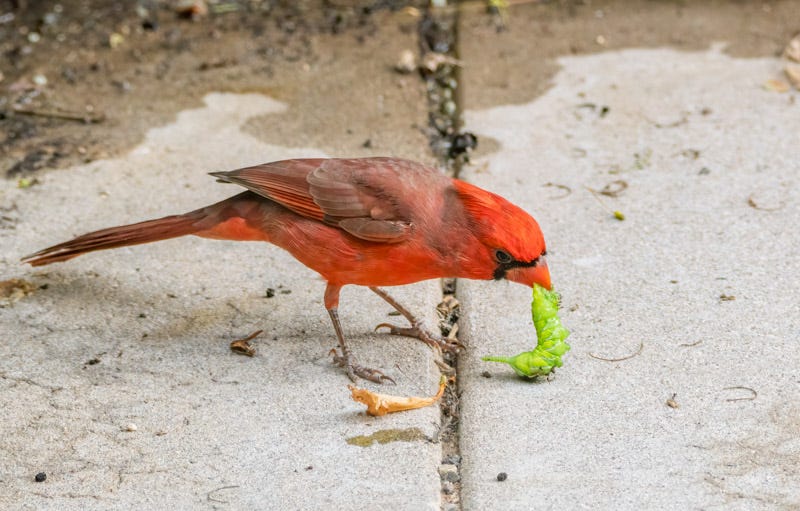
By tasting bits of the caterpillar, the Cardinal can sense whether it still burns from the toxicity or is more neutral.
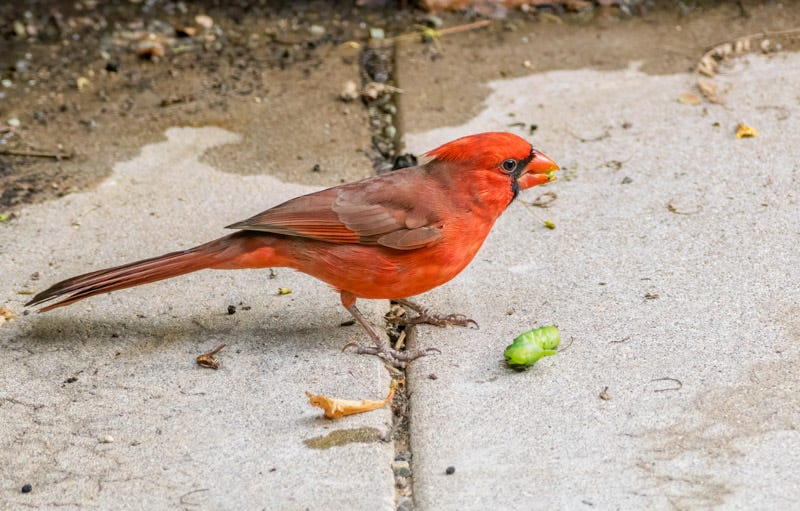
It can also sense if the body, now deflated thanks to the liquid spillage, is limp and will be easier to swallow.
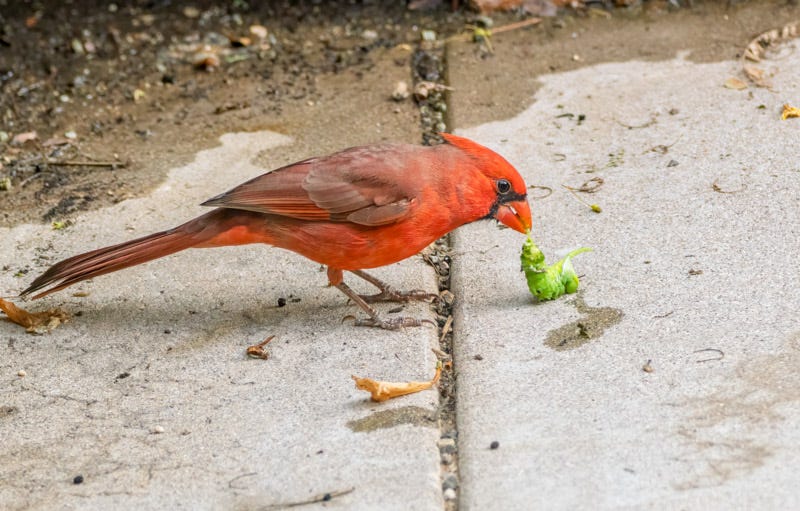
The kitchen prep seems to be done, and the Cardinal was ready to go find a nice spot to enjoy its meal.
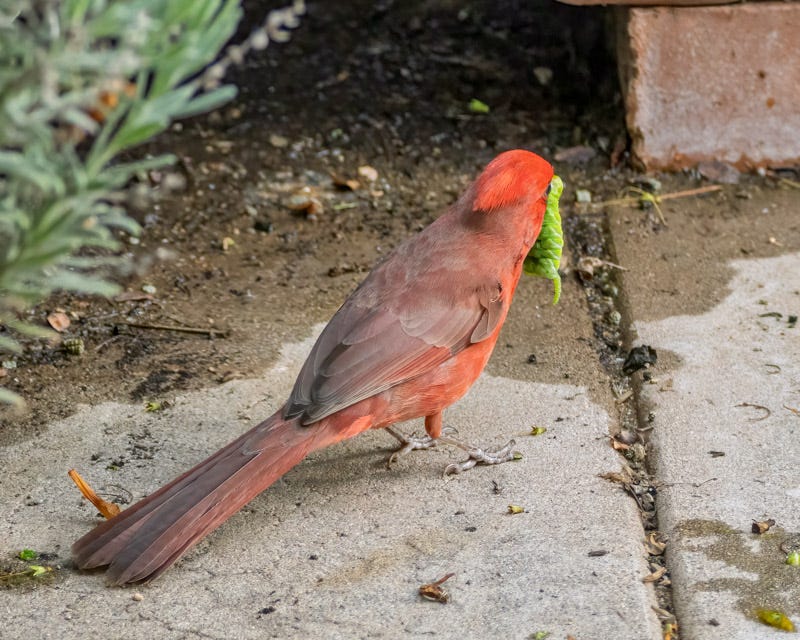
A tobacco hornworm offers a rich source of protein and lean fat to the Cardinal’s dietary needs. That meal may provide around a quarter of the Cardinal’s daily food intake and contains a good source of liquid and a variety of other minerals and vitamins.
I was able to witness 90 seconds of nature at its best before the Cardinal flew off into the desert.
Live and learn! I'd always thought that Cardinals were strictly seed eaters.