

Cassin’s Kingbirds are one of several Flycatchers that make the Tucson area their summer home. At this time of year many return south for the winter but we do have some Cassin’s linger beyond breeding season. Cassin’s Kingbirds are distinguished by their white cheek patch, a darker gray head than other Flycatchers, and a bright lemon belly.
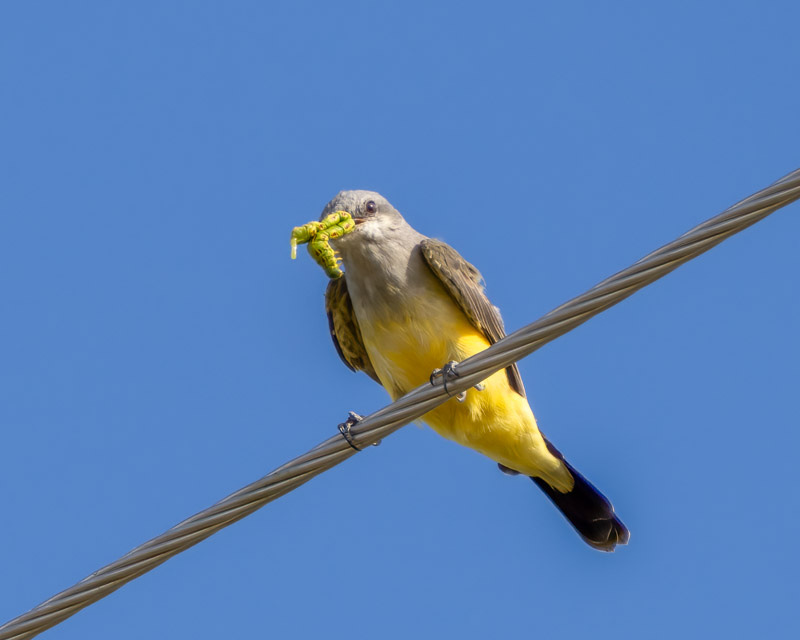
This Kingbird was not on the most photogenic perch, but when I see a bird holding onto a large green caterpillar my camera responds on its own and becomes activated! Not only was the Kingbird holding onto its meal, but it was killing and tenderizing its meal. I wasn’t sure what it was doing while I was watching, but the photograph shows the details of the action as it whipped the caterpillar into the thick wire.
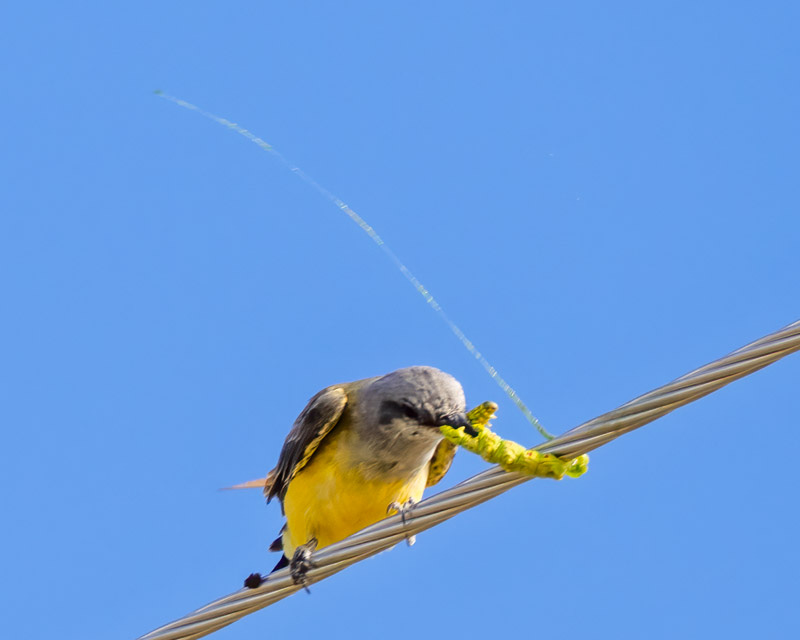
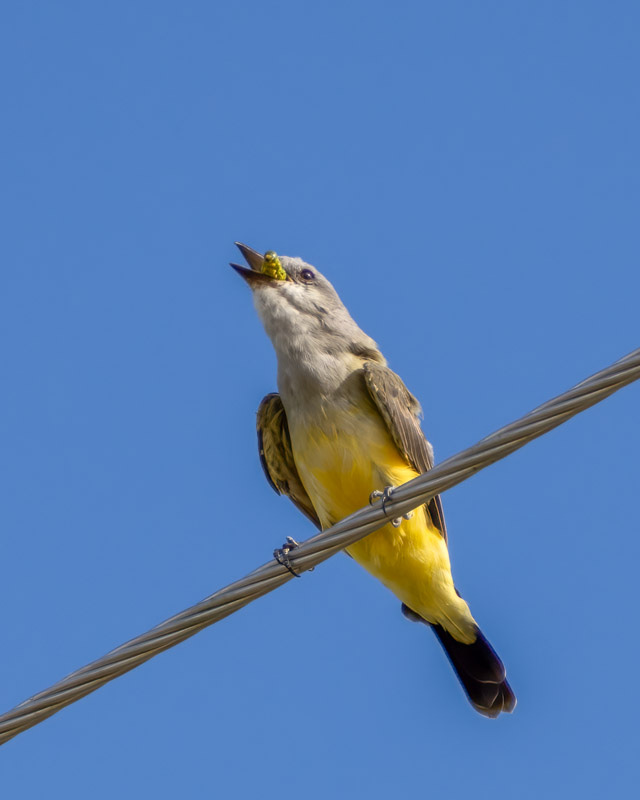
After several minutes of hard work, dinner was served.
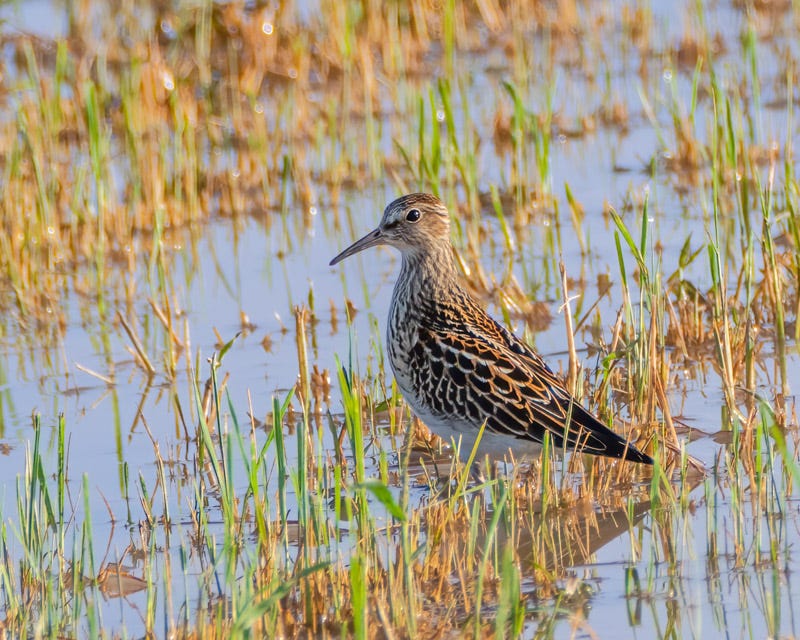
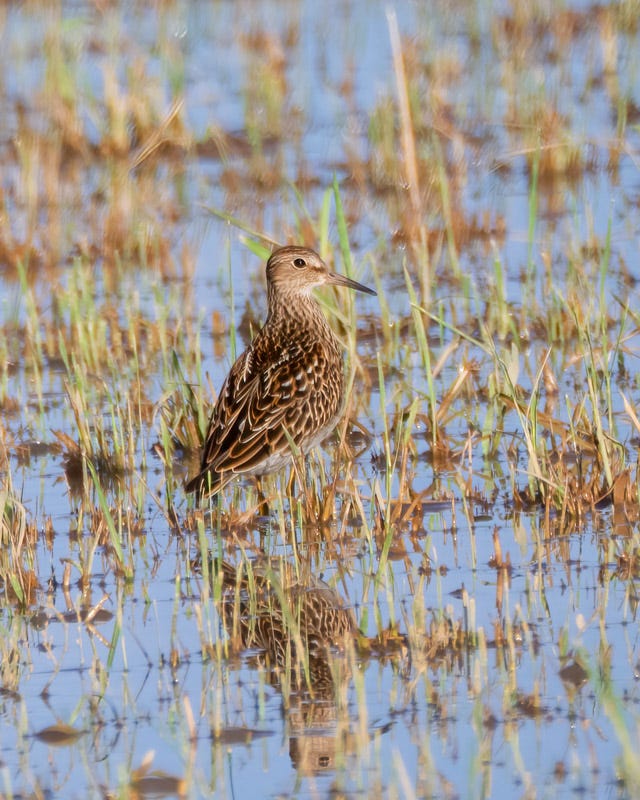
There was a very unusual shorebird in the field. It wasn’t feeding. It wasn’t walking around. It stayed in one spot for the longest time and just stared over its shoulder at us. With a little bit of research, I learned this was a Pectoral Sandpiper. This bird is considered very uncommon in our area during the fall migration period.
A look at the range map from AllAboutBirds hints at why it was hardly moving. This Sandpiper’s summer breeding spot is on the tundra at the top of North America and it winters in South America!!
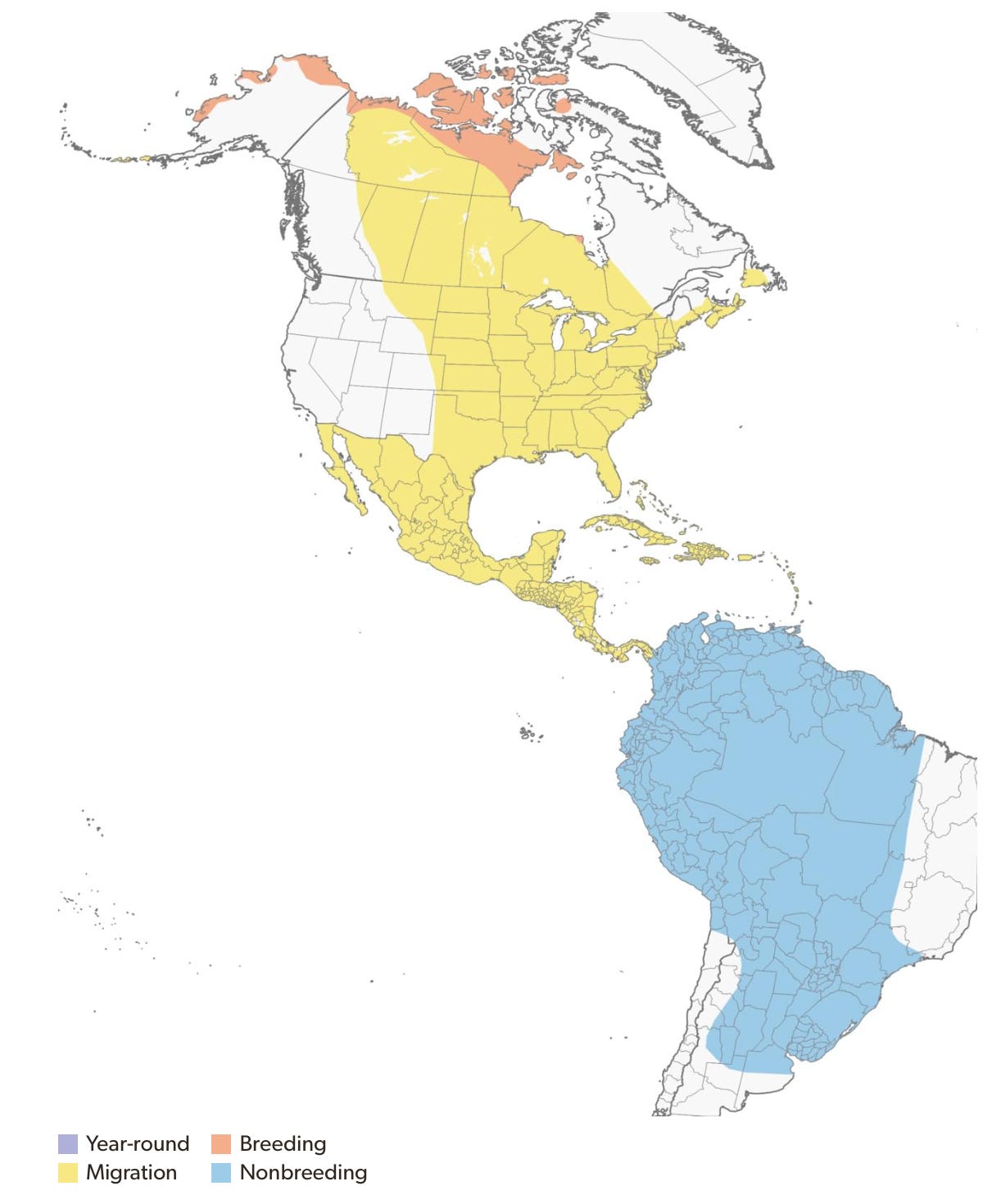
No wonder it was standing still in this farm field. It probably was very exhausted from its previous night’s long flight. Pectoral Sandpipers fly throughout the long night, stopping each day to rest and feed. Their migration takes them almost 10,000 miles one way each season!!
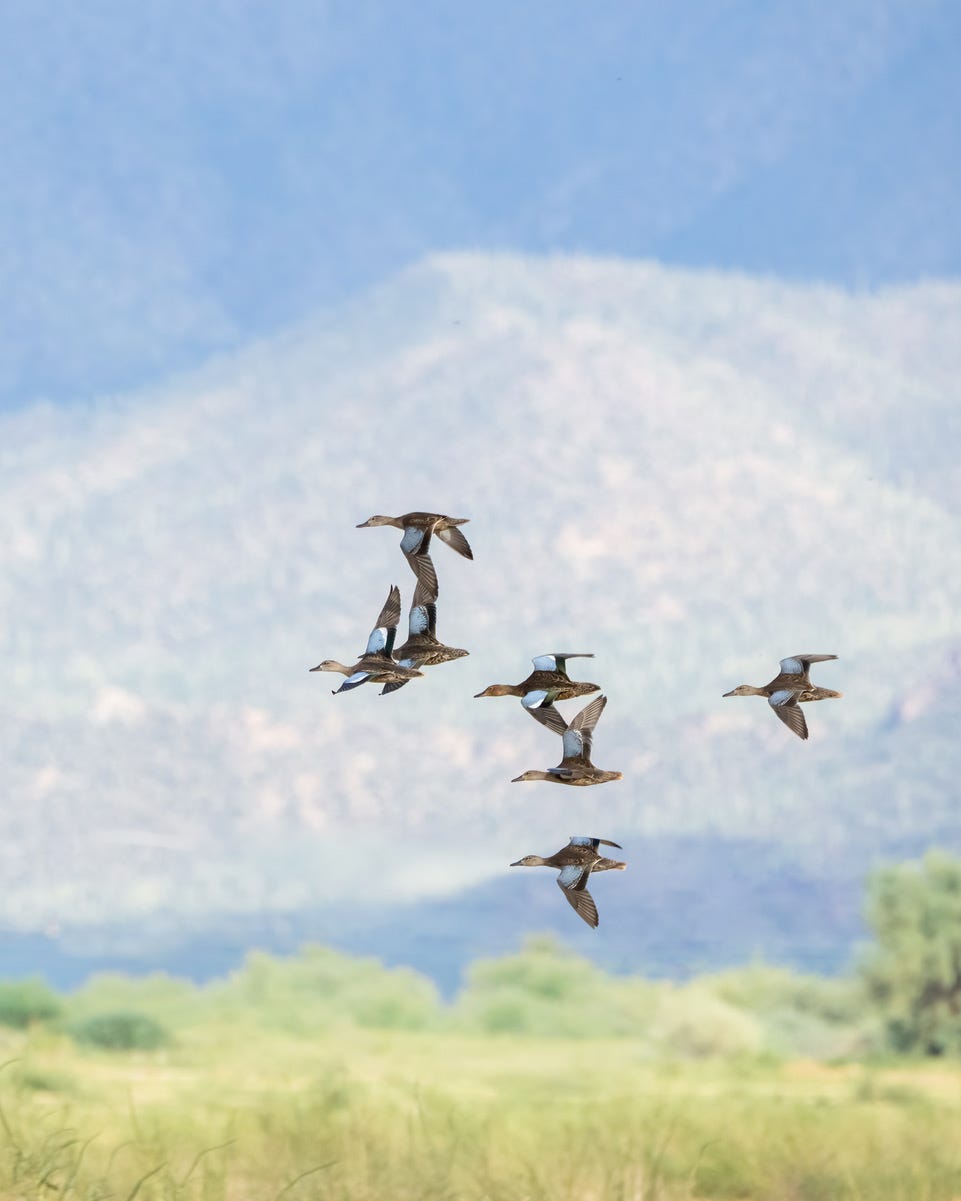
Sharing the flooded alfalfa field with the White-faced Ibis, the Snowy Egrets, and the Pectoral Sandpiper was a small flock of Cinnamon Teal.

They, too, would feed for a while, then take off and circle the field a few times before landing in the shallow water and begin feeding again. The lower bird in the next photo is a male, with a hint of green on its flight feathers just below the blue wing patch.

Because we were at this farm field in the late afternoon, we were watching all of the birds from a spot to the west of the field and looking towards the east. As photographers, that gave us the best light with the light behind us. It also offered the Catalina Mountains and the Tucson Mountains as a wonderful backdrop to these ducks in flight.
Cinnamon Teal will be found at many ponds and lakes in the Tucson area throughout the winter. You can find the range map for Cinnamon Teal at AllAboutBirds and read more about them at other links on that site.