

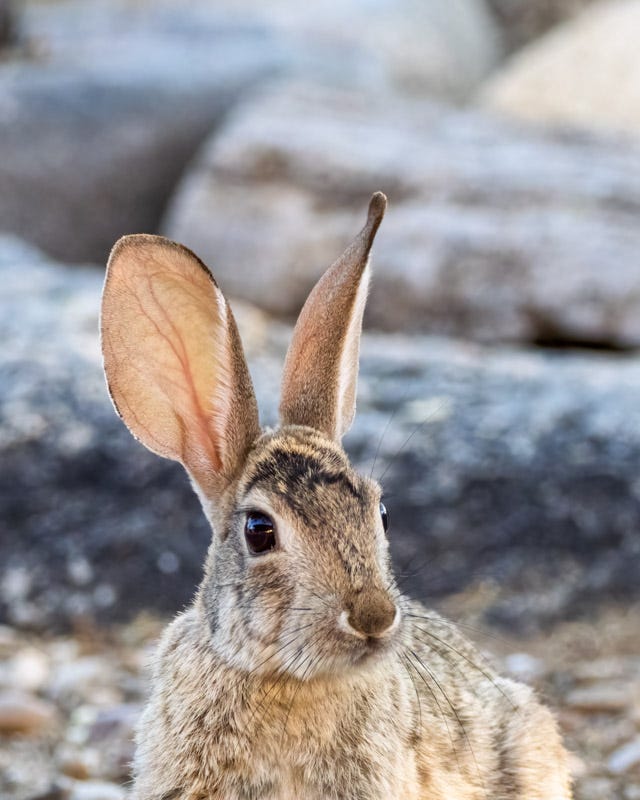
My home sits adjacent to the neighborhood “common area” where there is untouched desert. This helps to provide nice habitat for desert animals including a number of Desert Cottontails. There are nine species of Cottontails in the US but ours is the only species in the Sonoran Desert. Our Desert Cottontail has very large and long ears compared to others. Those ears act as radiators to help the rabbits shed body heat in our climate.
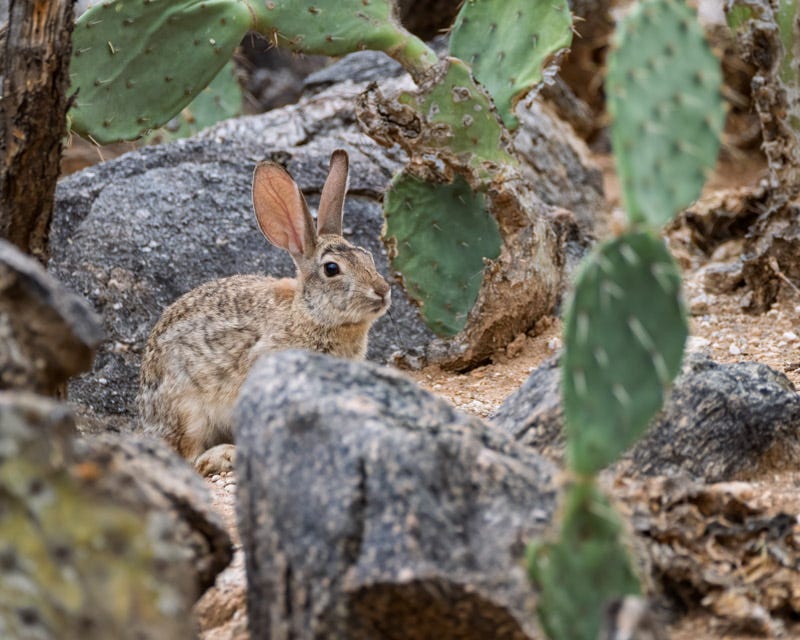
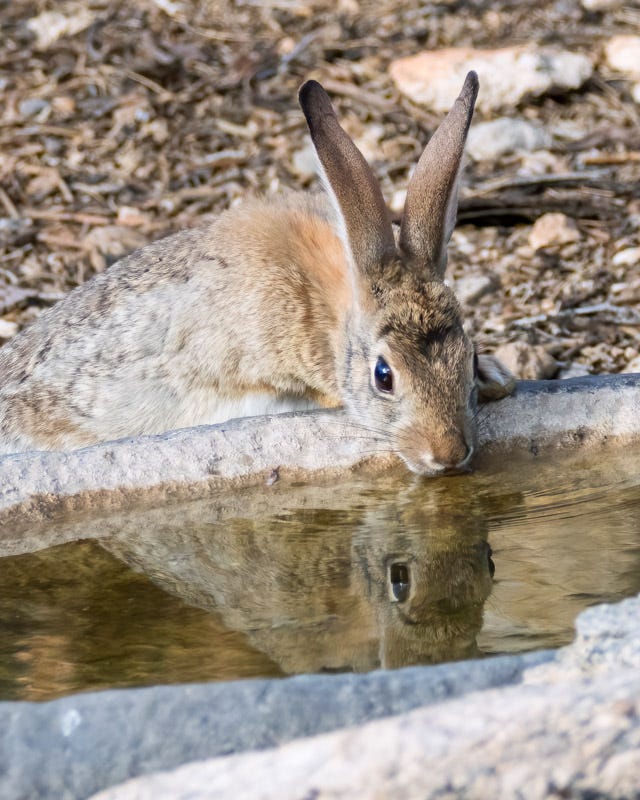
Like many animals that live in the desert, Cottontail Rabbits have adapted to our dry climate. They get most of the moisture they need from the plants and succulent vegetation that they eat. However, if water is available, they will readily drink it. I love seeing this rabbit on its toes drinking and causing ripples in the water.
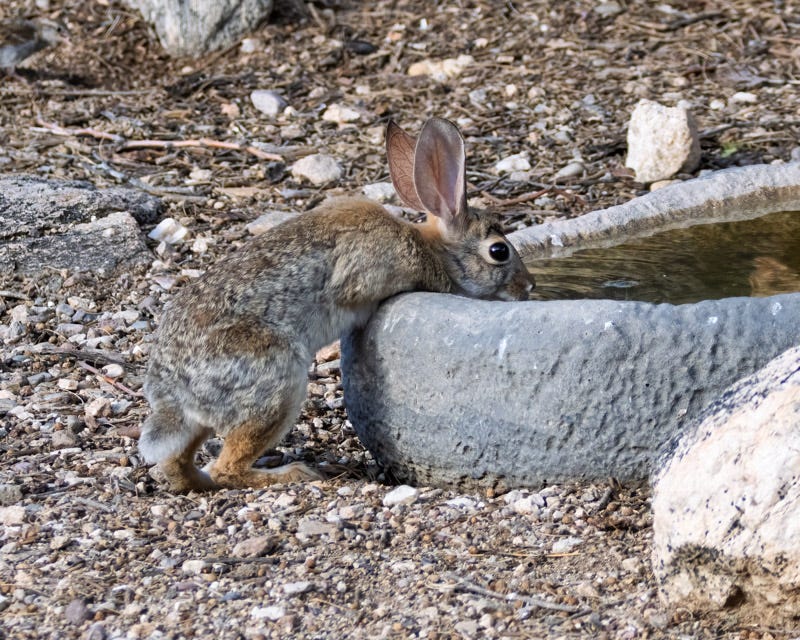
It would pause every once in a while. In the shot below you can see its white, “cotton” tail.
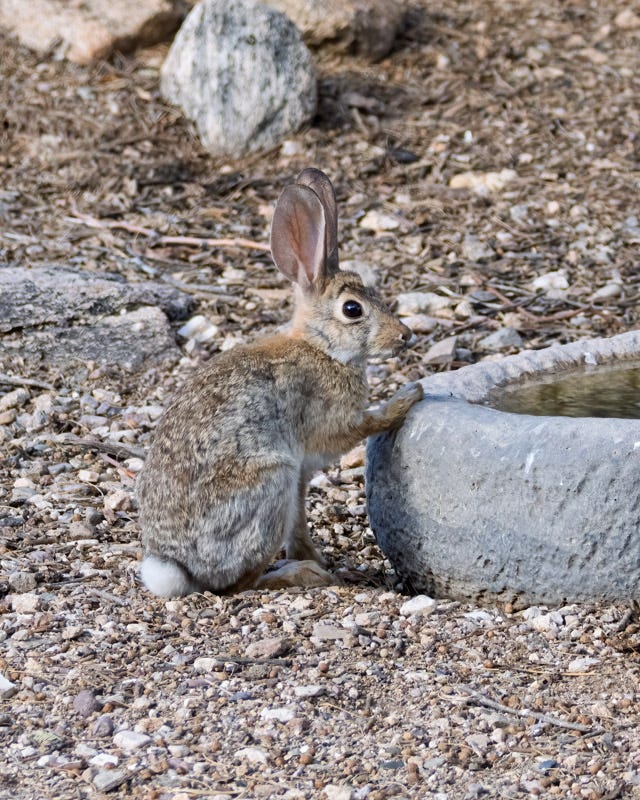
Sometimes the rabbit would continue drinking but from another side of the water dish. I’m pretty certain it knew there was no difference in the taste of the water. Perhaps it changed positions just to be able to watch for predators from another perspective.
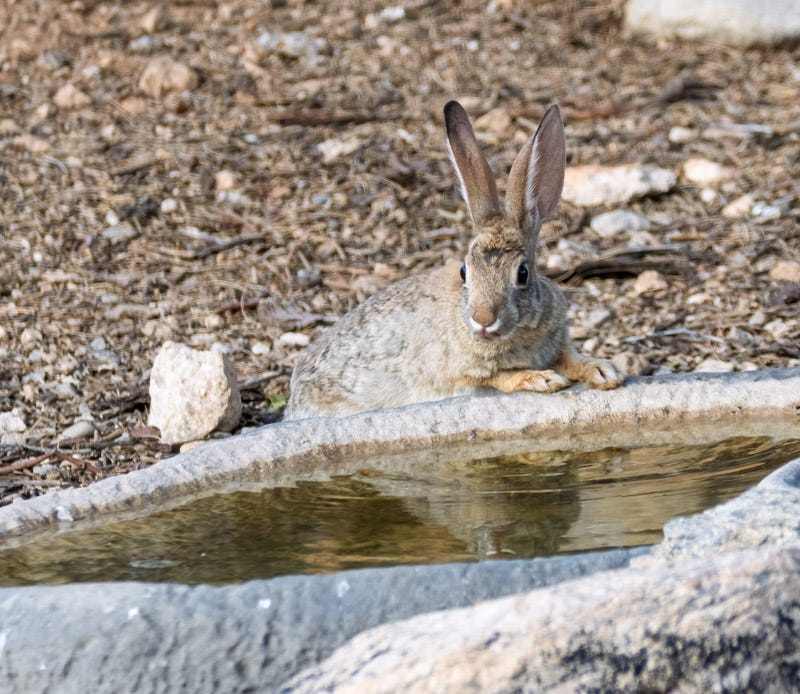
Rabbits don’t sip water. They slurp or lap up the water using their tongue.
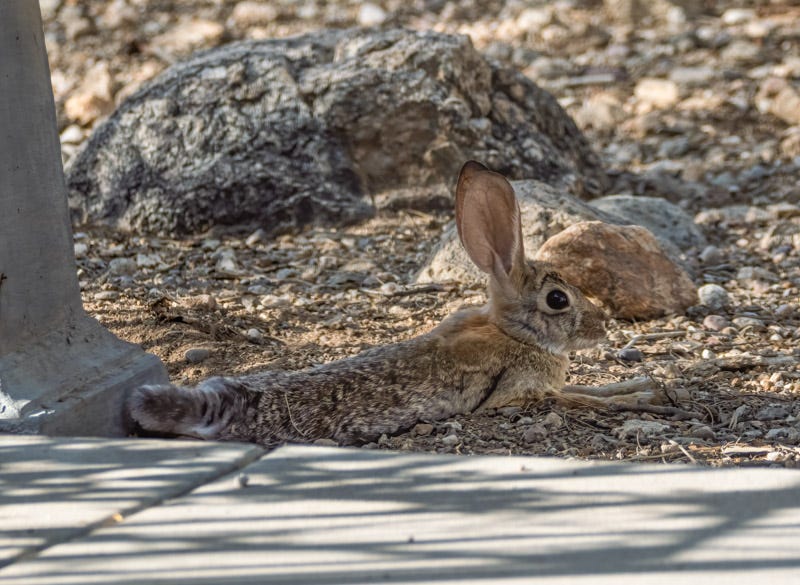
Normally the Cottontail would run back into the desert when it finished, but occasionally it would find a cool spot to rest in the yard. Below, it lay down in the shadow of a birdbath stand. This pose is called “heat dumping” or “splooting” and other desert animals also do this. This posture allows body heat to transfer directly to the cooler surface the Rabbit is resting on.
Then, just as quickly, the Cottontail was up and about once more. Those large ears serve two purposes for Cottontail Rabbits. Cottontails are prey animals, so those ears serve as highly sensitive radar dishes to help them pinpoint sounds of danger from far away. Rabbits do not sweat, so when it gets hot, blood flow to the ears increases and the air passing over those large ears cools the blood. That cooled blood then circulates back into the body cooling the Rabbit’s overall temperature.
Those big eyes are another survival necessity because Cottontail Rabbits are prey animals. Their oversized eyes give them incredible vision in 360° and allow the Rabbit to see movement well in dim lighting during dawn and dusk when Cottontails are most active. So those huge eyes that help to make these bunnies cute also help to keep them alive.
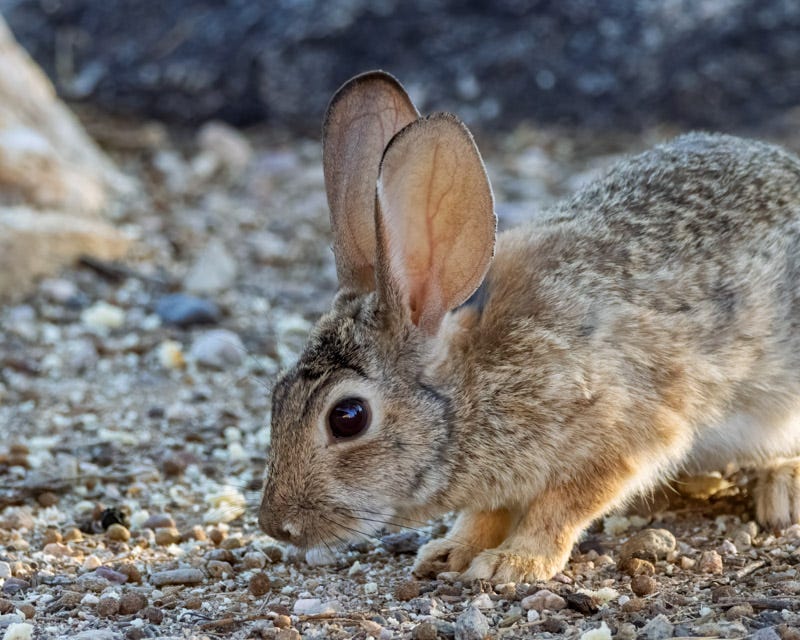
As a prey species, Cottontail Rabbits have evolved to be able to sleep even with their eyes open. You never know when something is sneaking in and wanting to have you for lunch.
For more on Desert Cottontails and a comparison to other Sonoran Desert Rabbits, see the Desert Museum’s fact sheet.
I love bunnies! I have a family that lives under my deck. Enjoy watching them bounce around.
So interesting about the ear size and how they drink water. I had a pet bunny a few years ago and she would lay out on the mantle of the fireplace as you described to cool down on hot days. I didn’t know that at the time but after your share I do! Thank you for the beautiful pictures and the time you put into creating a storyline for us with such great information 😊🙏
Thanks Dan, love to hear about the adaptations desert animals make to endure the heat and cold.