

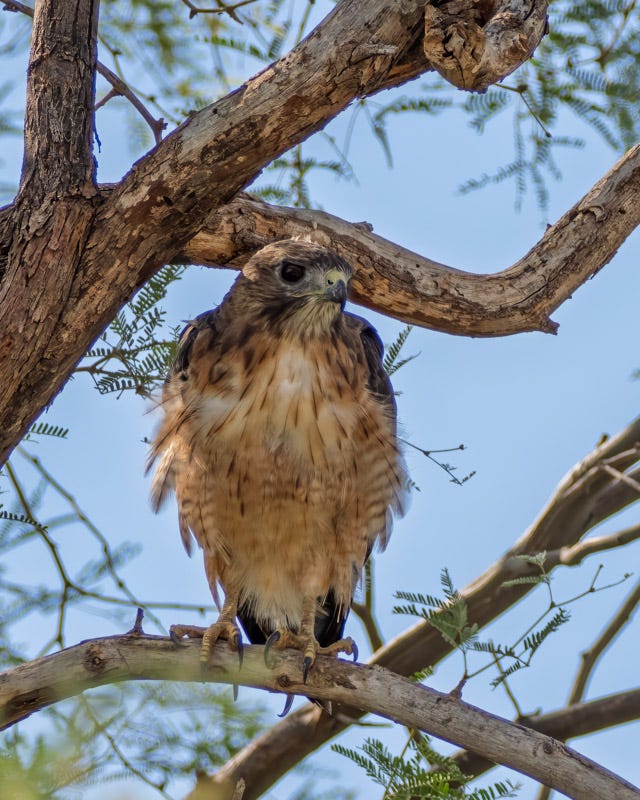
I hadn’t been to a favorite farm of mine for a while. During the summer it just seems too hot to find any good bird activity there. With the days becoming shorter, I thought I’d give it another try. One of the first birds we came across was a young Red-tailed Hawk sitting in a row of mesquite trees. This might have been the same bird that I saw swallowing a snake a year ago.
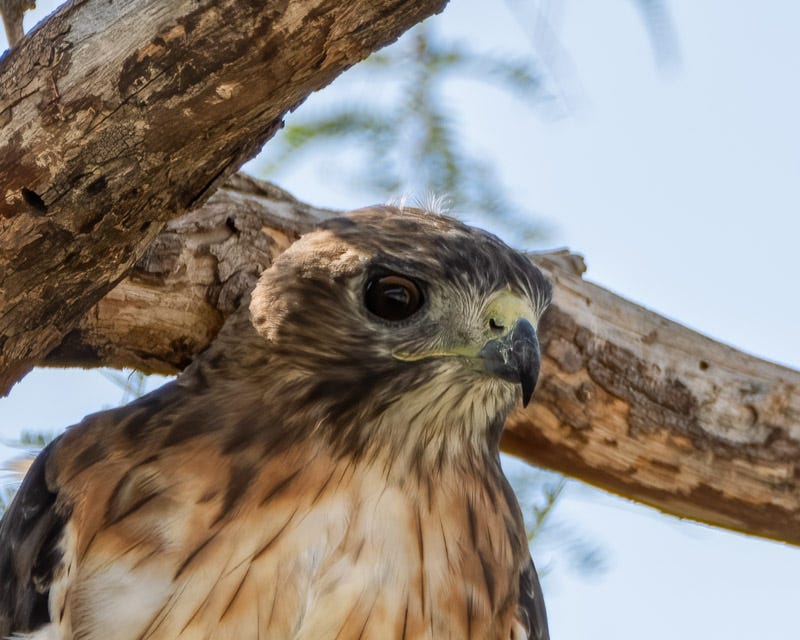
The Hawk watched the truck for a while, then roused and flew off.
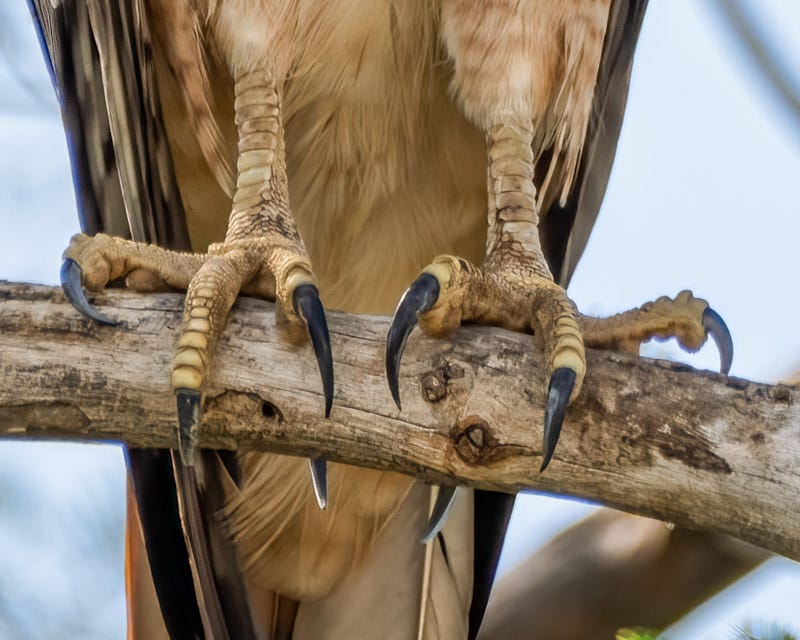
A close-up shows the hunting and killing tools of this raptor. Those talons have the grip strength of up to 200 pounds per square inch. Red-tails have three forward facing toes and one large back toe called a hallux, used to pierce and kill its prey. Red-tailed Hawks have a mechanism in their legs that automatically locks the tendons which clamps the talons, allowing them to hold their prey tightly without needing any muscular effort!
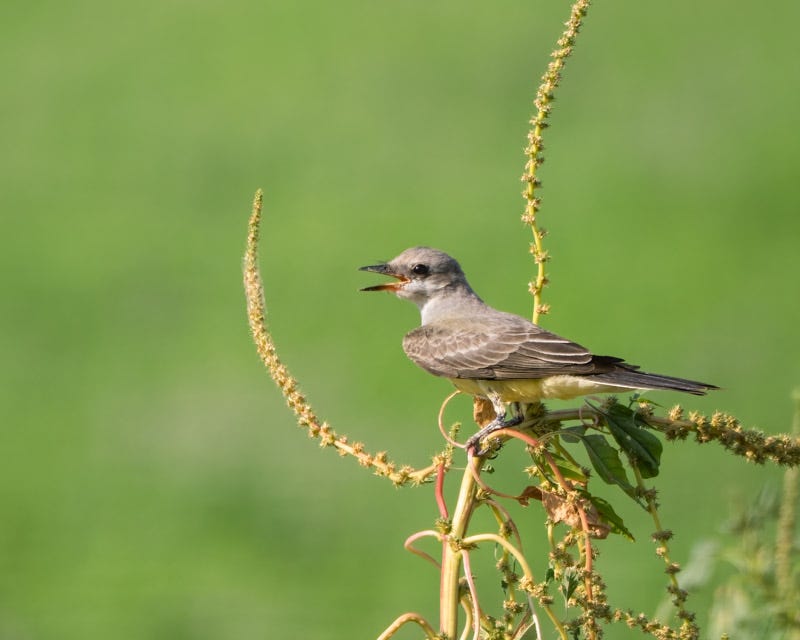
Meanwhile, the birds in the field were all feeling the heat. This young Western Kingbird was breathing through an open mouth. Birds don’t sweat so this panting behavior helps to cool them down. The inside corner of the open mouth is called the bird’s gape. On this bird, the light color of the gape where upper and lower halves of the bird’s beak meet tells us this is still a young bird.
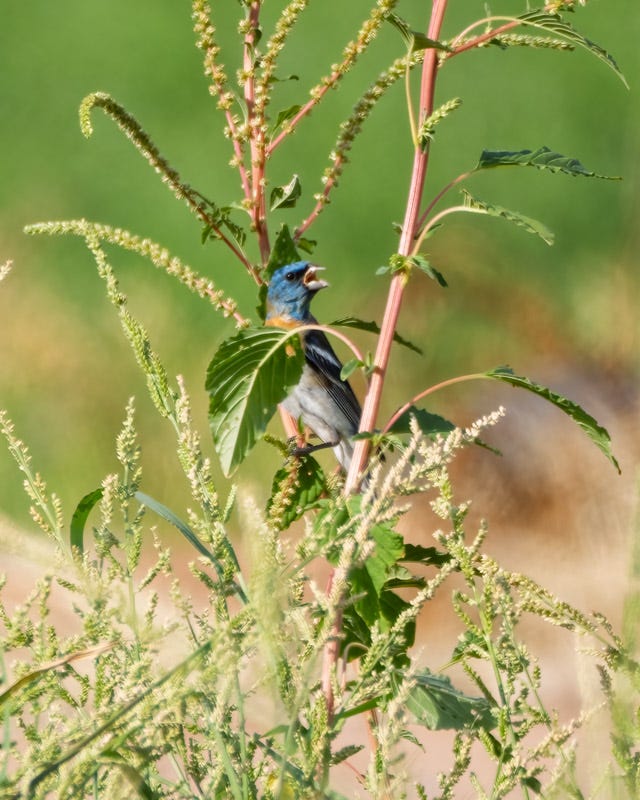
The Palmer Amaranth plants between the fields are popular spots for the birds, both to perch on but also for the many seeds they provide. This male Lazuli Bunting was as hot as the Kingbird was. Lazuli Buntings pass through our area during migration season and Birdnote tells us more about these birds.
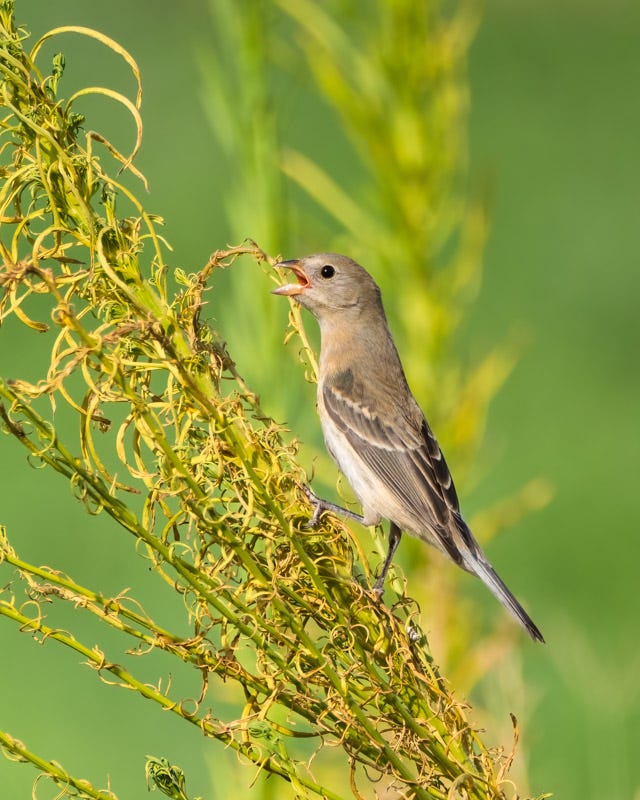
Female Lazuli Buntings lack the bright blue of the males and are grayish brown. This bird was also mouth breathing, trying to stay cool on this harsh summer afternoon.
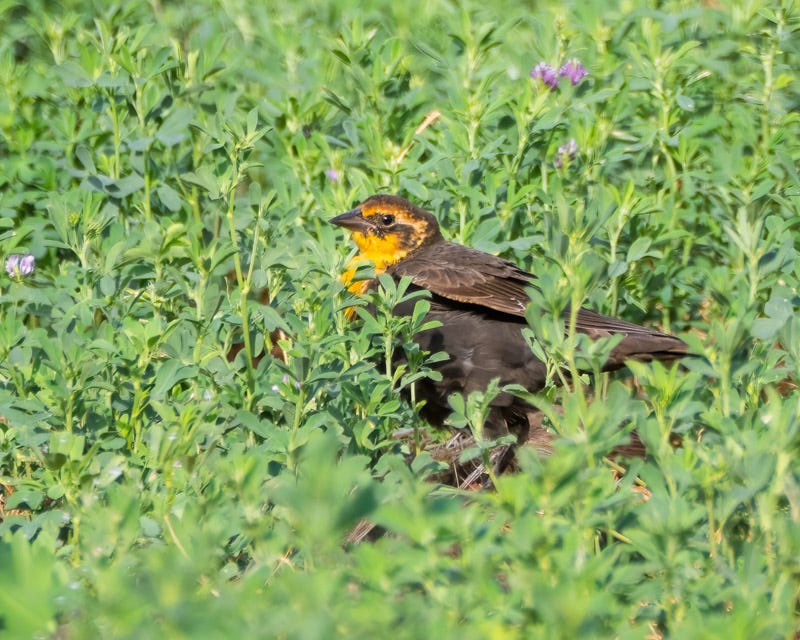
Yellow-headed Blackbirds have begun their migration south. Many pass through the Tucson area and many will also remain here throughout the winter. The alfalfa fields are a comfortable place for these birds. Both female and immature males are more brown than black and both can have dull yellow heads.
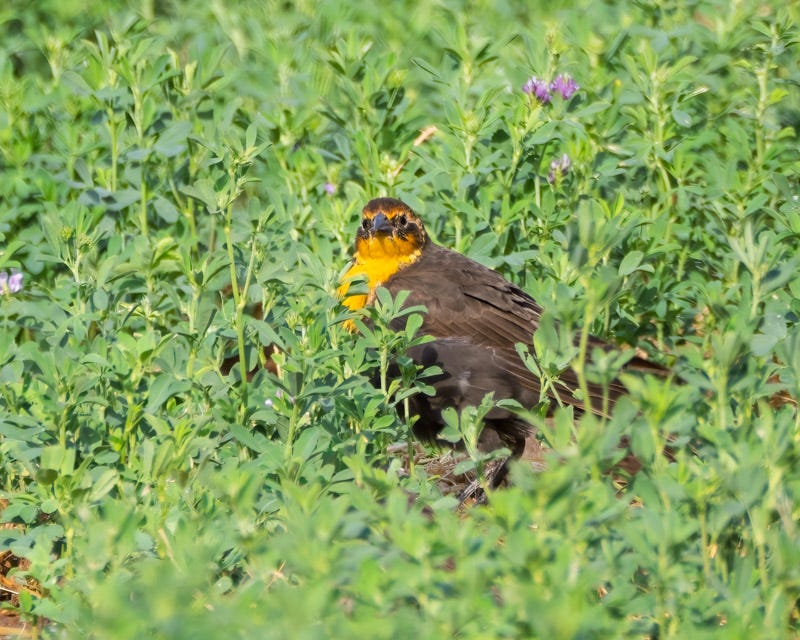
Here’s another view of the Yellow-headed Blackbird looking straight at me. You can learn more about this species of birds at this Audubon Field Guide site.
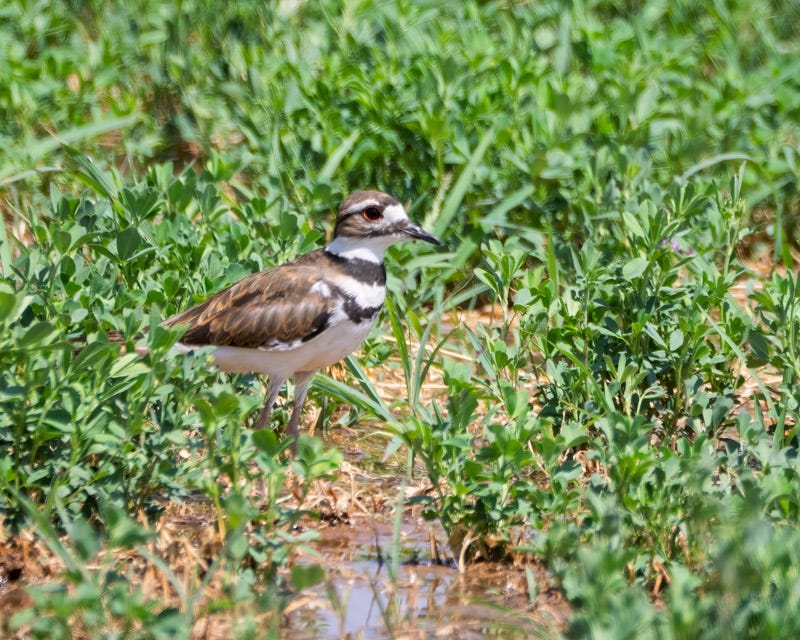
There was a small flock of Killdeer in the field. Ordinarily Killdeer are not found in flocks. However, they do group together for migration. We saw about two dozen Killdeer in the fields. They were all spaced about five feet from each other but moved together as a collective group. This one is representative of the many others that were nearby in the muddy alfalfa fields.
More to come as there will be changes in the birdlife at local farms as we move into fall and winter!
If the birds are starting to migrate, it must be that fall is not that far off. The temperatures in Texas sure aren’t any indication of fall!
Superb series!