

Another cool morning as Spring lingers
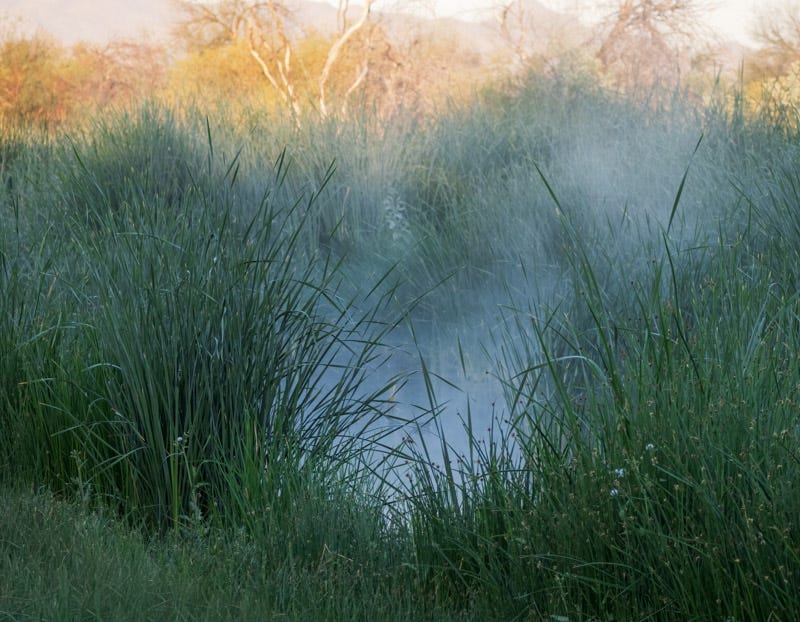
I went on an early morning walk at Sweetwater recently, arriving right at sunrise. As I mentioned in a previous post about Sweetwater, I was once again met with steam fog along much of the water. This really adds to the experience when walking alongside this phenomenon.
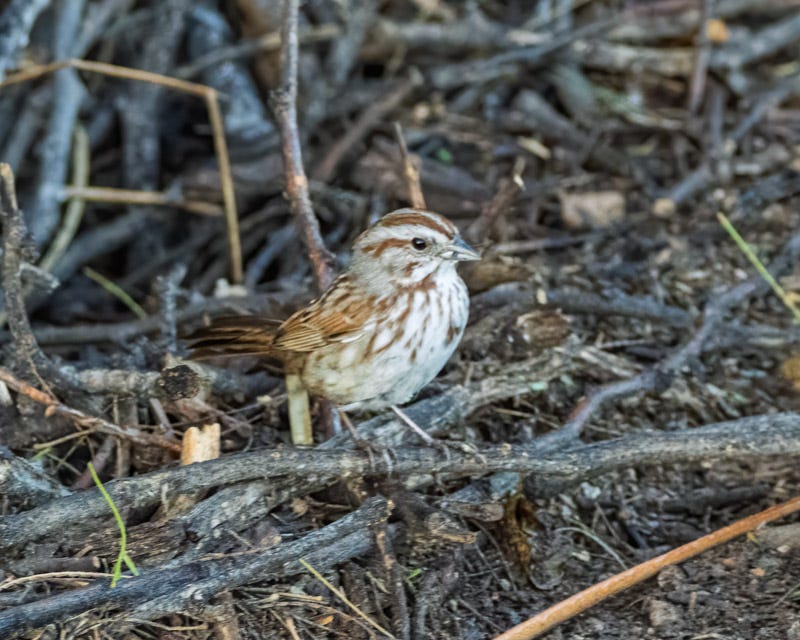
There were a number of water birds of course. The first non-water bird that I saw was a Song Sparrow that hopped into the brush right next to me. As close as I was, this bird was very focused on foraging for food in the leaves and branches on the ground. This particular bird was silent but the Song Sparrow gets its name from the large repertoire of songs that it sings. Birdnote tells us more.
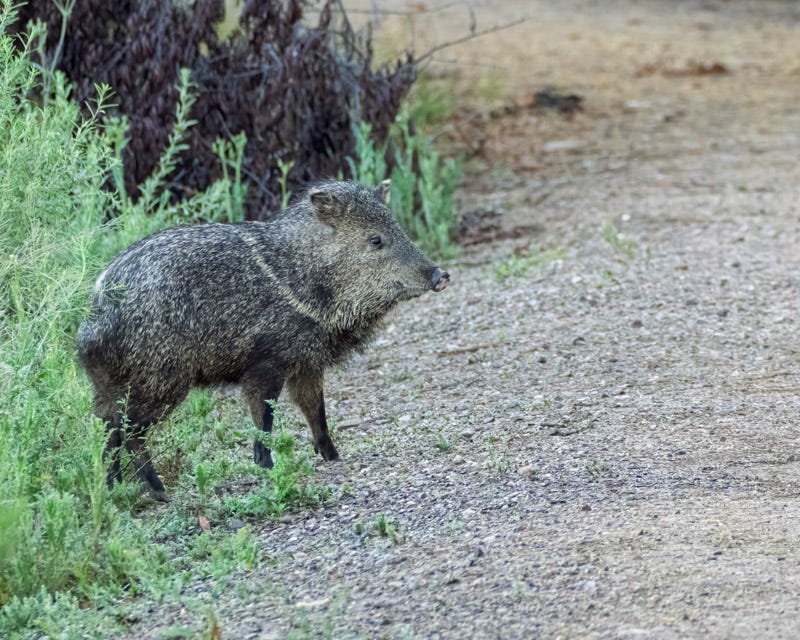
That morning I was hoping to see bobcats or coyotes, but the largest mammals I saw was a small troop of Javelinas. This was the last one in the group. It paused as it began to cross the trail. Javelinas are called “Collared Peccaries” and you can see the white “collar” on this one. The Desert Museum tells us more about these interesting desert creatures.
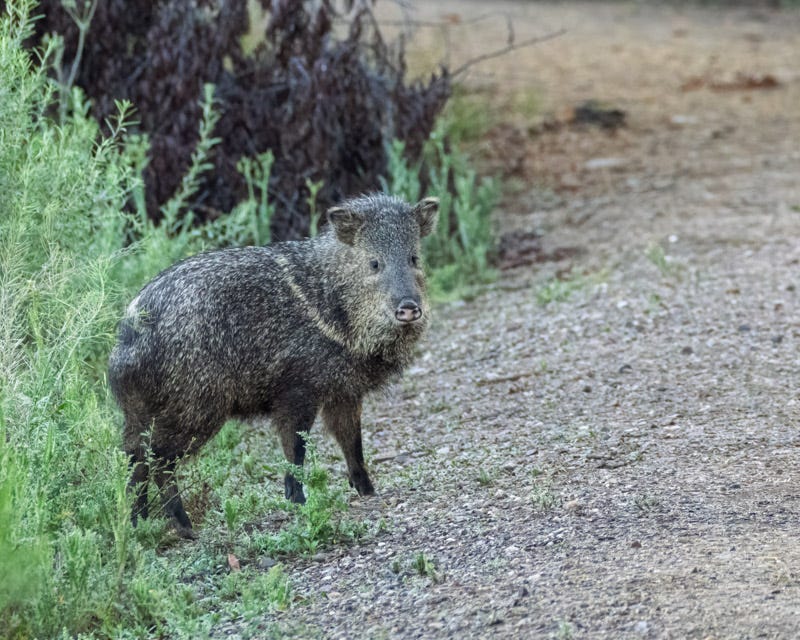
Javelinas do not have good sight. They rely on their sense of smell and their hearing to assess the world around them. This Javelina paid attention to me for a few seconds before it felt safe enough to cross the path and join the rest of the herd,
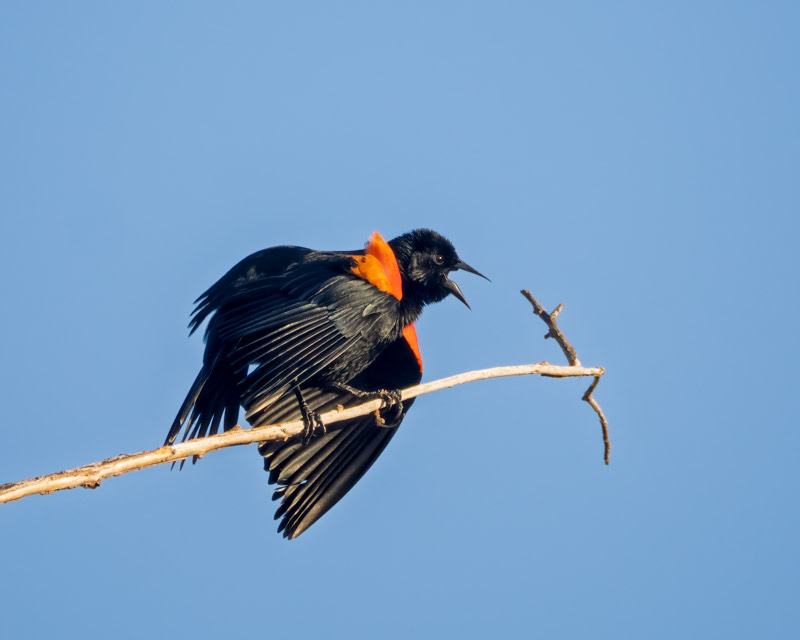
Red-winged Blackbirds were all around the wetlands. The males were perching high and announcing their presence to the world. Their singing is done to defend their territory and to attract mates. Tucson Bird Alliance provides a nice summary about this species.
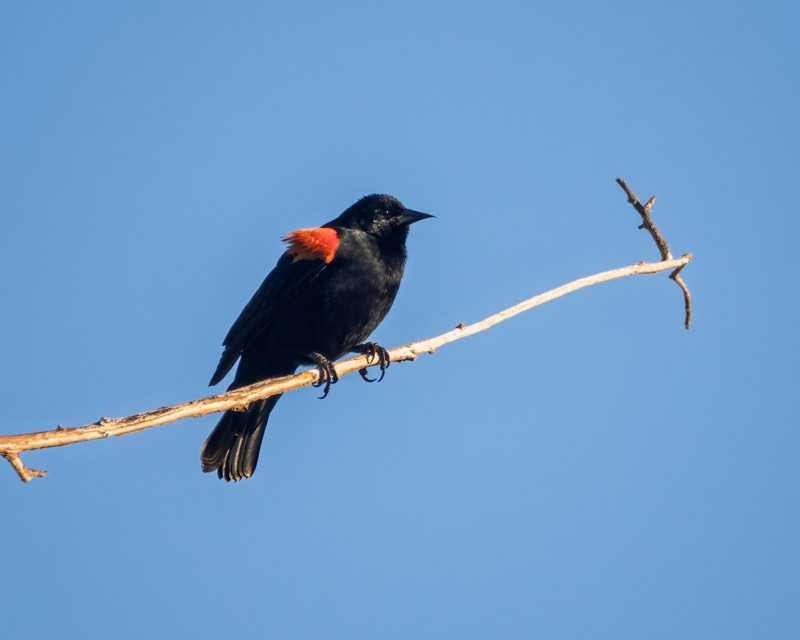
This male continued to creep towards the end of this branch. He would stop every few inches to sing and flash his red shoulder patches. Those red shoulder patches, called epaulets, serve as a visual symbol of strength, status and age.
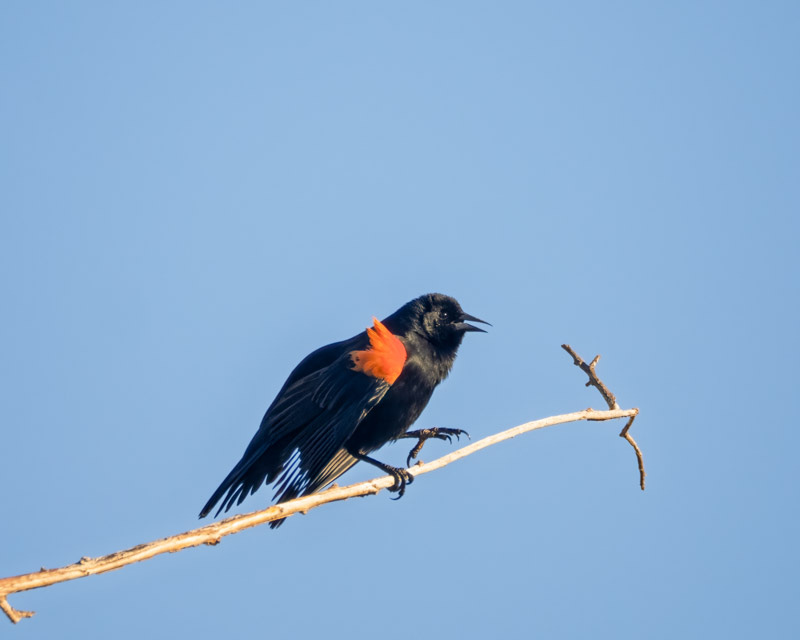
Sometimes this Red-winged Blackbird almost seemed to physically explode due to the intense energy he was putting into his calls. Birdnote has a wonderful video showing male Red-winged Blackbirds’ behavior.
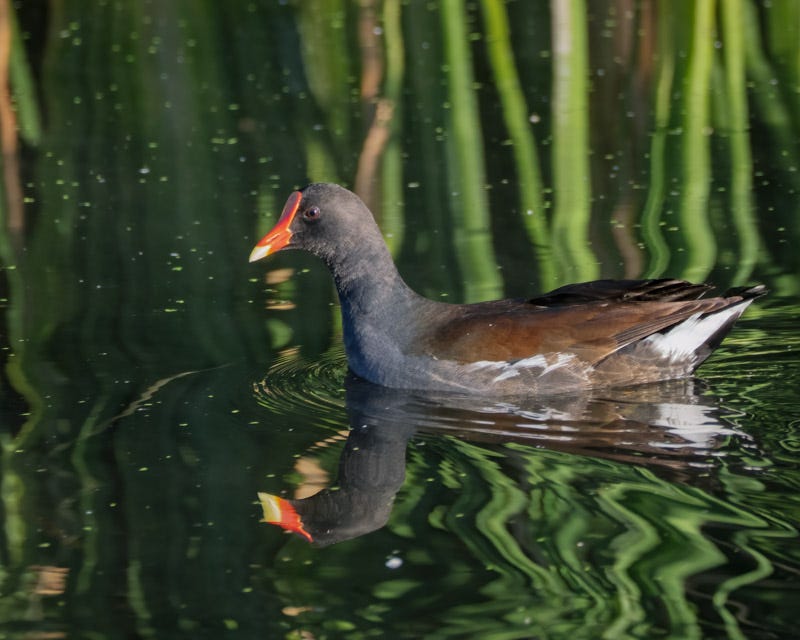
Another nice bird was this Common Gallinule. Common Gallinules are marsh birds whose bright red facial shield is notable. With the orange tip, that beak reminds me of candy corn. Matt Griffiths, with Tucson Bird Alliance, has some good information about Common Gallinules.
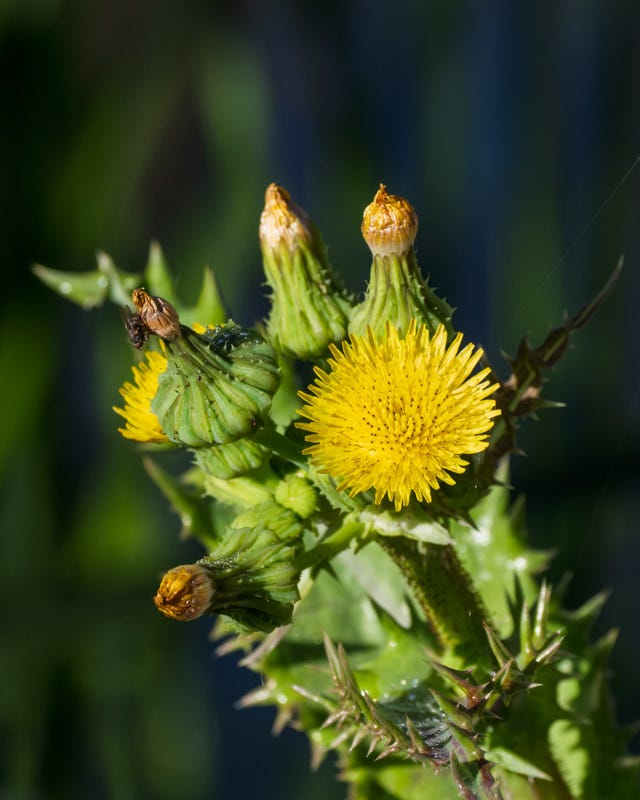
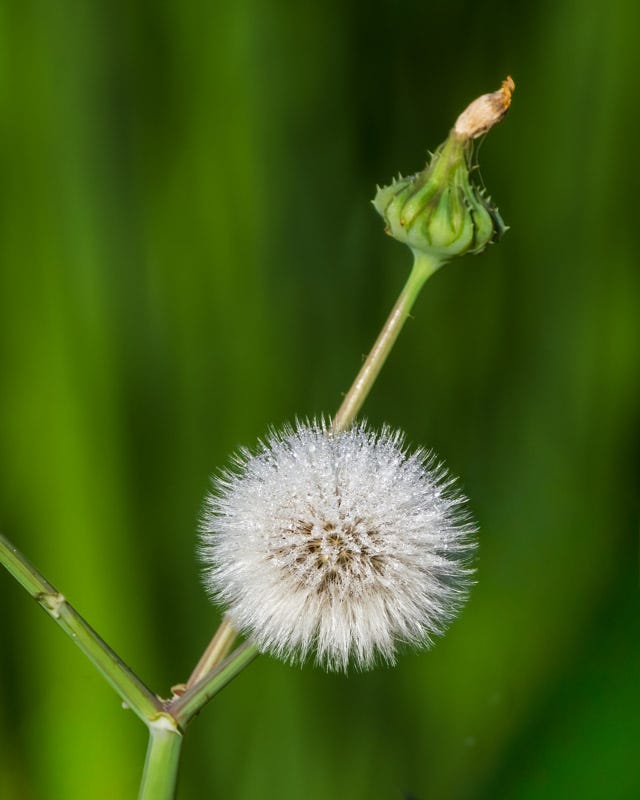
I saw many examples of an interesting plant while I walked around Sweetwater. The plants either had bright yellow flowers or snowy white seed puff balls. I had to research the plant and found that it is called Prickly Sowthistle. Its name comes from the spiny, thistle-like leaf edges. It also has a thick milky sap that oozes from the leaves and stems when they are cut. Historically it was used as feed for lactating pigs (sows) when people thought that the milky sap would aid in milk production. That’s how “sow” came to be part of its name.
Here is the puffy seed head of the Prickly Sow-thistle.
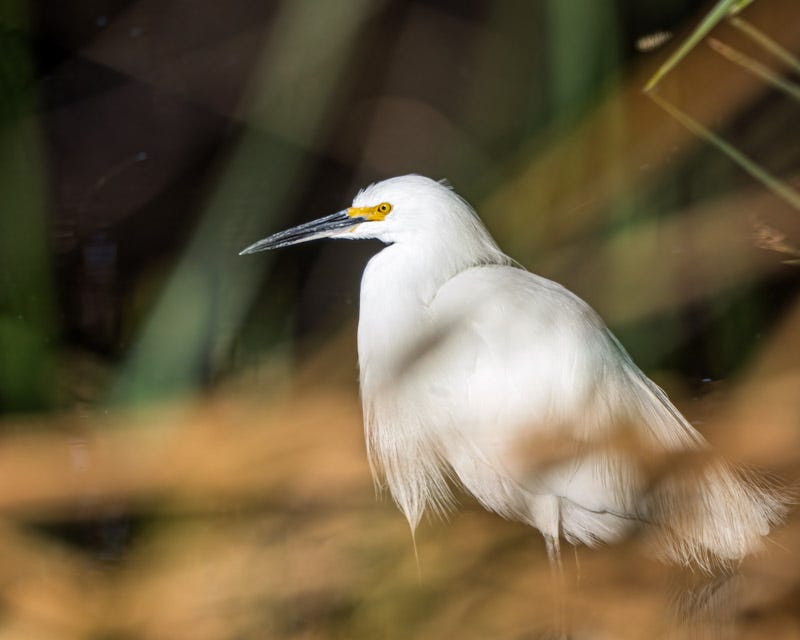
When I first arrived at Sweetwater, a pair of Snowy Egrets were flying around in a courting display. Every few minutes they would appear in the sky flying together. They would then disappear and land somewhere in the wetlands. Towards the end of my walk, I saw one of the Snowy Egrets in the water to the side of the trail. Hidden by foliage, it was standing around and not feeding and showing the long breeding feather plumes draped off of its head and back.
Sweetwater continues to provide a nice refuge for birds and for people who visit.
Very entertaining Dan, I enjoyed your walk!
Love the javelina and the shot of the exploding Red-winged Blackbird, and all your careful documentation of what you see on your forays.