

These are some photos that have been sitting on my desktop for a while now, waiting for me to find a suitable group for them to be a part of. I’ve never found that group, so I’m just sharing this collection as individual photos. I hope you enjoy a few of them.
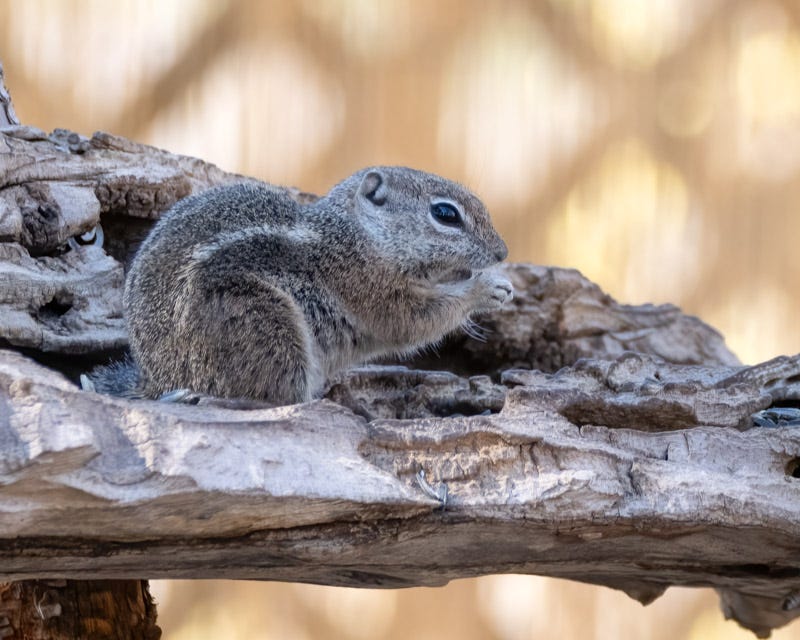
This Harris’s Antelope Squirrel was enjoying seeds in a backyard in Portal last spring. The way these squirrels hold food in both paws is pretty darn cute.
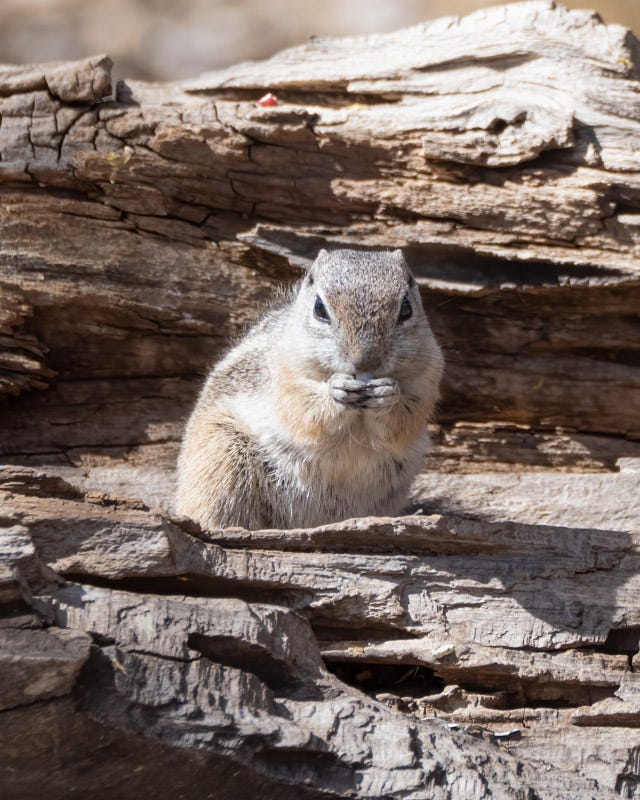
A fascinating behavior by these squirrels is an adaptation they’ve made to be able to survive in the hot Sonoran Desert. Harris’s Antelope Squirrels hold their tails over their backs to help shade their bodies from the sun. This cools their bodies by several degrees and allows them to be out and about in the sun for longer hours finding food. The Desert Museum has more.
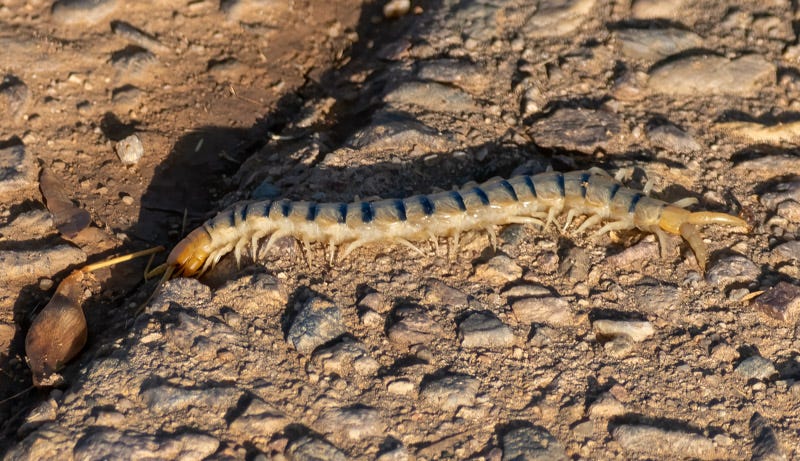
There are two types of centipedes in the Sonoran Desert. The one I’m most familiar with is the Giant Desert Centipede. It is large and has an orange body. In September, I was surprised to come across this very different centipede, shorter and lighter and with tiger stripes. It is called a Common Desert Centipede. I love surprise finds like this one. Again, the Desert Museum is a great resource about many things including centipedes.
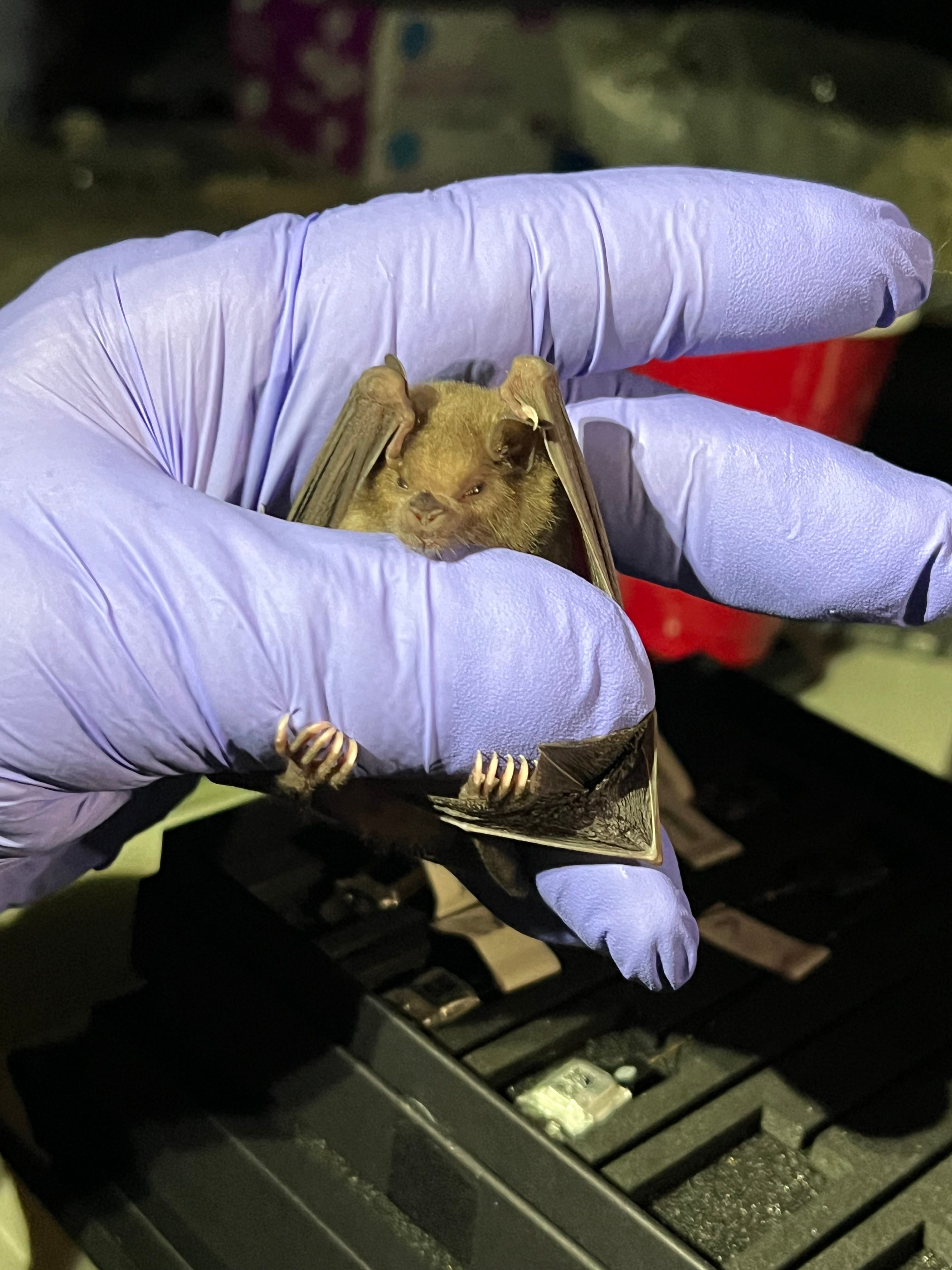
Tucson is home to many species of bats including two that are nectar feeding bats. Nectar feeding bats migrate north to Tucson each summer to raise their young in maternal roosts in the caves and mine tunnels of the Catalina and Rincon Mountains. People with hummingbird feeders are familiar with nectar feeding bats because their hummingbird feeders are drained nightly from August through October as the bats feed to get ready to fly south again. I have been fortunate to help with annual scientific studies of these bats for a few summers. Last summer, bats were being fitted with teeny radio transmitters to help scientists follow their migration paths back into Mexico. I really like the look of the bat below but I do understand some of you may have a different opinion.
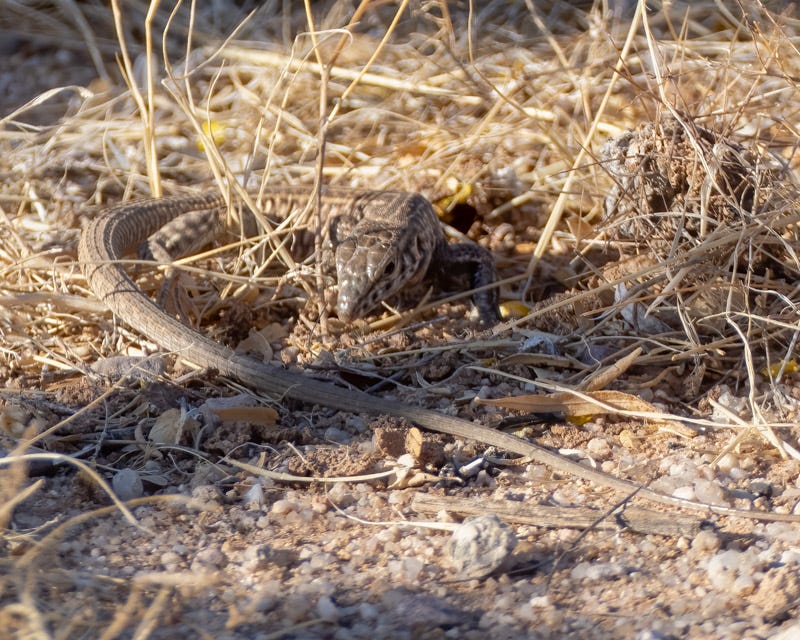
I was sitting in my car and watching a Caracara nest west of Tucson last spring when this Tiger Whiptail Lizard appeared near the car, exploring the desert ground for food.
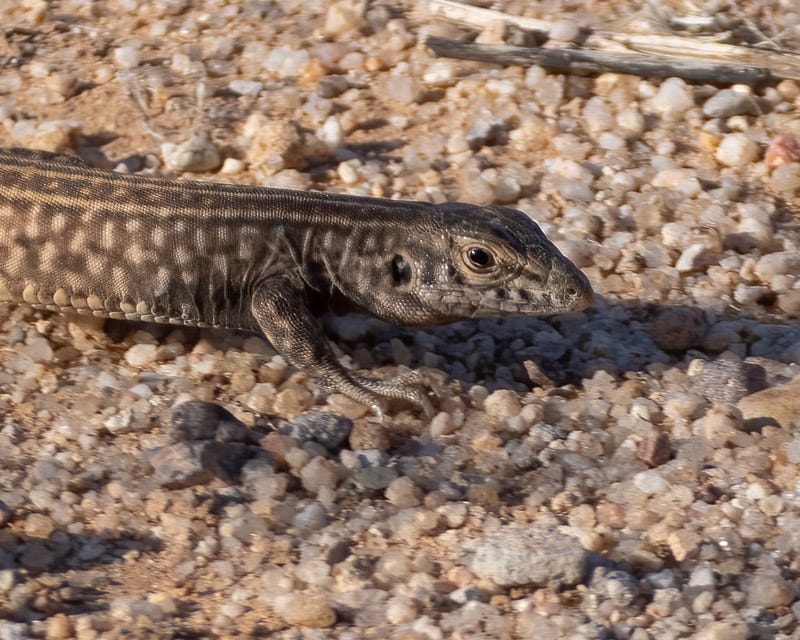
Whiptails are fast lizards with a long, “whip-like” tail, a pointed snout and distinctive markings.
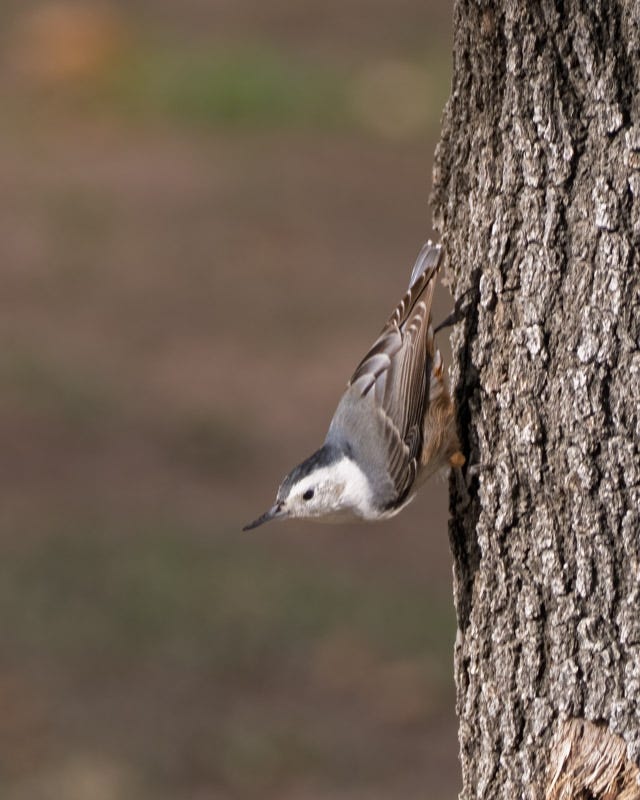
White-breasted Nuthatches are found throughout most of the United States. Here in Arizona they are not generally found in the desert during the hot summer but can be found in most other elevations through much of the year. White-breasted Nuthatches forage up, down and sideways along tree branches in search of food. This one was seen in Reid Park.
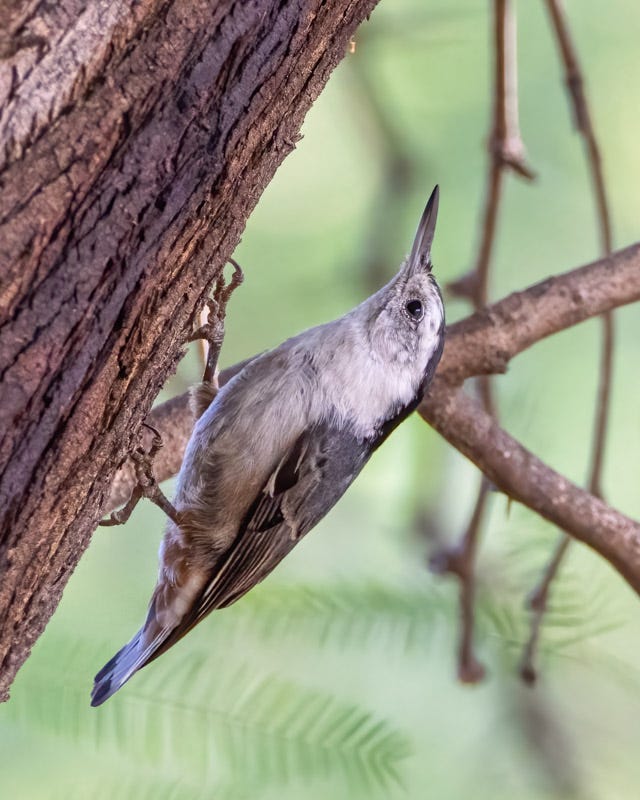
This White-breasted Nuthatch was found in Sweetwater Wetlands.
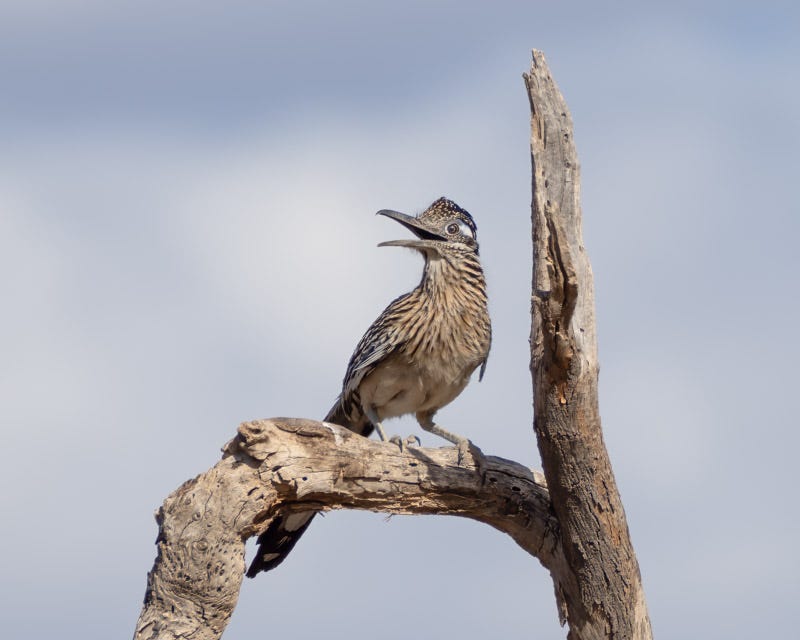
This Roadrunner seems to be very happy. On that snag, the photo almost looks like a studio portrait. It is not a studio shot, it was taken on a dead tree snag on the edge of a farm in Marana late one afternoon in April. Even if the Roadrunner isn’t really happy, I sure was happy to get this shot!
To learn a bit more about the ongoing research on nectar feeding bats, watch this great 2024 video from Arizona Game and Fish:
Another wonderful video on these bats was done in 2023.
Cool centipede, loved the bat -- and the Roadrunner!
Love the artsy background on the White-breasted Nuthatch shot; really enjoy your posts.