

Great Blue Herons are the largest North American Herons. They stand nearly 4.5 feet tall and have a 6.5 foot wingspan. They can be found in open areas like agricultural fields and city parks, but they are most often associated with water.
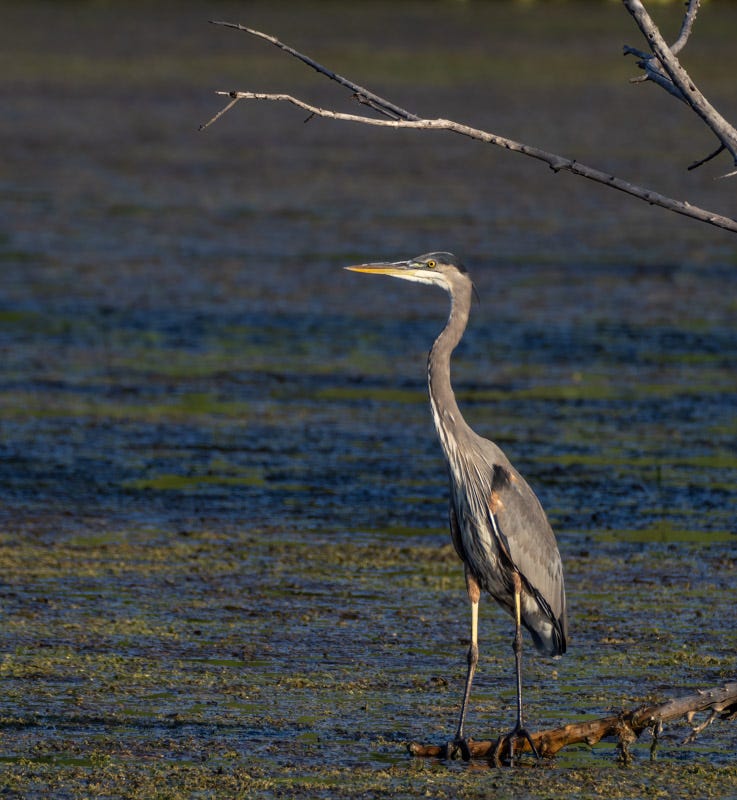
This Great Blue Heron was at El Rio Preserve one morning. After standing still at the end of a dead tree branch for a while, it finally decided to move.
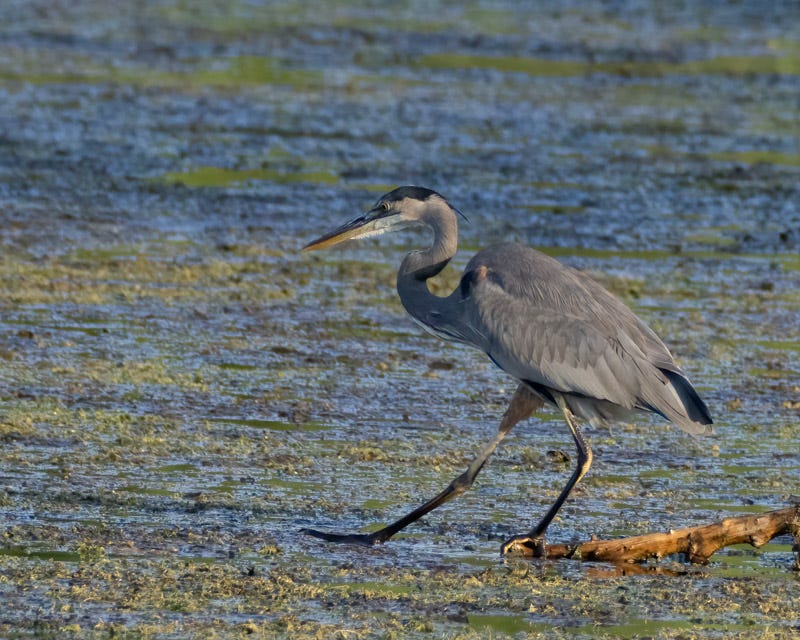
Stepping slowly, the Heron walked into the water and then stopped. I didn’t see any feeding behavior. It didn’t turn its head towards the water at this time. Looking at this bird, it is not a bright or royal blue. Perhaps it can be described as having a blue-gray plumage, but it was given its name to distinguish it from the Eurasian Grey Heron.
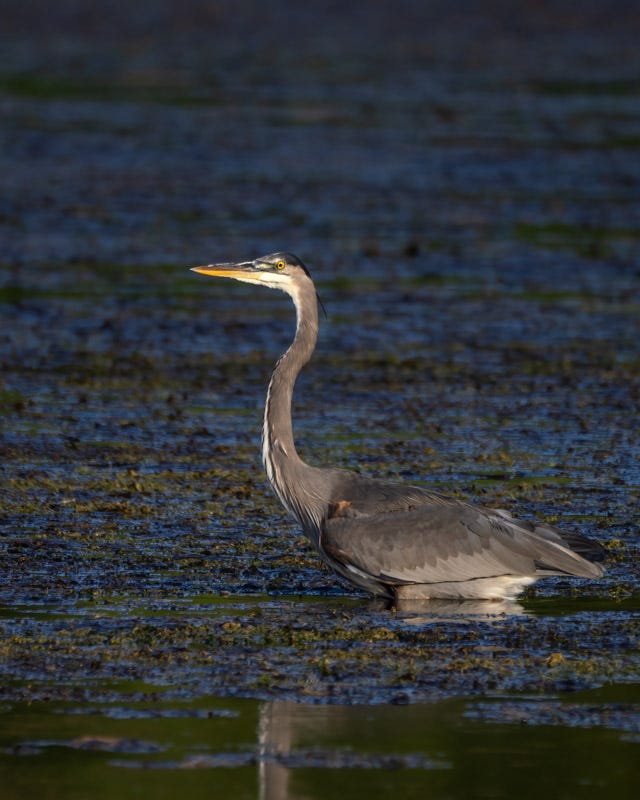
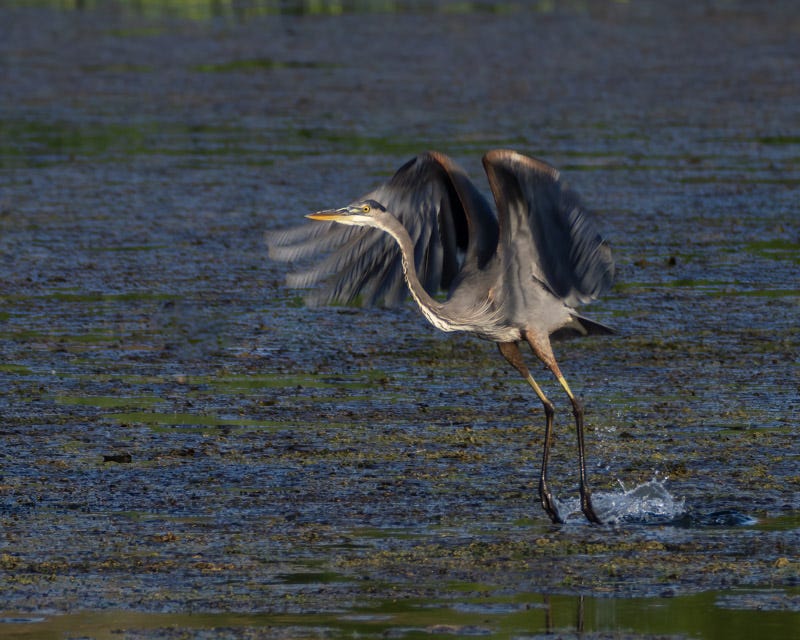
Eleven minutes passed between when it stepped off the branch and while it was standing still in the water. Suddenly it took off. Because the Heron’s takeoff angle was low and shallow, the tips of its long toes brushed across the surface of the water. Great Blue Herons are massive birds and it takes a bit to gain lift before it is flying smoothly with its legs stretched behind it.
Within 16 seconds the Heron had circled around and was heading in the opposite direction. Notice how the Great Blue Heron tucked its neck in during normal flight. The Heron has a long, muscular neck and a heavy bill. Folding its neck into this “S” shape helps both to balance its center of gravity and to stabilize its flight.
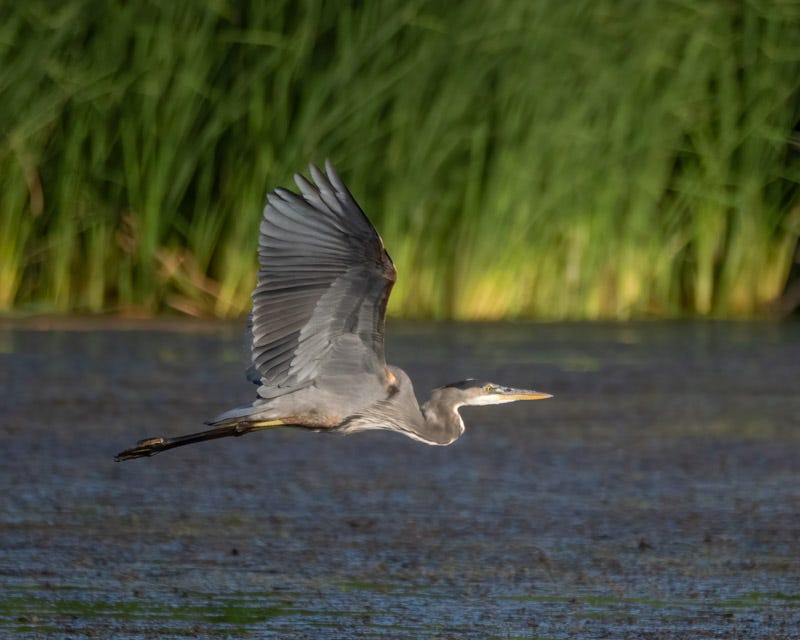
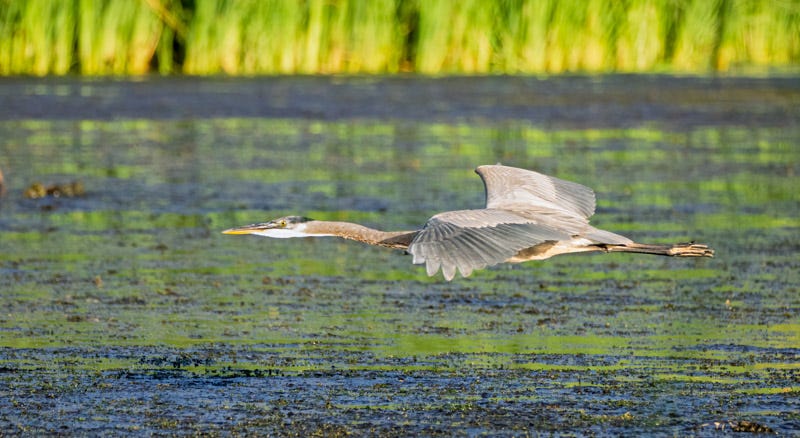
Almost an hour later the Great Blue Heron headed back across the Preserve. Note how its neck is stretched out this time? One reason these large Herons may fly that way is because they are chasing other Herons. With their necks extended, their wings will not limit their vision during a chase and they can maneuver more easily.
Great Blue Herons are so large they are easy to spot and easy to observe. We have many year-round residents in Tucson but northern migrants are moving through our area now, so our numbers are temporarily increased. If you want to find a Great Blue, visit Danny Lopez Park along Silverbell Road. There is a rookery tree on an island in the middle of that urban fishing lake. Several Great Blue Herons can be seen there pretty much year round.