

I shared photos of Little Girl with you a few weeks ago. Since then, I was fortunate to have two more opportunities to observe her flying. Falconers should fly their bird at least five days per week and for 1-2 hours per hunt. Ordinarily, ‘guests’ aren’t welcomed to these training flights. Birds of prey can be very sensitive to unexpected additions to their hunting field. This could cause them to end the hunt or fly away to seek safety. So why was I invited there? I’ll share some photos while telling the story.
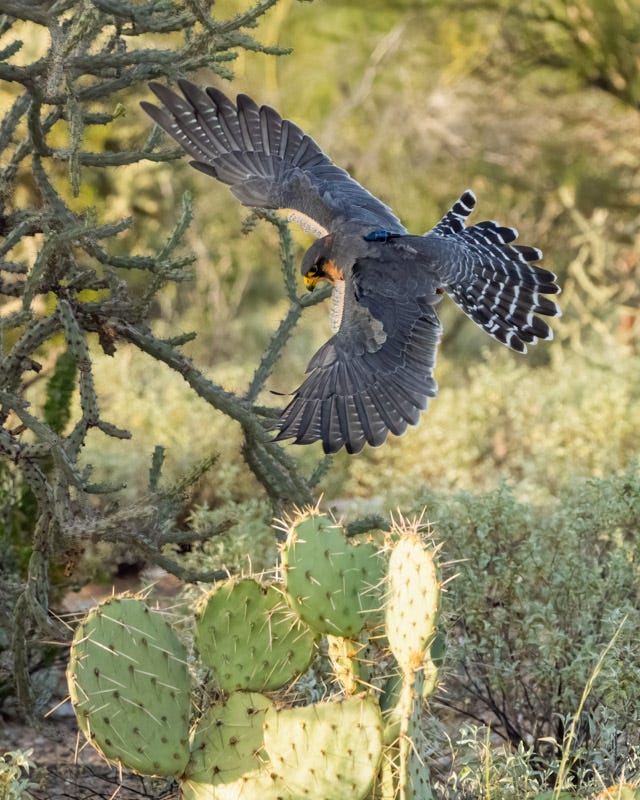
Little Girl and her Master Falconers will be showcased at this week’s Arizona Game and Fish Outdoor Skills network in Camp Verde. This Introductory Falconry Skills camp will allow attendees to participate in a variety of workshops which will include observing Falconers as they fly their birds in the field. This firsthand look will teach attendees about avian behavior, equipment, and training techniques. Little Girl will be one of a featured raptors flying at the camp and her trainers have been working to get her accustomed to crowds while she is in the air. As in my previous visits, I saw her perching often on elevated rocks.
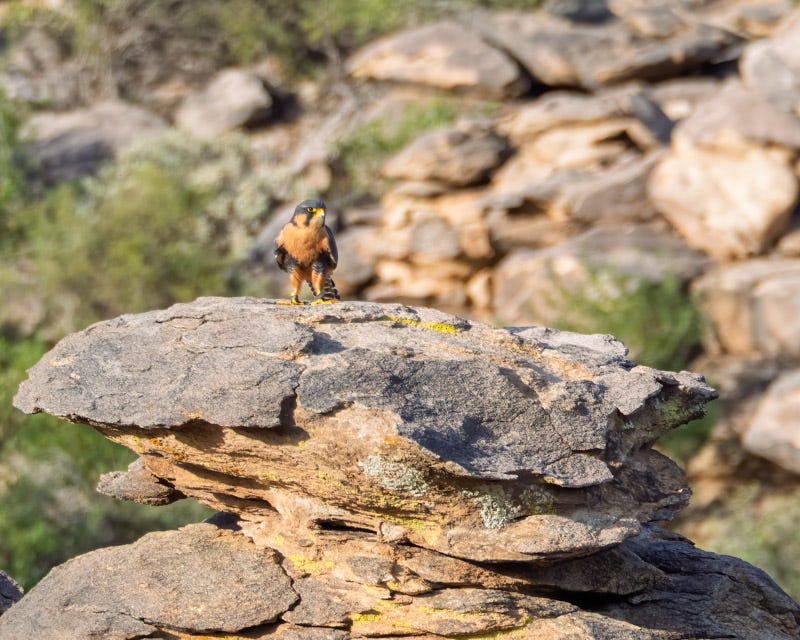
Little Girl, a Peruvian Aplomado Falcon, has the long pointed wings and long tail of a falcon. She also has a malar stripe (a mustache) that many falcons feature.
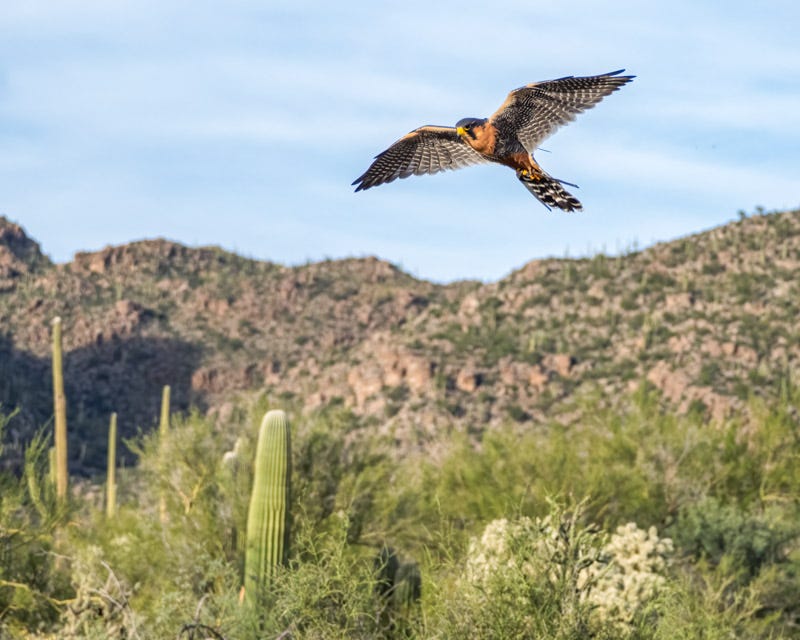
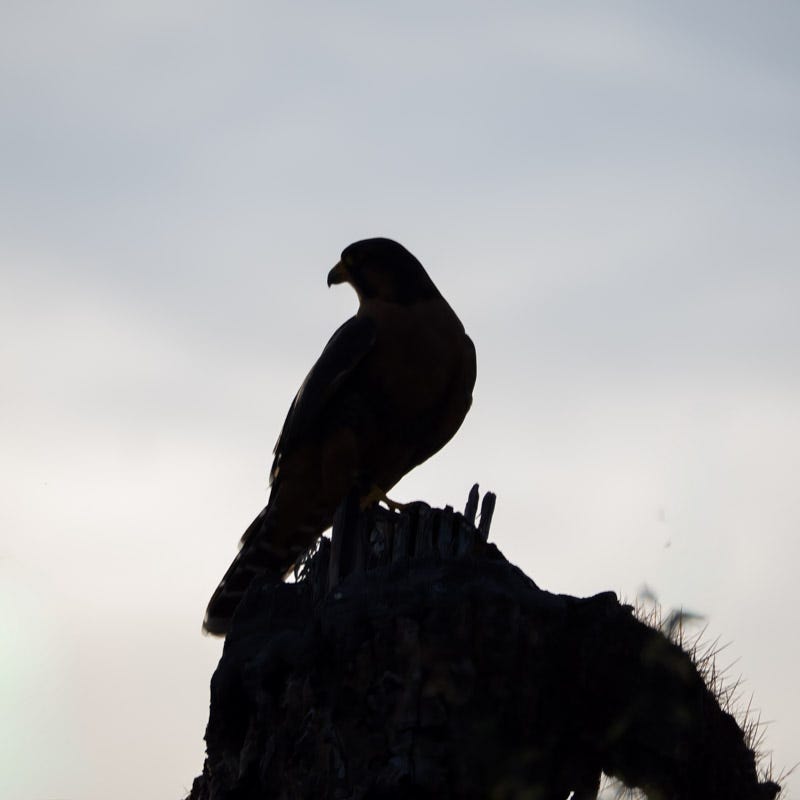
As we wandered around the desert, Little Girl would fly off in one direction or another. The falconers and the small group of observers either trailed along, or moved in different directions to vary the route of return by the Falcon. She trained in the final hours of the day, so the sun was low and often lighting wasn’t the best for photographs. After regularly landing on rocks or the ground, at one point she actually landed on a broken saguaro. Even with the sun behind her, we all whooped and took photos. She had finally perched on something other than the ground!!
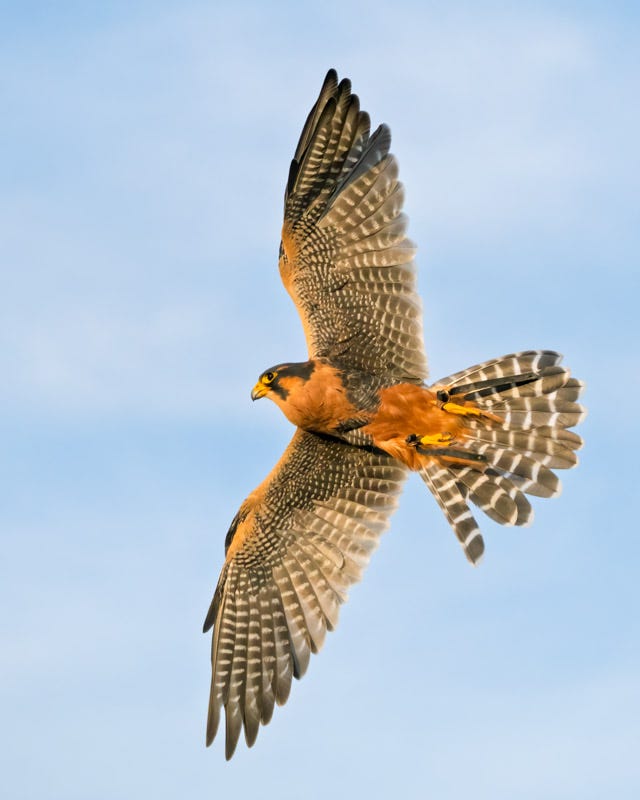
Each training event included a session of aerial hunting. When the falconer threw little tidbits of meat in the air, Little Girl had to track a moving object, adjust her flight path, and then grab a moving object out of the air. The burst of energy this requires helps to develop muscle tone and conditioning.
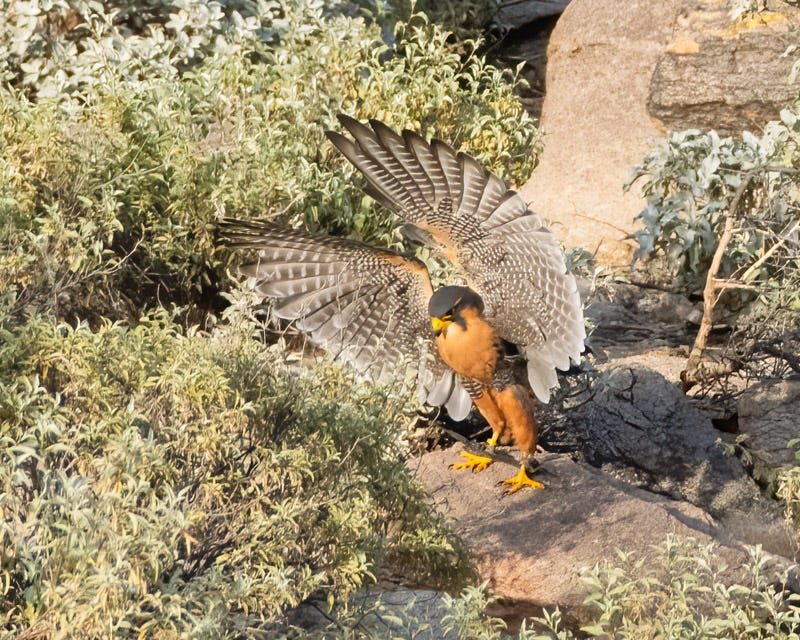
After catching her “prey” in the air, Little Girl would take it to the ground to eat. This simulated chase activity builds trust and focus as the bird learns that her handler is a source of exciting food rewards. It is a great bonding experience.
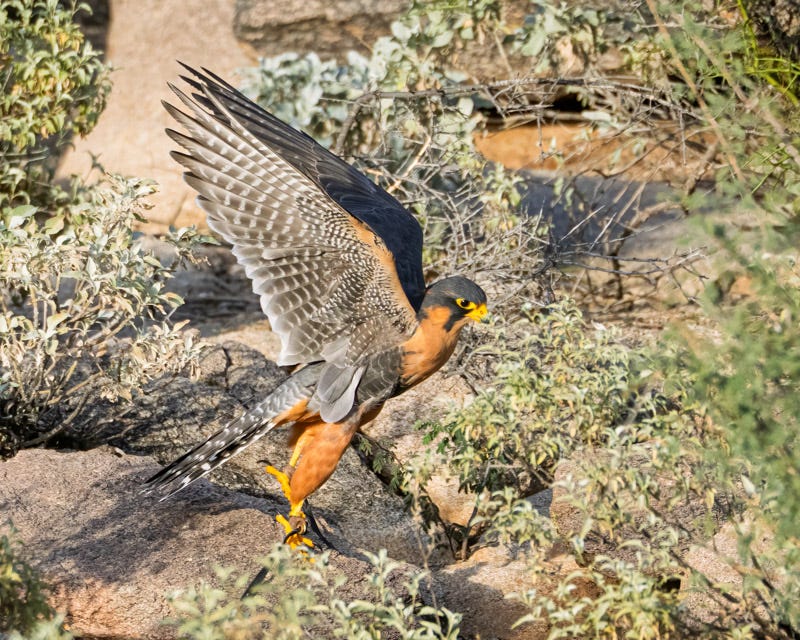
Little Girl didn’t remain on the ground for long. She was up in the air and quickly chasing more flying tidbits.
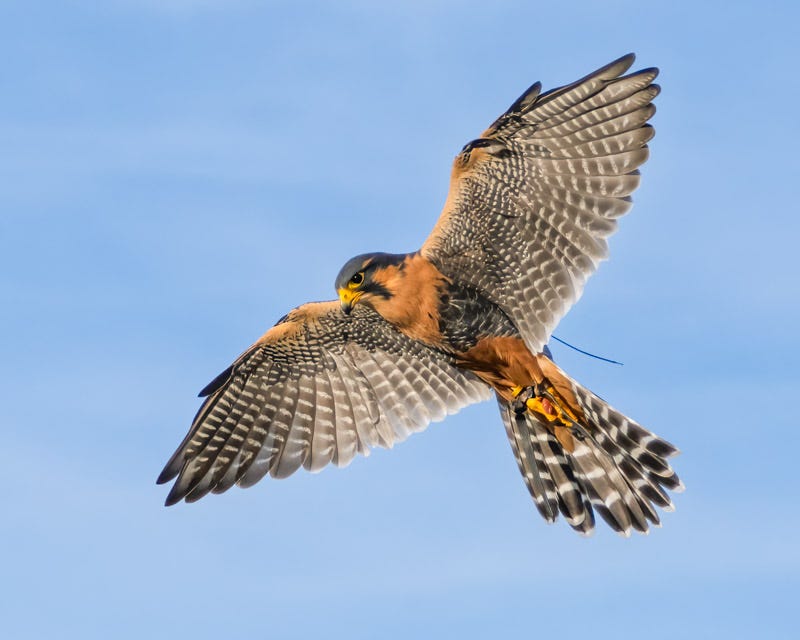
It was awesome to watch her agility and command of flight as she would turn and adjust in the air.
At the end of her hunt and training, we had circled back to our starting spot. Little Girl enjoyed a cool-down spray of water while on the falconer’s gloved hand. She seemed to be very comfortable with, if not enjoying, the company of the human guests who had watched her flying. We had walked just under a mile in the desert. According to her GPS tracking device, the Falcon had flown over three miles.
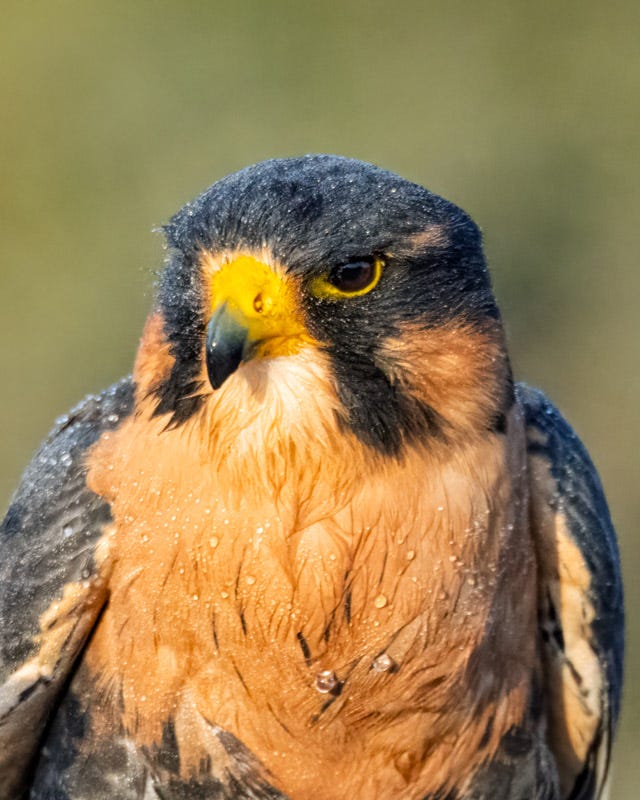
I don’t think Little Girl knew how cute she looked, but she definitely was the center of attention.
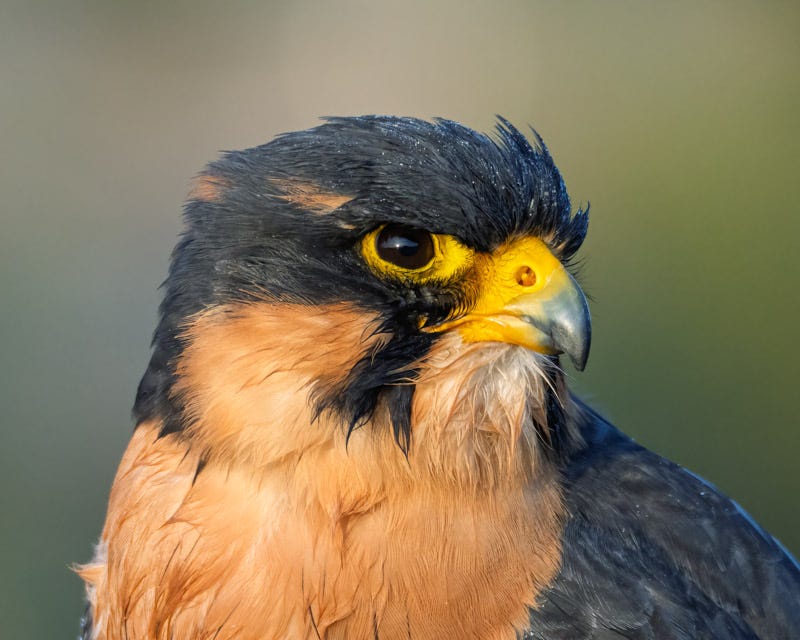
I was glad to be able to take part in her training. It was impressive to see her flight skills and fascinating to watch her fly freely.
The Master Falconers who work with Little Girl are part of the Arizona Raptor Center, a 501(c)3 organization focused on rehabilitation, education and research of Birds of Prey. It is a network of falconers statewide who volunteer their time to promote wildlife conservation and environmental awareness. Little Girl’s Falconers help to coordinate the ARC’s programs throughout Pima County.