

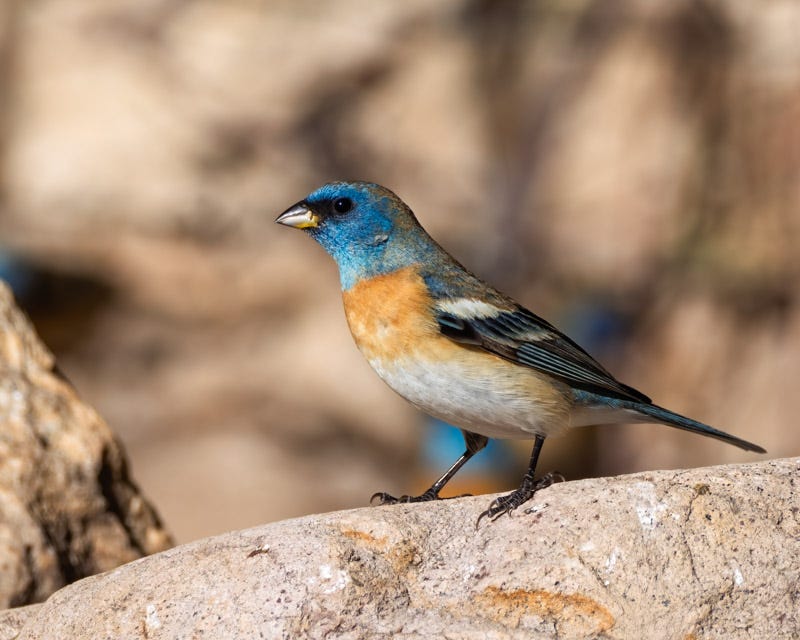
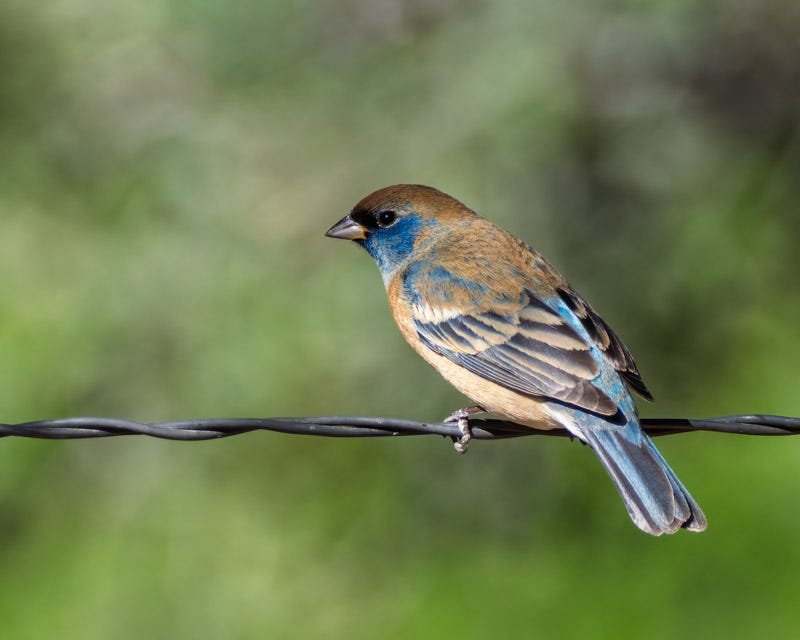
Lazuli Buntings are now migrating through southern Arizona on their way to their summer breeding grounds. The word “lazuli” is of Persian origin and means “sky blue” or “heavenly blue” referring to the lapis lazuli stone. The AllAboutBirds site describes the male Lazuli Bunting as “flashing the blue of a lapis gemstone mixed with splashes of orange.”
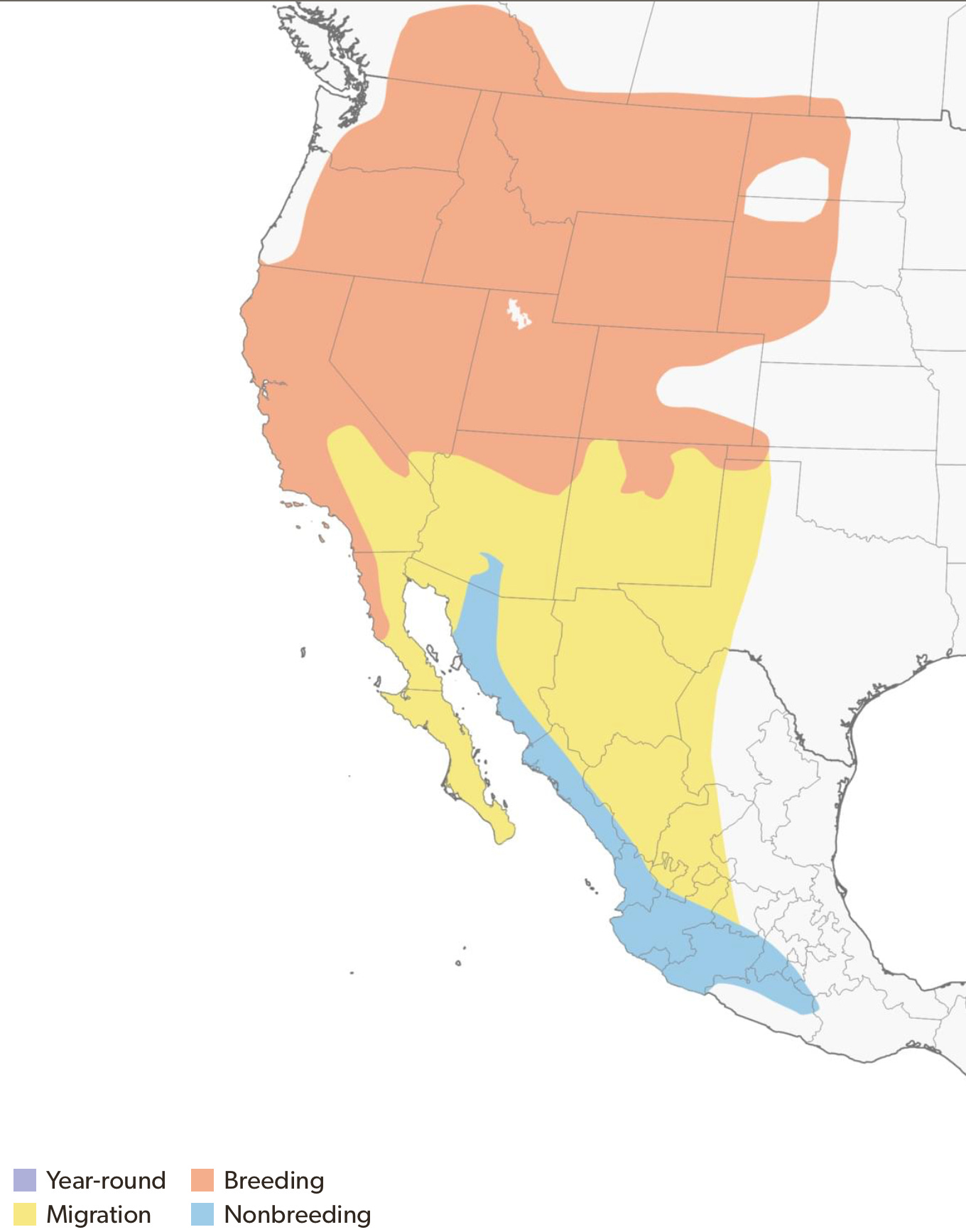
The range map from AllAboutBirds shows how the Lazuli Bunting migrates through our region. A few do winter in southern Arizona but only small numbers do.
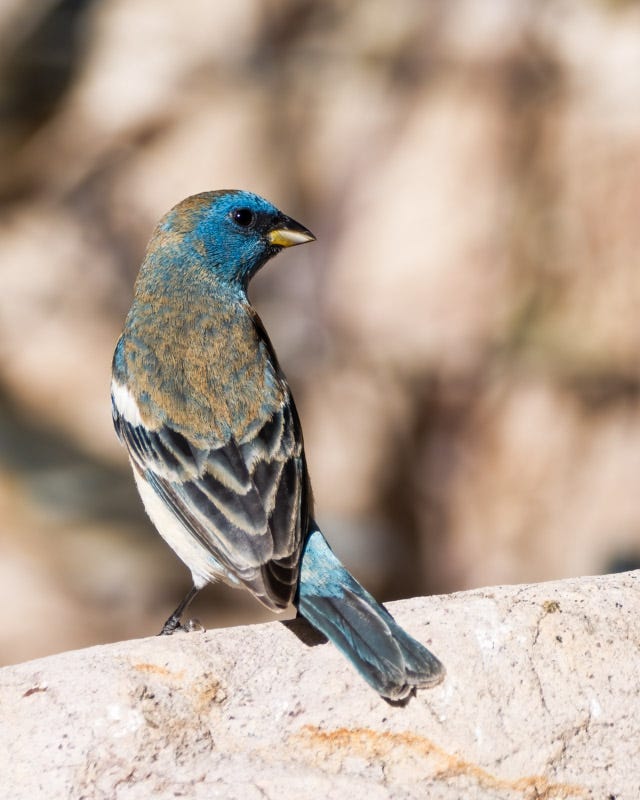
The backs of these songbirds are also bright blue in breeding adults. That bright blue plumage in the back comes in by the male’s second year. The back of the male in the photo below is a mottled tan and blue. So this bird is likely a one-year old. It may still successfully attract a female and breed at that age despite the duller plumage. Lazuli Buntings also have forked tails, seen here.
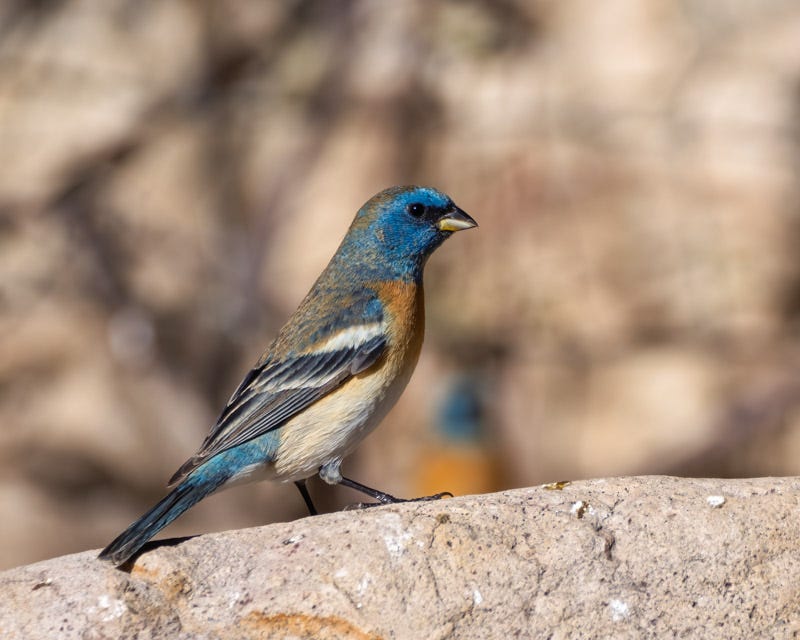
I’ve mentioned this before but a reminder that the blue feathers in birds are not really blue!! The actual feather pigment is brown but the cell structure of those feathers scatters light in a way that only blue wavelengths are reflected back to our eyes. This is just another example of how impressive Nature can be. For those species, vibrant blue feathers reflect health and fitness and aid in attracting a mate.
You can hear the song of the Lazuli Bunting in this Birdnote piece.
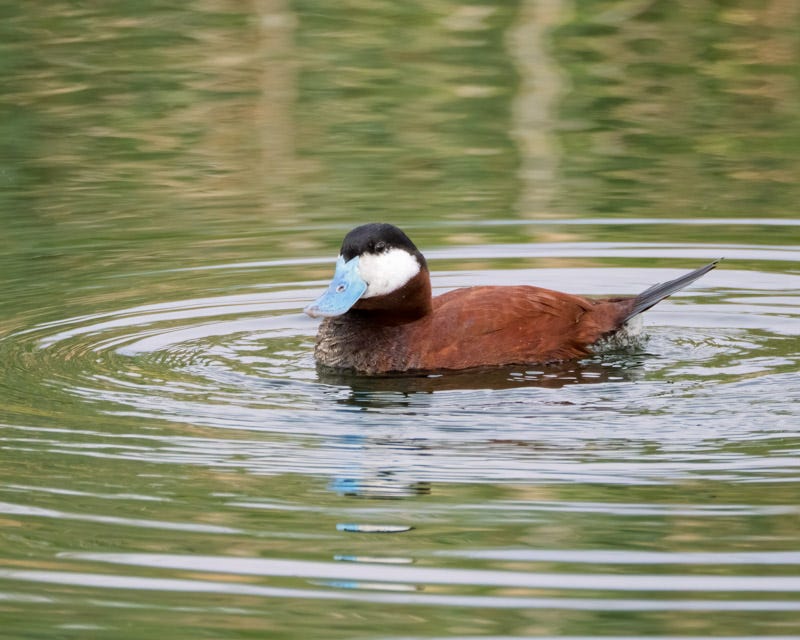
While on our Birdathon morning last week, we came across some Ruddy Ducks in breeding plumage. Non-breeding males have dull, gray/brown plumage. Their feathers are nothing special. But during breeding season, they turn “ruddy” as their name implies. Their feathers become a deep reddish/brown, sometimes called a chestnut color. Much like the feathers of blue birds, the Ruddy’s bill is not actually blue. Rather, the cell structure of the outer layer of the bill changes causing it to reflect blue light.
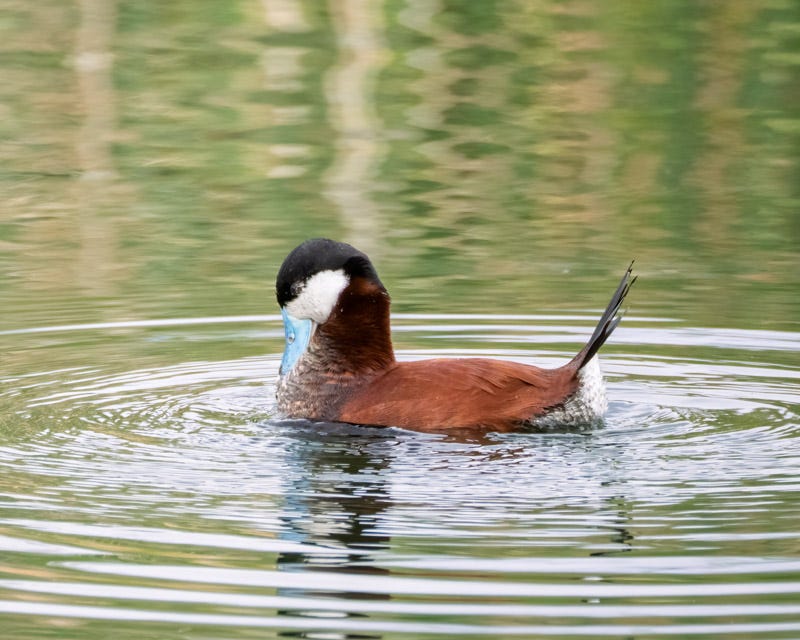
One of the first courtship behaviors the male Ruddy Duck displays is interesting to see. The male puffs up his neck, raises his long tail stiffly, and shakes his head while tapping his bill against his neck, creating a ring of bubbles in the water. The male can strike his bill against his chest many times per second, and he’ll repeat this action sporadically but continuously while courting the female.
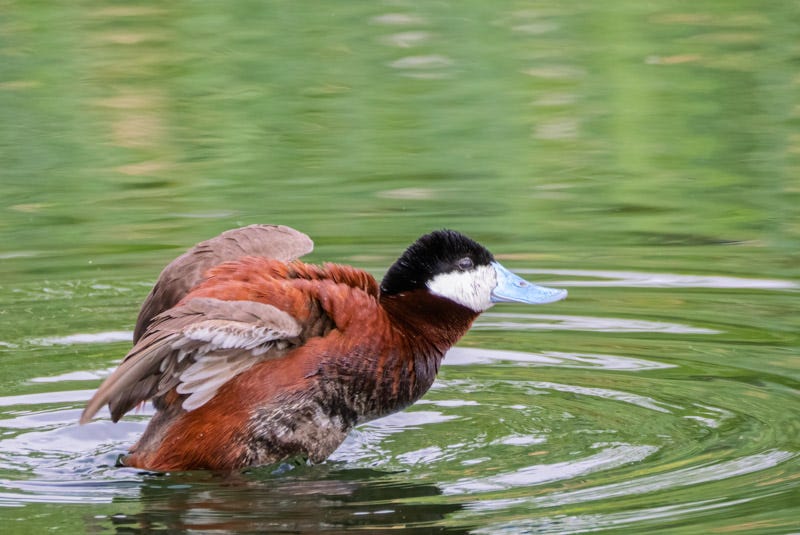
After a bit of courtship activity, this male stretched to relax again, and then swam off.
Across cultures the color blue is always considered one of the most popular colors. It is a calming and tranquil color. The writer John Ruskin said, “Blue color is everlastingly appointed by the deity to be a source of delight.” That color makes these two bird species even more special than usual.
Nice quote from an esthete!
Great shots of beautiful and interesting behaviour, and, as always, intriguing information. Glad you haven't given up teaching...