

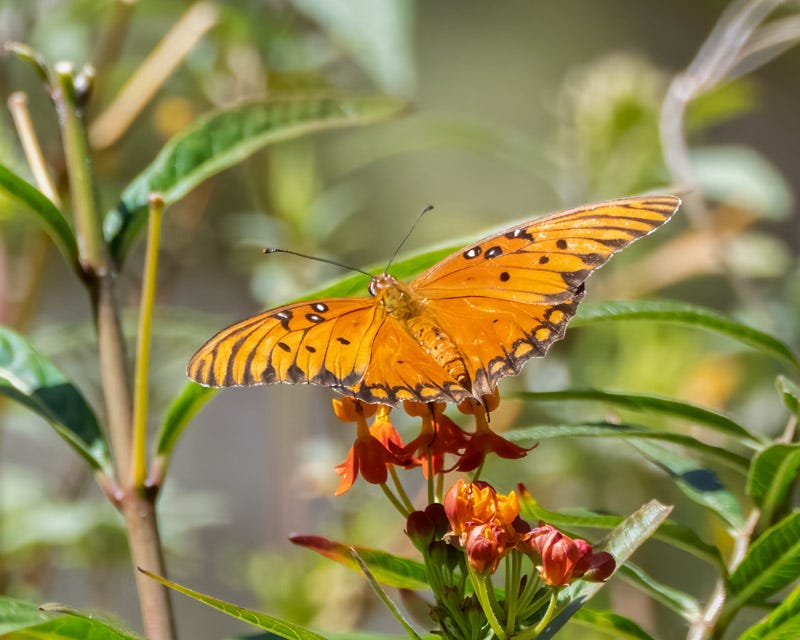
In Tucson, we have butterflies much of the year. There is a wide variety of species and after our Monsoon season there is even a greater chance to see a butterfly flying around pollinator plants. Below is a Gulf Fritillary. When I had a large Arizona Passionvine plant I had many more Gulf Fritillary butterflies than I do now so it was nice to see this one.
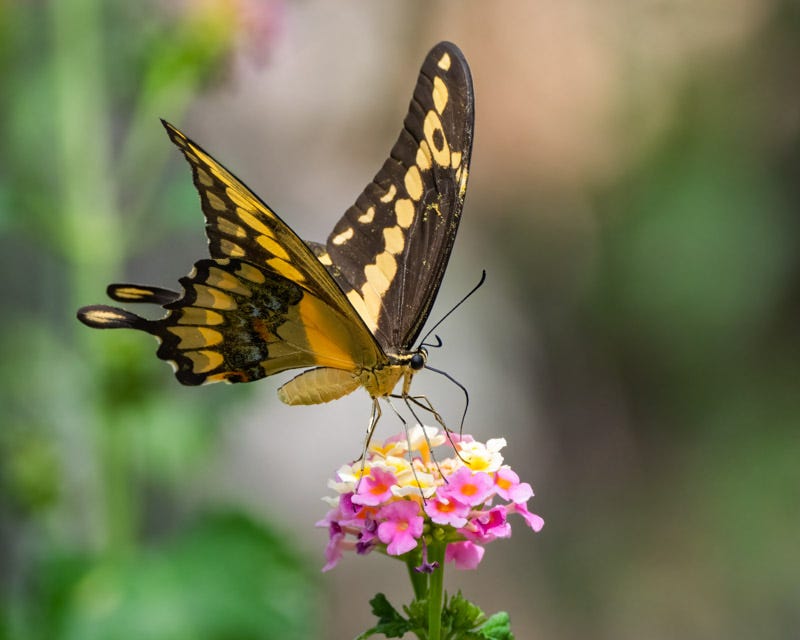
The Giant Swallowtail really is a giant sized butterfly. We see them in the warmer months and after the summer rains. Their wingspan ranges from almost six to over seven inches. Swallowtails were named for the long extension from their hindwings. Those were said to resemble the long tails of Swallows.
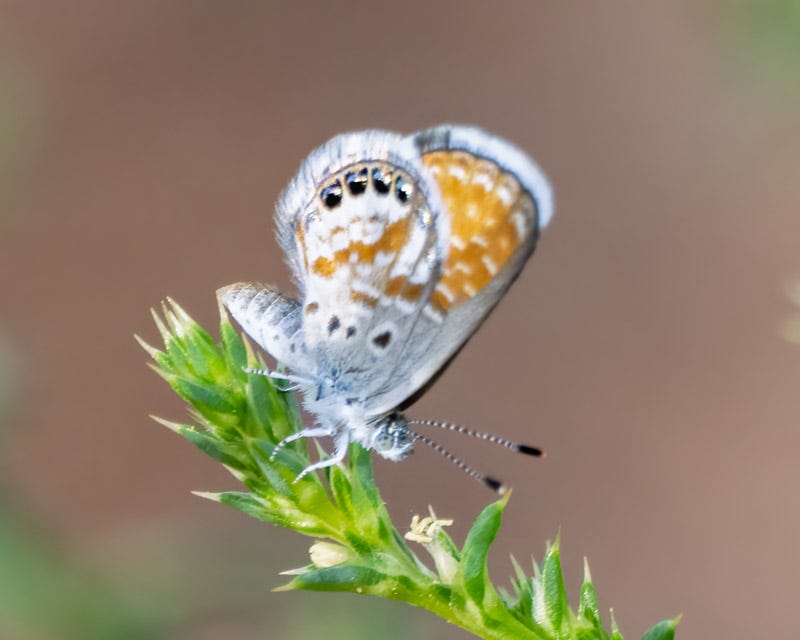
I am by no means an expert in butterfly ID but I believe this is a Western Pygmy Blue butterfly. It is one of the smallest butterflies in America. The multiple black dots and the coppery color of its wings help to distinguish it from any other of the “Blue” butterfly species. The wingspan of the Western Pygmy Blue is perhaps only a half-inch.
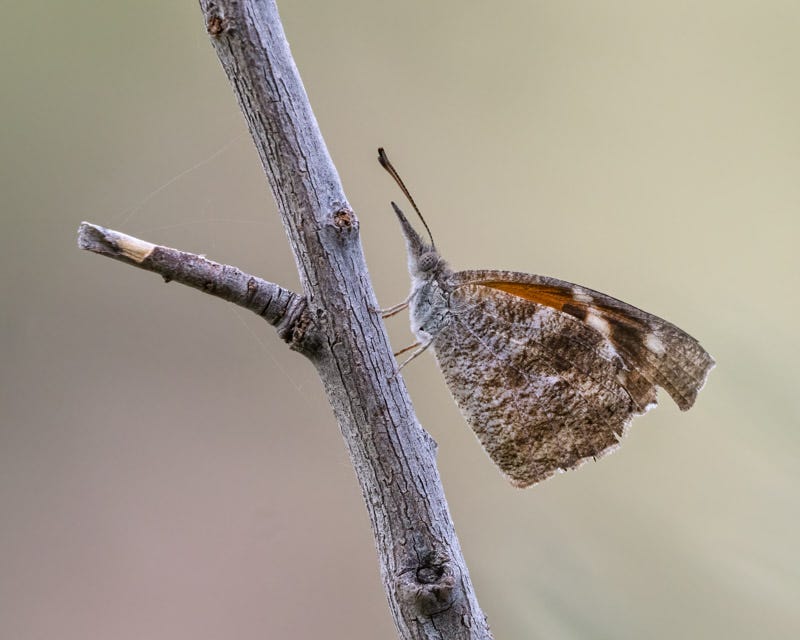
The number of American Snout butterflies explodes in the Tucson area every monsoon season. It seems like everybody has hundreds and hundreds of these butterflies on the plants in their yard or where they go on walks. American Snouts look like dead leaves on a plant and they have a very elongated “snout”.
A neighbor called me over to his house to show me the hundreds and hundreds of small green caterpillars in his yard. They were all American Snout caterpillars. When I went to his yard, I saw incredibly large numbers of these caterpillars suspended from silk threads hanging from a Mesquite tree adjacent to his porch.
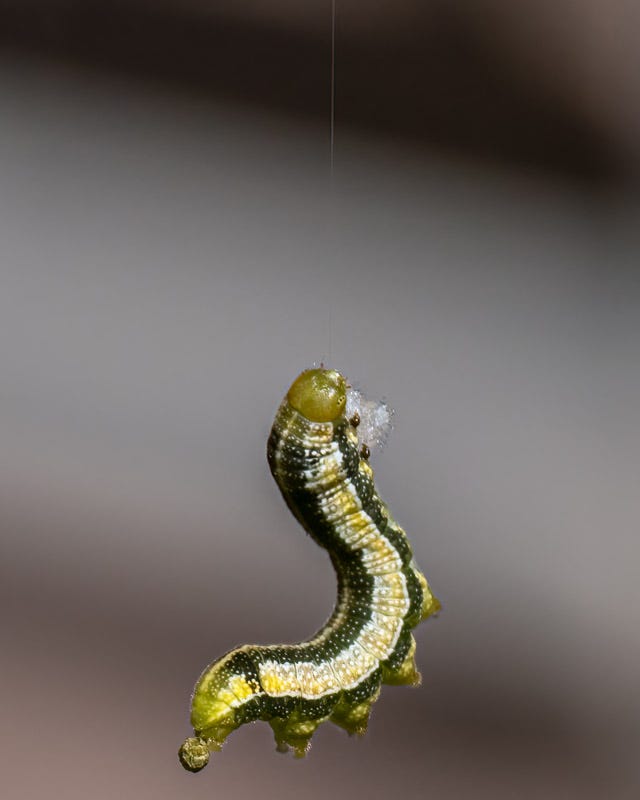
American Snout butterflies lay their eggs on desert Hackberry trees. Hackberry trees are the exclusive host plants for their caterpillars. When a massive population explosion happens, the caterpillars will strip the Hackberry tree of all its leaves. Once that food supply runs out, they use these silk lines to repel down to the ground. Many of them landed on his back porch.
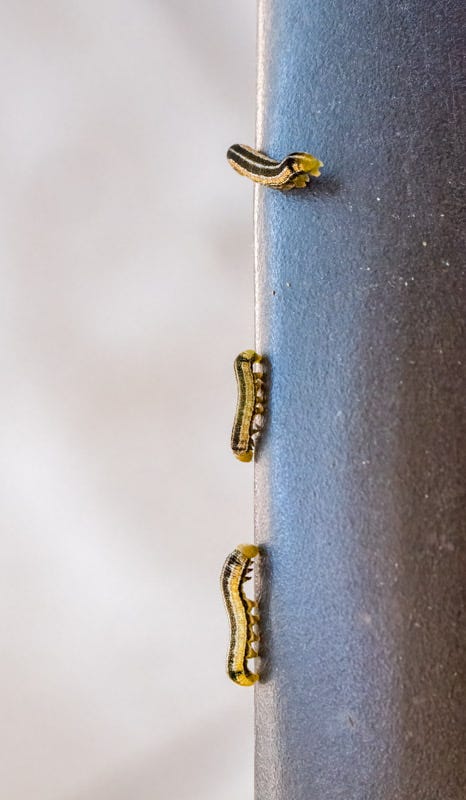
When those caterpillars land on a solid surface, they will pupate and transform into a chrysalis. I was shocked to see that neither birds nor lizards were eating the hundreds of caterpillars on my friend’s porch. Apparently, Hackberry leaves contain bitter compounds which become concentrated in the bodies of the caterpillars. Birds and lizards learned that eating American Snout caterpillars results in a terrible taste in their mouth so they leave those caterpillars alone.
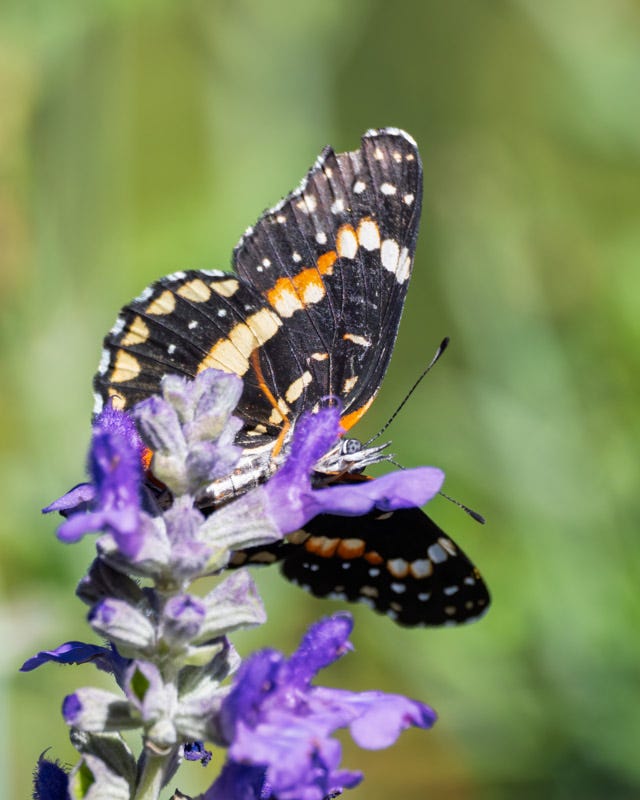
The Bordered Patch is a regularly seen butterfly species in the Tucson area. Unlike many other butterfly species, there is some variability to their wing color.
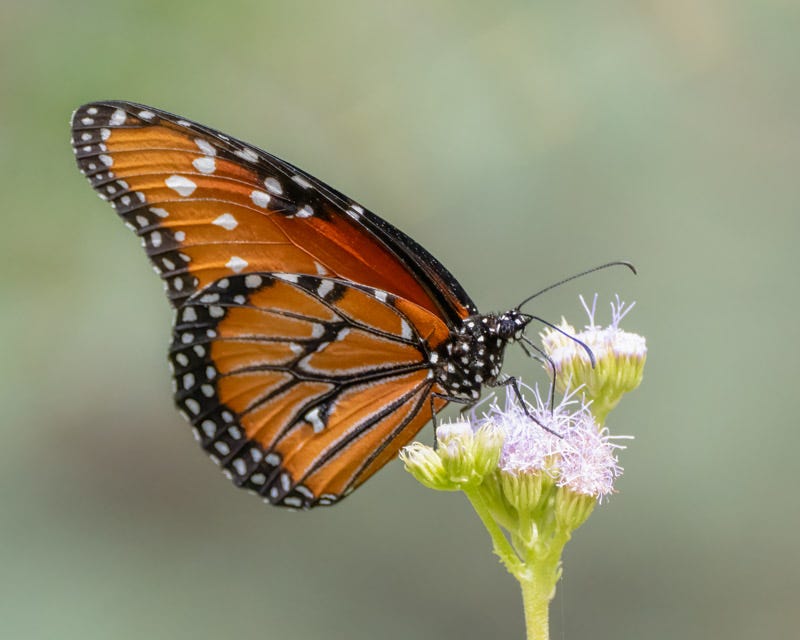
A very common butterfly in the Tucson area is the Queen Butterfly. Because of the orange and black colors, it is often confused with Monarch Butterflies. Although they are closely related, Monarchs are larger and have solid orange sections in their wings. The Queen Butterflies have white spots on the inside of their wings as well as on the wing edges.
I will have more butterfly photos to share soon, including some very large Swallowtail Butterflies.