

Hooded Orioles arrive in Tucson every spring in anticipation of the summer breeding season. They will look for fan palms to make their nest in. Their size and bright colors are always an attractive sight. At the end of April I was watching the Great Horned Owl nest in Sun City when this Hooded Oriole made an appearance.
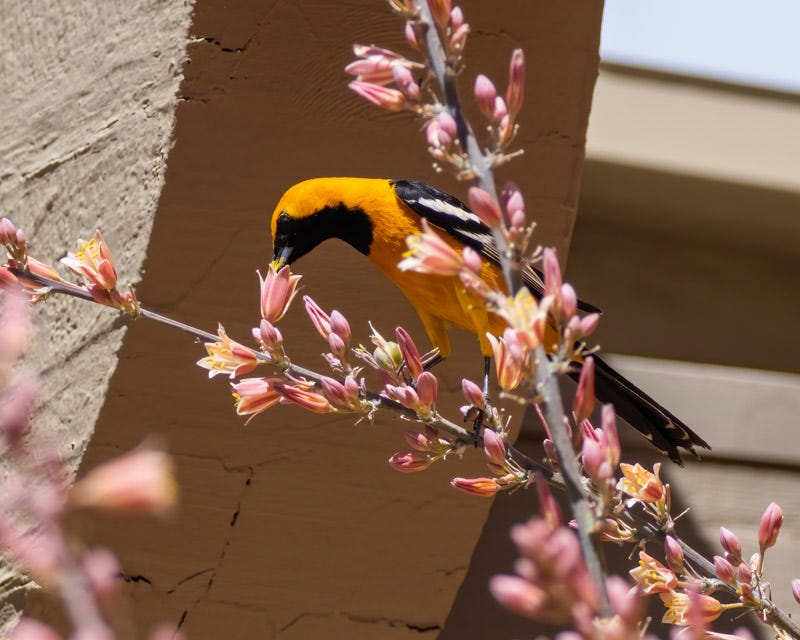
One friend living just six streets down from me has had nesting Hooded Orioles for many years now but they had never visited my yard in the past. Then, last summer, another friend one block up from me had a pair of Hooded Orioles that nested in a fan palm in his yard. That pair began visiting my feeders regularly. This April, the same pair (I assume) appeared once more!
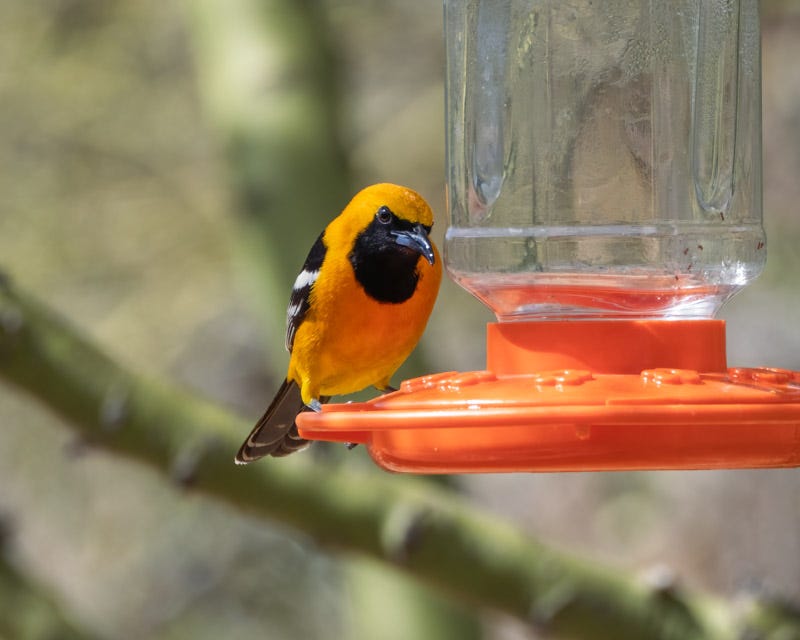
These birds are stealth feeders. They never linger in trees before hitting the feeder and they never stay around afterwards. The only time they will stop in the palo verde tree is if a Gila Woodpecker is at the feeder. Then, they will perch in the palo verde tree and wait for their turn.
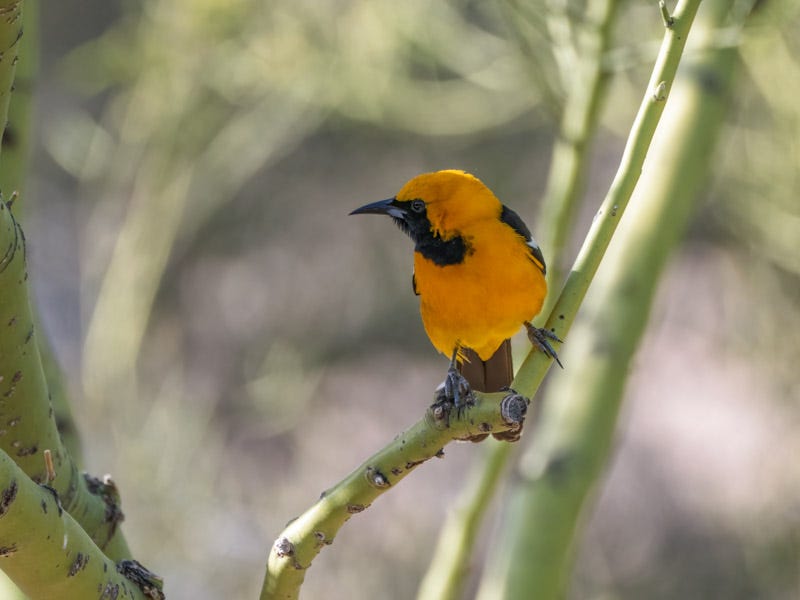
As soon as the Gila leaves, the Orioles will go to the feeder. The male Hooded Orioles have an orange/yellow hood that contrasts with the black bib on their face and neck.
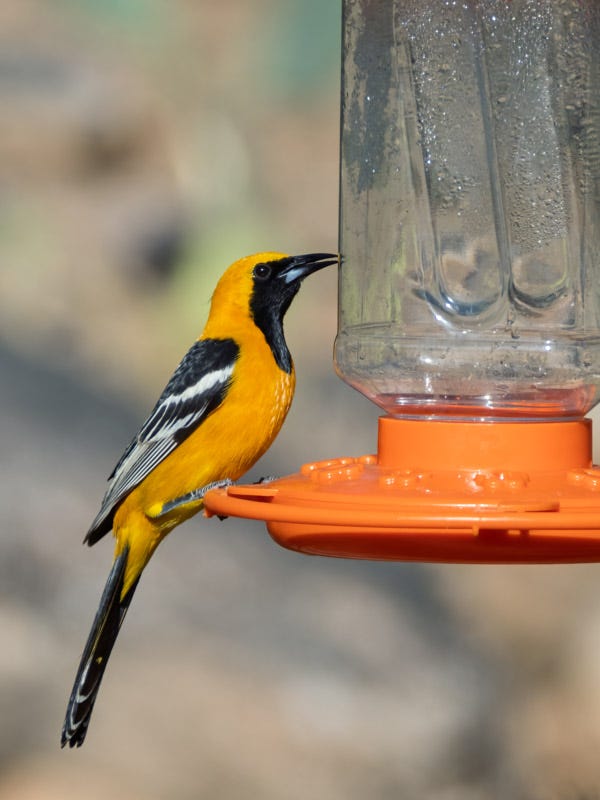
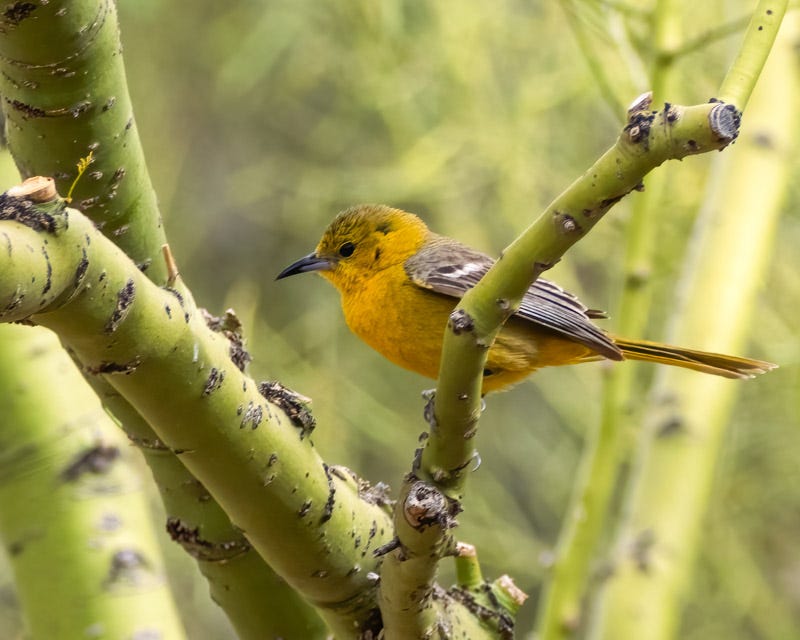
Female Hooded Orioles are a pale yellow. They are long and sleek like the males but this shot shows one in a more plump resting position.
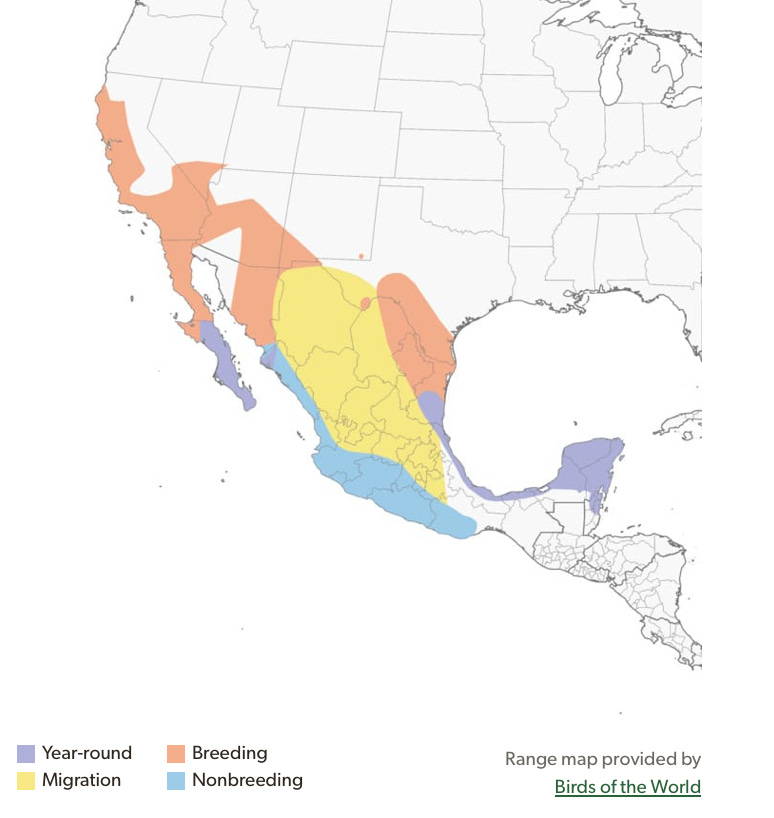
Hooded Orioles are found in the Southwest during the summers as this AllAboutBirds range map shows. They build their nests by sewing a bowl to the underside of a fan palm leaf. Some people have called this species Fan-palm Orioles or Palm-leaf Orioles as a result of this behavior.
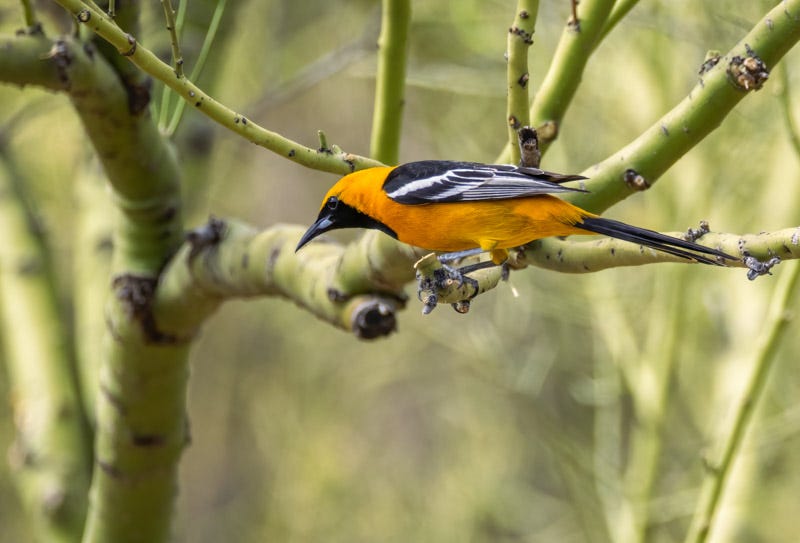
The Oriole came flying into the palo verde tree out of nowhere and immediately positioned himself ready to get to the feeder.
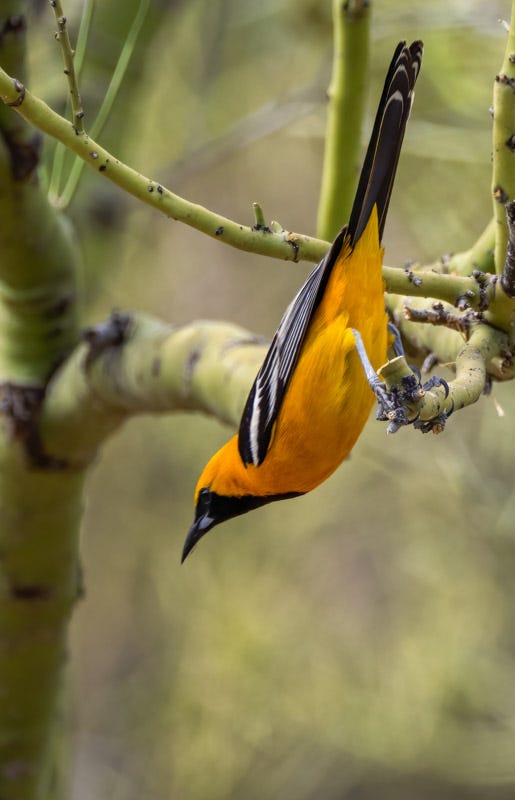
The moment the Gila Woodpecker left, the Oriole dropped down.
At times, the Oriole would move from hole to hole in the feeder, as if it were going from flower to flower. It was always wary. If it caught sight of me, even from a distance, it would fly off.
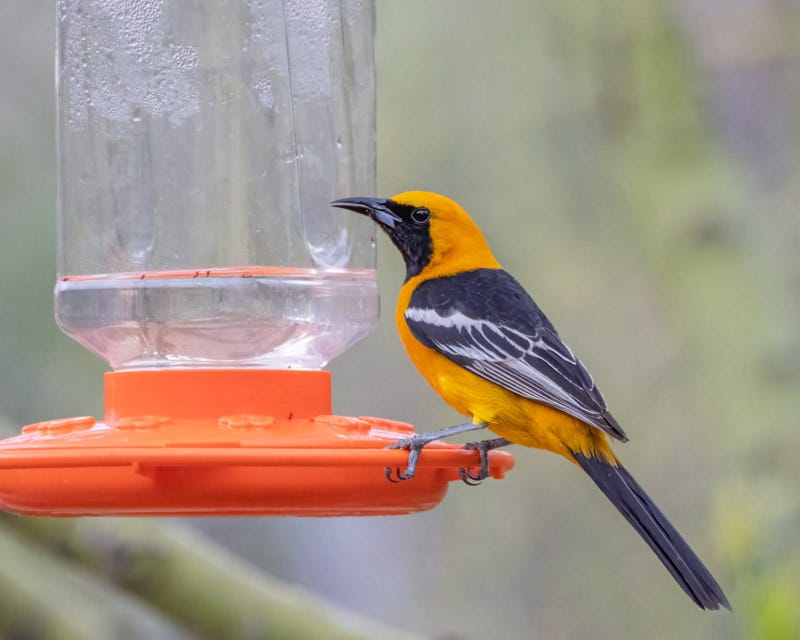
And the moment it finished feeding it would dart off, flying across the desert and over houses in the next street. I wish it would hang around a bit, but is a dine-and-dash bird. As bright as it appears, it seems to be a very inconspicuous bird often remaining hidden. I know it is coming in to feed when I hear its call and that’s how I know to look for its sudden and brief appearance at my feeder. You can hear some of the Hooded Oriole’s songs and calls at AllAboutBirds here.
Lucky for us you were able to catch such good shots before the dash! Thanks Dan
Beautiful! You described their feeding behavior perfectly.