

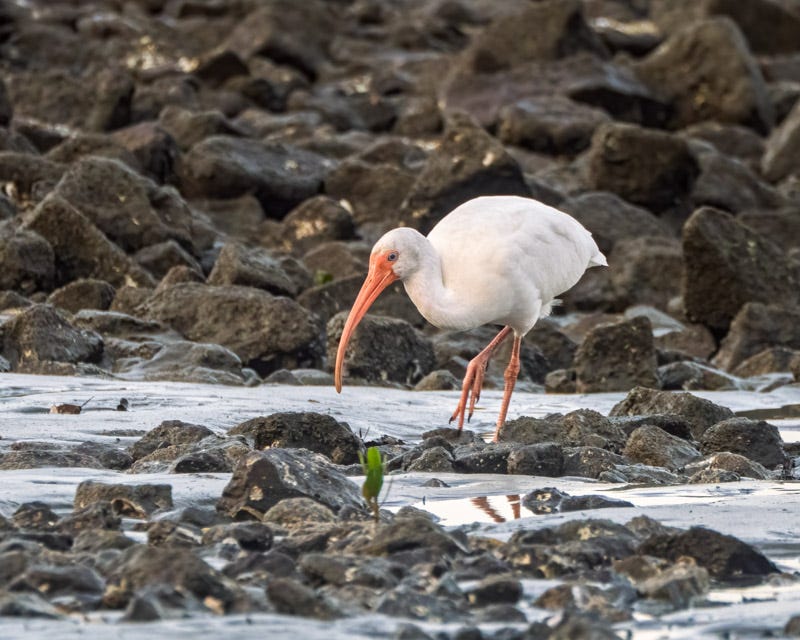
In February on the last two nights of our weeklong trip to Panama, we stayed at a hotel on Playa Bonita about 11 miles southwest of downtown Panama City. It gave me a chance to look for ocean birds on the Pacific Ocean side of Panam. I was able to spot a number of birds near the rocky western end of the beach. Many birds were feeding in that area, including this beautiful White Ibis. At times, it was very crowded on the rocks and there were four Ruddy Turnstones in front of this Ibis.
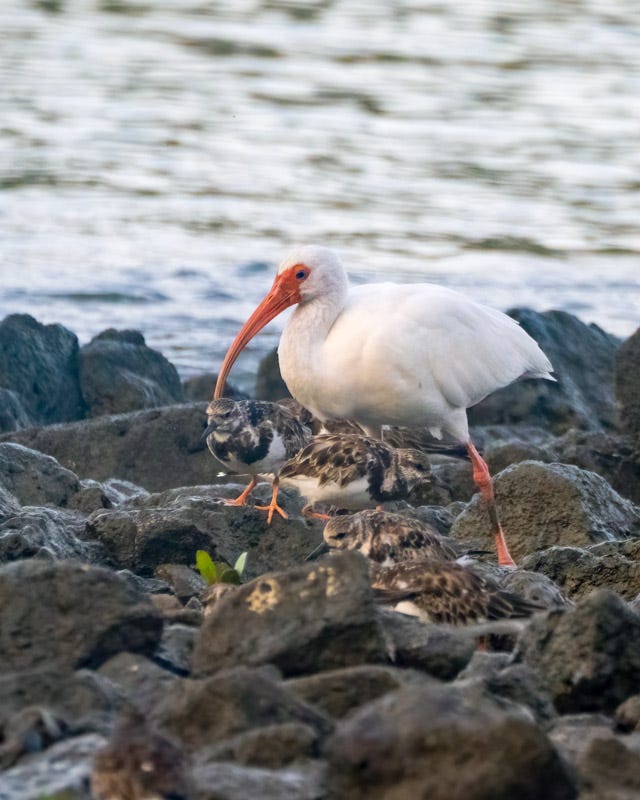
It was just after sunrise and low tide- a prime feeding time. As they do, all of the birds were in constant motion during this feeding window. The White Ibis moved around constantly finding things to eat. In the US, this species is found on the Gulf Coast and the southern Atlantic coast. (See their range map here.)
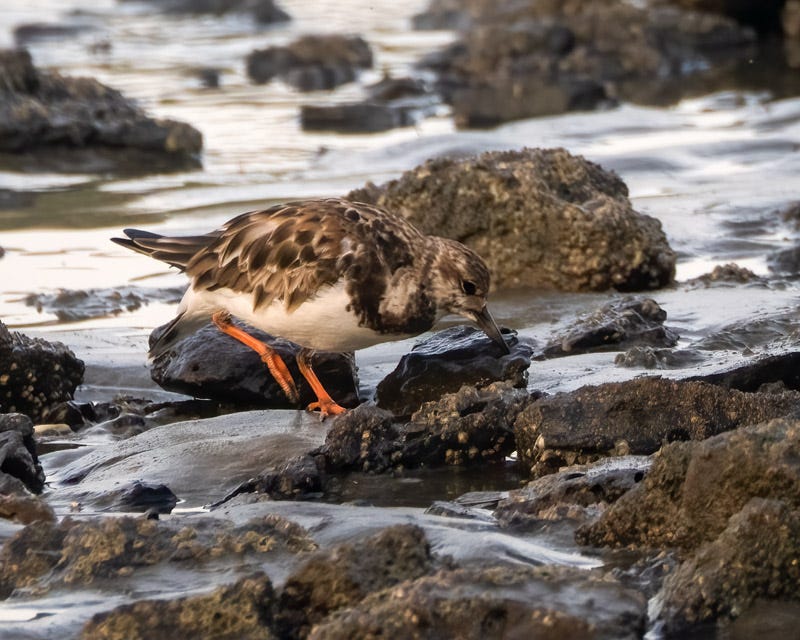
Meanwhile, the Ruddy Turnstones continued to find food in shallow water among the rocks. During the breeding season which beginns in May, many of the feathers on the back of this bird will have turned that ruddy color that gives the bird its name. However, to see these birds in breeding plumage you have to travel to the Arctic tundra where their breeding range exists. These are long distance flyers! (Click here for their range map.)
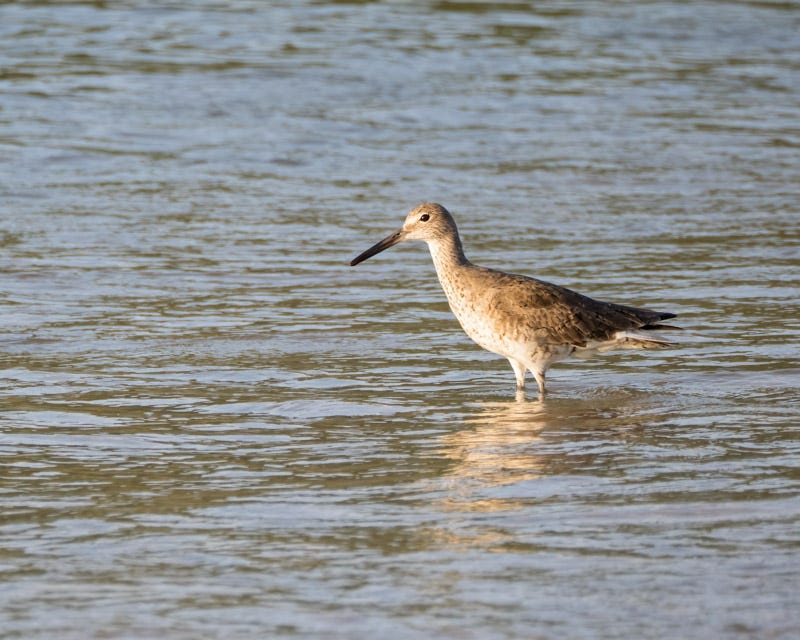
Willets are large common shorebirds along the coasts of most of the Americas. With their shape and thick long bill, they are fairly easy to recognize. The ends of their bills are sensitive with specialized nerve endings. This helps them to locate hidden prey in the wet sand through touch and vibrations. (Range map here.)
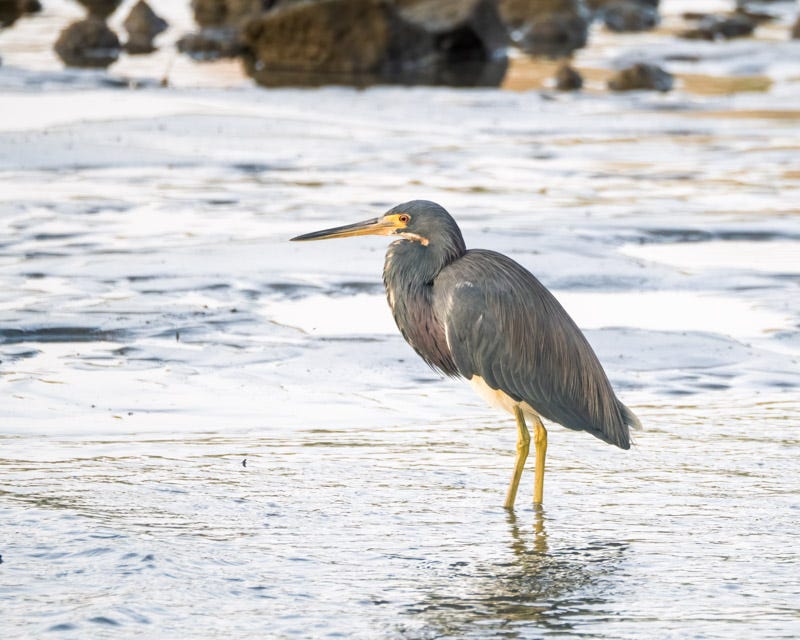
The Tricolored Heron looks like many other Herons. It was named for the three colored plumage that it has. The colors become more vibrant during the breeding season, which happens once the rainy season begins. At that time the lavender/purple chest plumes are more visible against the gray/blue feathers of its neck, back and upper wings. The white belly, color number three, is not visible in this profile photo but it was there. (Range map)
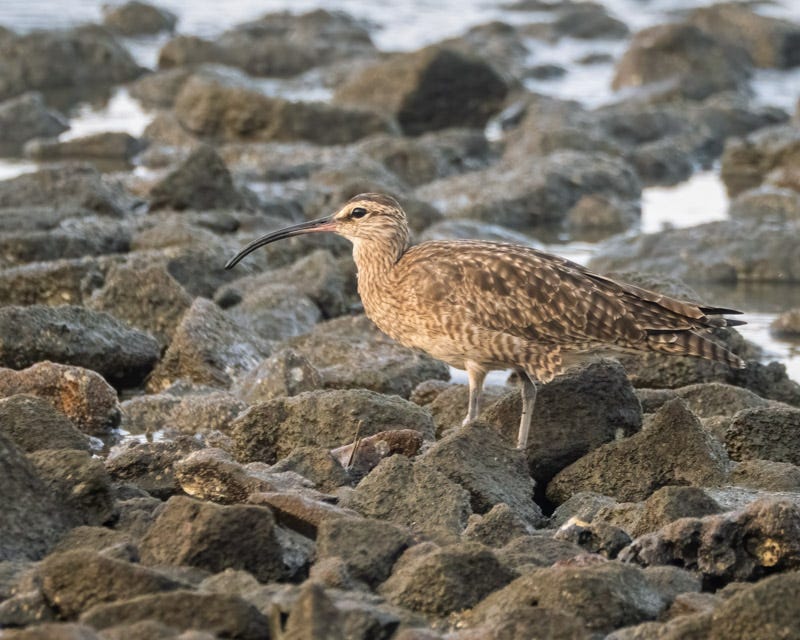
Long-billed Curlews are always a delight. That long bill is so unusual. Their bill, like that of the Willet, has a very sensitive tip that helps them to find prey in the wet sand. The curved bill allows them to rotate their bills under the mud to probe a wider underground area than a straight bill could and the curve allows the Curlew to follow the contours of burrows in the mud. (See range map.)
Brown Pelicans are a bird of our coastal waters. They will fly low over the waves in single file, and then plunge headlong into the water in pursuit of fish. By the early’70’s, they were an endangered species. DDT and other pesticides decimated the population of Brown Pelicans. The federal banning of DDT allowed this species to survive and now they are found along both the Atlantic and the Pacific coasts of America and down the coastlines to the northern part of South America as their range map shows. Here, they were all gathered on one rock just beyond the mangroves.
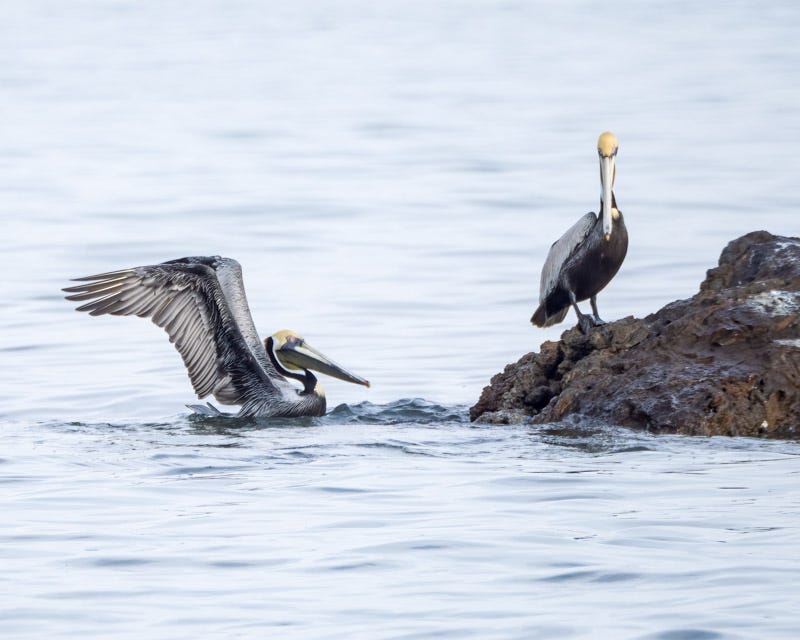
Most of the Pelicans were perched on the rock during the morning when I observed them. I did not see any Pelicans actively hunting, but a few Pelicans would arrive at the rock every once in a while. In the background, you can see some of the large container ships waiting for their allotted time to enter the Panama Canal.
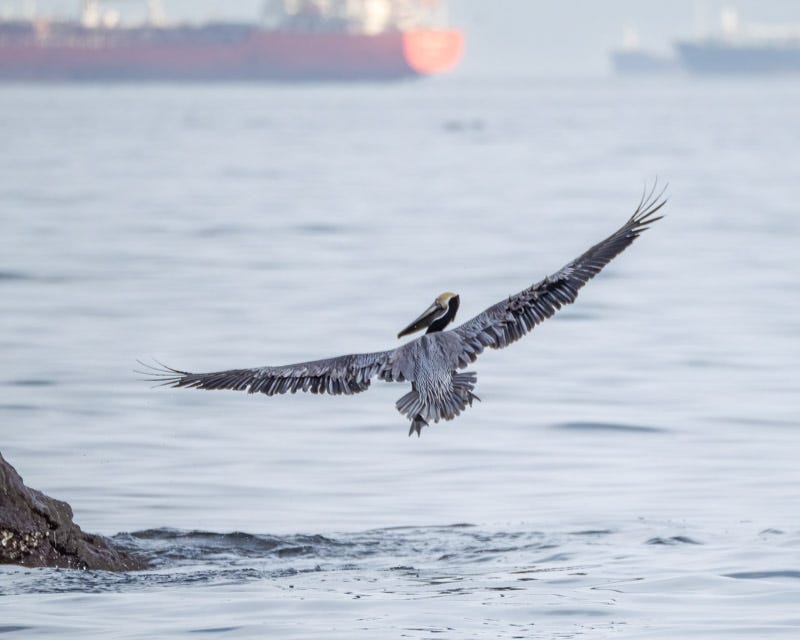
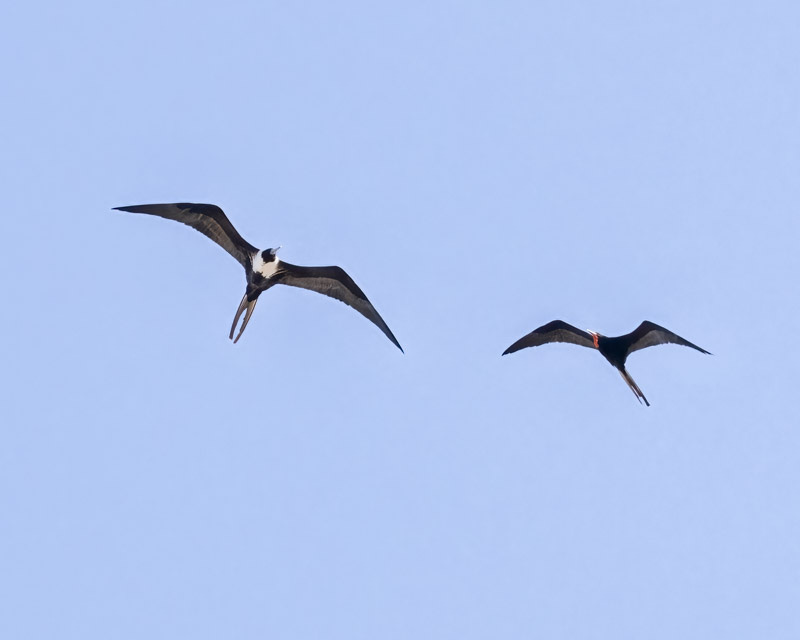
Magnificent Frigatebirds are unmistakable in the air. Their long pointed wings, with a wingspan of 7-8 feet, and their long forked tail give them a unique look. I saw a number of these birds at Playa Bonita, but the two in the photo below were seen during our visit to the Panama Canal locks. The bird on the right is a male as evidenced by the red throat. During breeding season, that red throat patch is inflated into a large balloon-like shape as a courtship display. The bird on the left is a female with her black head and white throat. (See their range map.)
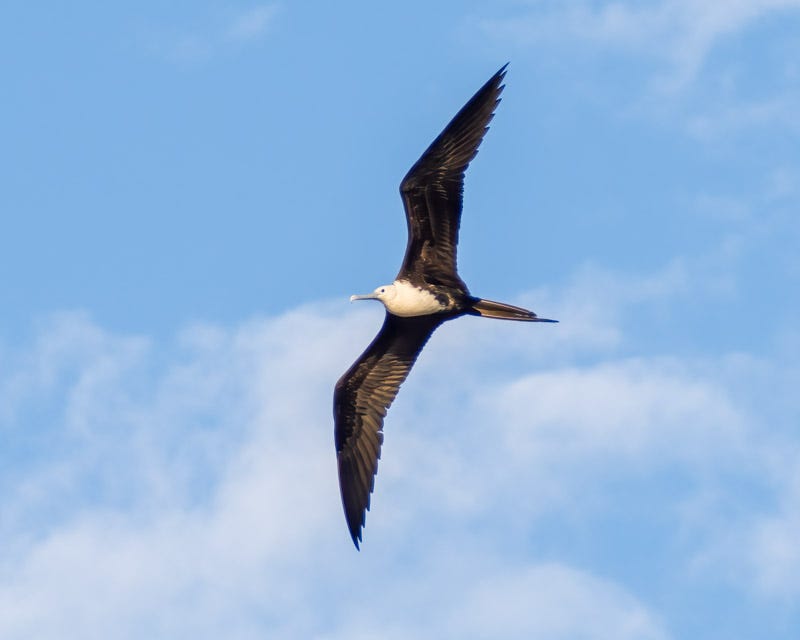
At Playa Bonita, I never saw a male Magnificent Frigatebird. Most of the Frigatebirds soaring there were juveniles like the one below with an all white head. Magnificent Frigatebirds are called “seabirds”, i.e., bird species that are adapted to a marine environment and whose food is primarily from the ocean. Seabirds like Magnificent Frigatebirds are able to safely drink salt water. They have evolved to possess “salt glands“ that allow them to extract excess salt from the seawater that they drink.
None of these birds are regular visitors to the Tucson area so it was a treat to see them. Willets are uncommon here but may be present during migration season. Long-billed Curlews are also uncommon in our area.
Nice selection, as usual.
I love seeing Herons and this is one I have never seen before. Beautiful pictures! Thank you Dan