

Lesser Nighthawks come to southern Arizona to breed every summer as this range map from AllAboutBirds shows. While the word “night” is in their name, they primarily hunt at twilight, during dawn and dusk. In flight, you can see their long, pointed wings and the white bars along the outer edge of their wings. They also have a white stripe across their necks. Lesser Nighthawks have a long notched tail but only the males have a white stripe across the end of their tails.
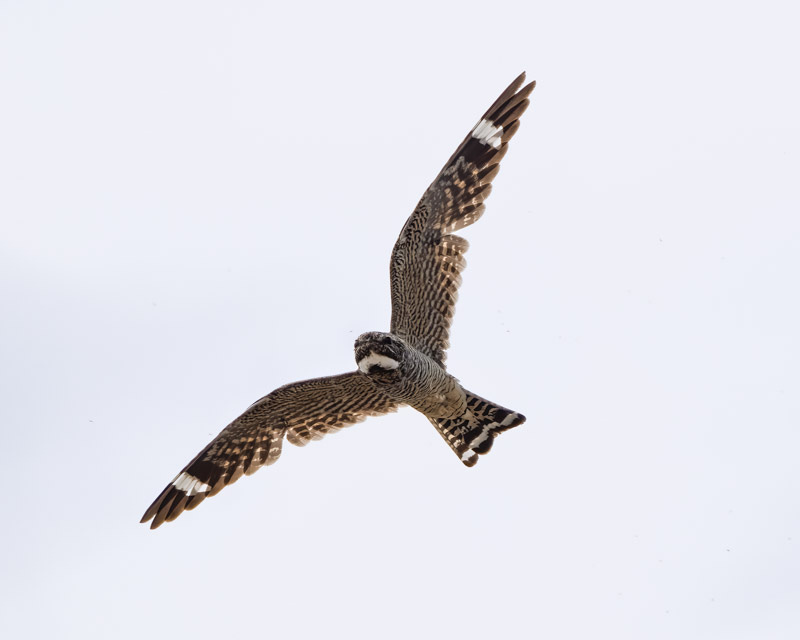
Lesser Nighthawks have a buoyant, erratic flight. They maneuver rapidly, alternating short glides with quick, snappy wingbeats. All of this is done in order to find and snatch flying insects mid-air. It is mesmerizing to watch them in the air. (Also, fyi, these birds are not hawks, despite their name. They catch flying insects at a high speed, a behavior that is called ‘hawking’.)
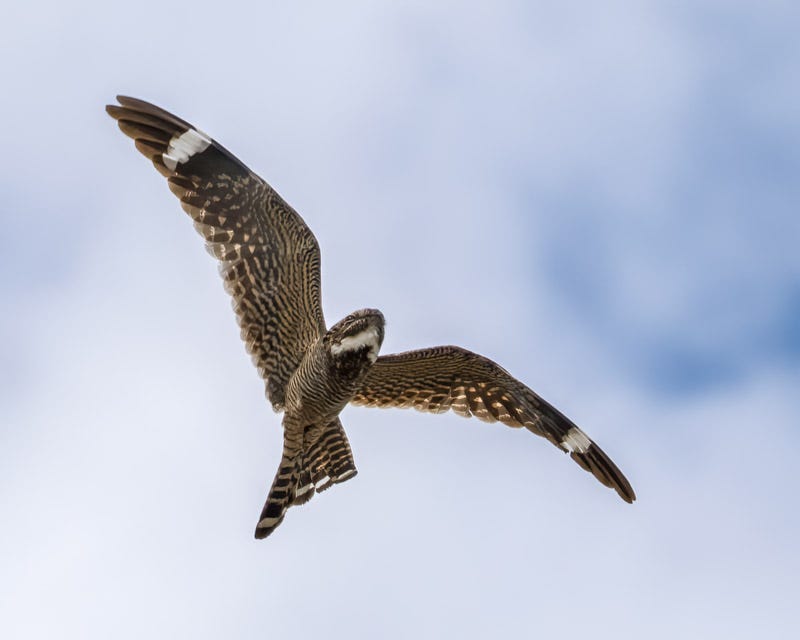
Monday morning after last week’s rain (the first good rain of the summer), I left my house at 10:30 to run errands when suddenly I saw many Lesser Nighthawks hunting in the sky. I stopped the car and jumped out with my camera to watch the show overhead. Why were all of those birds hunting that late in the morning?
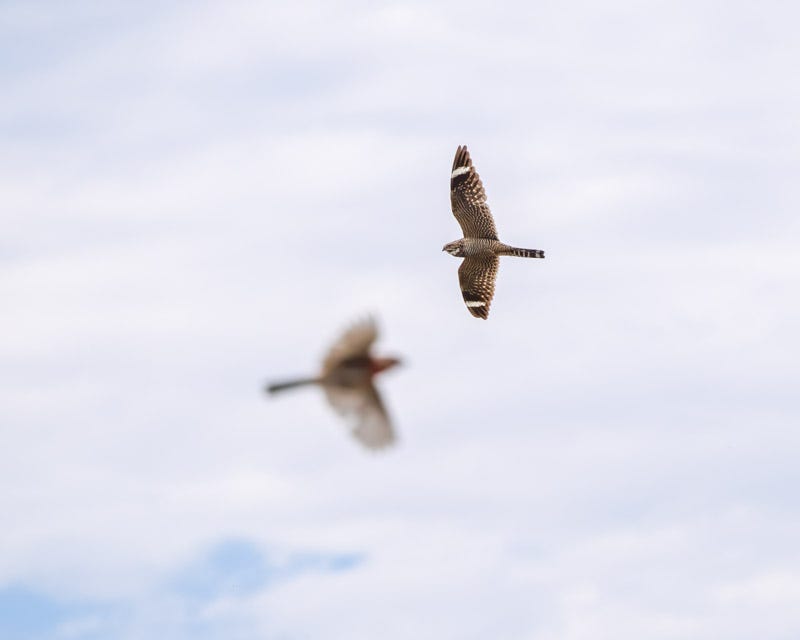
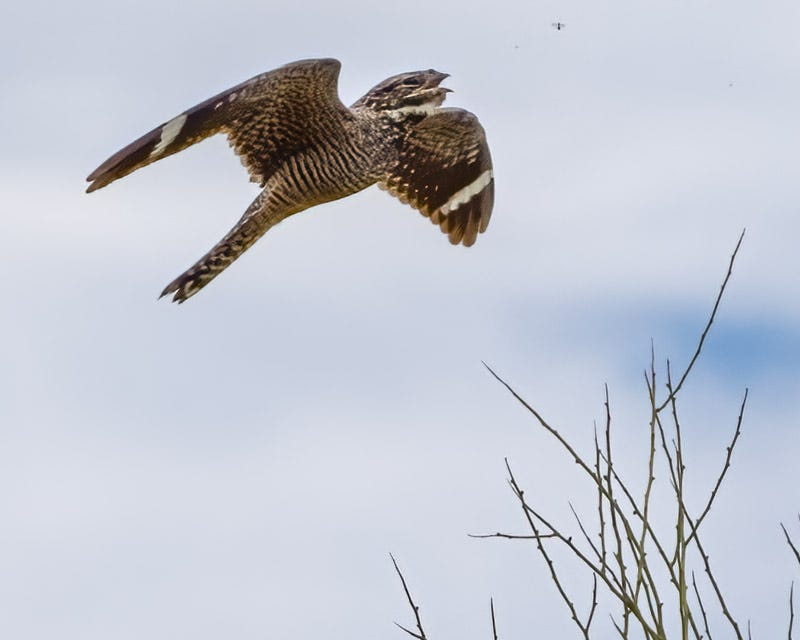
The Sunday night rains happened at sunset and lasted until dark. The Lesser Nighthawks had not been able to hunt then. The following morning, it also sprinkled at sunrise, limiting the hunting window. The strong summer rains led to swarms of insects in the air. Subterranean termites and harvester ants are known to swarm after our summer monsoons. I believe that the timing of the rains prevented the Nighthawks from hunting at their usual time, and then the swarms of flying insects led to a bounty of food for the hungry birds. The bulkiness of the insect in the photo below seems to indicate it is an ant and the Nighthawk is flying low, just over a palo verde tree, to capture this insect.
It was partly cloudy, with some blue sky along with thick clouds. The variable sky provided a variable background to my photos. The birds’ erratic and fast flight made it a challenge to track them across the sky.
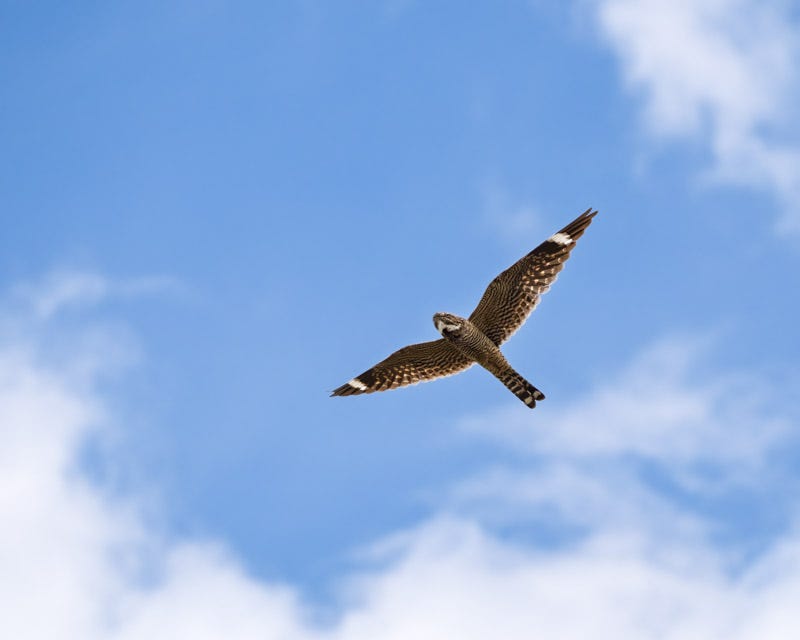
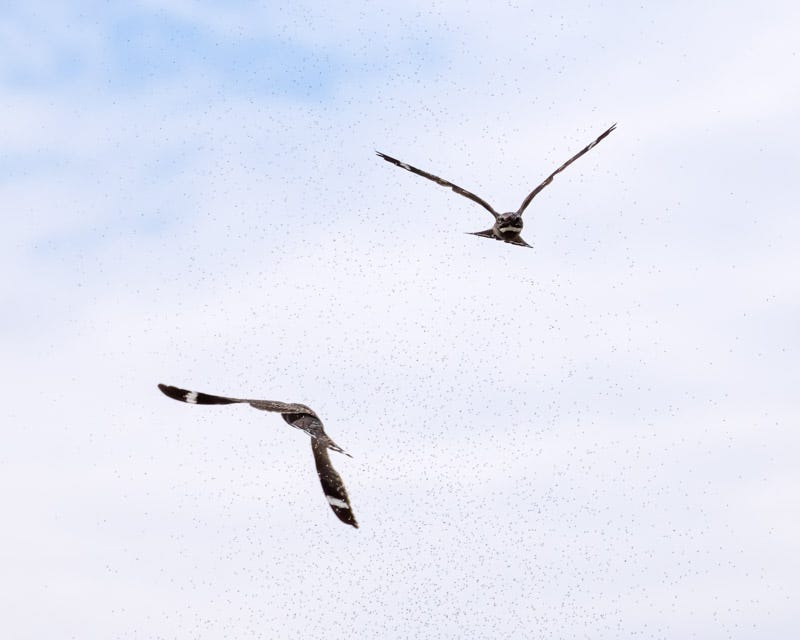
I spent quite a while shooting, walking along neighborhood streets to ‘follow’ the Nighthawks’ unpredictable and wide-ranging hunting area. Although I never saw a single insect with my eyes, the camera captured what I couldn’t see in real time. Look at the swarm of insects these two Nighthawks were feasting on!
Again, in real time I could not tell when a bird was grabbing a bug out of the air. A Nighthawk does not fly with its mouth open at all times. It keeps its mouth and bill shut until it spots an insect, and then opens it to scoop up the bug on the move.
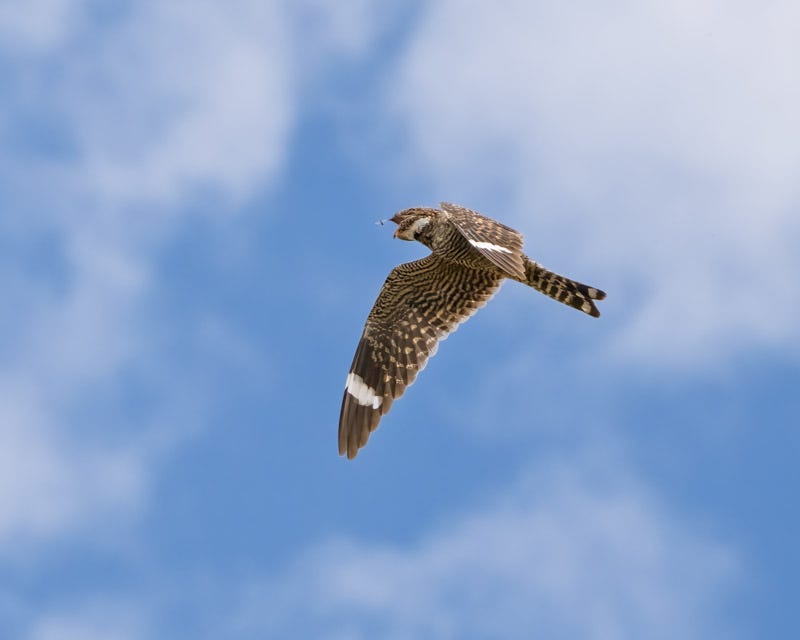
With their variable flight, sometimes the wings are held out straight, sometimes they are pointed, sometimes they curl down to change speeds or turn in the air. The flying appears effortless but it is non-stop as the Lesser Nighthawks hunt while they can before it gets too hot to fly.
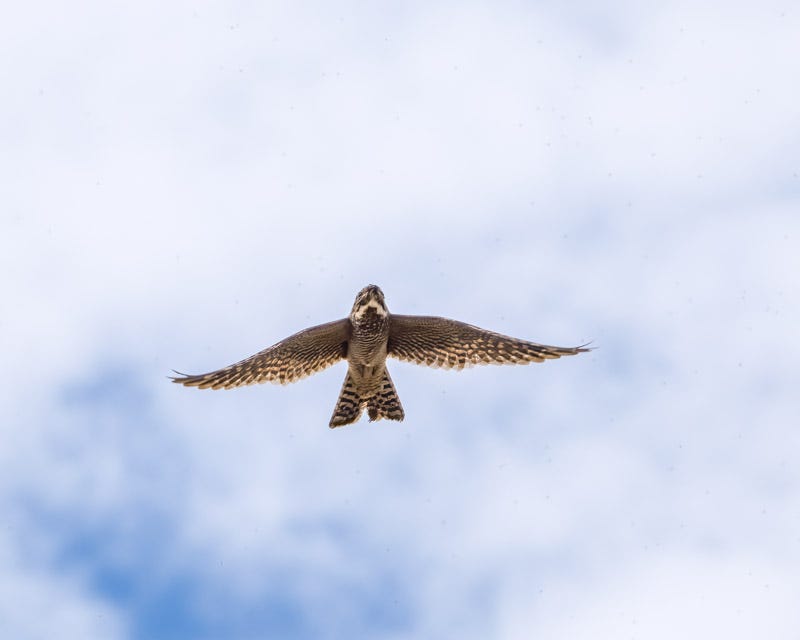
Here you can see the continual adjustments made in the air in order for the bird to successfully grab a flying insect. Despite having a tiny bill, the Lesser Nighthawk opens its mouth incredibly wide to create a large “net” to capture its prey. The inside of the bird’s mouth is lined with tiny hairs to help trap the bugs.
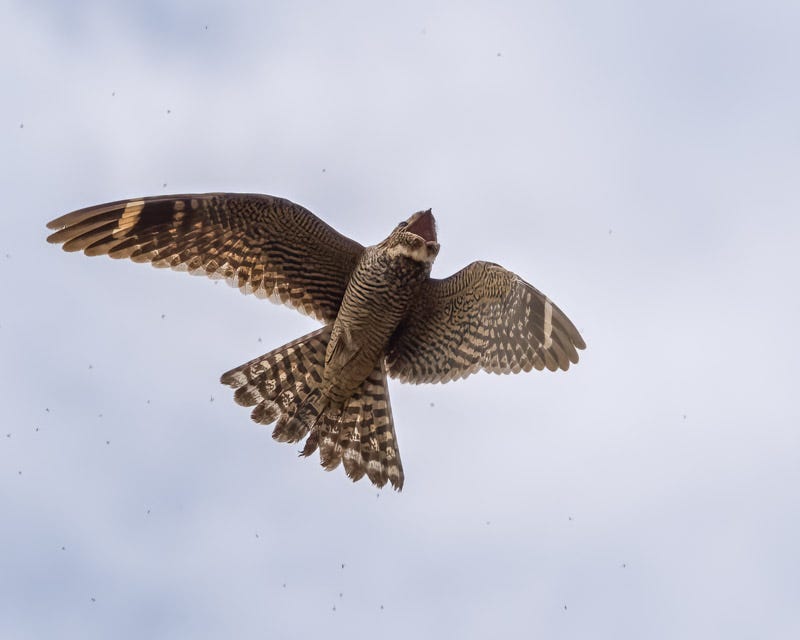
This Nighthawk is also molting its feathers. You can see the symmetrical gaps in its flight feathers where the feathers have fallen out. You can also sense the aerobatic twisting of the bird with each of its wings held out differently.
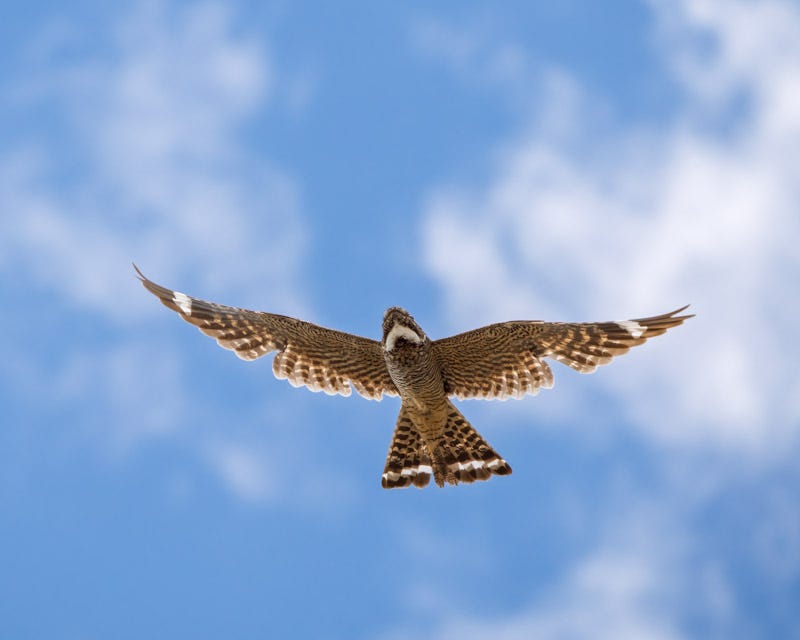
One other cause for Lesser Nighthawks to hunt during the day may be hungry young. Both male and female provide food for the young who are dependent on the parents to feed them for the first weeks after they hatch. The parents may need more time than usual to find food resulting in their continuing to hunt for food during the morning daylight hours.
For more on Lesser Nighthawks, you can revisit my post from last July at Tohono Chul Park after sunset.
During Covid in 2020, I had a very good Lesser Nighthawk summer. Early on I had good fortune to see a number of different Lesser Nighthawks. Their photos were shared in this post at the beginning of June.
Just a few weeks after that 2020 post, a friend told me about her neighbor who had a nesting Lesser Nighthawk just beyond her backyard wall. Here is the post with some very special looks at a Lesser Nighthawk chick!! One week after that post I returned to the Nighthawk’s “nest”. The chick was noticeably more active. The experience of observing those birds that summer remains one of my favorite personal photography experiences.
I appreciate seeing the aerial movements we can't see with our eyes. Thanks. A few years ago a large storm front passed over from the north. Riding directly in front of the towering line of clouds were thousands of nighthawks riding the draft from the storm. They were seen from the Mississippi River east for about forty miles to near Reedsburg in Wisconsin. There were countless birds from above tree tops to so high they were specks in the sky. It was unforgettable and much commented on here so we had an idea of how massive the bird movement was.
Beautiful pictures and such beautiful markings of the feathers. So enjoy the pictures and the commentary. Thank you Dan!