

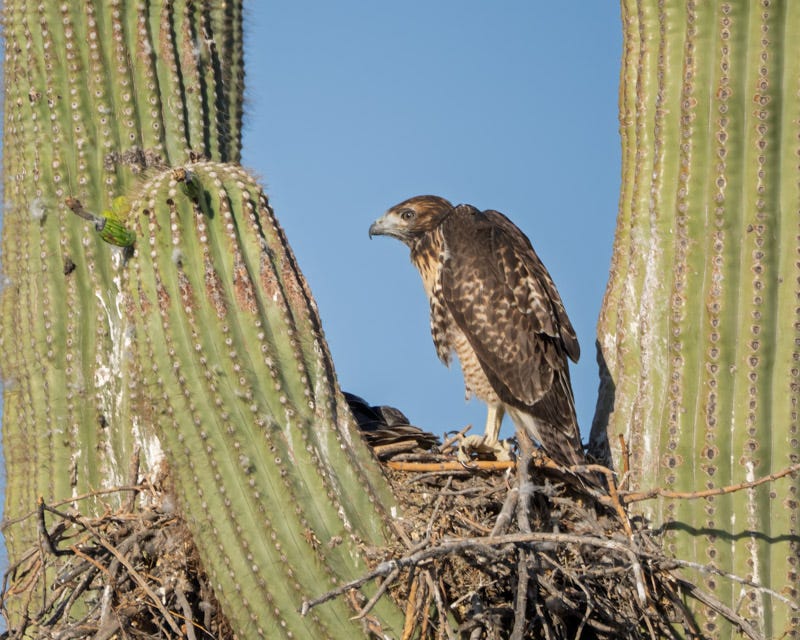
A friend told me about a Red-tailed Hawk nest outside of Tucson. The nest was in a saguaro cactus, always a special type of nest to see. We don’t have many large trees in the Sonoran Desert so raptors of all types may build nests in the large structures that saguaro cacti offer. We parked near the site and walked into the desert a quarter of a mile or so towards the saguaro. We kept our distance but our telephoto lenses allowed us to “get a closer” look. We could see two juvenile Red-tailed Hawks, one in the nest and one on an arm of the cactus. Noticeable were the white dots of down feathers on the saguaro spines. Those feathers were the natal down from when the Hawks first hatched. As their next set of feathers grew in, the down feathers were pushed out and some have blown into and gotten stuck on the saguaro spines.
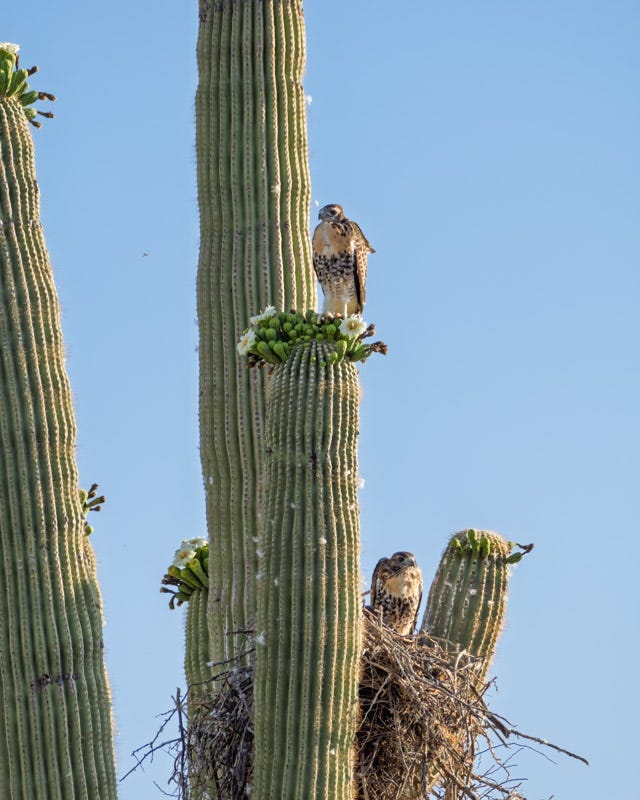
As we quietly observed the nest, one of the parents came flying in from a very distant saguaro perch.
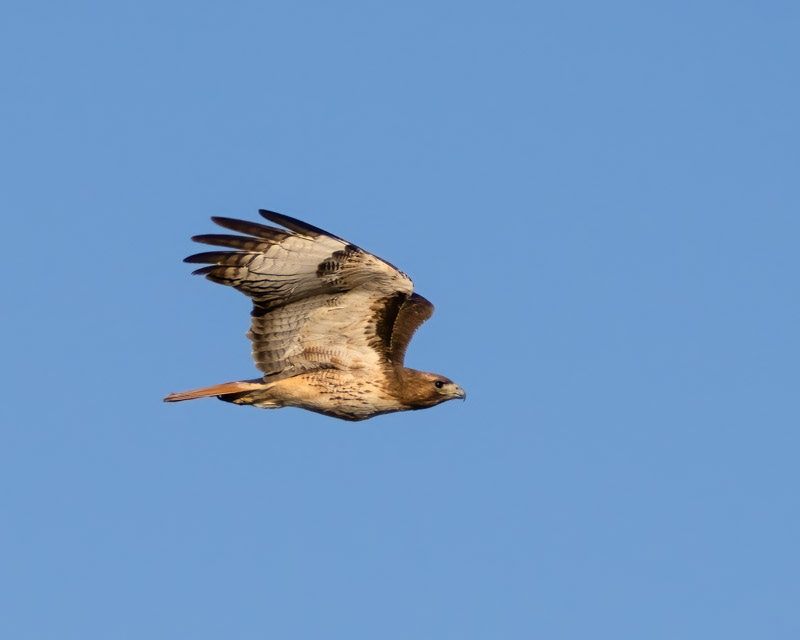
She landed on a saguaro about 40 yards away from the nest.
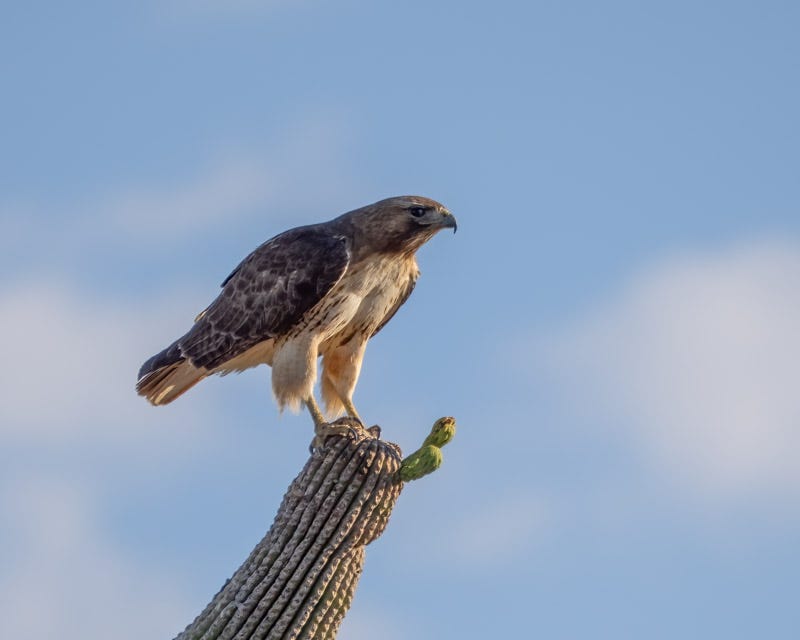
The angle of the sun from her perch left her head in shadow but she was alert. You can see her brood patch. That is the long part in her breast feathers. As mother birds go through hormonal changes approaching nesting season, they lose the feathers on their breast. This provides a brood patch that allows her to sit with her bare skin directly touching the eggs (and later the hatchlings) to aid in keeping them warm. She watched for a while and then flew off further to the east.
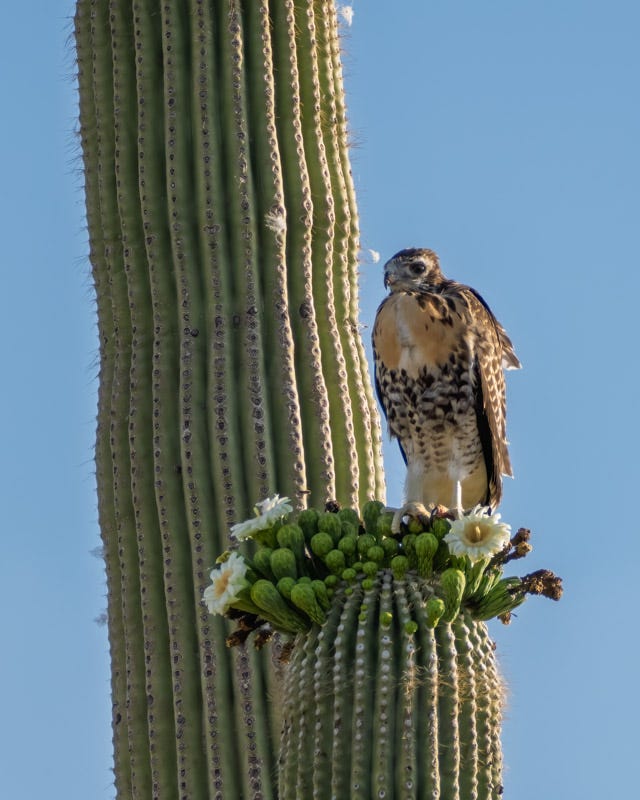
Back on the saguaro nest, one of the young birds was out of the nest on an adjacent saguaro arm. The fledgling Red-tailed Hawk had very pretty plumage.
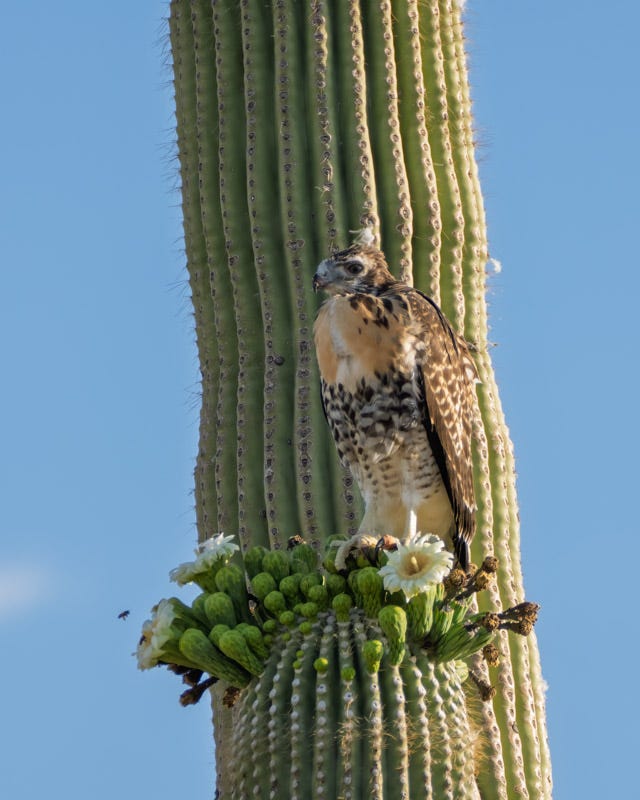
Here is another shot, taken from a step to my left so that the Hawk’s image is now surrounded by blue sky rather than against the green cactus.
A second bird was standing on the nest. You can see that much of the surrounding saguaro is covered in what we politely call “whitewash”. The nest looked large and likely is several years old by now. In addition, there was a third young Redtail but it remained napping in the nest, laying down during our short visit.
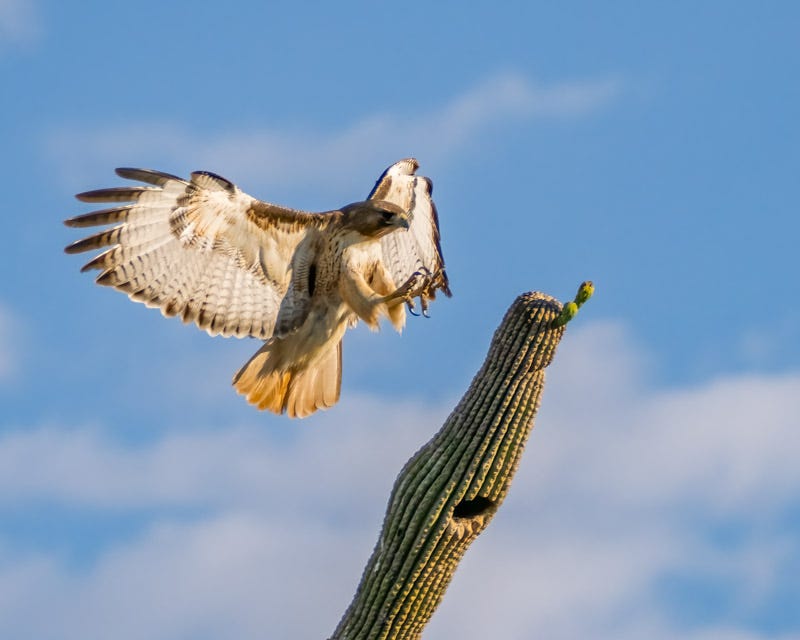
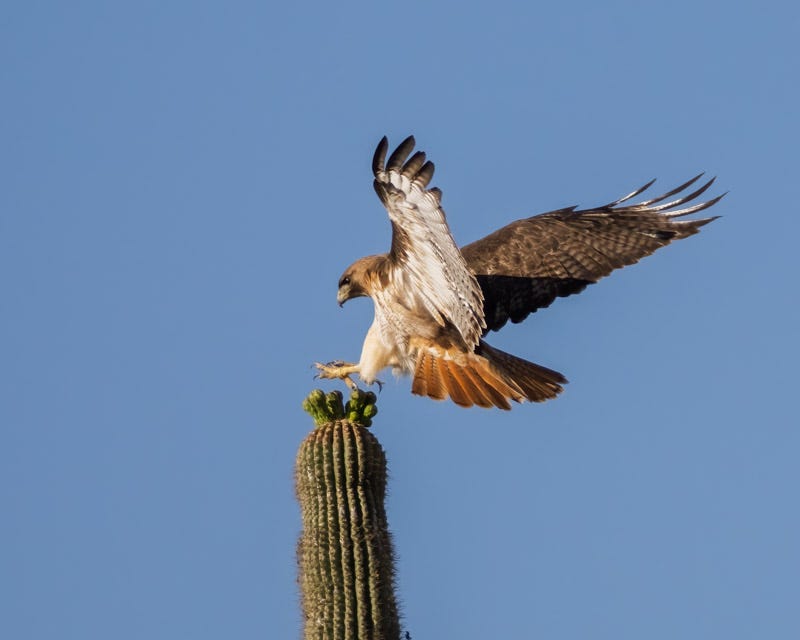
Mom had flown off but about ten minutes later Dad came flying in from the west. As he braked in the air to land, you could see the rusty colored tail feathers that give this hawk its name.
Dad was not too happy that we were in the vicinity of the nest. He voiced his concerns non-stop. If you’ve ever heard the call of any raptor in any TV show or movie, you’ve heard the call of a Red-tailed Hawk. For whatever reason, Hollywood seems to feel that the Redtail’s call is what every raptor should sound like. Birdnote tells us more about Red-tailed Hawks while sharing the well known call they make.
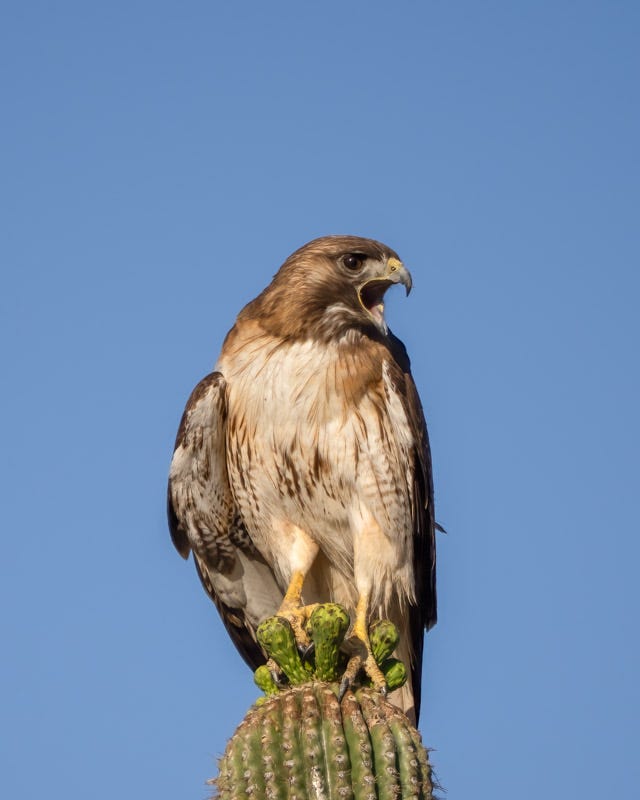
At one point the Red-tailed Hawk closed its nictitating membrane momentarily. I think it gives this bird a ghostly look.
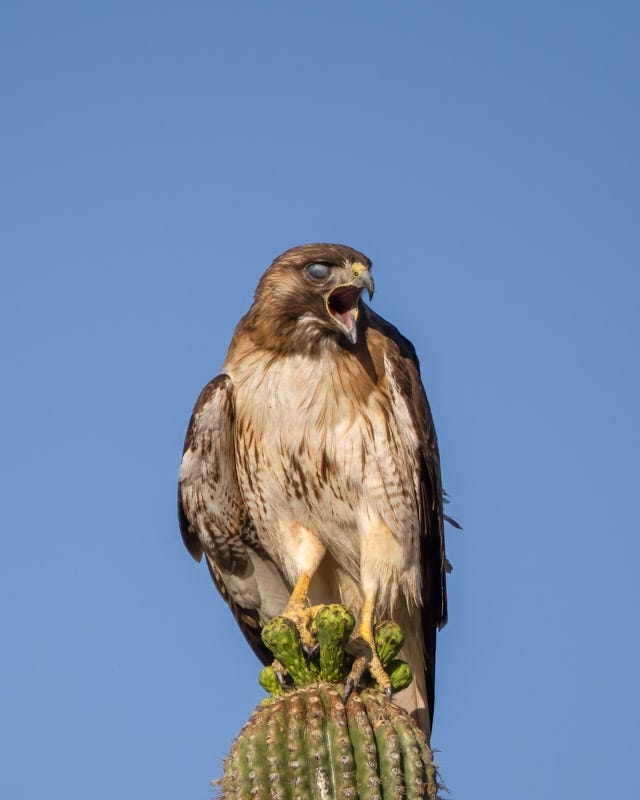
You can see a gallery of many other birds and read about their nictitating membranes at this Birdnote site.
You captured so much detail...of the hawks, the cactus.. Thank you for sharing it all!
Beautiful pictures
Fabulous series! The young hawk standing on the cactus arm covered with flowers is so illustrative of the Sonoran Desert!