

Northern Aplomado Falcons are one of the six native Falcon species in the United States. These Aplomados are listed as Federally Endangered in the US. Their population collapsed in the early-middle 20th Century due to habitat loss and DDT, along with some other causes. Ongoing reintroduction programs in coastal and southern Texas and parts of New Mexico are actively helping the population reclaim their historic range. Around 30 years ago, falconers legally brought the Peruvian Subspecies of Aplomado Falcons to the US for use in falconry.
A good friend of mine is a licensed Master Falconer. She invited me to watch her and her daughter, also a licensed Master Falconer, in a training session with their Peruvian Aplomado. We went to open range in the foothills of the Tortolitas to let “Little Girl” fly.
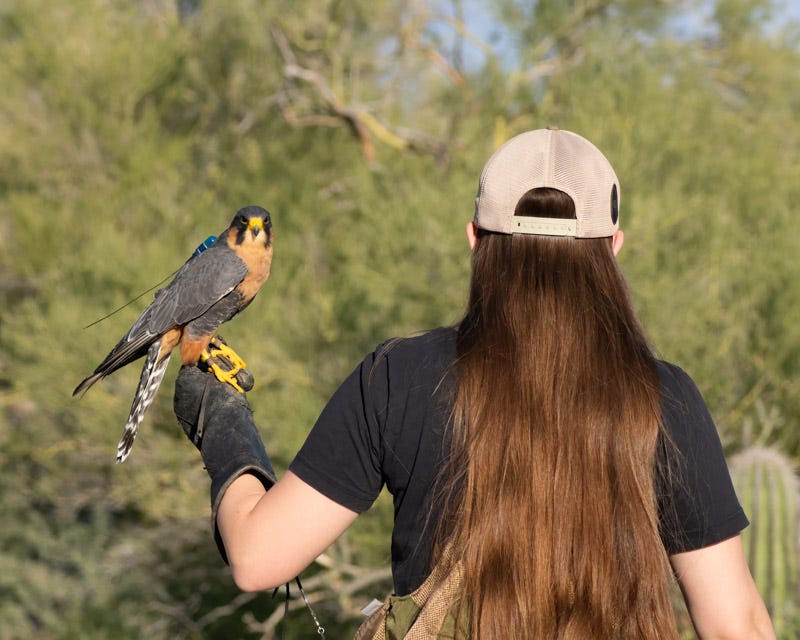
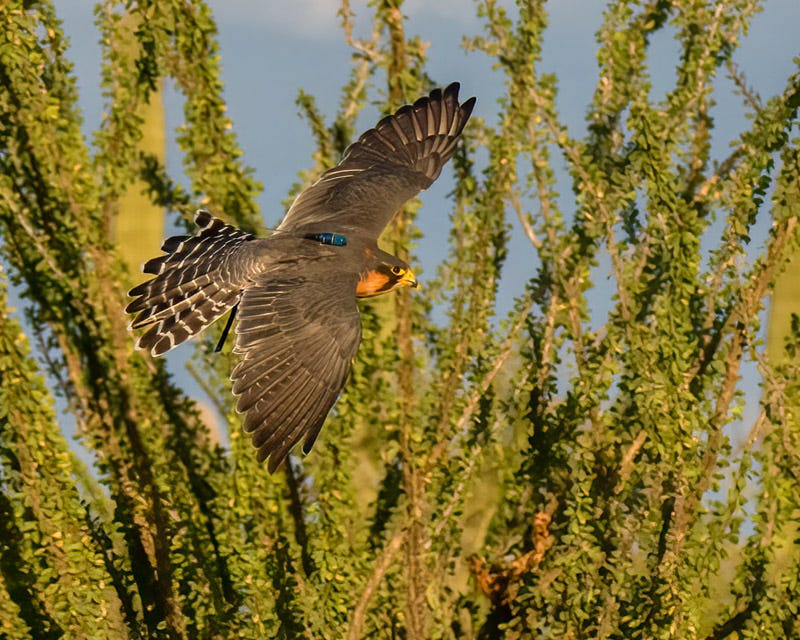
As with all falconry birds as well as raptors in Free Flight Programs, the Aplomado was wearing some equipment as she flew. You can see the GPS transmitter on Little Girl’s back that allows the falconers to track the bird’s flight on their cell phones. Peruvian Aplomado Falcons are generally much darker than the American Aplomado. Both species have a barred black and white tail pattern.
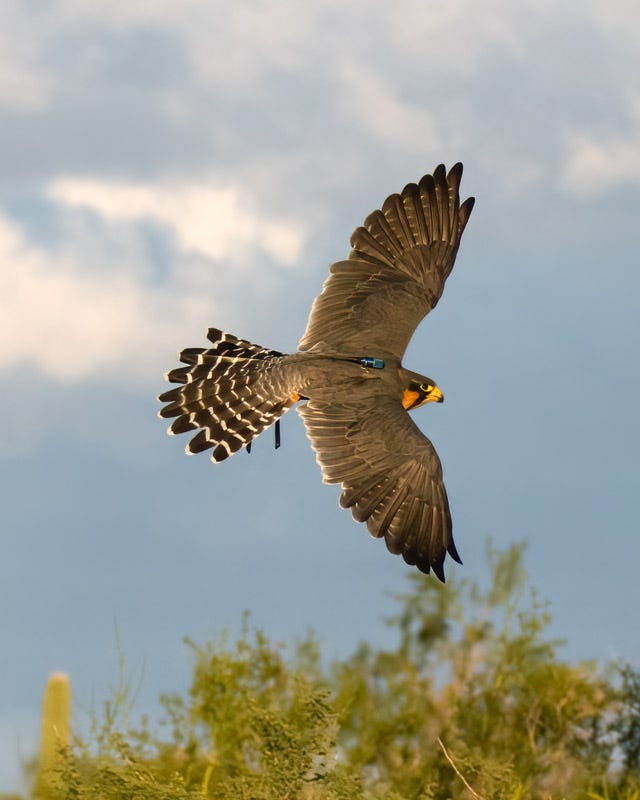
It was fascinating to see how low Little Girl flew through the desert landscape. Her long tail aids in maneuverability as she chases prey using the high speed that Falcons are known for.
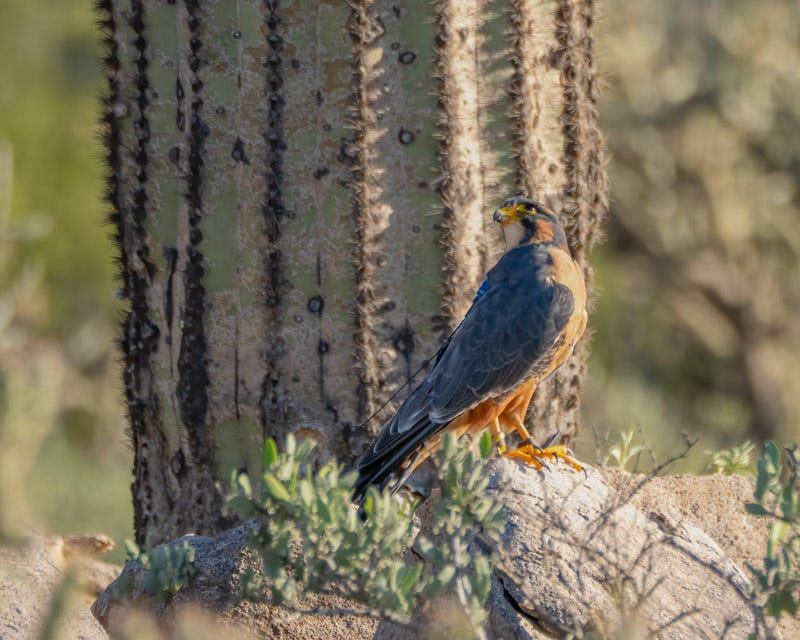
It was interesting to see that Little Girl chose to land on rocks or the ground rather than to perch in trees. Peruvian Aplomado Falcons are able to run fast to chase their prey on the ground. Using rocks or low mounds as perch spots puts the Aplomado directly in her hunting element. Those perches give her an unobstructed line of sight for finding prey but also for seeing any predator approaching from the air or on the ground. Generally, Aplomado Falcons are birds of the open country and not of the forests.
At one point the falconers worked with Little Girl by throwing “tidbits” of meat into the air. This helps to refine her hunting reflexes, build muscles, improve physical conditioning, and to strengthen trust with her trainers.
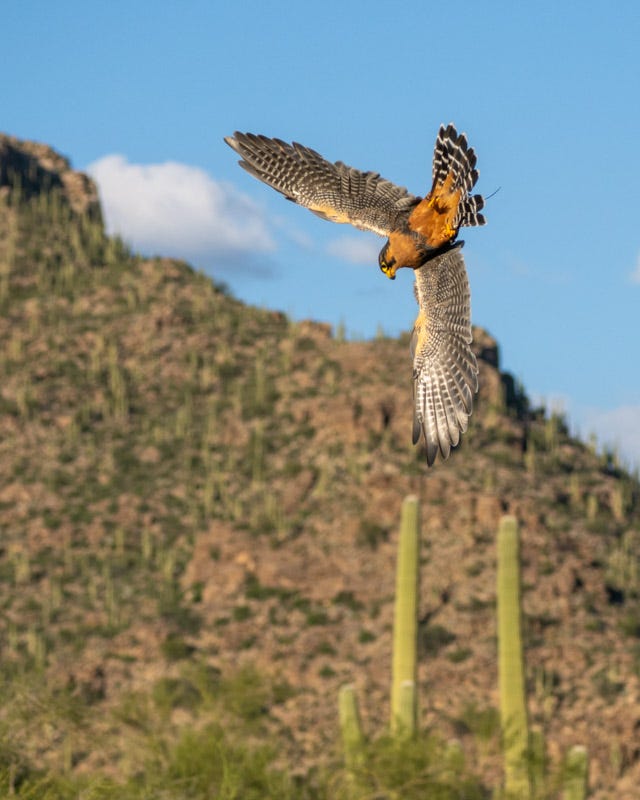
Little Girl chased the tidbit using the same skills she would to catch a bird in the air. You can see her focus and intent.
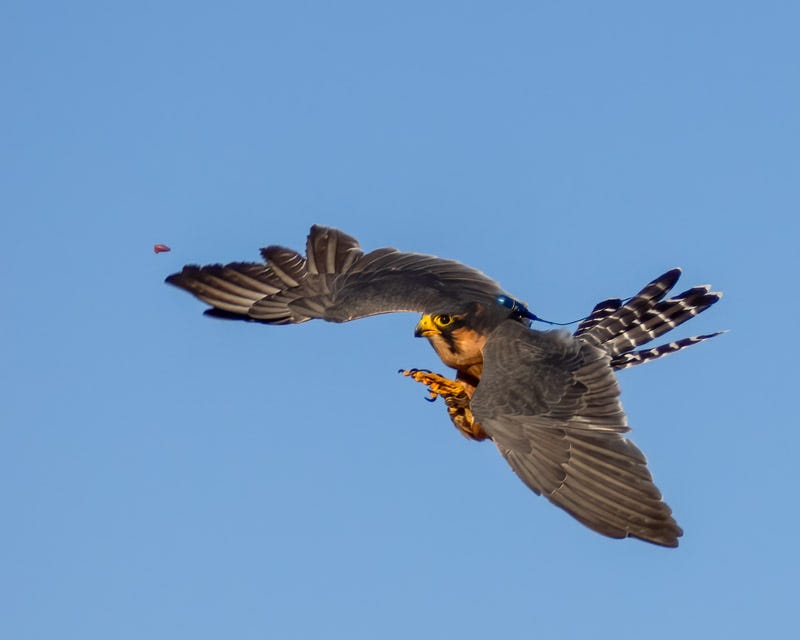
When the tidbit dropped on the ground the Falcon hovered in the air, practicing the hunting technique she would use to capture rodents, lizards, insects and any other ground dwelling prey. In the shot below, you can see some of the other equipment Little Girl was wearing. She was wearing soft leather anklets through which some leather jesses are dangling. Those are used for safety and control by the falconer during emergency situations in the field. If you look closely on her right ankle, you can see the metal band which is her government ID.
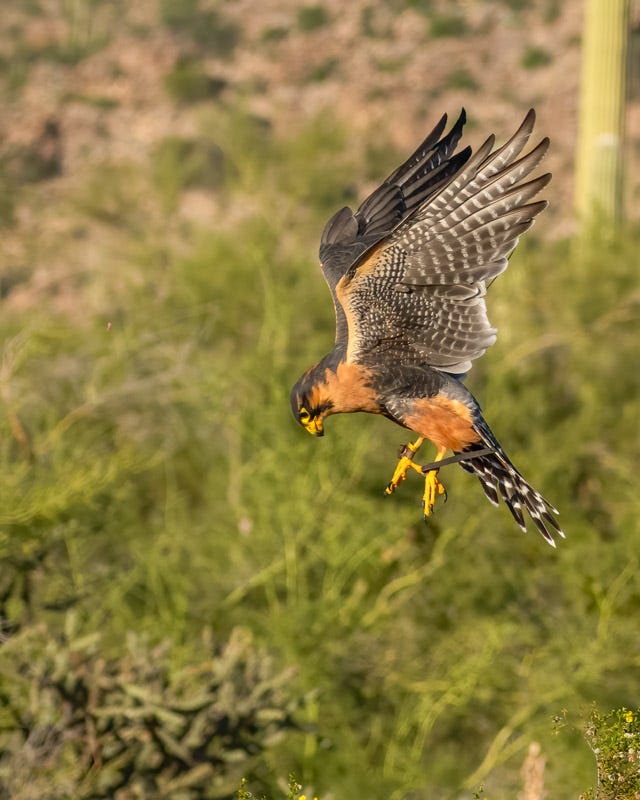
Peruvian Aplomado Falcons have a deep, rich color to their bellies compared to a more washed out, lighter color on the bellies of American Aplomados. You can see the long, pointed wings typical of Falcons. Those wings are built for speed and her wingspan is almost three feet. Aplomados also have the malar stripe- the dark mustache on their cheeks- that other falcons like Peregrines and Kestrels have.
Little Girl found perches near and far, but always on solid earth.
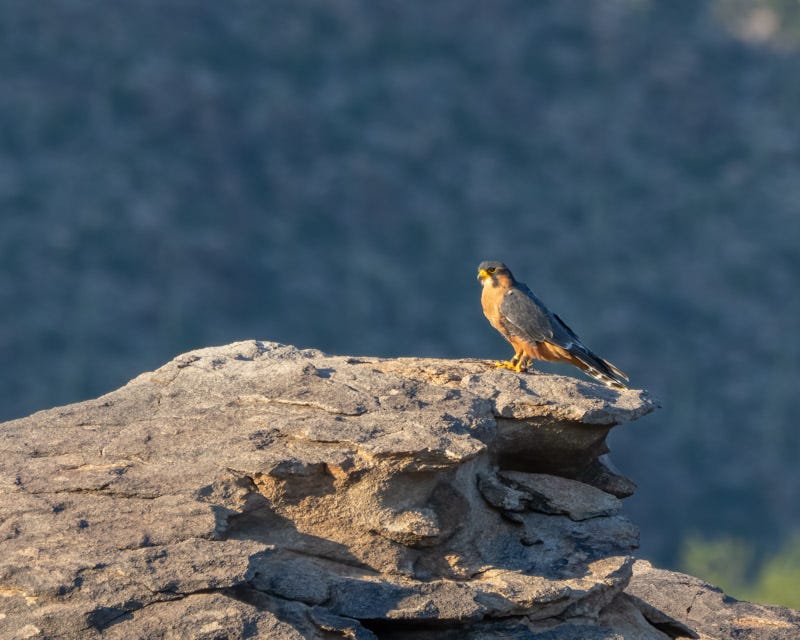
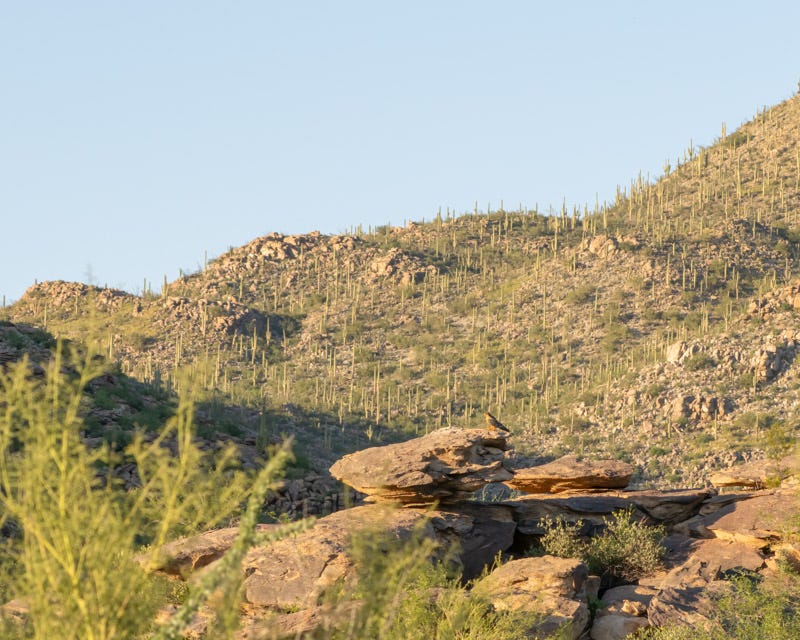
The photo above is a close-up of her on the perch. In the photo below, you can see her on the same perch with a greater view of the setting. You can find her on the right hand side of that large rock with the desert canyons of the Tortolita foothills behind her.
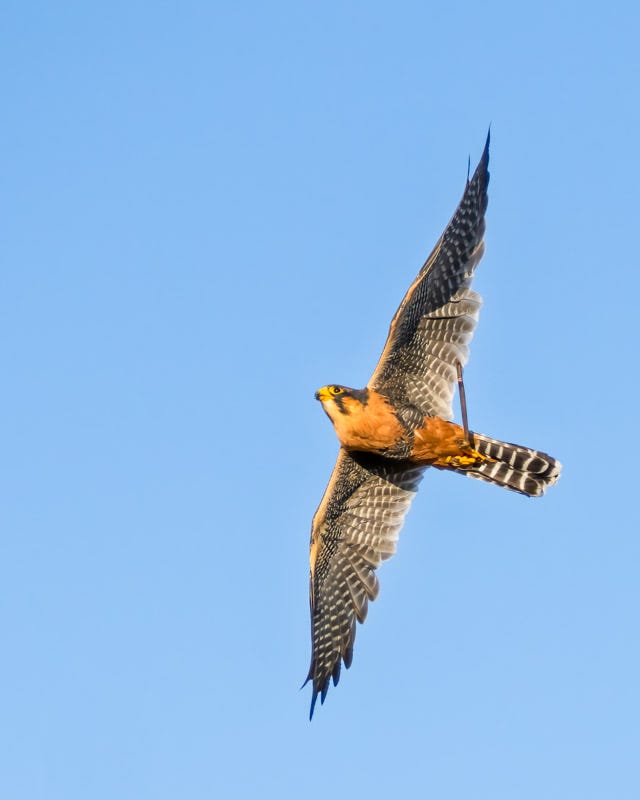
Little Girl always flew fast and mostly flew low, but she could also flew high when she wanted to.
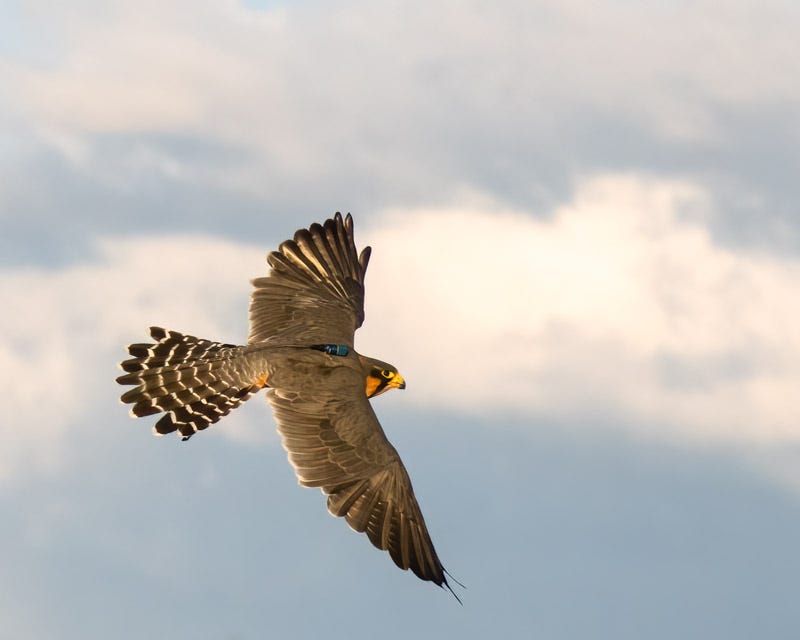
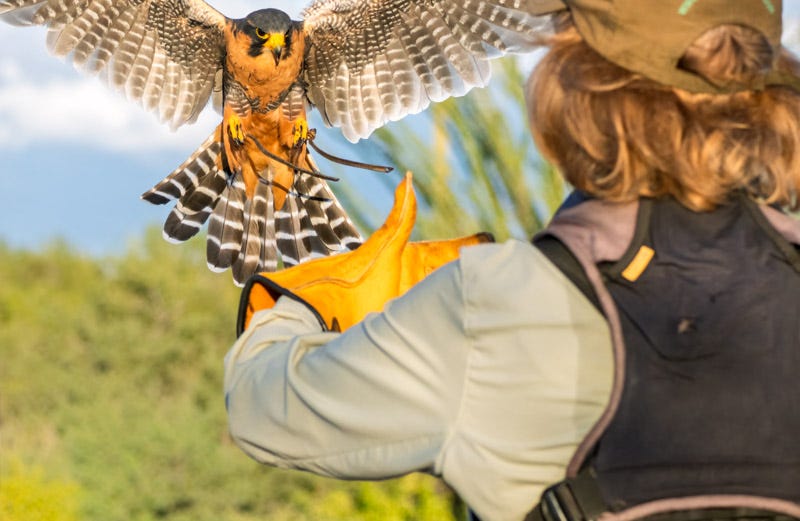
At the end of our session, she flew around all of us as we waited for her to return to the falconer.
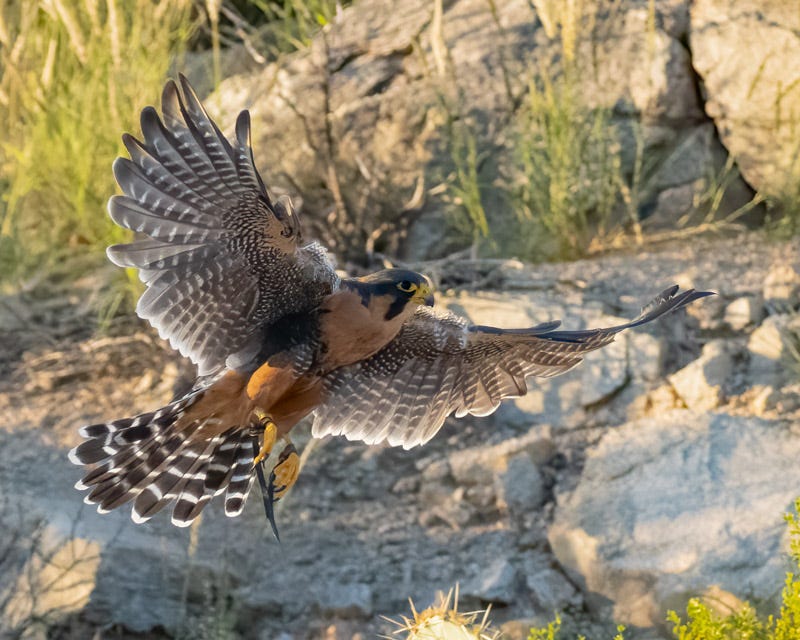
At that time, we were all given the chance to do ‘glove calls’ with the Aplomado. This training practice gives her more practice with orientation towards humans. What an incredible experience!
You can read about how the Peregrine Fund is working to restore American Aplomados to their historical range.
To learn about falconry through the ages, this site provides a virtual history tour of falconry with this “Timeline”.
If interested, you can read a detailed story of how Peruvian Aplomado Falcons came to the US for falconry.