

According to the Merriam-Webster Dictionary, the word ferruginous is an adjective meaning “of, relating to, or containing iron or resembling iron rust in color.” The Ferruginous Hawk was named for its rusty wings and rusty legs that form a V-shape when the bird is flying. It also has rusty feathers under its wings and can have some rust on its flanks.
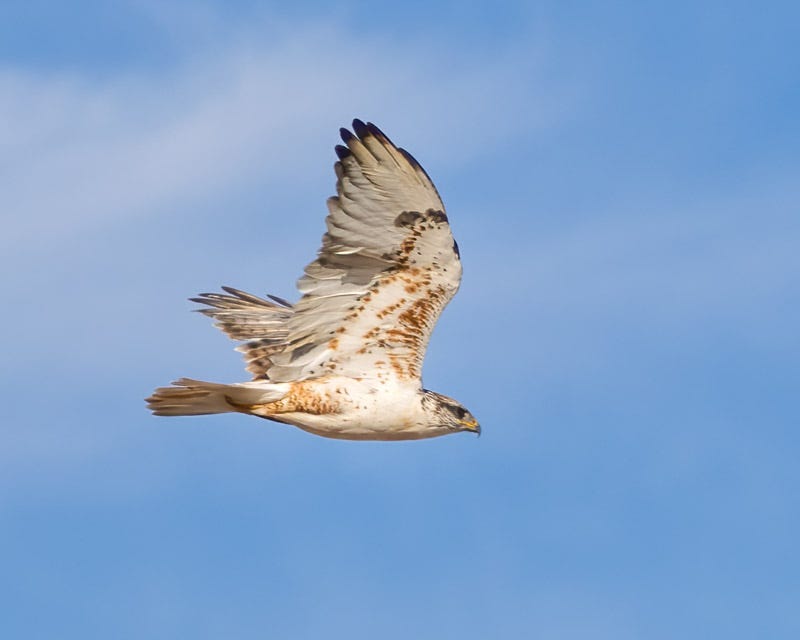
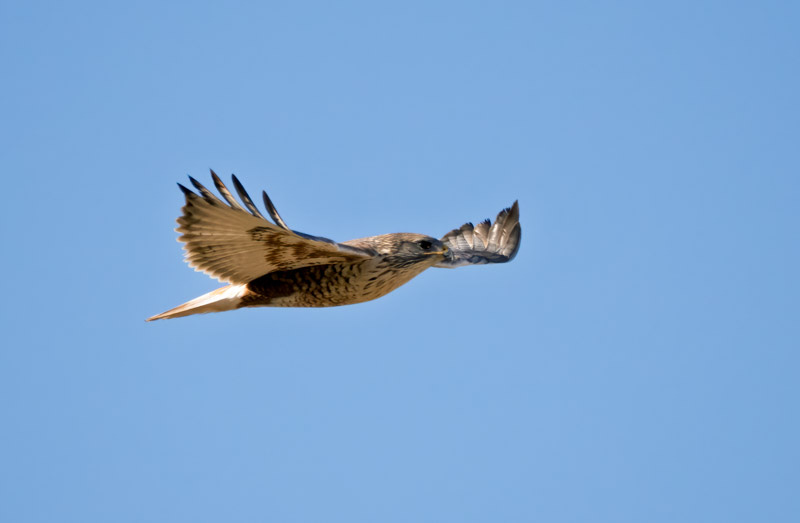
Ferruginous Hawks are birds of wide open spaces of the West. They arrive in southern Arizona during the winter. I saw my first Ferruginous Hawk of the season in October in farmland of Pinal County. That’s the bird in the photo above. I returned to the same area last week and saw another Ferruginous Hawk (in the photo below). You can see the difference in their plumage.
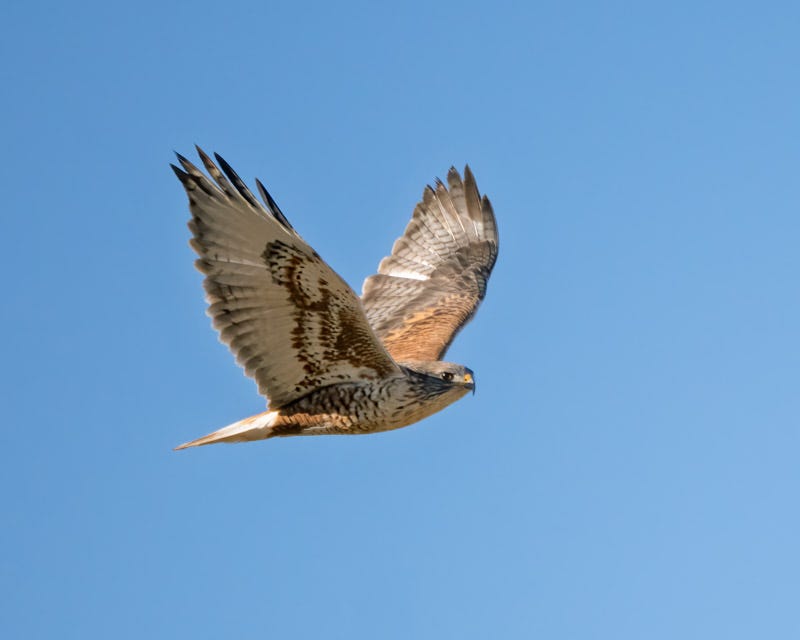
Ferruginous Hawks are the largest soaring hawk in the US. There are larger raptors, such as eagles and osprey, but Ferruginous Hawks are the largest of the soaring hawks. The Ferruginous Hawk’s wingspan is almost five feet across.
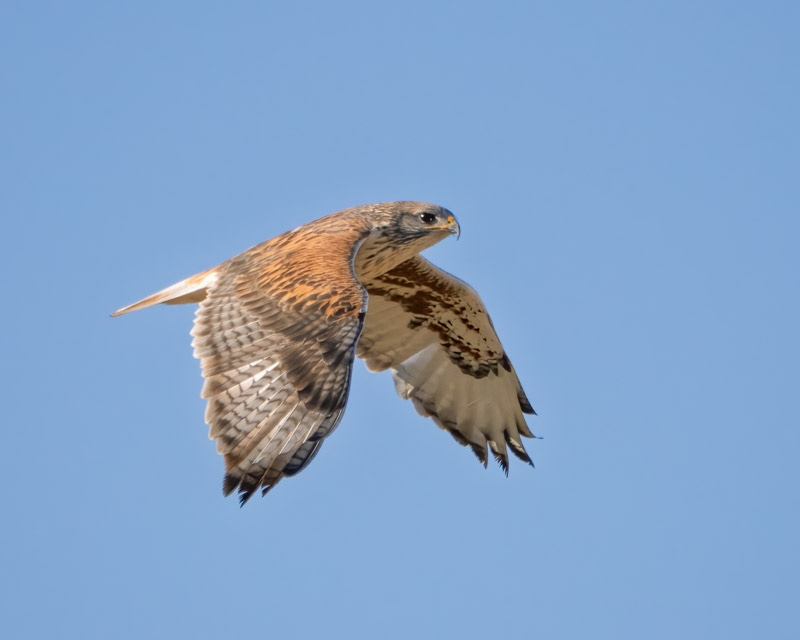
Ferruginous Hawks have large heads and a very solid look to their body.
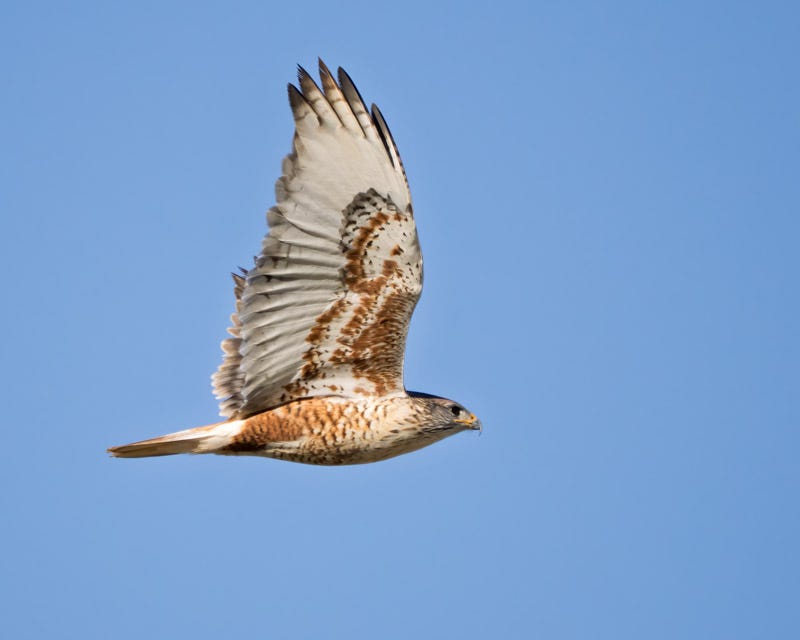
With its large size, a Ferruginous Hawk has a slow and deliberate wing beat. Its wings can look pointed in flight.
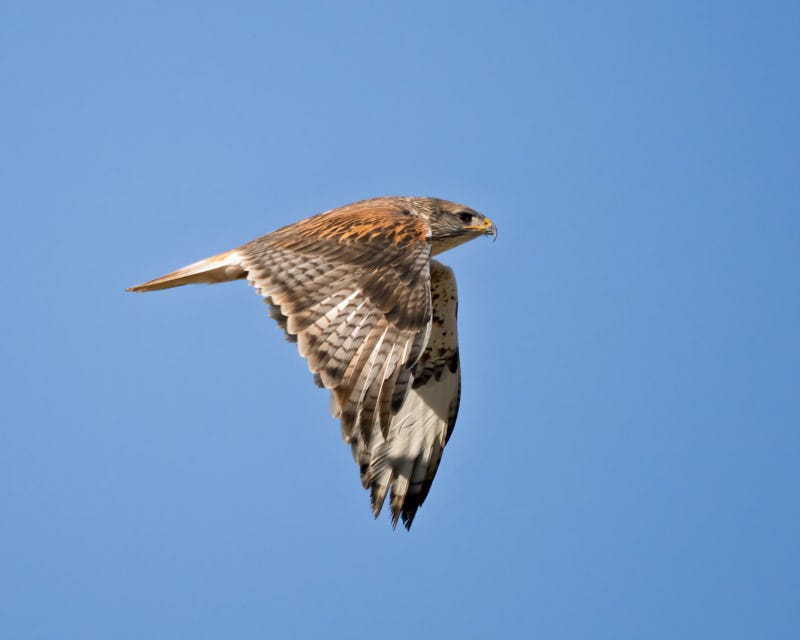
Ferruginous Hawks may soar or glide between wingbeats.
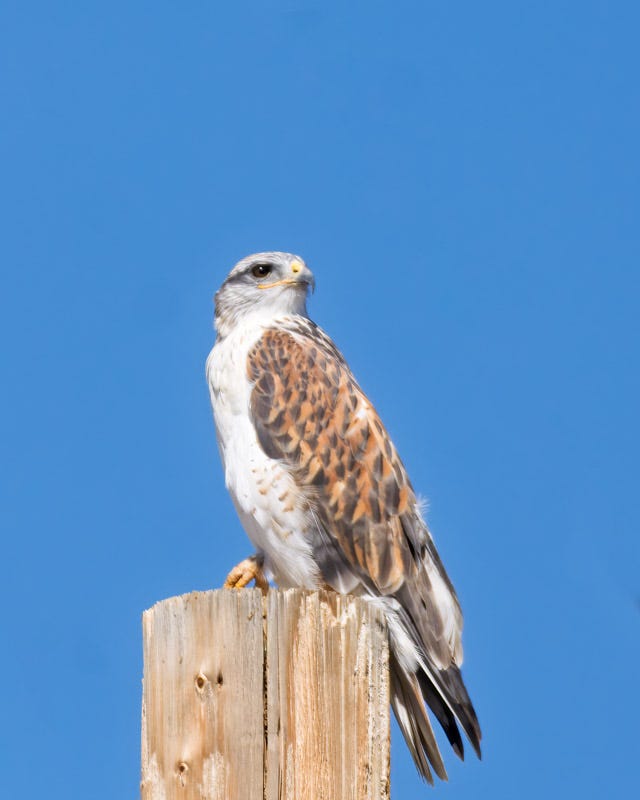
Several years ago I saw a Ferruginous Hawk perched on a pole in Marana’s farmland. I wanted to share this shot so you can see how regal this bird looks. You can also note another special feature of Ferruginous Hawk in this picture. The bird’s mouth is very large. The yellow fleshy part, called its gape, stretches back beneath its eye. This feature allows Ferruginous Hawks to swallow their prey whole before another bird could steal it from them.
Ferruginous Hawks’ prey includes prairie dogs, gophers, squirrels and rabbits. For more on Ferruginous Hawks, see Matt Griffith’s article for the Tucson Bird Alliance.
Such a unique and beautiful species!! Great photos as always!